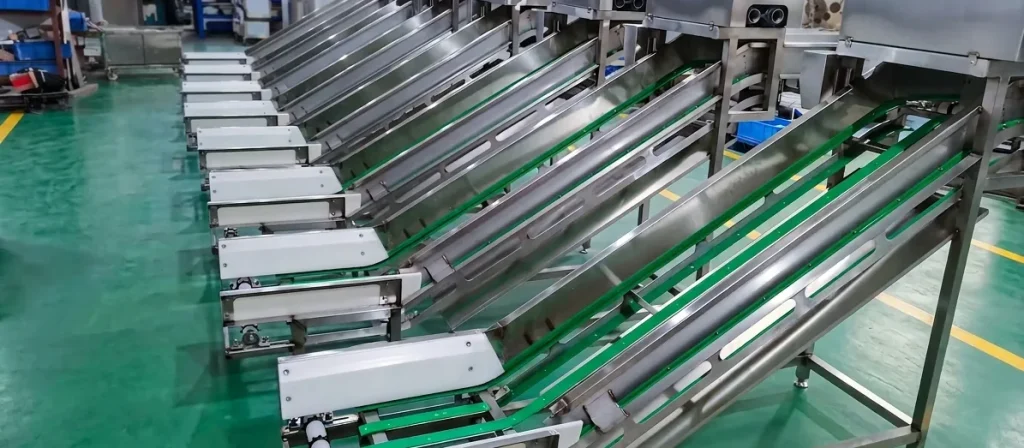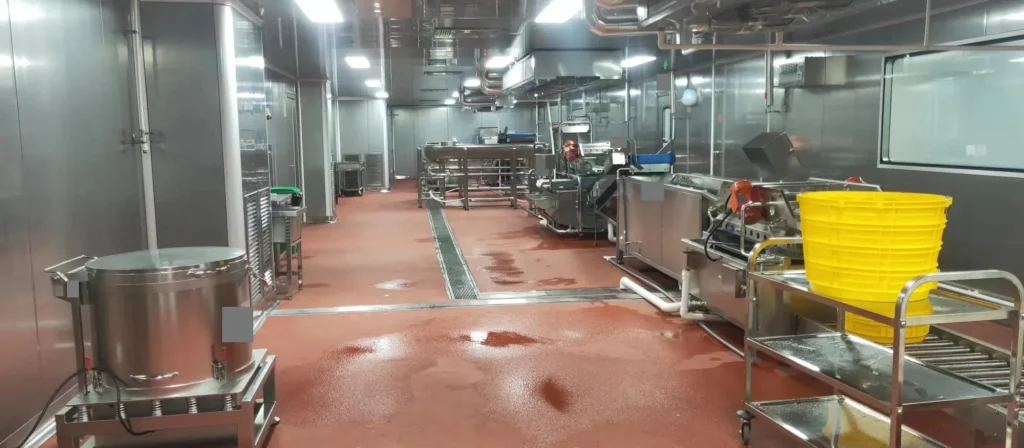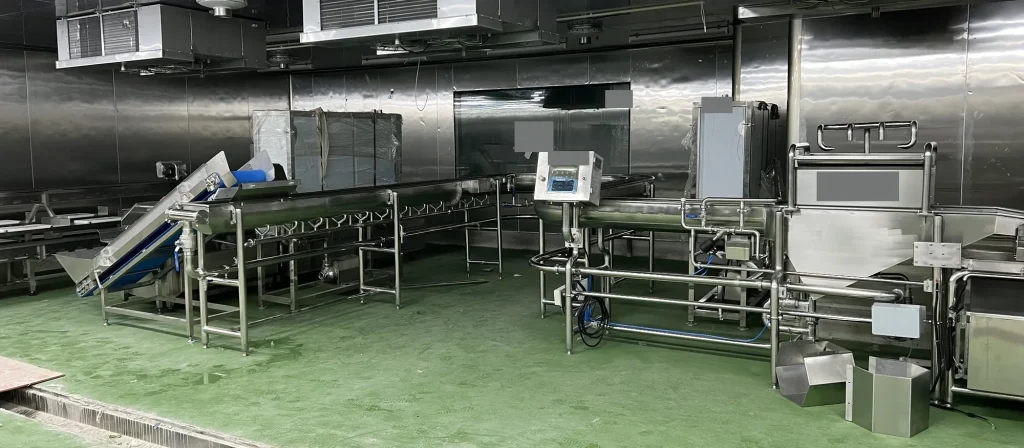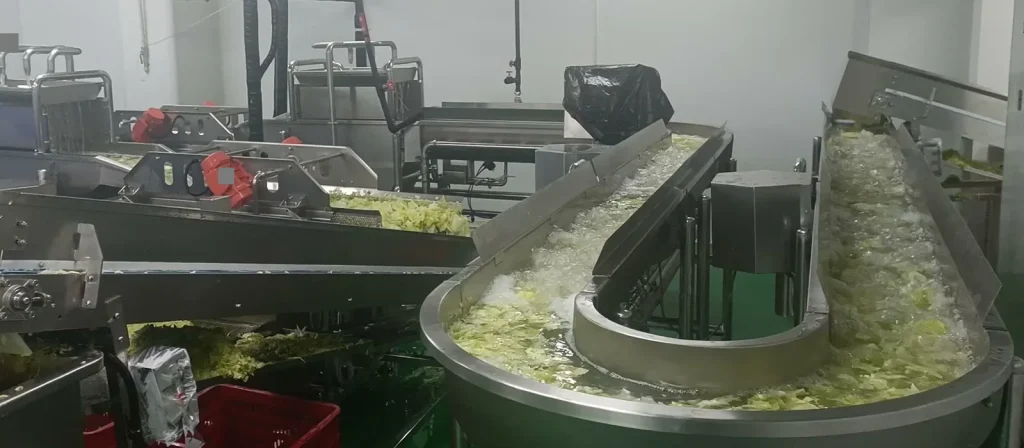
A fresh-cut produce and healthy-meal manufacturer was adding a salad-processing line to an existing operation. The project combined site-specific dimensions, existing preparation interfaces and customer-defined exterior identification requirements. TEEMYEAH’s configuration approach focused on a 1,000 kg/h operating throughput, controlled treatment-stage contact time, accessible construction and the connections needed for installation and service.
Project Snapshot
- Customer industry: Fresh-cut produce and healthy-meal manufacturing
- Processing application: RTE salad preparation
- Project type: Site-specific line configuration
- Project scope: Salad-line project with dimensional customization and exterior identification requirements
- Engineering focus: Layout definition, interface coordination, cleaning access and equipment traceability requirements
- Project line throughput: 1,000 kg/h
- Treatment-stage contact time: 60 seconds
- Preparation references: 40 × 40 mm lettuce pieces and 2 mm cabbage shreds
The Operational Challenge
The customer was expanding an existing fresh-salad operation with an additional processing line. Existing cutting and dewatering activities provided interfaces for the new arrangement. The project needed to accommodate those connections while addressing cleaning access, material compatibility and the treatment-stage requirements of an RTE salad process.
The customer also defined requirements for the equipment’s exterior identification. That introduced another item to be coordinated within the configuration specification, alongside layout, interfaces and service information. The engineering task was to bring these individual requirements into a consistent basis for design review.
TEEMYEAH’s Engineering Response
Our engineering approach centers on dimensional definition, drawing review and change control. These controls provide a structured way to translate the customer’s site requirements into a configuration that can be reviewed for manufacture, installation and service. The design work needs a consistent reference for both the equipment arrangement and the connections around it.
The first step is to define the equipment boundary. The layout should identify the part of the process covered by the salad-line project and the interfaces with surrounding equipment. The direction of material transfer, inlet and discharge heights and available utilities belong in that review, together with the space needed for operators and maintenance activities.
The next step is to establish the drawing approval basis. Dimensions and interfaces need to be reviewed together so that the agreed configuration represents a connected arrangement. Changes can then be assessed against that basis, with their effects on layout, access and connections considered before they are incorporated into the design.
Equipment and Process Configuration
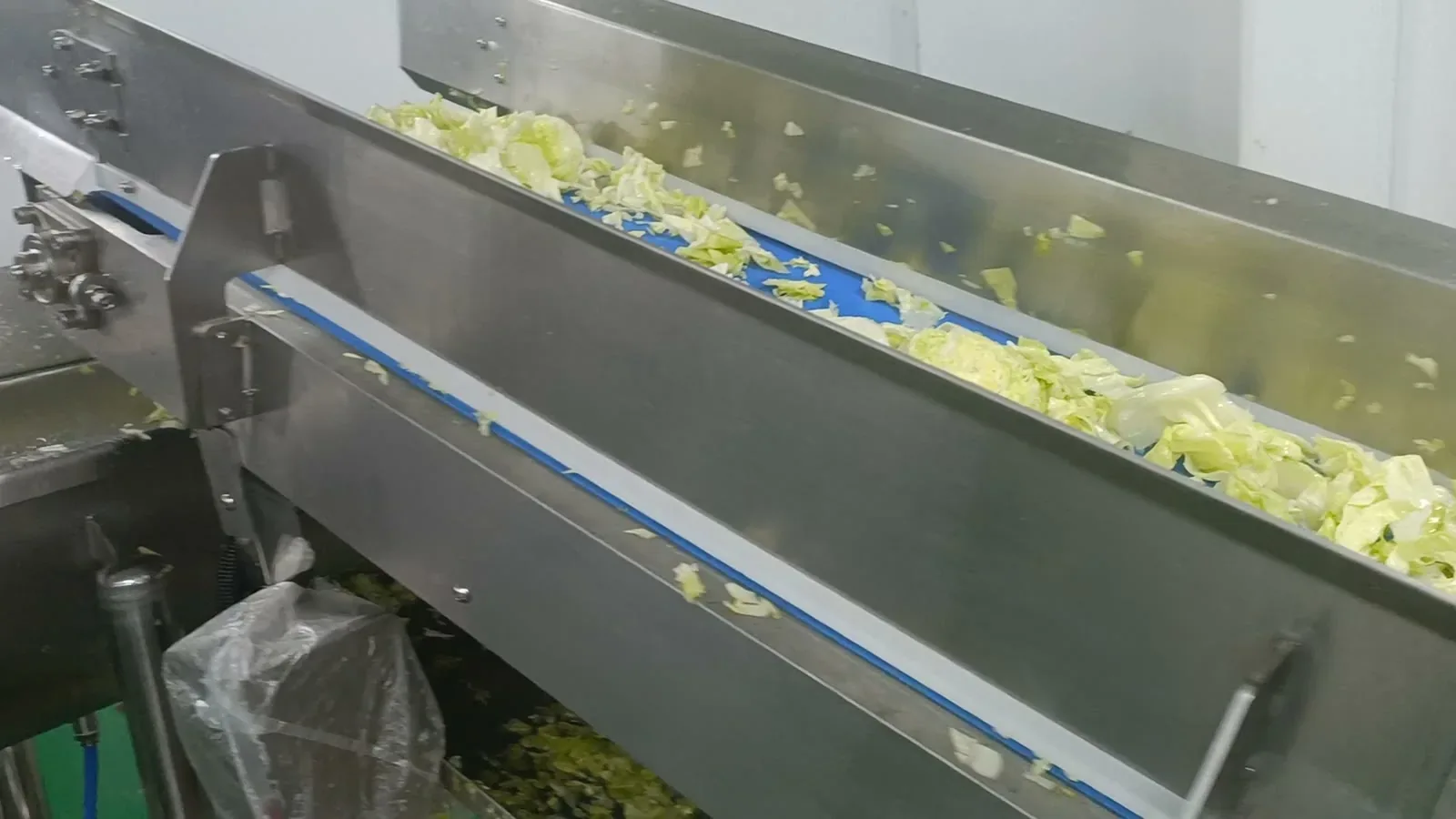
The project configuration was developed around a 1,000 kg/h line design target. Preparation references included lettuce pieces approximately 40 × 40 mm and cabbage shreds approximately 2 mm wide. Those product formats provide a basis for reviewing material presentation, transfer points and the relationship between cutting, washing and downstream handling. Operating output varies with product condition, loading and process settings.
The layout review should address equipment positions, inlet and outlet interfaces and the clearances needed for operation and service. It should also identify the points that require coordination with the site, such as fixed structures or connections to adjacent equipment. This gives each design discussion a specific physical reference.
Customer-defined exterior identification requirements belong in the same controlled specification. Exterior presentation, equipment identification and service information should be considered together. The intended arrangement must retain the identification needed for safe operation and maintenance, with internal equipment references defined as part of the engineering requirements.
The treatment-stage brief included a 60-second contact-time target. The actual treatment effect depends on the customer’s chemicals, concentration, contact time, water quality, contamination load, monitoring and on-site validation. The line arrangement therefore needs to support the selected operating procedure as well as the intended material flow.
Implementation and Interface Considerations
Service access requires its own review. A line can fit within an allocated area while leaving limited space for cleaning or maintenance. The intended installed arrangement should therefore be checked for access to service points and for the space occupied when an access panel or removable component is handled. These considerations help connect the layout to the equipment’s everyday use.
Project support covered layout planning, on-site installation, equipment connections and operator familiarization. The installation sequence brings the processing sections into the available working area and coordinates their connections with existing equipment. Operator guidance links the configured arrangement to routine cleaning, maintenance and process-setting responsibilities.
Change control then provides a way to manage later adjustments. The review should identify what changed, why it changed and which surrounding decisions are affected. A dimensional adjustment may influence a transfer height, a utility connection or a maintenance clearance. Recording those relationships helps keep the configuration consistent as the design develops.
Internal equipment traceability is another design requirement. The intended control should associate the configured equipment with an internal identifier and the appropriate manufacturing and service information. This gives operation and maintenance teams a clear reference for the configuration, including customer-specific features that may matter when arranging service or replacement parts.
Project Operating Results
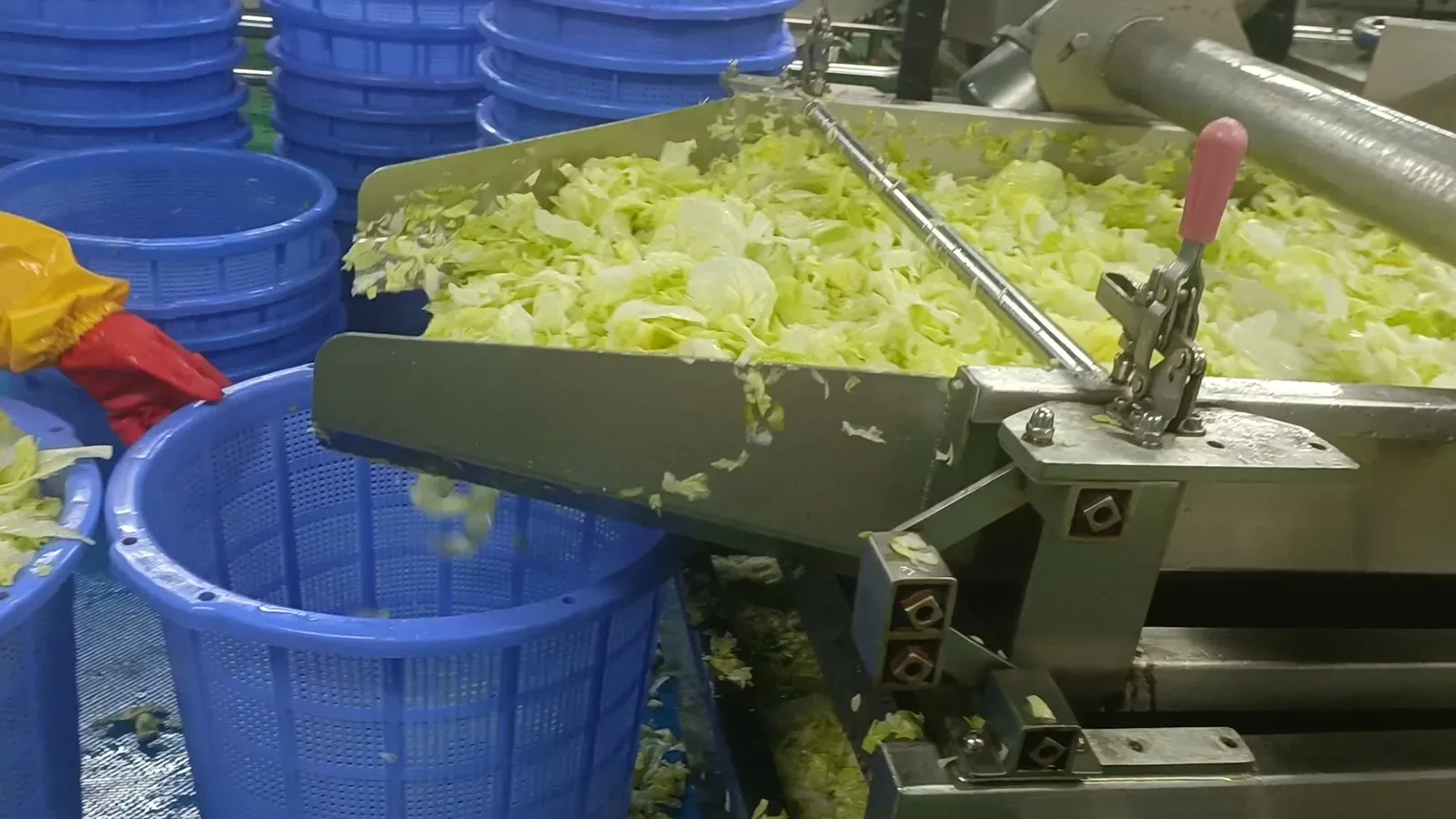
The additional salad line was installed and brought into operation around the agreed material formats and process route. Its operating figures describe the line itself, with packaging treated as a separate activity.
- Line throughput: 1,000 kg/h
- Treatment-stage contact time: 60 seconds
- Line operators: 5–7, excluding packaging
- Line automation: approximately 80%
- Water consumption: approximately 1.5 metric tonnes per hour
- Lettuce preparation reference: 40 × 40 mm pieces
- Cabbage preparation reference: 2 mm shreds
The operating team highlighted throughput, access for cleaning and stainless steel construction. The figures refer to the configured line and its project operating conditions; they do not represent a comparison of total factory output or staffing. Treatment performance remains linked to the chemicals, concentration, contact time, water quality, contamination load, monitoring and on-site validation used for the product.
What the Project Demonstrates
The project added a salad-processing arrangement shaped around existing preparation activities, a defined line-design target and an explicit treatment-stage contact-time requirement. Its engineering value lies in bringing material flow, cleaning access and process conditions into the same configuration review, with customer-specific identification requirements retained within the design brief.
For buyers planning a similar project, the key lesson is to define the approval basis before finalizing the configuration. A clear layout reference and a controlled method for subsequent changes support an organized design process. This approach is particularly useful where equipment must connect to an existing material route or accommodate customer-specific requirements within the available working area.
Relevant Solutions and Process Guidance
Review the RTE Salad Processing Line Solution for overall process planning. Our Vegetable Washing and Vegetable Dewatering guidance can support equipment-selection discussions. Explore further approaches in the Case Study Hub.
Discuss a Site-Specific Configuration
Share your intended material route, available layout and connection requirements. Request a processing line recommendation to review the dimensions, access needs and interface decisions that will shape the configuration. For broader context, review TEEMYEAH’s international project-delivery approach.