A central kitchen and fresh-cut food manufacturer required a coordinated salad-processing configuration for a high-SKU prepared-food environment. The project combined a salad line, an inspection table, sanitizing-related equipment, three conveyor lines and unpowered transfer equipment. TEEMYEAH coordinated the components around an 800–1,000 kg/h line range, varied product formats and organized site integration.
Project Snapshot
- Customer industry: Central kitchen and fresh-cut food manufacturing
- Processing application: RTE salad preparation
- Project type: Coordinated processing-line integration
- Project scope: One salad line, one inspection table, sanitizing-related equipment, three conveyor lines and unpowered transfer equipment
- Engineering focus: Component completeness, flexible product formats, transfer interfaces and installation coordination
- Salad-line configuration range: 800–1,000 kg/h
- Facility product portfolio: more than 100 SKUs
- Project development to signing: approximately three months
The Operational Challenge
A central kitchen salad processing line brings several equipment functions into one material route. The main processing equipment, inspection station and transfer sections need to be considered together. The project team must address where product changes direction, how operators reach inspection points and how adjacent sections connect during installation.
In this project, the salad line was accompanied by an inspection table, three conveyor lines, sanitizing-related equipment and unpowered transfer equipment. That combination made component completeness a central requirement. The main line and supporting sections needed a shared integration plan so that the interfaces between them could be reviewed as part of the overall configuration.
The challenge extended beyond fitting machines into a room. The facility handled more than 100 product SKUs, so line planning also needed to account for changes in raw material, cut specification and downstream packaging. Transfer positions, operating access and installation sequencing remained shared engineering responsibilities across the connected equipment.
TEEMYEAH’s Engineering Response
Our engineering approach centers on component completeness and interface consistency. The equipment scope provides the starting point for reviewing which items belong together and which connections need a shared specification. This organizes the main line, inspection station and transfer equipment around the same processing objective.
The first consideration is the boundary of each equipment group. The inspection table provides a position for visual checking and manual selection. The conveyor lines connect processing activities, while the unpowered transfer equipment forms part of the material-handling arrangement. Defining these roles gives the team a practical basis for reviewing the route and assigning interface responsibilities.
The second consideration is the connection itself. Inlet and discharge positions, transfer heights, direction of travel, operator access and utilities should be reviewed together. A machine can fit within its allocated space while still creating a difficult connection to adjacent equipment. Reviewing the complete route is intended to reduce interface uncertainty during installation planning.
Equipment and Process Configuration
The project scope includes one salad-processing line, one inspection table and three conveyor lines, together with sanitizing-related equipment and unpowered transfer equipment. The salad-line configuration range is 800–1,000 kg/h. The broader process route connects inspection and cutting with washing, treatment, rinsing, dewatering and boxed downstream packaging.
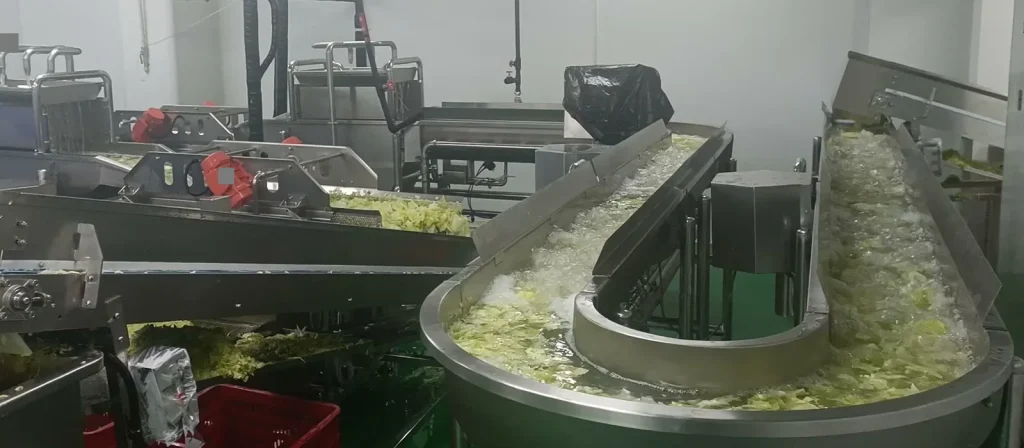
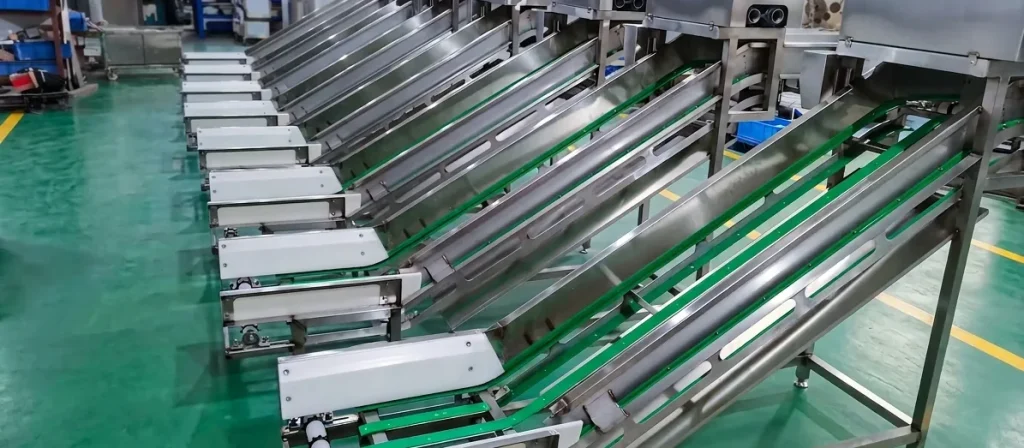
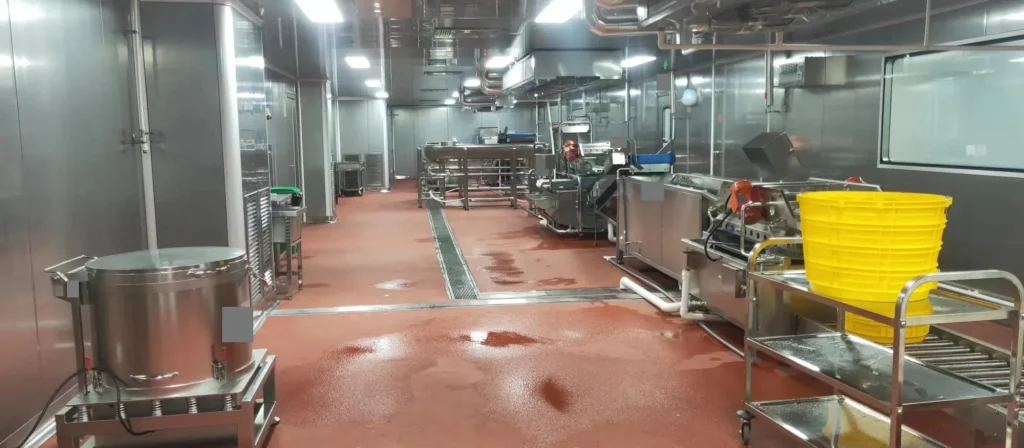
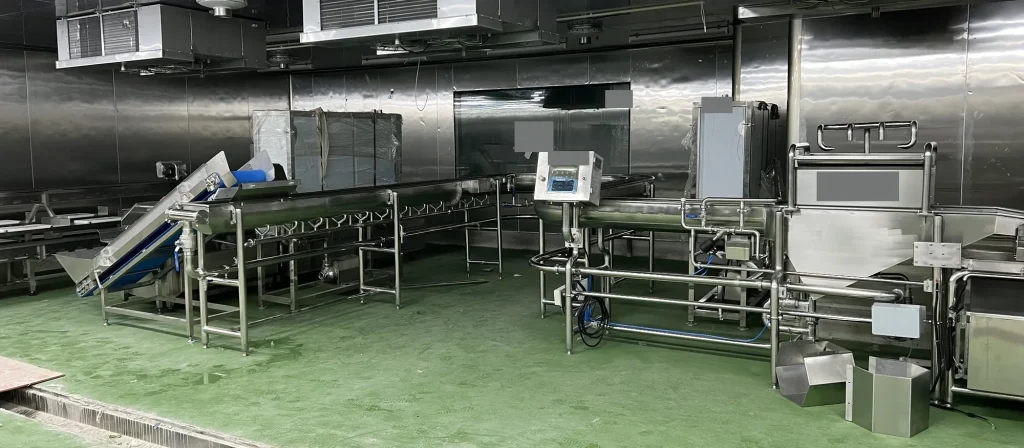
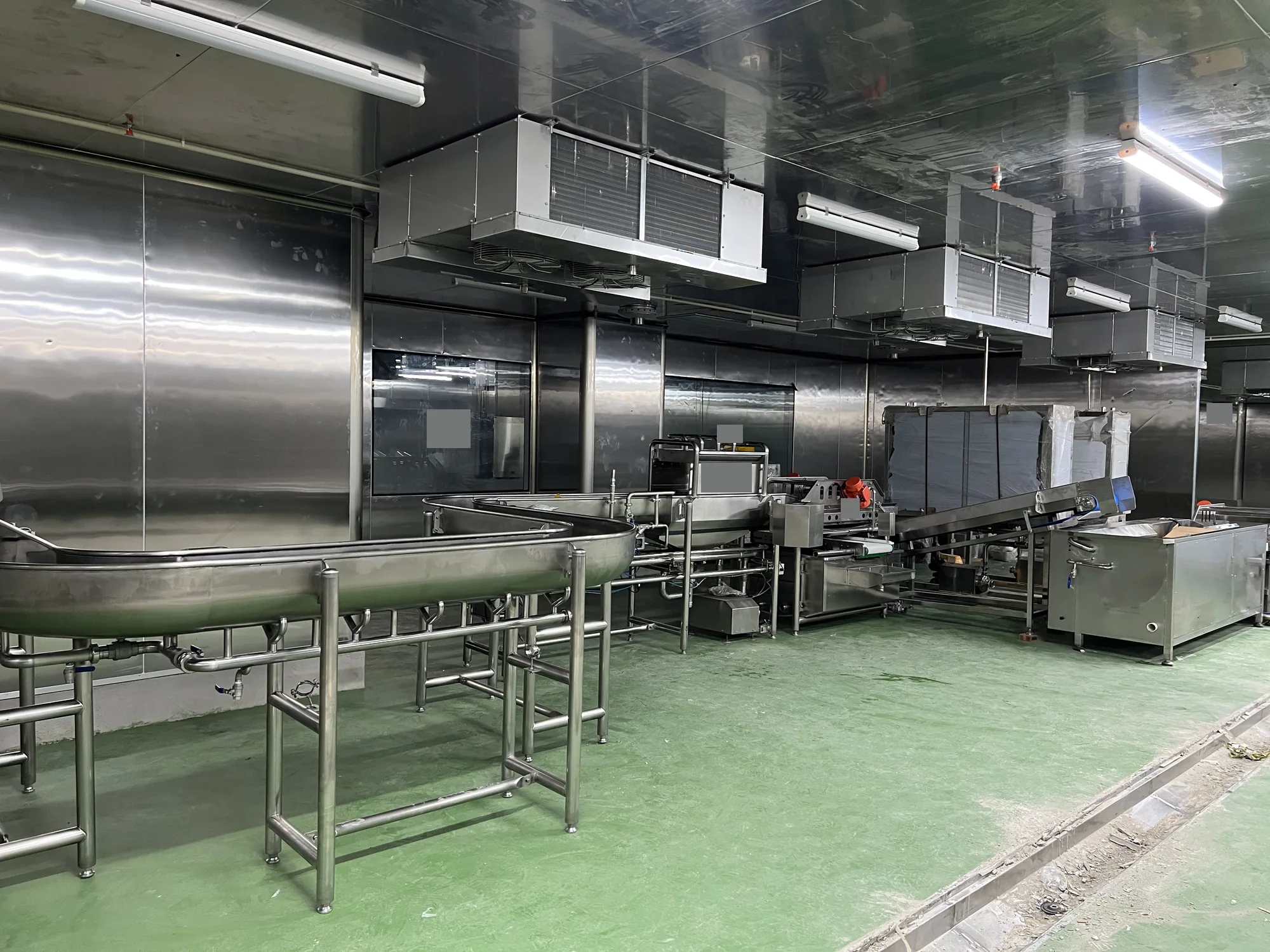
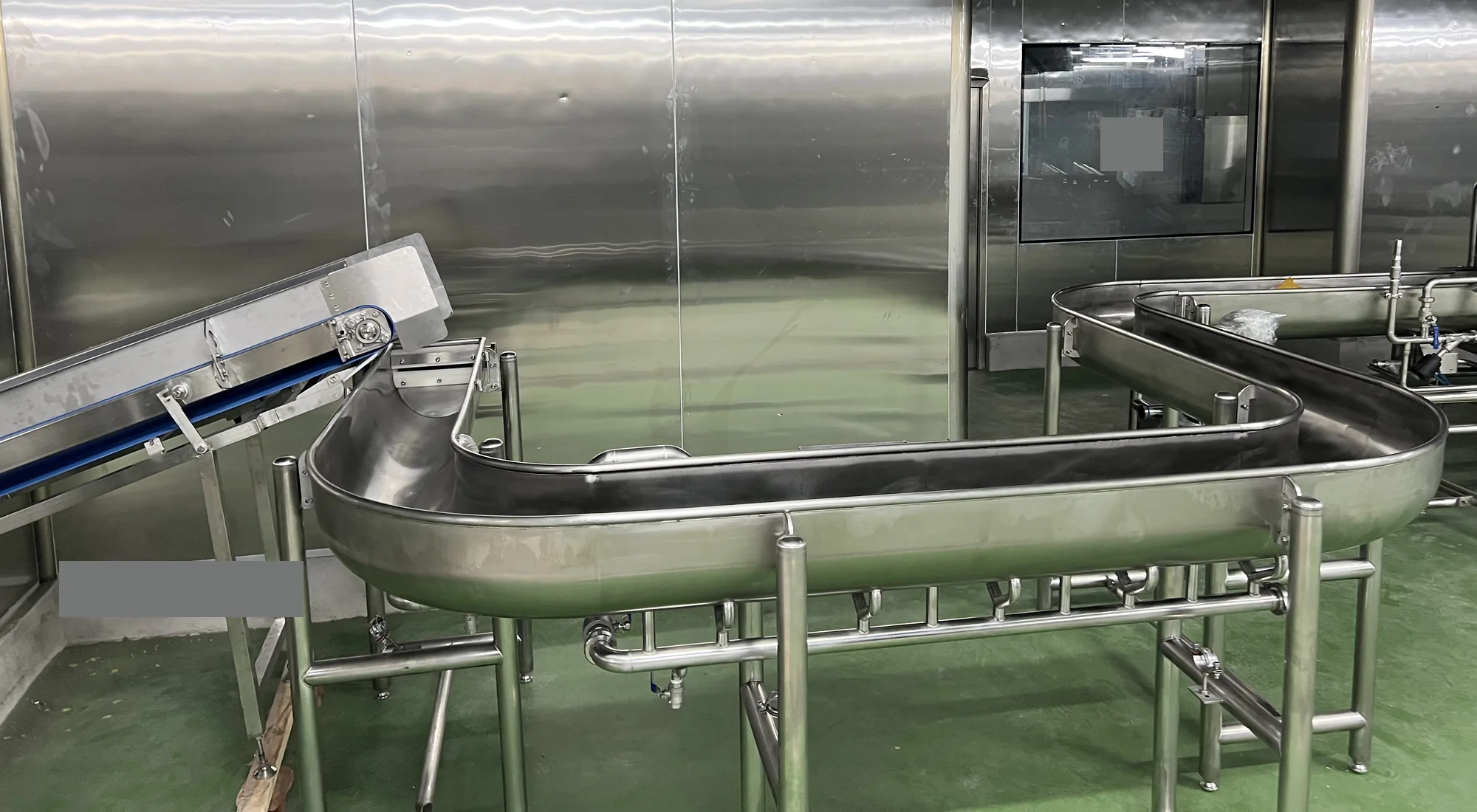
The installation photographs show the physical relationship between stainless steel processing sections and the surrounding conveyor equipment. Curved processing sections and inclined conveyors illustrate why direction changes and transfer positions need to be considered early. The available space around the arrangement also matters for installation work, inspection and maintenance access.
Product references included lettuce pieces approximately 40 × 40 mm and cabbage shreds approximately 2 mm wide. These formats illustrate the changeover and transfer requirements created by a varied product portfolio. The inspection position, operator access and conveyor interfaces need to remain workable across those product conditions.
Unpowered transfer equipment requires the same attention to its operating role. Its position, access and connection to surrounding work areas need to match the intended handling method. Bringing these details into the line review helps keep supporting equipment aligned with the processing route.
Implementation and Interface Considerations
A coordinated installation plan should address site readiness, mechanical connections and utilities before progressing to process trials. Transfer sections need alignment with the adjacent equipment, while access for cleaning and maintenance should remain available after connections are made. The purpose is to review the combined arrangement, including interfaces that can be overlooked in separate machine checks.
Conveyor coordination concerns product loading as well as speed. Upstream discharge patterns and downstream availability affect how material moves through the arrangement. A practical review should consider how material is introduced, where accumulation may occur and how a stop in one section affects the surrounding process. These questions help define the operating conditions to be assessed during site trials.
Sanitizing-related equipment must be matched to the customer’s process and validation requirements. Where a chemical sanitizing step is used, its actual effect depends on the chemicals, concentration, contact time, water quality, contamination load, monitoring and on-site validation. Equipment selection and process validation are complementary responsibilities in developing the customer’s food-safety controls.
Project development to signing took approximately three months. Support then covered layout planning, equipment installation and connection, operator training, maintenance guidance and initial operating follow-up. The processing lines were brought into operation through the planned installation sequence, with the site and equipment teams working from a shared scope and interface list.
Project Delivery and Operating Scope
The integrated salad-line package was taken through layout coordination, installation, equipment connection and operator training. Its 800–1,000 kg/h configuration range supports the planned salad route within a facility producing more than 100 SKUs. Boxed modified-atmosphere packaging formed part of the downstream product context.
- Salad-line configuration: 800–1,000 kg/h
- Facility portfolio: more than 100 SKUs
- Project development to signing: approximately three months
- Lettuce preparation reference: 40 × 40 mm pieces
- Cabbage preparation reference: 2 mm shreds
- Downstream format: boxed modified-atmosphere packaging
Operating output and treatment performance remain linked to the raw material, cut specification, loading, chemicals, concentration, contact time, water quality, contamination load, monitoring and on-site validation used for each product.
What the Project Demonstrates
The project illustrates why a salad line should be reviewed as a connected configuration. Processing equipment, inspection, sanitizing-related equipment and transfer sections each contribute a different function. Their relationship within the material route determines the interface decisions that the project team needs to resolve.
For buyers planning a similar installation, the useful lesson is to bring component completeness and interface planning into the same review. Define the equipment boundaries, identify the connections and organize site activities around the combined arrangement. This provides a structured basis for installation planning and for agreeing the process checks appropriate to the intended operation.
Relevant Solutions and Process Guidance
Our RTE Salad Processing Line Solution explains the broader route. Review Vegetable Washing and Vegetable Dewatering for process-selection considerations. Compare other applications in the Case Study Hub.
Discuss a Coordinated Processing Line
Share your raw materials, intended process, transfer requirements and available layout. Request a processing line recommendation to review how the equipment groups and their interfaces should be coordinated.