
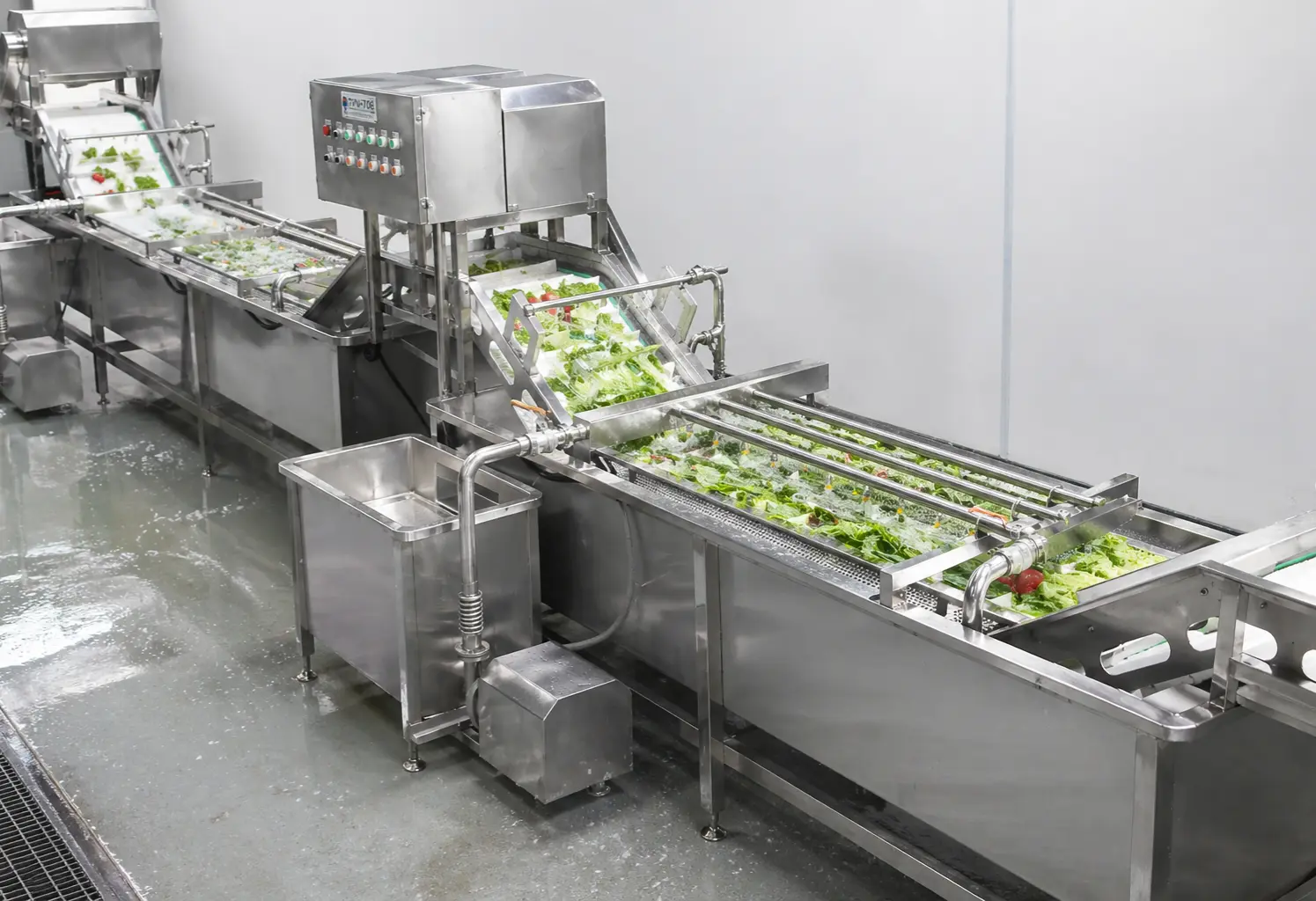


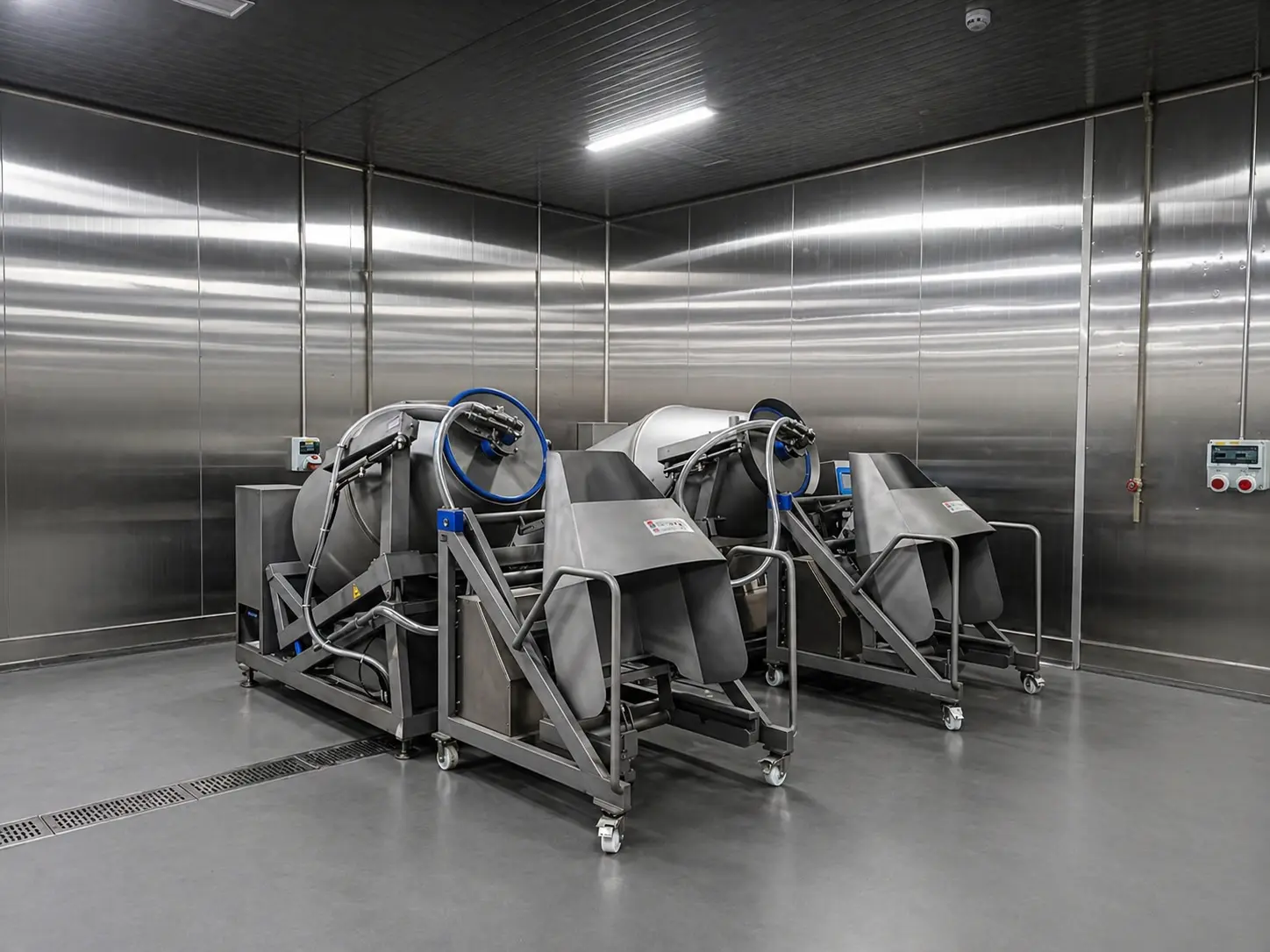


Food Processing Line Control & Digital Integration
A processing line becomes easier to manage when operators can see what the equipment is doing, review the process conditions that matter and keep useful operating records in one connected control environment.
TEEMYEAH integrates centralized line control with equipment visibility, selected process monitoring and structured data capture around the actual food-processing line. Where the project requires it, additional monitoring, control logic, data structures and higher-level system interfaces can be engineered around your production requirements.
For new processing lines, line upgrades and project-specific automation requirements.
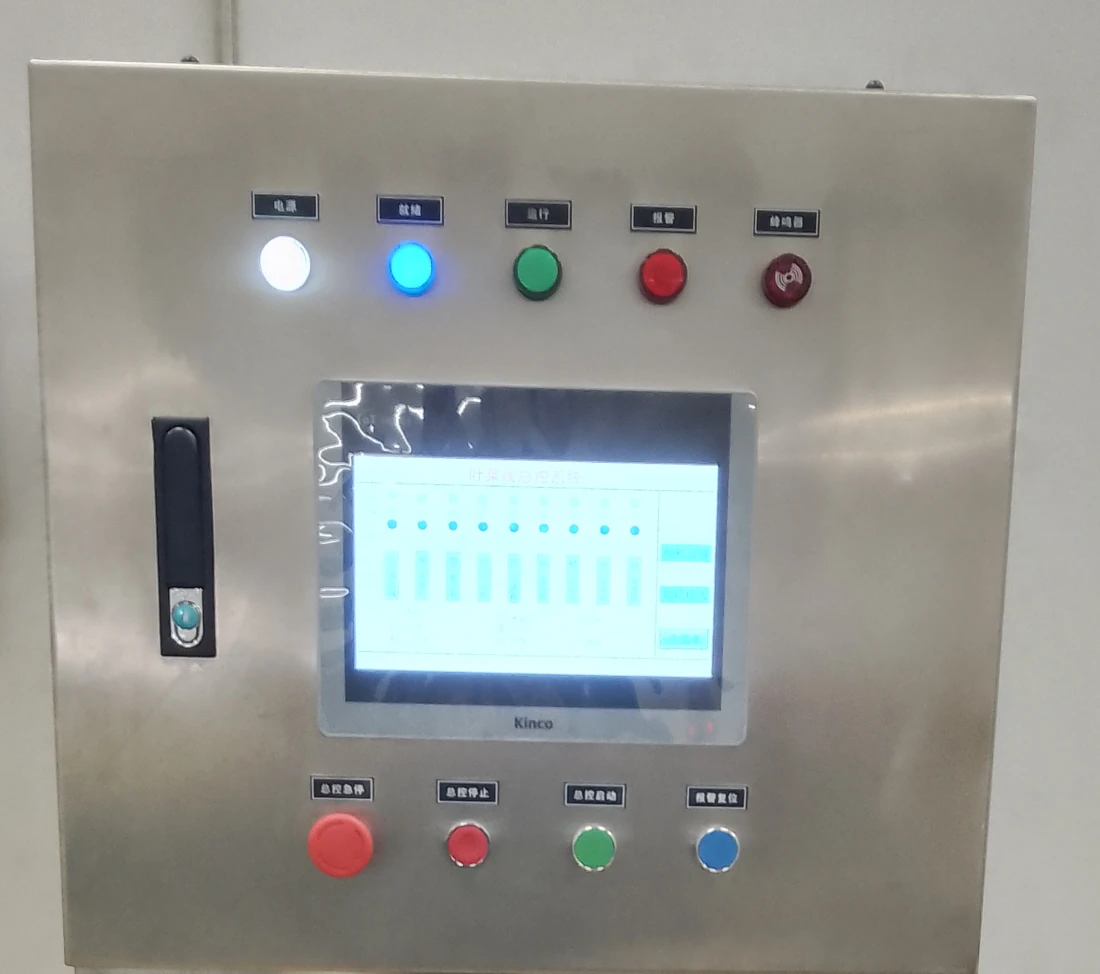
Centralized control cabinet · project configuration shown
Make the Processing Line Easier to Control, See and Review
Adding automation is not only about connecting more sensors or installing a larger control cabinet. The practical question is whether the people running the plant can understand what is happening across the line and use that information when a decision needs to be made.
TEEMYEAH digital integration is designed around four practical operating needs.
Centralized Line Control
Coordinate connected equipment from a line-level control point.
Configured machines can be brought into a centralized control environment for operating-status visibility, start and stop functions, defined operating sequences and line interlocks.
Process Visibility
Bring relevant machine and process conditions into a clearer operating view.
Operators can see connected equipment status together with selected process measurements where the required instrumentation is included in the project.
Operating Records
Keep useful information available after the production moment has passed.
Configured alarm records, accumulated equipment runtime and selected production records can support later operational, maintenance and production review.
System Integration
Avoid treating every new machine as another isolated source of data.
When required, line information can be structured for connection with higher-level plant systems according to the customer’s defined interface and data requirements.
Monitor the Data That Matters to the Processing Line
The useful data points are different for every food-processing project. A leafy-vegetable washing line does not need exactly the same monitoring architecture as a root-vegetable line, an RTE preparation line or a customized central-kitchen installation.
TEEMYEAH therefore defines monitoring around the equipment, process and operating decisions involved in the project.
Core digital information can include
Machine operating status
See whether configured equipment is available, running, stopped or indicating a fault.
Equipment alarms
Bring equipment alarms and selected process-limit events into the control environment where configured.
Accumulated runtime
Record accumulated equipment operating time to provide additional context for operation and maintenance review.
Selected washing-process conditions
Relevant washing parameters can be monitored when the appropriate sensing and instrumentation are included in the equipment scope.
Configured production records
Selected production counts or other project-defined production information can be incorporated where the required measurement is available.
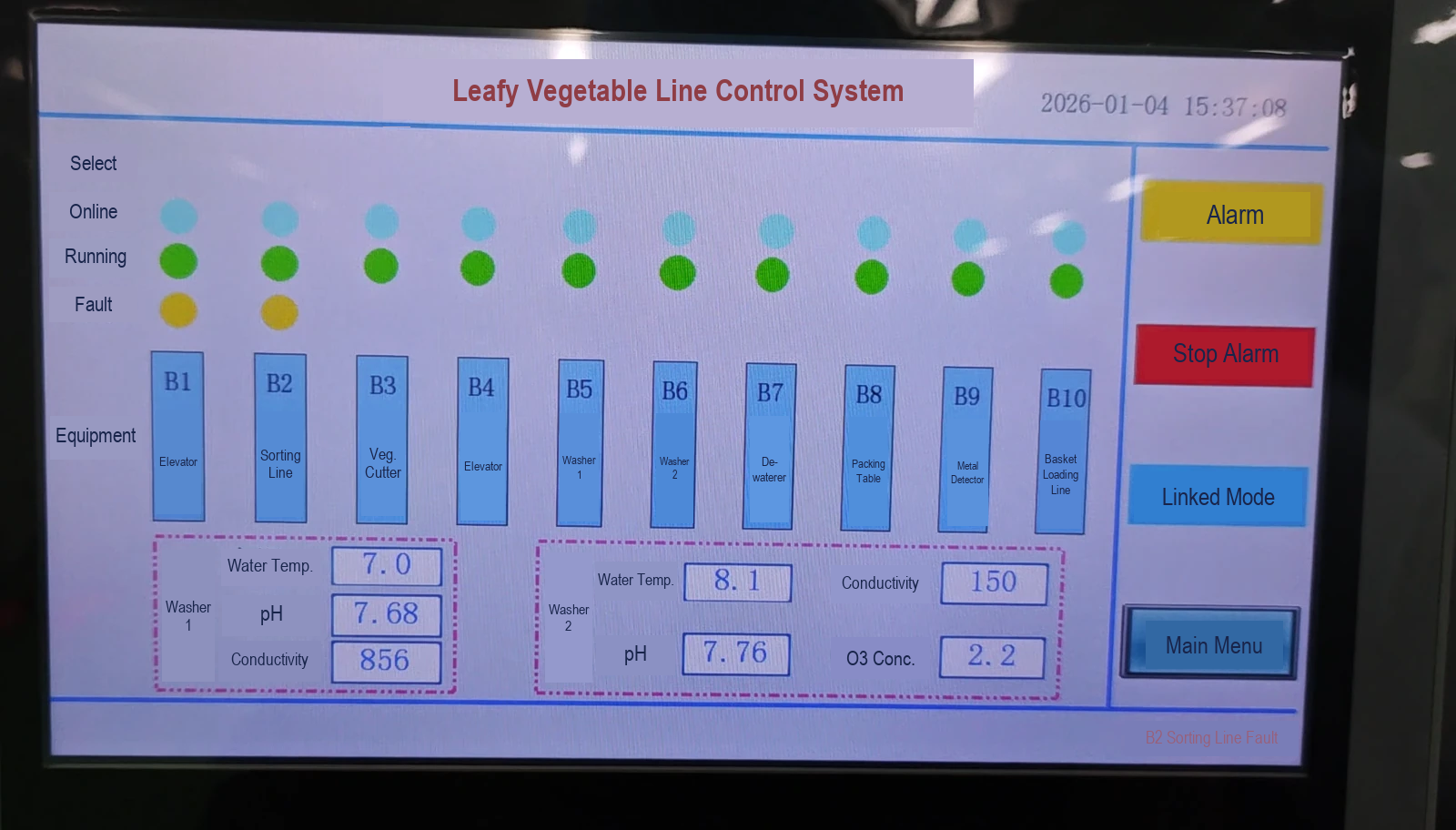
Example monitored process information — project configuration shown. Original interface values and alarm indications are retained; the image illustrates interface structure, not a live feed or process limits.
Project-specific monitoring can extend further
Depending on the processing line and customer requirements, additional instrumentation can be engineered for areas such as:
- utility consumption
- water-related measurements
- electrical consumption
- compressed-air usage
- environmental conditions
- additional process measurements
- customer-defined operating information
The exact parameters, recording functions, alarm logic and data availability are confirmed according to the equipment configuration and digital scope of each project.
From Machine Signals to Usable Production Information
A useful digital architecture should follow the physical processing line. Data begins with the machine or process point, moves through the control layer and is organized only as far as the plant actually needs it to go.
Equipment & Sensors
Machine status and project-defined process measurements originate from the connected equipment and instrumentation.
Line Control
The centralized control layer brings configured machines together for line-level operation, status visibility, sequencing and defined interlocks.
Local Data Layer
Selected operating information can be stored and presented locally for visualization, reporting and operational review according to the configured system scope.
Plant-System Interface
When required, defined line information can be made available to the customer’s higher-level production environment through a project-specific interface.
Not every plant requires the same digital depth. Some customers need centralized line operation and equipment records. Others require additional instrumentation, reporting structures or integration with existing production-management systems. The architecture should match the actual operating requirement rather than add software complexity without a clear production purpose.
The Same Processing Line Serves Different Teams
Operator
Know where attention is required.
A centralized operating view helps the operator see the status of connected machines and identify where an alarm or stoppage is occurring without treating every machine as a completely separate operating island.
Production Manager
Get a clearer view of line operation.
Equipment status, accumulated runtime and configured production records provide additional context when reviewing how the line has been operating.
Quality & Food Safety
Add process information to operational review.
Where relevant process conditions are monitored and recorded, those records can give quality teams additional evidence when reviewing how a processing step was operating.
Maintenance
Use operating information to support troubleshooting.
Equipment alarms and accumulated runtime can provide useful context when maintenance teams investigate faults or plan routine maintenance activity.
IT & Automation
Define the data interface before connecting systems.
Instead of treating integration as a generic software promise, the required fields, data direction, update requirements and responsibilities can be defined as part of project engineering.
When Something Goes Wrong, Data Gives You a Starting Point
When production is running normally, operators may not think much about historical operating information. Its value becomes much clearer when something changes.
A machine stops. An equipment alarm appears. A washing condition moves outside the expected operating range. Production needs to know whether the event was isolated or part of a wider line issue.
With the appropriate digital scope in place, the investigation can begin with structured operating information rather than relying only on memory.
See the Event
The operator identifies the machine or monitored process point requiring attention.
Check the Operating Context
Relevant equipment status, alarms and available process information provide context around the event.
Review Available Records
Configured operating records can be used by production, maintenance or quality personnel during follow-up review.
Add Deeper Production Context Where Required
If the customer’s project requires production-run, batch, order or other business-level relationships, those identifiers and data structures need to be designed into the wider digital architecture.
Digitalization does not eliminate abnormal events. It can make the operating context around those events easier to reconstruct.
Use Process Records to Support Food-Safety Review
Food-safety management depends on more than whether a machine is connected to a network. Customers define their own hazards, process controls, limits, monitoring procedures, corrective actions and verification requirements according to the products they manufacture and the regulatory framework that applies to the plant.
Where relevant equipment events and process conditions are monitored and recorded, the resulting information can support production and quality teams when reviewing how a processing step was operating.
Depending on the customer’s HACCP or wider food-safety program, configured digital records may also support specific monitoring and recordkeeping activities defined by the customer.
System Can Support
- Monitoring
- Operating records
- Alarm information
- Process-review context
Customer Food-Safety System Defines
- Hazards
- Limits
- Corrective actions
- Verification
- Product release
The control system supports data availability — it does not replace the customer's food-safety system.
TEEMYEAH digital integration does not replace:
- hazard analysis
- customer-defined critical limits
- corrective-action procedures
- verification activities
- product disposition or release decisions
- the customer’s own HACCP documentation and responsibilities
The required parameters, alarms, records and reporting expectations should therefore be defined together with the process requirements during project engineering.
Define the Traceability Depth Your Operation Actually Needs
A connected machine is not automatically a traceability system.
Equipment data can show how a machine was operating. Process records can add information about selected production conditions. But batch-, lot-, order- or finished-product traceability requires reliable identifiers that connect those records to the material being processed.
Equipment & Process Records
Machine status visibility, alarm and runtime records, and configured process information form the basic digital scope around the processing equipment.
Production Run / Batch / Lot Linkage
When a customer needs records linked to a defined production run, batch or lot, the required identifiers and data relationships must be included in the project architecture.
Order & Finished-Product Integration
Deeper relationships involving production orders, packaging, finished-product identification or downstream systems require the relevant business data and higher-level plant-system integration.
If deeper traceability is required, TEEMYEAH can evaluate the identification and data-linkage structure around the customer’s process and existing production systems, and engineer the agreed scope once feasibility is confirmed.
The final traceability scope is therefore confirmed during project engineering rather than assumed from equipment connectivity alone.
Connect Line Data to MES, ERP and Other Plant Systems
Many food factories already operate with an ERP, MES or another production-information system. In this situation, the useful question is not simply whether two systems can “connect.”
The project needs to define what information is required, where that information originates and what the higher-level system needs to do with it.
Define the Data Contract
WHAT DATA IS REQUIRED?
Machine status, selected process information, production records or other project-defined fields.
WHERE DOES THE DATA ORIGINATE?
The equipment, a line-level controller, a local data layer or another customer system.
WHICH DIRECTION MUST IT MOVE?
Not every interface needs to be bidirectional.
HOW OFTEN IS IT REQUIRED?
Real-time visibility, periodic records and management reporting have different data requirements.
WHAT IDENTIFIER CONNECTS THE INFORMATION?
Equipment, production run, batch, order and finished-product relationships require different data structures.
TEEMYEAH Processing Line
Equipment and configured line information
Defined Project Interface
Fields, identifiers, direction, update requirements and responsibilities
Customer MES / ERP / Plant System
Customer-defined production information environment
TEEMYEAH Integration Scope
Database-based data access can be engineered around defined project interfaces within the current digital architecture.
Where a project requires additional data exchange, TEEMYEAH works with the customer’s technical team to confirm the required fields, interface method, responsibilities and engineering scope.
Production-order exchange, recipe synchronization, batch identifiers and bidirectional MES or ERP integration are not assumed as standard functions. Their feasibility and engineering scope are confirmed for the project before implementation.
Configure the Digital Scope Around How Your Plant Actually Operates
A fixed software package is not always the right starting point for a food-processing project. The digital scope should reflect the actual equipment, process risks, operating responsibilities and existing plant systems.
Core Line-Control Functions
Typical line-level digital functions can include:
- centralized equipment status
- centralized start and stop functions
- defined operating sequences
- line interlocks
- equipment alarm visibility
- accumulated runtime recording
- configured production records
Configured Monitoring & Data
Depending on the project, the digital scope can include:
- selected process instrumentation
- additional monitoring points
- local data storage
- data visualization
- defined alarm logic
- record-export requirements
- utility or environmental monitoring
Project-Specific Integration
Where deeper digitalization is required, engineering can extend to:
- customer-defined control logic
- production data structures
- production-run or batch identification requirements
- customized dashboards and reporting
- higher-level plant-system interfaces
- integration requirements defined with the customer’s automation or IT team
The final scope is confirmed after TEEMYEAH understands the processing line, the equipment involved, the data the customer actually needs and how that information will be used.
Build Digital Control Around the Processing Line
TEEMYEAH does not treat digitalization as an isolated software layer added after equipment selection.
Control architecture, monitoring points and data requirements can be considered together with the physical processing flow so that the digital system reflects how the product actually moves through the plant.

RTE Salad Processing
Coordinate relevant preparation, washing, dewatering and downstream process equipment around the requirements of ready-to-eat production.
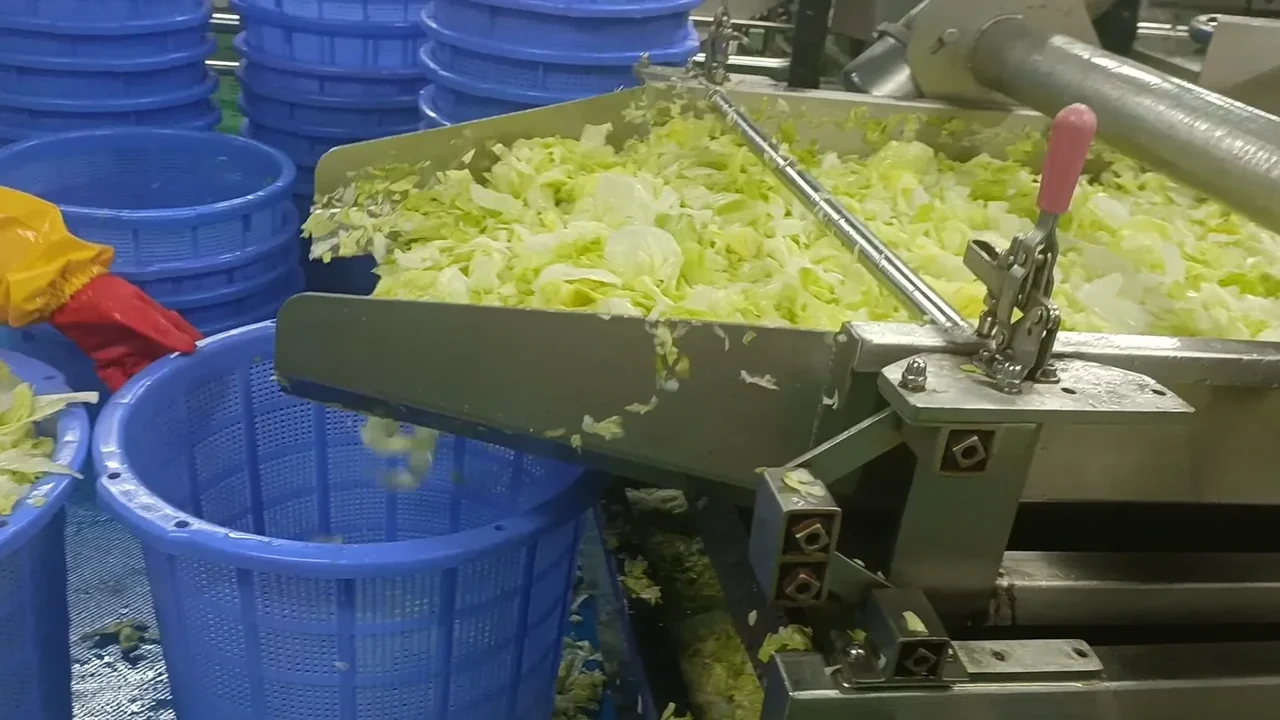
Leafy Greens Processing
Build line control and process visibility around the washing and handling requirements of leafy vegetables and fresh-cut production.
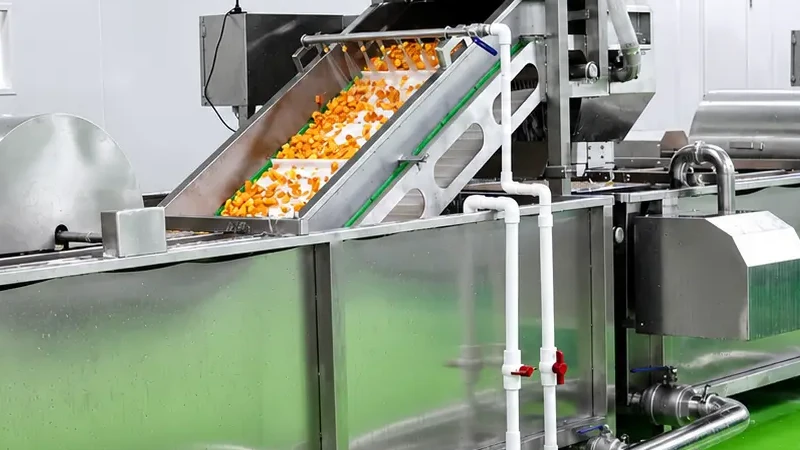
Root Vegetable Processing
Integrate control and monitoring around root-vegetable preparation, washing, peeling, cutting and downstream handling.
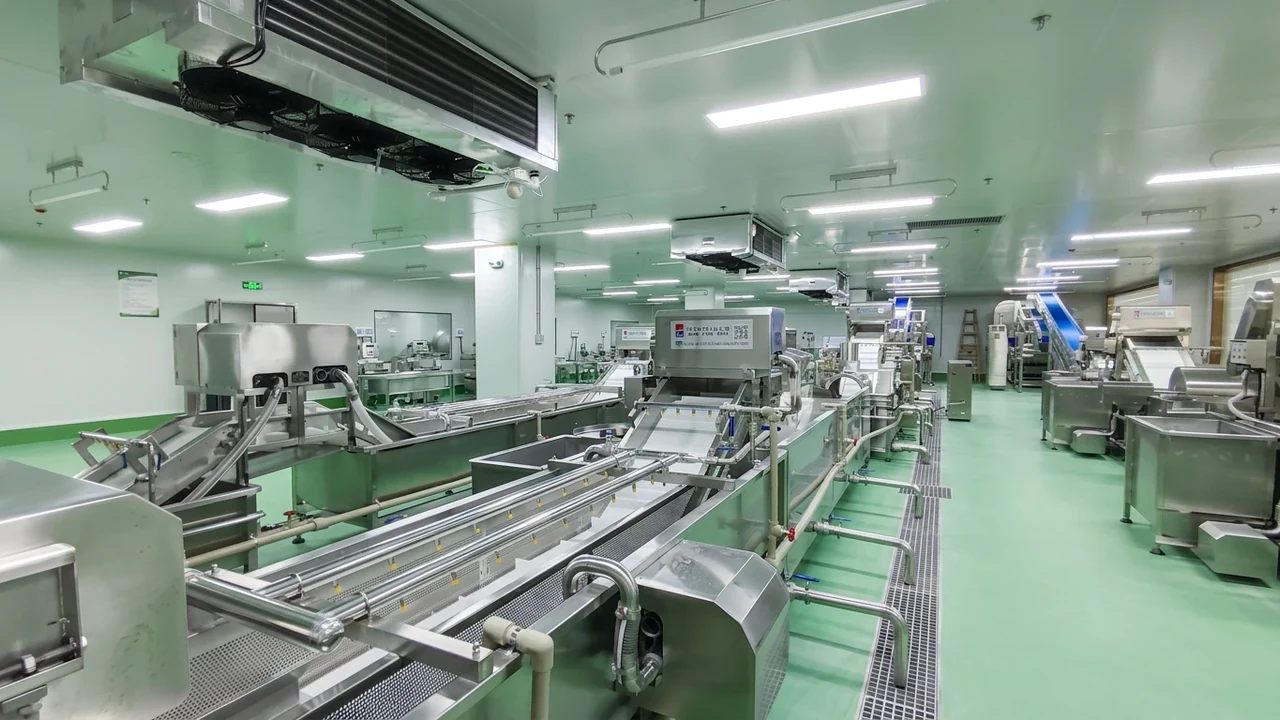
Custom Food Pre-Processing
Define a tailored combination of processing equipment, line automation and digital requirements when your production process does not fit a standard line configuration.
Review food processing methods and equipment logic to define the process before selecting the digital scope.
Food Processing Line Control & Integration FAQs
Can TEEMYEAH connect every machine on an existing processing line?
Not automatically. Existing equipment must be assessed for available control signals, communication capability, controller compatibility and the data points the customer wants to use. Retrofit or third-party equipment integration is therefore evaluated project by project.
What process parameters can be monitored?
The available parameters depend on the equipment, sensors and project configuration. TEEMYEAH can define relevant monitoring points around the processing requirement and add additional instrumentation when required by the project.
Can operating data be stored and exported?
Local data storage and visualization can be included within the digital system. Configured equipment alarms, runtime and selected production records can also be retained, and defined HMI records can be exported.
The exact record fields, retention period, sampling requirements and export format should be confirmed during project engineering.
Does the system provide batch traceability?
Equipment connectivity and process records do not automatically create batch traceability.
If batch- or lot-level linkage is required, the project must include a reliable batch identifier and the data relationships needed to connect that identifier with the relevant processing records. TEEMYEAH can evaluate and define this additional architecture according to the customer’s process and plant systems, with feasibility confirmed during engineering.
Can TEEMYEAH connect the processing line with our MES or ERP?
Yes, integration can be engineered around a defined project interface. The required data fields, system direction, data relationship, update requirements and responsibilities are confirmed with the customer’s automation or IT team.
Database-based access is available within the current digital architecture. Additional integration methods are confirmed according to the project.
Does installing the system make our plant HACCP compliant?
No. HACCP compliance depends on the customer’s complete food-safety system, including hazard analysis, process limits, monitoring procedures, corrective actions, verification and recordkeeping.
TEEMYEAH digital control can support selected monitoring and recordkeeping activities when the required process parameters and records are included in the project scope.
Can additional digital functions be customized?
Yes. Beyond the core line-control and data-recording functions, additional sensors, monitoring points, control logic, data structures, dashboards, reporting requirements and plant-system interfaces can be engineered around the needs of the processing project.
Feasibility and final scope are confirmed during engineering.
Planning an Advanced, Automated and Digitally Integrated Food Pre-Processing Line?
Whether you are planning a new processing line, expanding production or upgrading an existing facility, automation and digital control should be designed together with the physical processing process.
Tell us what raw materials you process, your target capacity, the required processing steps and the level of automation you want to achieve. TEEMYEAH can then develop the equipment configuration, line-control architecture, monitoring scope and required plant-system integration as one coordinated processing solution.
Helpful inputs include your raw materials, target capacity, required processing steps, available floor space, automation requirements and any existing MES, ERP or plant systems.