







Summary
The right lettuce washing and drying line is configured from the condition in which lettuce enters the process and the condition required at the packing machine. The procurement decision should therefore connect seven items: whole-head, detached-leaf or cut-leaf entry; the purpose of each wash stage; product load, cut size and incoming debris; water circulation and refresh; transfer into dewatering; batch or continuous product flow; and a measurable definition of pack readiness.
For an RTE lettuce project, TEEMYEAH can combine the TW-705 vegetable salad production line with an appropriate dewatering arrangement. The TW-705 supports bubble washing, vortex washing, shower or rinse washing, sand settling, vibratory filtration, automated waste collection and circulating-water filtration. An optional clean-water spray rinse can be included when the agreed process calls for it. Wash residence, water-flow intensity, water level and make-up water should be configured around the actual lettuce presentation rather than selected as isolated machine settings.
Where the required factory flow supports continuous centrifugal dewatering, the TW-980LB/LV fully automated vegetable dehydration line provides automatic feeding, buffering, selectable programs, centrifugal dewatering and automatic discharge. Confirm the final selection and lettuce output through representative product trials matching each SKU, cut specification, product load, required leaf condition, moisture target and downstream packing rhythm.
A useful supplier discussion should end with a line-specific trial plan, not a general request for “clean and dry lettuce.” TEEMYEAH’s lettuce line trial protocol provides a practical structure for recording the sample, processing sequence, moisture observations, leaf condition, debris removal and packing interface.
1. Define the Lettuce Entry Condition Before Selecting the Wash Sequence
Whole heads, detached leaves and cut leaves do not enter a washing system in the same physical condition. The differences affect loading, water contact, debris release, transfer behavior and the way damage should be inspected. A processor should therefore define the entry condition for every commercial SKU before deciding how many wash actions or what dewatering sequence the line needs.
Whole-head entry may be relevant when receiving, opening, trimming or core-removal work is included near the beginning of the project. The important procurement question is where the head becomes separated leaves or cut product. A line should not be specified as though an intact head and loose prepared leaves create the same hydraulic and mechanical load.
Detached-leaf entry gives the washing section a product that can spread through the water more readily, but leaf size, curvature, stem content and overlapping still influence circulation and transfer. The supplier needs to know whether the leaves are predominantly full-size, whether small inner leaves are included and whether damaged or discolored leaves have already been removed.
Cut-leaf entry brings cut dimensions and size distribution into the line design. Provide the normal cut-size range, including small fragments and fines, alongside the nominal specification. A trial sample should show the normal range of pieces, including small fragments and fines. These smaller pieces can behave differently on filtering conveyors, at transfer points and during centrifugal dewatering. The project should also identify whether cutting occurs immediately before washing, whether product is temporarily accumulated and how consistently it is fed.
| Entry condition | Information to provide | Configuration decision affected | Trial observation |
|---|---|---|---|
| Whole head | Head size range, trimming condition, core status and point of leaf separation | Preparation boundary, feed arrangement and location of the first effective wash action | Opening consistency, released soil and leaf condition after preparation |
| Detached leaf | Leaf size range, stem content, inner-leaf proportion and pre-sorting condition | Product loading, wash residence, circulation intensity and transfer design | Leaf separation, folding, overlapping, debris release and visible damage |
| Cut leaf | Target cut, normal size distribution, fines and time between cutting and washing | Filtering, drain-back, transfer gaps, dewatering program and pack interface | Fragment retention, cut-edge condition, surface moisture and packer feeding |
The line should also be configured for the real product load, not just the name of the lettuce. A light, evenly distributed feed behaves differently from a deep or intermittent surge. If upstream cutting releases product in batches while the washing section is intended to run steadily, a feed-control or buffering decision is required. Otherwise, the wash tank may alternately receive too little product and sudden concentrated loads.
Debris profile belongs in the same entry specification. Soil, sand, loose outer-leaf material, small cut fragments and other removable matter do not all travel through a water circuit in the same way. The processor should send photos of normal material as received and examples from more difficult seasons or suppliers. This lets the project team decide what should settle, what should be carried to a filtering conveyor and what must be collected before water returns to the working zone.
These definitions keep the lettuce-specific project focused. Broader calculations involving hourly demand, shift utilization and the balance among all machines can be handled through leafy vegetable line capacity matching. For the washing and drying configuration itself, the immediate task is to establish the form, variability and loading of the product entering each stage.
2. Assign a Clear Purpose to Every Wash Stage
A wash stage should be selected because it performs a defined task on a defined lettuce presentation. Configure each wash stage around a defined purpose, using the water volume and equipment sequence required by the actual lettuce and debris load. The buyer and supplier should agree on what each stage is expected to do, how product moves through it and what will be observed at its outlet.
The TW-705 provides several available washing actions within an integrated leafy-vegetable processing arrangement. Bubble washing and vortex washing can be configured to move and separate product in water, while shower or rinse washing provides another form of water contact. The machine also includes features for separating and managing released debris: a sand-settling zone, vibratory filtering conveyor, automated waste collection and circulating-water filter tank.
Adjustable wash residence and adjustable water-flow intensity allow settings to be developed for the actual product. This flexibility should be used through a controlled trial. Large detached leaves may require enough movement to separate overlapping surfaces without unnecessary agitation. Smaller cut pieces require attention to retention and transfer. Heavier incoming debris may change the appropriate balance among settling, filtration, waste collection and refresh.
The buyer should avoid describing the complete stage merely as “washing.” A more useful sequence might define the work as initial product separation and debris release, managed circulation with debris removal, drain-back during transfer and an optional clean-water spray rinse where the process specification requires it. The precise arrangement should be confirmed against the product and the facility’s operating plan.
| Process element | Available configuration role | Customer decision | Acceptance evidence |
|---|---|---|---|
| Bubble and vortex washing | Product movement, separation and wash contact in the main washing section | Suitable residence and water-flow intensity for each lettuce format | Product movement observations, debris condition and leaf photos |
| Sand-settling zone | Provides a defined area for settling material within the wash system | Incoming soil and sand profile to be represented during the trial | Settled material observation and downstream sample check |
| Vibratory filtering conveyor | Transfers product while filtering and allowing water drain-back | Cut-size range, fines and acceptable product retention | Product loss check, retained debris and transfer condition |
| Waste collection and filter tank | Collects removed material and filters circulating water | Cleaning frequency and access requirements for the expected debris load | Filter condition, collected waste and cleaning-access inspection |
| Optional clean-water spray rinse | Adds a separately supplied spray-rinse action when specified | Rinse purpose, water source, flow responsibility and discharge route | Operating observation and confirmation of the agreed water boundary |
If the processor is still deciding how separate washing purposes should be arranged, the detailed discussion in salad washing stages can support that decision. In the final equipment order, however, the stage descriptions should be converted into an agreed product path, water path, control scope and trial acceptance record.
3. Configure the Water Circuit as Part of the Process
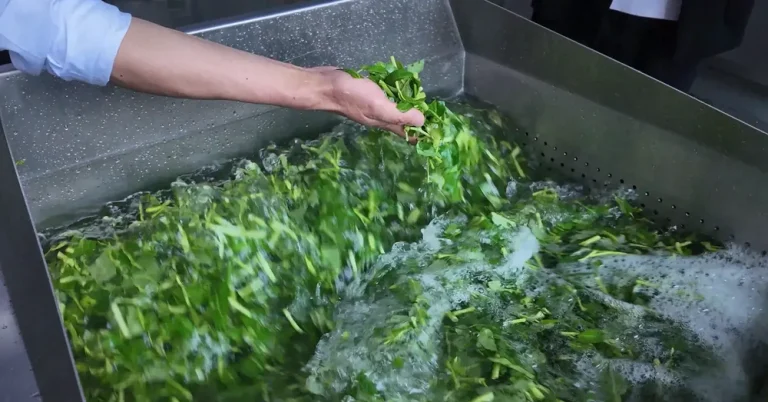
The working water circuit affects how released debris is carried, separated and prevented from simply returning to the product zone. It should be reviewed as a connected system covering the tank, settling area, filtering conveyor, waste collection, circulating-water filter tank, make-up water, refresh practice and any optional final rinse.
Settling and filtration perform different roles. Material that can settle should be given a suitable location to do so, while floating or transported debris needs an appropriate collection path. The TW-705’s sand-settling zone, vibratory filtering conveyor, automated waste collection and circulating-water filter tank give the project team several points at which debris can be separated or collected. Their operating and cleaning frequency should reflect the incoming debris profile and daily production sequence.
Make-up and refresh should be defined operationally. The TW-705 supports make-up water and pneumatic water-level control. Stable level control helps the system maintain its intended operating condition, but water-level maintenance is not the same decision as refresh management. The processor should identify its water source, available flow, production window, discharge constraints and the conditions under which water is refreshed or replaced according to its process-control program.
An optional final rinse requires an explicit boundary. If clean-water spray rinsing is included, the quotation should identify where the rinse water comes from, which utility connection is required, where the used water goes and how the spray section is cleaned. The customer should also state the purpose of the rinse within its process plan. This prevents the final rinse from being treated as an undefined add-on with no agreed supply or drainage responsibility.
FDA guidance for fresh-cut ready-to-eat produce places washing within a wider hazard-minimization and sanitary-processing program. For a purchasing team, the practical implication is that equipment configuration, cleaning procedures, facility controls and the processor’s own food-safety program must work together. Specify the wash line as controlled processing equipment integrated with the processor’s food-safety program, cleaning procedures and facility controls.
The UC Davis AIFS summary on AI-supported produce washing also highlights the value of observing changing wash conditions rather than assuming that a single static setting represents an entire run. The line specification should therefore identify what the processor will monitor, who owns those measurements and how operators respond when incoming load or water condition changes.
During the equipment review, trace both the product and water paths. Ask where heavy matter settles, where light debris is collected, how the filter is reached, how retained material is removed, where make-up water enters and which drains receive cleaning and process water. This exercise often reveals installation requirements that are easy to miss in a machine-only quotation.
4. Protect the Product During Transfer and Buffering
Lettuce condition can change between the last wash action and the dewatering equipment. Drops, narrow transfer points, uncontrolled accumulation and abrupt re-feeding can undermine a carefully selected wash setting. Transfer design should therefore be evaluated with the same product sample and cut specification used for washing and dewatering trials.
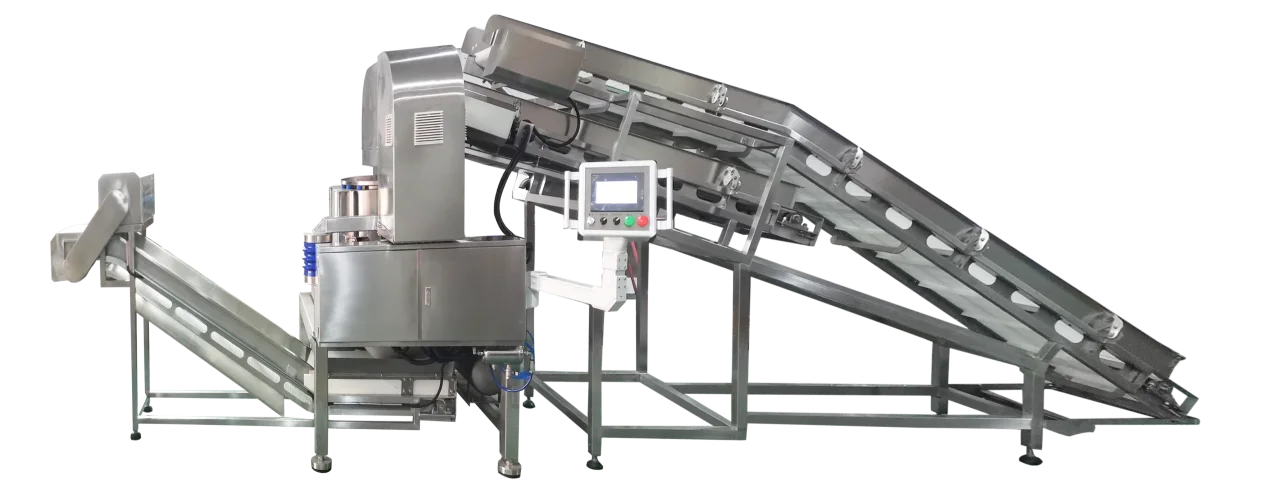
From the washing section, the vibratory filtering conveyor supports product transfer and water drain-back. The next decision is how the product reaches the dewatering inlet. The layout should limit unnecessary fall height, avoid trapping leaf pieces at gaps and provide an orderly transition into the selected dewatering method.
A buffer may be needed when the upstream washing flow and downstream centrifugal cycle do not operate in exactly the same rhythm, or when the packing system experiences brief interruptions. The buffer’s role should be written clearly. It may be intended to regulate feeding, hold a limited product quantity during a normal machine sequence or coordinate automatic discharge. It should not become an unspecified storage point where wet lettuce is allowed to accumulate without a defined residence limit.
The TW-980LB/LV documentation supports automatic feeding, buffering and discharge for continuous centrifugal dewatering. Its inner-drum and air-knife discharge arrangement moves product onward after the selected program. Removable conveyor sections support access during cleaning. These functions should be reviewed in the actual proposed layout, including access around the inlet, buffer, drum area, discharge and downstream conveyor.
Gentle handling should be evaluated with evidence, not only by watching whether leaves pass through the line. Before-and-after photographs should use representative samples, similar lighting and enough close views to show leaf edges, stems and cut surfaces. The inspection should record tears, folding, bruised-looking areas, trapped pieces and visible fragmentation. When a project needs a deeper investigation of likely damage points, the separate guide to leafy vegetable damage during processing can be used without turning the line specification into a general troubleshooting exercise.
5. Choose Batch or Continuous Dewatering Around Product Flow
The choice between batch and continuous dewatering should follow the factory’s product flow, changeover pattern and packing interface. It should not be made from a generic assumption that one method is always gentler or more productive.
A batch arrangement may suit a process in which lettuce is prepared in clearly separated lots, operators intentionally control loading and unloading, or frequent SKU changes require distinct handling. The project must account for how washed product is held while a batch is processed, how each load is kept consistent and how the dewatered product is transferred to packing. Operator actions, temporary containers and waiting time are part of the configuration, even when they fall outside the dewatering machine itself.
A continuous arrangement becomes relevant when upstream washing, dewatering and downstream packing are intended to form a coordinated product flow. The TW-980LB/LV supports continuous centrifugal dewatering with automatic feeding, buffering and discharge. It also supports selectable programs and adjustable speed and time within its documented operating context. These controls allow operating programs to be developed for different products, but the correct lettuce settings and resulting output must be established with representative trials.
Use representative lettuce trials to establish lettuce performance, keeping published output values for other product types within their documented product context. Lettuce line output is affected by the entry format, piece size, product load, program, required surface-moisture condition, acceptable leaf appearance, changeover practice and downstream acceptance rate. The commercial proposal should state how lettuce performance will be verified rather than borrowing a figure from an unrelated raw material.
The packing machine matters just as much as the dewatering inlet. A dewatering system that releases product faster than the packer can accept it will require controlled accumulation or coordinated speed management. A packer that stops periodically may send interruptions back through the line. The design discussion should cover normal operation, short stops, restart behavior, SKU changeover and the maximum product quantity permitted in the buffer.
For multi-SKU projects, the trial plan should establish whether products can share one program or require separate selectable programs. The team should begin with a small number of meaningful groups based on leaf form, cut size and moisture response, then document settings for the accepted samples. Program names, loading instructions and operator checks can be transferred into commissioning and training materials.
6. Accept Pack Readiness With a Practical Measurement Record
“Dry enough” is too subjective for equipment acceptance. Pack readiness should be defined as an observable condition at the agreed handover point between dewatering and packing. The method does not need to be complicated, but it must be repeatable and linked to the actual package or downstream machine.
The acceptance record should combine four views: surface moisture, leaf condition, remaining debris and pack-interface behavior. Assess pack readiness through the combined result: surface moisture, leaf condition, remaining debris and packing behavior. Confirm that leaves retain the agreed appearance while free water stays within the accepted pack-interface condition.
| Acceptance item | Practical method | Record to retain | Decision supported |
|---|---|---|---|
| Surface moisture | Use a consistent sample size and observation method at the dewatering discharge; where required, compare package-condition observations after a defined trial interval | Program, sample identity, observation time, photos and agreed result | Whether the dewatering program is suitable for the specified SKU and pack interface |
| Leaf condition | Photograph representative samples before washing and after dewatering using comparable views | Images of edges, stems, cut surfaces, tears and fragments | Whether handling and settings preserve the agreed commercial appearance |
| Remaining debris | Inspect a defined sample at the agreed line outlet and classify visible matter consistently | Sample details, debris observations and relevant wash/filter settings | Whether the configured wash and debris-removal sequence meets the trial agreement |
| Pack interface | Feed product into the intended packer or a representative interface and observe bridging, clumping, accumulation and stop/restart behavior | Video, packer settings, line conditions and operator observations | Whether discharge and downstream feeding operate as one coordinated system |
The surface-moisture method should be agreed before the trial. Depending on the customer’s existing quality process, it may use a standardized visual or touch assessment, a controlled absorbent-contact comparison, a repeatable mass-based method, or direct evaluation in the intended pack. Set the acceptance threshold around the customer’s product, package, holding conditions and quality plan, using a repeatable method agreed before the trial.
Before-and-after leaf photographs should be treated as part of the acceptance record, not promotional imagery. Photograph the same SKU and representative size range, include close views of cut edges and stems, and record the relevant wash and dewatering program. If two settings are compared, samples should be identified clearly so the purchasing and production teams can make the decision from matched evidence.
The pack-interface test should include normal running and at least one controlled short interruption. Observe whether product backs up at the dewatering discharge, whether it clumps or bridges at the packer feed and how the line restarts. Responsibilities must also be clear: TEEMYEAH can configure and demonstrate the supplied equipment, while the processor or packing-equipment supplier should provide the packer requirements, communication points and acceptance conditions for the interface.
7. Inspect Cleaning Access Before Freezing the Layout
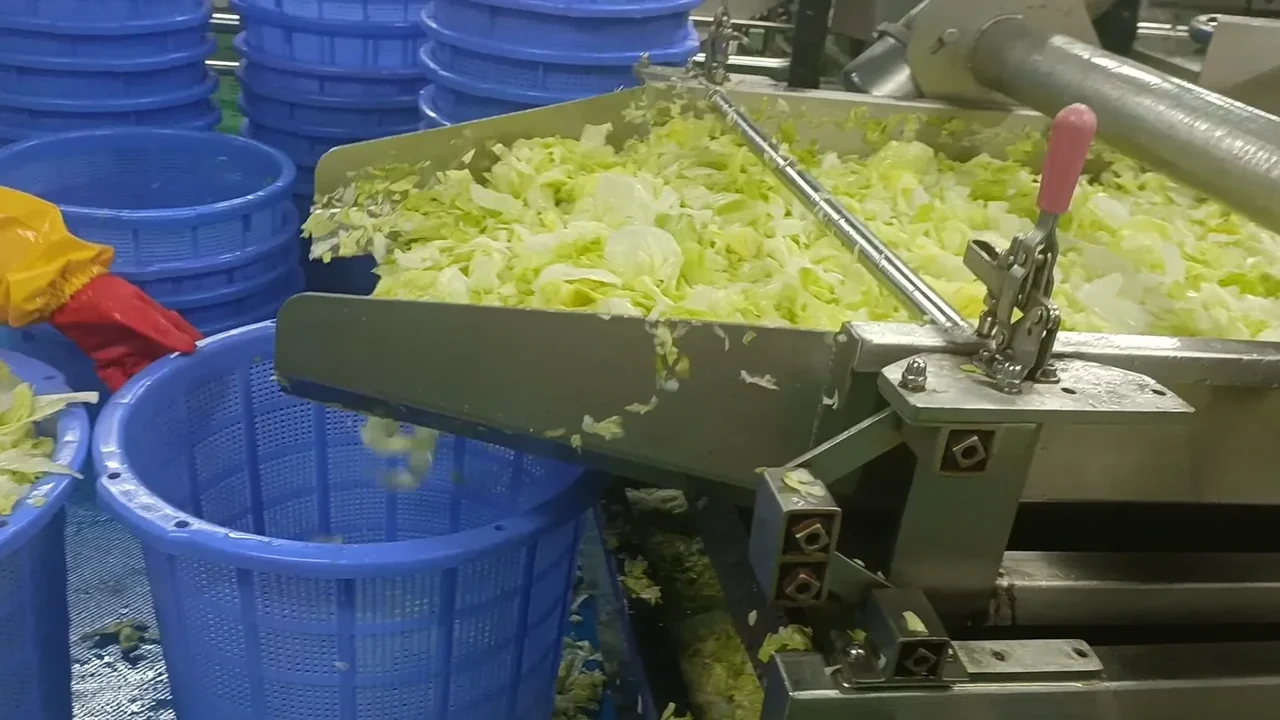
Cleaning access is easier to correct during configuration than after installation. The buyer’s review should follow the actual surfaces and components that operators must reach: belts, filtering areas, tanks, drains, sanitary piping, quick connections, filter tanks, conveyors, dewatering drum or basket area, sensors and surrounding floor access.
On the TW-705, the quick-release sanitary piping should be demonstrated as part of the cleaning-access review. The team should identify which connections are opened, where residual water drains and how components are reassembled. Tanks, the sand-settling zone, vibratory filtering conveyor, automated waste-collection area and circulating-water filter tank should all be checked from the operator’s working position.
For the dewatering section, inspect access to the centrifuge drum or basket area, product-contact conveyors, inlet buffer, discharge path and sensors. The TW-980LB/LV’s removable conveyor sections and cleaning access should be shown in the proposed configuration. The review should include the space needed to remove or reposition components safely within the room, rather than assuming that a removable part remains accessible after walls, packers and service platforms are installed.
Drains deserve a joint equipment-and-facility review. The layout should show where normal process water and cleaning water leave the equipment, how they reach the facility drainage system and whether operators can inspect the relevant areas. Utility and drain locations should be confirmed before fabrication and again before installation.
The final purchase specification should assign responsibility for water supply, drainage connection, floor preparation, electrical supply, upstream product delivery, downstream packing integration and any plant-side communication. A broader project-input checklist is available in the RTE salad processing line RFQ guide, while TEEMYEAH’s leafy vegetable processing line solution shows how the equipment roles can be integrated into a complete processing route.
Frequently Asked Questions
Should whole lettuce heads be opened before entering the main wash section?
The project should identify the exact point at which whole heads become detached or cut leaves. If opening, trimming or core removal occurs upstream, provide the resulting leaf presentation and released debris to the supplier. If part of this preparation is expected within the supplied line, include the labor method, inspection requirement and transfer boundary in the RFQ and layout.
How should several lettuce SKUs be grouped for equipment trials?
Group them by the characteristics that change washing and dewatering behavior: whole or cut presentation, leaf size, cut dimensions, stem proportion, product loading and required pack condition. Do not select only the easiest SKU. Include a normal high-volume product and representative difficult products so that program selection, changeover and cleaning requirements can be reviewed.
What should be sent when incoming debris changes by season or supplier?
Send dated photos and representative descriptions of normal and difficult incoming material, including soil, sand, outer-leaf waste and small fragments. State whether upstream sorting changes during the year. The trial and quotation can then address settling, filtering, waste collection, cleaning frequency and water refresh under more than one realistic receiving condition.
How should the optional final rinse be written into the equipment order?
State its intended process position and purpose, required water source, plant connection, expected control method, drainage destination and cleaning responsibility. The order should also identify whether TEEMYEAH supplies the spray section and controls, while the customer supplies suitable water, plant piping and drainage to the agreed connection points.
What layout information is needed for the transfer and buffer area?
Provide available length and width, floor and drain locations, usable height, nearby walls or columns, operator aisles, cleaning access and the inlet height of the packing system. Also provide the packer’s normal feed pattern and stop behavior. This allows transfer height, buffer position, removable conveyor access and restart logic to be considered together.
How can we choose batch or continuous dewatering when the packer stops intermittently?
Document the normal duration and frequency of packing interruptions, permitted product accumulation and required restart sequence. For a continuous TW-980LB/LV arrangement, coordinate feeding, buffering and discharge, and size the buffer for the agreed accumulation limit and packer stop/restart pattern. If production is intentionally organized as separate lots with frequent manual intervention, a batch workflow may be more suitable. The decision should be demonstrated with the intended flow.
How should pack readiness be recorded during factory acceptance?
Use an agreed sample identity, dewatering program, surface-moisture method, before-and-after leaf photographs, debris inspection and a representative pack-interface test. Record the upstream wash settings and product load as well. Acceptance should refer to the complete trial condition so the selected result can be reproduced during commissioning.
Which installation and cleaning responsibilities should appear in the purchase documents?
List responsibility for water quality and supply, make-up and rinse connections, electrical service, plant drainage, floor preparation, upstream and downstream equipment, packing-machine signals and operator access. The cleaning review should cover belts, tanks, filters, drains, quick connections, drum or basket access, sensors and the space required to remove accessible components.
Request an RTE Lettuce Line Trial
To configure a lettuce washing and drying line for your factory, send TEEMYEAH product photos, whole-head or leaf entry condition, cut specification, target output by SKU, daily production window, available utilities, drainage information, room layout and the required packing interface. Include photos of typical debris and identify any seasonal or supplier-related variation that should be represented.
TEEMYEAH can use these inputs to review the TW-705 washing functions, water-circuit arrangement, transfer and buffering requirements, and the suitability of TW-980LB/LV continuous centrifugal dewatering for the proposed product flow. The trial can then compare wash settings, product movement, surface moisture, leaf condition, retained debris and downstream feeding using representative lettuce.
Download the TEEMYEAH lettuce line trial protocol, complete the available product and project information, and request a live equipment demonstration. The objective is to leave the trial with a defined product path, documented operating program, practical pack-readiness method and clear installation responsibilities for the proposed RTE lettuce line.
References
- U.S. Food and Drug Administration. Guidance for Industry: Guide to Minimize Microbial Food Safety Hazards of Fresh-cut Fruits and Vegetables.
- UC Davis AI Institute for Next Generation Food Systems. Improving Food Safety with AI-Powered Produce Washing.


