







Summary
Vegetable washing and sanitizing are related operations, but they are not interchangeable controls. Washing primarily removes soil, plant debris, insects, cellular fluids and other material from vegetables through water movement, agitation and physical separation. An antimicrobial treatment used in process water has a different primary role: helping prevent microorganisms released from contaminated produce from surviving in the wash water and transferring to other product.
This distinction is especially important in fresh-cut and ready-to-eat production. FDA’s August 2026 fresh-cut produce guidance explicitly states that an antimicrobial wash-water process control is not a pathogen “kill step” comparable with cooking. Its effectiveness depends on the actual system, commodity, organic load, antimicrobial concentration and other relevant process conditions. Monitoring, verification, corrective action and records therefore matter as much as the chemical or treatment selected.
For processors evaluating vegetable washing vs sanitizing, the practical question is not “Which one do we need?” A robust process normally asks two separate questions: Is the washing stage physically removing the incoming contamination load? and Is the wash-water control remaining within validated conditions that limit microbial cross-contamination? Treating those as separate engineering and food-safety tasks makes equipment selection, line balancing and process verification much more defensible.
Why Vegetable Washing and Sanitizing Get Confused in Real Processing Plants
A production team can look at a tank of apparently clean water and assume the washing process is under control. Another facility may focus almost entirely on sanitizer concentration while large amounts of soil and damaged plant tissue continue entering the same water. Both approaches miss part of the problem.
Fresh vegetables bring variable loads into a processing facility. Lettuce harvested after dry weather may arrive relatively free of soil but contain loose leaves and insects. Root vegetables harvested from wet ground may carry substantial soil. Fresh-cut onions, cabbage or lettuce introduce another variable after cutting: damaged cells release organic material into the water. Flow rate, product-to-water ratio, cut size, residence time and the amount of product processed since the last water change can all alter conditions during a shift.
The process therefore has two interacting but distinct control objectives.
- Physical washing: remove soil, debris, loose plant material and other contaminants while protecting the product from unnecessary damage.
- Antimicrobial wash-water control: maintain process-water conditions that help prevent microorganisms released from one piece or batch of produce from being transferred through the water to other product.
This distinction is not semantic. It changes where equipment belongs, what operators measure, what alarms mean, how a deviation is handled and how a processor decides whether additional automation is justified.
It also explains why a washing machine with strong turbulence does not automatically provide adequate microbial process control, while an antimicrobial dosing system cannot compensate for an overloaded washer full of soil and plant debris. The two functions must be engineered together without pretending that one replaces the other.
Vegetable Washing vs Sanitizing: The Core Process Difference
| Decision Question | Vegetable Washing | Antimicrobial Wash-Water Control |
|---|---|---|
| Primary objective | Physically remove soil, debris, loose organic material and other contaminants from produce. | Control microorganisms in process water sufficiently to reduce the risk of wash-water-mediated cross-contamination under the validated process. |
| Main mechanism | Water flow, agitation, flotation, spraying, separation, filtration and product movement. | A lawful antimicrobial treatment or other validated water-control approach operated within defined process conditions. |
| What operators can see directly | Soil removal, floating debris, foreign material, damaged leaves, water clarity and product condition. | Usually very little by visual inspection alone; concentration or other relevant parameters require measurement. |
| Typical process variables | Water flow, residence time, agitation intensity, product loading, tank turnover, filtration and water replacement. | Antimicrobial concentration, relevant water chemistry, organic load, product loading, monitoring location, monitoring frequency and system-specific parameters. |
| Can it remove microorganisms? | Washing can reduce some surface contamination through physical removal, but results vary and washing is not sterilization. | It can control microorganisms in wash water and reduce cross-contamination when properly validated and operated, but it should not be treated as a kill step for pathogens attached to or internalized in produce. |
| Main failure mode | Insufficient soil/debris removal, excessive product damage, overloaded water, poor separation or excessive WIP. | Loss of effective antimicrobial conditions, incorrect measurement, excessive organic demand, unsuitable monitoring location or an uncontrolled deviation. |
| Typical evidence of control | Product inspection, foreign-material removal, turbidity or other water-quality indicators, water turnover, throughput records and product-damage observations. | Validated limits, actual-value monitoring records, calibration or accuracy checks, verification records, documented corrections and corrective actions. |
The strongest process designs preserve this separation even when washing and antimicrobial treatment occur in the same physical machine. A tank may perform both functions, but the functions still require different engineering questions and different evidence.
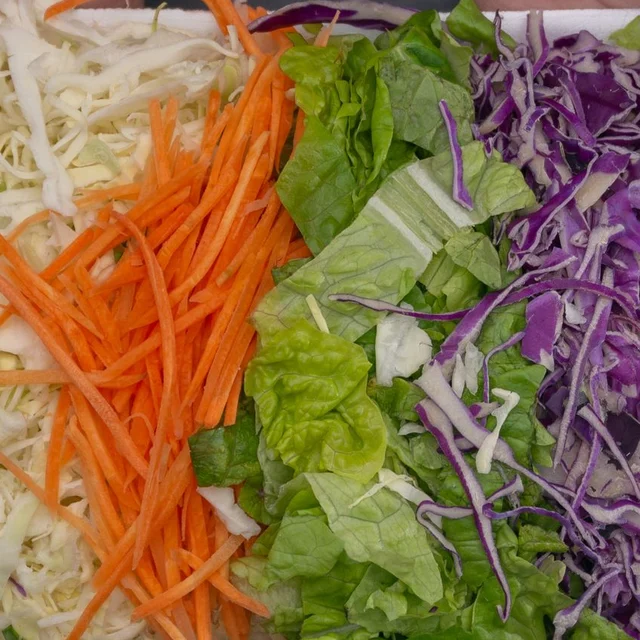
What Vegetable Washing Can Control
Removal of Soil and Field Debris
Washing is well suited to physical contamination that can be detached and carried away. Depending on the commodity, this may include soil, sand, loose leaves, plant fragments and insects. Water movement, bubble agitation, sprays, flotation and mechanical separation can all contribute, but greater force is not automatically better.
Delicate salad leaves may bruise under aggressive turbulence. Root crops may tolerate much stronger washing. Folded leaves can trap soil. Dense cut vegetables behave differently from floating leafy greens. Equipment selection therefore begins with the raw material rather than a generic target such as “stronger washing.”
Seasonality also matters. A washer configured around relatively clean summer product may perform differently when incoming soil load increases after heavy rainfall. The appropriate operating window should account for the difficult raw-material conditions a facility reasonably expects to process.
Removal of Cellular Fluids After Cutting
Cutting changes the washing problem. Codex notes that washing cut produce with potable water can remove some cellular fluids released during cutting, reducing nutrients available for microbiological growth. From a process-engineering perspective, those fluids also contribute to the organic load entering the wash system.
That means the cutter and washer cannot be sized independently. Higher cutting throughput, smaller cuts or damaged product can increase the material entering wash water. A washer that appears adequate on whole leaves may behave differently after shredding.
Product Temperature and Quality Management
Washing may also participate in temperature management and removal of field heat where the process is designed accordingly, but water temperature should not be treated as a stand-alone food-safety control. Product quality, water infiltration, microbial behavior and subsequent dewatering all have to be considered.
The more useful engineering question is: What condition should the product have when it leaves the washing stage? That specification may include visible cleanliness, temperature, product integrity, residual water and readiness for the next controlled step.
What Vegetable Washing Cannot Reliably Control
A visually clean vegetable is not necessarily microbiologically safe. This is one of the most consequential misunderstandings in fresh-cut production.
Water can detach microorganisms from produce surfaces, but those microorganisms do not simply disappear. In a shared or recirculating system, organisms released from contaminated product can enter the water and potentially contact other product. The washing stage can therefore become a cross-contamination route if water quality is not controlled.
More washing time is not a universal solution. Extended residence may increase tissue damage, increase cellular-fluid release and reduce throughput without creating a validated pathogen-reduction process. Likewise, stronger turbulence may improve soil removal while simultaneously damaging delicate leaves.
Washing also cannot substitute for supplier controls, personnel hygiene, hygienic zoning, equipment sanitation, drainage, environmental controls, temperature management or appropriate handling after washing. Fresh-cut RTE production is particularly sensitive because the finished product may be consumed without a later cooking step that would significantly reduce biological hazards.
For a broader treatment of where that RTE risk changes the plant design, see TEEMYEAH’s RTE and RTC processing separation guide. The present article addresses the narrower wash-water decision: what physical washing controls and what an antimicrobial water-control program must control separately.

What “Sanitizing” Should Mean in a Fresh-Cut Vegetable Process
The word sanitizing is used loosely in the food industry. It may refer to treatment of equipment surfaces, environmental sanitation, treatment of process water or attempts to reduce microorganisms on food. Those applications are not automatically governed by the same product authorization, concentration or operating instructions.
For fresh-cut vegetable wash systems, a more precise engineering term is often antimicrobial wash-water process control. It keeps attention on the actual objective: preventing the wash water from becoming a vehicle that spreads contamination between products.
FDA’s August 2026 guidance makes this boundary particularly clear. It explains that water containing an antimicrobial substance may remove some pathogens from produce surfaces, but the antimicrobial does not significantly minimize pathogens that have attached to produce or become internalized in tissue. FDA therefore does not characterize this wash-water control as a kill step comparable with cooking, boiling or roasting.
This distinction has direct consequences for supplier evaluation. A chemical, ozone system, dosing skid, sensor or washing line should not be assessed by asking only, “How strong is the sterilization effect?” The processor needs to determine what hazard the control addresses, where it is applied, what process parameters matter, how those parameters are validated and what happens when the process moves outside its accepted conditions.
The Central Food-Safety Problem: Wash Water Can Transfer Contamination
Imagine a continuous leafy vegetable line. Most incoming leaves are uncontaminated, but a small amount of product carries a pathogen. Washing can dislodge organisms from that material. If the process water allows those organisms to survive and circulate, previously uncontaminated leaves may be exposed as they pass through the same system.
This is why the relevant objective is not simply reducing the microbial count of the first contaminated leaf. FDA describes antimicrobial substances in wash water as being particularly useful for minimizing pathogens that have been washed off produce and are circulating in the water, thereby helping prevent their transfer to other produce.
Codex takes a compatible process view. Its guidance for RTE fresh pre-cut fruits and vegetables recommends water replacement at a sufficient frequency to prevent excessive organic-material accumulation and minimize cross-contamination, while also describing the use of biocides where appropriate to minimize cross-contamination during washing.
For a processing manager, this reframes the question from:
“Does our sanitizer disinfect the lettuce?”
to:
“Can our wash-water system remain under control throughout the real production run, including the highest product load and the most demanding raw material?”
That second question can be measured, validated and managed.
Organic Load Connects Washing Performance to Antimicrobial Performance
Physical washing and antimicrobial control intersect most clearly through organic load.
Soil, plant fragments and cellular fluids enter process water continuously. The amount depends on commodity, preprocessing, cut size, incoming condition, product feed rate and how long the water has been in use. Some antimicrobial systems can lose effective concentration as they interact with this material, and the relationship differs by treatment chemistry and commodity.
The FDA’s 2026 guidance specifically discusses product type and cut size as factors that can affect organic load and, consequently, antimicrobial concentration and effectiveness. Its validation examples deliberately examine demanding operating conditions rather than assuming that a startup measurement represents the entire production shift.
This is why an antimicrobial reading taken in clean water before production begins is weak evidence by itself. The difficult condition normally occurs after product has been entering the system for some time.
Variables Worth Trending Together
- Finished kilograms processed per hour.
- Raw kilograms entering the washing stage.
- Product-to-water loading.
- Cut size or SKU.
- Time since water replacement.
- Relevant organic-load indicator selected by the facility.
- Antimicrobial concentration or treatment parameter.
- Relevant water chemistry, where applicable.
- Product condition and visible soil load.
- Frequency of automatic or manual corrections.
A trend is more informative than a single reading. If antimicrobial demand repeatedly increases after a particular production duration or when one SKU is processed, that pattern can influence scheduling, water replacement, filtration strategy, dosing capacity and monitoring frequency.
Concentration Alone Is Not a Complete Control Plan
Many operating discussions start and end with a ppm number. That is risky.
A concentration value only becomes meaningful within the process for which it is authorized and validated. The antimicrobial chemistry, commodity, organic load, water characteristics, monitoring method and regulatory conditions can all influence how that value should be interpreted.
For example, FDA discusses pH as an important factor affecting the active form of chlorine in sodium-hypochlorite wash systems. The same free-chlorine concentration can therefore represent different antimicrobial conditions at different pH values. The guidance’s PAA example, meanwhile, considers concentration together with commodity-specific organic load and operating conditions.
Processors should therefore resist copying another facility’s concentration target from an audit form, chemical supplier sheet or online article. Even the numerical examples contained in regulatory guidance are examples created for defined process scenarios, not universal recipes for every vegetable processing line.
U.S. facilities must also consider the lawful conditions of use for substances contacting food. The eCFR provision at 21 CFR 173.315 identifies substances and conditions applicable to chemicals used in washing or assisting the peeling of fruits and vegetables. Authorization to use a substance does not remove the processor’s responsibility to follow the applicable conditions and establish an effective process for the actual application.
Monitoring: Measure the Process Where Failure Is Most Likely to Be Detected
A monitoring system should answer a practical question: How will the operator know, during production rather than after it, that the wash-water control is still operating within the required conditions?
FDA describes both continuous measurement with sensors and manual sampling as possible approaches. Where manual monitoring is used, the validation work should inform how frequently measurements need to be taken. The guidance also recommends considering a monitoring point where antimicrobial concentration is likely to be lowest, rather than selecting a location merely because it is convenient to access.
That principle has significant implications for equipment layout. A dosing point beside a recirculation tank does not automatically make the same location appropriate for verification. The system may need sampling access farther through the water circuit, after the antimicrobial has encountered product and organic material.
Manual Monitoring Can Be Reasonable When
- Production runs are relatively short.
- Product loading is stable and well understood.
- The validated monitoring interval can be reliably staffed.
- Operators have a robust test method and training.
- Record review and corrective-action discipline are strong.
Continuous or Automated Monitoring Becomes More Valuable When
- Production runs are long.
- Throughput is high or variable.
- Antimicrobial demand can change quickly.
- Multiple SKUs produce different water conditions.
- Manual sampling intervals leave too much uncertainty.
- The process requires frequent dosing corrections.
- Production teams need traceable time-series data.
Automation reduces some dependence on repeated manual action, but it introduces different requirements: sensor accuracy, calibration, maintenance, dosing-pump reliability, alarms, data integrity and operator response. An automated number on a screen is not verification by itself.
Processors evaluating this approach can review a PAA dosing and online concentration-control configuration as one example of how dosing and measurement can be incorporated into a processing system. Suitability still depends on the product, validation basis and facility food-safety plan.
Operating Limits, Critical Limits and Corrections Should Not Be Treated as the Same Thing
A useful control plan creates margin before failure.
FDA’s fresh-cut guidance distinguishes the critical limit needed for a process preventive control from operating limits that can trigger a correction before the critical limit is exceeded. That distinction turns monitoring into an active control mechanism rather than a historical record of failure.
Consider a plant-specific antimicrobial minimum established through appropriate validation. Management may choose an operating target above that minimum. If concentration falls below the operating target but remains within the validated safe operating window, the process can call for an immediate correction, such as adjusting dosing. If the critical limit is breached, the response becomes more serious and may include stopping the line, identifying affected product and following the facility’s corrective-action procedure.
The numerical values must come from the facility’s lawful, validated process. They should not be generated by the equipment supplier as arbitrary defaults.
Washing and Sanitizing Control-Limit Table
Important: The table below is a process-design template, not a set of universal sanitizer limits. Each facility must establish applicable parameters and limits using its hazard analysis, regulatory requirements, product conditions, chemical or treatment instructions and appropriate validation.
| Control Element | Purpose | What to Measure | Operating Boundary | Critical / Action Boundary | Correction or Corrective Action | Verification Evidence |
|---|---|---|---|---|---|---|
| Incoming physical contamination | Prevent excessive soil and debris from overwhelming downstream washing. | Incoming condition, reject rate, visible soil/debris or facility-selected inspection measure. | Normal accepted raw-material range. | Facility-defined receiving rejection or special-treatment criterion. | Segregate, pre-clean, change process conditions or reject according to receiving procedure. | Receiving records and supplier trend review. |
| Washer product loading | Maintain effective movement and avoid overloading. | kg/h, belt rate, batch loading or product-to-water ratio. | Validated or tested normal production range. | Maximum process condition beyond which washing performance is not supported. | Reduce feed rate or stop loading until control is restored. | Production records and periodic line-capacity review. |
| Physical washing performance | Remove soil, debris and loose organic material without excessive damage. | Product cleanliness, foreign material, product damage, water condition. | Product-specific quality specification. | Facility-defined unacceptable product or water condition. | Adjust flow/agitation, refresh water, inspect upstream preparation or reduce loading. | QA inspection, trend records and product testing where appropriate. |
| Organic load / water condition | Identify deterioration in process-water conditions that can affect antimicrobial performance. | Facility-selected indicator such as COD, turbidity or another validated/verified measure where appropriate. | Expected range under normal production. | Maximum condition supported by the validated water-control process. | Refresh or replace water, improve filtration, reduce throughput or follow plant procedure. | Trend review against SKU, feed rate and production duration. |
| Antimicrobial concentration | Maintain the antimicrobial condition established for wash-water cross-contamination control. | Actual measured concentration using the specified method. | Plant-specific operating target or range above/between critical boundaries. | Validated plant-specific critical limit. | Correction before breach; if critical limit is exceeded, follow written corrective-action procedure and assess affected product. | Independent checks, calibration/accuracy records and record review. |
| Supporting water chemistry | Maintain conditions required for the selected antimicrobial system. | Applicable parameters such as pH, temperature or other treatment-specific variables. | Validated operating range. | Applicable validated critical or action boundary. | Adjust process conditions or stop according to the control plan. | Instrument checks and periodic verification against reference methods. |
| Monitoring location | Detect the condition where control is most vulnerable. | Sampling or sensor location. | Location established from system evaluation or validation. | Not applicable as a concentration limit; location is part of the monitoring procedure. | Relocate or redesign monitoring if verification shows the selected point is not representative. | Validation documentation and periodic process review. |
| Monitoring frequency | Detect deterioration before an unacceptable exposure period occurs. | Continuous data interval or manual sampling interval. | Frequency supported by process validation and risk assessment. | Failure to monitor as required is itself a process-control issue. | Follow procedure for missing data; assess the product and process interval affected. | Timestamped records and supervisory review. |
| Final rinse, drainage or dewatering | Meet process requirements after washing without creating uncontrolled moisture or recontamination. | Residual water, product condition, applicable rinse parameters and downstream hygiene. | Product-specific operating specification. | Facility-defined deviation criterion. | Adjust dewatering/rinse conditions and protect post-wash product from recontamination. | Product checks and sanitation verification. |
Corrective Action Is More Than Adding More Chemical
One of the most operationally important points in the 2026 FDA guidance concerns what happens after a wash-water process control moves outside a critical limit.
The guidance gives examples of responses that can include emptying the processing line, cleaning and sanitizing affected food-contact surfaces, identifying the cause, preventing recurrence and identifying product produced since the last confirmed in-control condition. It specifically cautions that simply rewashing product exposed to wash water that was outside the critical limits is not an appropriate corrective action in the example framework because cross-contamination may already have occurred.
This changes the economic value of early detection. A plant that notices a developing problem at an operating limit may be able to correct the process before a critical deviation. A facility that samples infrequently may discover the same problem later, leaving a much larger quantity of product whose status must be assessed.
Monitoring frequency therefore has a commercial dimension as well as a food-safety dimension. More data can narrow the uncertainty window around a deviation, although the cost and complexity of generating reliable data must also be considered.
A Corrective-Action Procedure Should Define at Least
- Who has authority to stop production.
- How the affected time or product interval is identified.
- How affected product is segregated.
- What equipment or food-contact surfaces require cleaning and sanitation.
- How the cause is investigated.
- What must be corrected before restart.
- What verification is required.
- Who reviews and closes the record.
The equipment interface matters here. Operators should be able to identify alarms, access relevant records, stop feed safely and restore the process without improvising under pressure.
Monitoring, Verification and Validation Are Different Activities
These terms are frequently blended together, yet they answer different questions.
| Activity | Question It Answers | Typical Example |
|---|---|---|
| Validation | Can this control, under defined conditions, achieve its intended food-safety objective? | Establishing through appropriate scientific or technical evidence that the wash-water process can control the identified hazard under the relevant product and operating conditions. |
| Monitoring | Is the process operating within its required conditions right now? | Continuous sensor readings or periodic manual measurement of antimicrobial concentration. |
| Verification | Is the control plan being implemented correctly and is the monitoring system trustworthy? | Accuracy checks, calibration, comparison with a reference test method and review of monitoring/corrective-action records. |
An operator measuring PAA every 30 minutes is monitoring. A supervisor reviewing those records is performing one form of verification. A study or scientifically supported evaluation establishing that the selected process conditions control wash-water cross-contamination is validation.
One activity cannot simply substitute for the other two.
Why RTE and RTC Vegetable Lines Need Different Risk Decisions
The same washer may be mechanically capable of handling an RTC vegetable and an RTE salad ingredient, but mechanical capability does not determine whether the two products should share the same process.
RTC products are intended to undergo a later cooking step, although good manufacturing practices and appropriate hazard control still apply. RTE fresh-cut products may be consumed without further processing that significantly minimizes biological hazards. This makes contamination prevention through raw-material control, plant hygiene, process water management, environmental sanitation and post-wash handling particularly important.
Facilities considering shared equipment should therefore evaluate the complete hazard and product-flow context rather than assuming that a sanitizer concentration can make an RTC/RTE crossover acceptable.
TEEMYEAH’s RTE salad processing line framework illustrates how washing, controlled treatment, dewatering and downstream handling can be considered as an integrated process rather than as isolated machines. For broader process planning across fresh-cut products, the fresh-cut vegetable processing guide provides the cluster-level framework.
How Throughput and Line Balance Affect Wash-Water Control
Nominal machine capacity is not enough for wash-process design. A line rated to move a certain number of kilograms per hour may encounter very different water conditions depending on whether the product is whole, shredded, muddy, freshly cut or already prewashed.
Actual throughput should be measured as finished acceptable output over real production time, including interruptions, water changes, cleaning, product changeovers, process checks and normal stoppages.
A simple plant metric is:
Actual throughput (kg/h) = Acceptable finished kilograms ÷ Actual operating hours
For the washing stage, another useful measure is:
Wash-stage loading intensity = Raw kilograms entering wash system ÷ Wash operating hour
Neither metric proves food-safety control, but trending them against water condition and antimicrobial demand can reveal when the line is being operated differently from the conditions used during process development or validation.
Illustrative Calculation — Not an Industry Benchmark
Assume a fresh-cut processor schedules a washing line for 1,500 kg/h but normally achieves 1,050 kg/h of acceptable finished output after accounting for water changes, inspections, dewatering delays and SKU changeovers.
Capacity utilization = 1,050 ÷ 1,500 × 100 = 70%
If management simply increases the cutter feed rate to pursue the 1,500 kg/h headline capacity, the result may be more WIP and higher organic loading rather than more packaged product. The relevant constraint may actually be washing control, dewatering or packaging.
This is why food preparation automation should address line balance rather than maximize each machine independently.
SKU Mix Can Be More Important Than Average Daily Volume
A central kitchen processing 3,000 kg per day in ten short product runs faces a different control problem from a fresh-cut factory processing the same volume as one continuous lettuce SKU.
Frequent SKU changes create cleaning, draining, refilling, parameter adjustment and verification work. Different vegetables can produce different amounts and types of organic material. Cut dimensions can change product behavior and sanitizer demand. A control plan based on a shift average can therefore hide the most challenging individual SKU.
During equipment selection, project teams should provide more than total daily capacity. A useful process brief includes:
- Raw material and varieties.
- Whole versus cut condition entering the washer.
- Cut dimensions.
- Typical and maximum kg/h.
- Production hours per shift.
- Batch size and SKU sequence.
- Incoming soil condition.
- RTE or RTC finished-product classification.
- Required washing and antimicrobial process.
- Available water supply and drainage.
- Existing food-safety monitoring method.
- Available production-room footprint.
Those inputs allow a process engineer to discuss water volume, staged washing, filtration, dosing, sampling access, dewatering and line balance as one system.
Where Multi-Stage Washing Can Help
When one tank is expected to remove heavy debris, maintain antimicrobial conditions, protect delicate product and deliver final cleanliness simultaneously, the operating window can become unnecessarily narrow.
A multi-stage design can separate functions. An upstream stage may take more of the physical soil and debris load. A subsequent stage can operate with cleaner water and a more controlled antimicrobial environment. A later rinse or finishing stage may be added where required by the product, chemical conditions or process design.
The advantage is not simply “more washing.” The engineering value lies in assigning different control objectives to different stages.
A multi-stage vegetable washing configuration, for example, can be evaluated in terms of how separate washing zones fit the required process flow. The number of tanks alone does not establish food-safety performance; loading, water management, treatment control, sanitary design and downstream handling still need to be defined.
When Automated Antimicrobial Dosing Is Not Necessary
Automation should not be assumed to be superior in every vegetable processing operation.
A small central kitchen running short batches may be able to maintain a properly designed manual program with trained operators, documented measurements and manageable sampling intervals. Capital-intensive dosing and sensing equipment can add complexity without resolving a meaningful bottleneck if throughput is low and process conditions are stable.
Manual control may remain commercially reasonable when:
- Production runs are short and infrequent.
- Process-water conditions change slowly.
- The validated monitoring frequency is easy to maintain.
- Production personnel are consistently available and trained.
- The number of SKUs is limited or batches are separated clearly.
- Maintenance resources for automated instruments would be disproportionately burdensome.
Semi-automation may be preferable when the process benefits from controlled dosing but still relies on manual verification, or when monitoring automation is justified before broader production-line integration.
An integrated approach becomes more attractive as throughput, run length, staffing pressure and data requirements rise. Yet the business case should include calibration, consumables, maintenance, cleaning and operator training—not only reduced manual dosing labor.
When Automation Creates New Risks
An automatic dosing pump can fail. A sensor can drift. A sample point can foul. A control loop can produce an apparently stable reading from an unrepresentative location. Operators can become overconfident because the HMI shows a green status.
Those are automation risks rather than reasons to avoid automation.
A robust design considers:
- Sensor calibration and accuracy checks.
- Independent verification methods.
- Low-level and out-of-range alarms.
- Dosing-pump failure detection.
- Chemical storage and operator safety.
- Accessible sample points.
- Data retention and traceability.
- Response to power or communication failure.
- Cleaning access around sensors and injection points.
- Defined manual procedures if automatic control is unavailable.
The correct comparison is therefore not “manual versus automatic.” It is which control architecture can be reliably operated, verified and maintained by this facility?
Equipment Cannot Replace Hygienic Design and Sanitation
Produce wash-water control is only one part of a larger sanitation system. Product that leaves a controlled washer can still be recontaminated by inadequately cleaned conveyors, cutting equipment, dewatering systems, bins, employee contact or the production environment.
Codex emphasizes equipment that can be effectively cleaned and disinfected, appropriate separation between incoming soiled material and processing areas, drainage management and hygienic control of processing water. FDA’s preventive-controls framework similarly places process controls within a broader food-safety plan rather than treating one machine as a complete solution.
When evaluating hygienic design, processors should examine:
- Accessibility of food-contact surfaces.
- Ease of disassembly where required.
- Drainability and standing-water risks.
- Residue traps and dead spaces.
- Accessibility of piping, tanks and filters.
- Separation between raw and post-wash operations.
- Personnel and waste flow.
- Cleaning time and verification access.
Cleaning time also affects production capacity. A nominally fast vegetable processing line can deliver poor daily throughput if difficult sanitation extends changeovers or shortens available production time.
How Labor, Training and Absence Affect the Control Plan
Wash-water management is sometimes treated as a chemical issue, but it is also a labor-management issue.
Manual systems depend on somebody taking the correct sample, at the correct location, at the required time, using a suitable method, recording the actual result and responding appropriately. Staff turnover, temporary labor, absenteeism and insufficient training can weaken the control even when the written SOP is technically sound.
Automated monitoring can reduce repetitive measurement work, but qualified personnel are still needed to interpret deviations, perform verification, maintain instruments and decide whether affected product can proceed.
A useful labor metric is:
Control labor hours per 1,000 kg = Labor hours devoted to wash-water preparation, monitoring, corrections and records ÷ (Finished kg ÷ 1,000)
The purpose of this calculation is not to eliminate those labor hours. It helps determine whether repeated manual control is becoming a scale constraint and whether a semi-automatic or automatic system might improve process repeatability.
How to Evaluate ROI Without Reducing the Decision to Labor Savings
The business case for a washing and sanitizing upgrade can include labor, but labor alone is an incomplete model.
Potential cost categories include:
- Monitoring labor.
- Water consumption and water-change frequency.
- Antimicrobial consumption.
- Production interruptions.
- Product held following deviations.
- Cleaning and sanitation labor.
- Yield loss caused by aggressive washing.
- Maintenance and calibration.
- Consumable test materials.
- Operator training.
- Additional filtration or water-treatment requirements.
A simple illustrative investment model is:
Simple payback period = Initial investment ÷ Estimated annual net operating benefit
The annual benefit should use measured plant data rather than generic vendor percentages. If the project is expected to reduce manual dosing time, the existing labor hours can be measured. If reduced downtime is part of the case, current downtime should be documented. If water savings are expected, baseline water consumption needs to be known.
Food-safety improvements should not be converted into invented financial savings merely to force a short payback calculation. Some controls are implemented because the hazard analysis, customer requirement or regulatory framework requires them, not because every benefit can be represented accurately as a labor-cost reduction.
A Practical Decision Framework for Washing and Sanitizing System Design
1. Define the Finished Product
Confirm whether the vegetable is whole, fresh-cut RTC or fresh-cut RTE, how it will be packaged and whether a later process will significantly minimize biological hazards. This determines the food-safety context before equipment is discussed.
2. Characterize the Raw Material
Document vegetable varieties, harvest conditions, soil load, incoming temperature, seasonal variation, cut dimensions and reject conditions. Design around realistic difficult conditions, not only clean trial material.
3. Separate the Washing Objective from the Water-Control Objective
State explicitly what the washer must physically remove and what the antimicrobial or water-treatment control is intended to accomplish. Do not write a single vague specification such as “wash and sterilize vegetables.”
4. Map Organic Load Through the Process
Determine where soil, damaged tissue and cellular fluids enter the water. Evaluate how cutting, feed rate and time affect water conditions.
5. Define the Relevant Process Parameters
Identify the measurements required by the selected control. These may include antimicrobial concentration, pH or other treatment-specific parameters, as well as production variables linked to the validated process.
6. Establish Monitoring Location and Frequency
Choose locations and intervals based on the process, not operator convenience. A continuous sensor can reduce time gaps, while manual measurement may remain adequate in stable, short-run operations.
7. Create Operating Limits and Corrective-Action Logic
Define what triggers a routine correction, what constitutes a critical deviation, who stops the line and how affected product is identified.
8. Design Verification Into the Equipment and SOP
Provide access for independent testing, sensor checks, calibration, record review and inspection. A control that cannot be verified becomes difficult to defend.
9. Balance the Entire Line
Match cutting, washing, antimicrobial control, dewatering, inspection and packaging capacity. Increasing upstream feed beyond the validated or practical washing condition is not useful line optimization.
10. Reassess When the Process Changes
A new vegetable, different cut size, increased throughput, altered water system, new chemical program or modified equipment may change the basis on which the original control was established. Change management belongs in the process plan.
What This Means for Equipment Selection
A processor comparing vegetable washing equipment should look beyond tank length, pump power and headline kg/h. The more useful supplier discussion covers the material and control flow around the machine.
Questions worth asking include:
- What raw-material condition was used to establish practical throughput?
- How is soil and floating debris removed from the system?
- Can water be refreshed, filtered or staged as required?
- Where can treatment chemicals or other water controls be introduced?
- Where can representative samples be collected?
- Can sensors be installed and serviced without creating hygiene problems?
- How is product loading controlled?
- What happens during a dosing or sensor fault?
- How quickly can tanks, piping and food-contact areas be cleaned?
- How will the washer connect to upstream cutting and downstream dewatering?
TEEMYEAH groups relevant technologies within its food-safety and process-water system category, but selecting a treatment technology should follow process definition rather than precede it. PAA, ozone-based approaches and other systems have different operating considerations; none should be treated as a universal substitute for validated process control.
For readers specifically evaluating ozone, the existing TEEMYEAH article on water-based ozone sanitation examines that technology in more depth. This article intentionally stops one level earlier: establishing what the water-control system must accomplish before selecting the technology used to accomplish it.
The Practical Answer to Vegetable Washing vs Sanitizing
Vegetable washing removes material. Antimicrobial wash-water control manages a microbial transfer pathway.
Those objectives overlap inside the same water system, but they should not be confused.
A strong washing stage physically removes soil, debris and cellular material while preserving yield and product quality. A strong antimicrobial control maintains validated process-water conditions, measures them at appropriate locations and frequencies, creates margin through operating limits, triggers corrections before critical failure where possible, and defines corrective action when control is lost.
Neither function replaces supplier controls, personnel hygiene, sanitary equipment design, environmental sanitation, RTE/RTC separation, temperature control or employee training. Nor does buying more automation automatically make the process safer. Poorly selected equipment can increase organic loading, damage product, create difficult-to-clean areas or produce data that operators do not know how to verify.
The engineering objective is therefore not to purchase a “washing and sterilizing machine.” It is to build a controlled process in which physical cleaning, wash-water microbial risk management, production capacity, hygienic design and verification work together.
Build a Washing and Sanitizing Control Plan
If you are planning a new fresh-cut vegetable line or upgrading an existing central kitchen, TEEMYEAH can review the process from the raw material forward rather than starting with a predetermined machine.
Share the vegetables you process, whether the finished product is RTC or RTE, cut dimensions, typical and peak throughput, production hours, current washing method, preferred antimicrobial approach, available water conditions and production-room layout. These inputs can be used to discuss a preliminary process flow, washing stages, capacity matching, monitoring approach, dosing or water-treatment configuration, dewatering and equipment layout.
For projects involving RTE production, combine the wash-water review with the RTE/RTC separation framework so that process-water control is evaluated within the correct hygiene zone and product-risk context.
FAQ
1. What is the difference in vegetable washing vs sanitizing?
Vegetable washing primarily uses water movement and physical separation to remove soil, debris, plant material and some surface contamination. Sanitizing, when referring to an antimicrobial fresh-cut wash-water process, has a different objective: maintaining water conditions that reduce the likelihood that microorganisms released from contaminated produce will circulate through the wash system and transfer to other product. The antimicrobial treatment should not automatically be considered a pathogen kill step on the vegetable itself. A commercial fresh-cut process may therefore need both effective physical washing and a separately defined wash-water microbial control program.
2. Does sanitizer kill all bacteria on fresh-cut vegetables?
No. FDA’s August 2026 fresh-cut produce guidance states that an antimicrobial wash-water process control is not equivalent to a kill step such as cooking. Antimicrobial water can help control microorganisms released into the wash water and may remove some microorganisms from produce surfaces, but it should not be assumed to significantly eliminate pathogens that are firmly attached to the produce or internalized in plant tissue. Raw-material controls, hygienic handling, sanitation, temperature management and prevention of recontamination remain necessary even when antimicrobial wash water is used.
3. Is clean-looking wash water proof that the process is microbiologically controlled?
No. Visual clarity can provide useful information about soil and suspended debris, but microorganisms and antimicrobial concentration cannot be assessed reliably by appearance. A wash-water control plan should identify measurable parameters relevant to the selected process, such as antimicrobial concentration and applicable supporting water chemistry. Organic loading also changes during production, so a startup observation is not enough to demonstrate control throughout a run. Monitoring should be conducted at a suitable location and frequency, with verification of the measurement method or instrument.
4. Why does organic load matter when sanitizing vegetable wash water?
Organic material enters wash water from soil, plant fragments and cellular fluids released from cut vegetables. Depending on the antimicrobial and commodity, that material can alter antimicrobial demand and reduce the effective concentration available in the water. Organic load is also influenced by throughput, product type, cut size and production duration. This is why process validation and monitoring should represent demanding operating conditions rather than clean startup water alone. A processor may need to manage organic load through upstream soil removal, filtration, water replacement, staged washing, controlled throughput or other process-specific measures.
5. Should a vegetable processor simply maintain a fixed PAA or chlorine ppm?
Not without a process-specific basis. A concentration number has meaning only within the regulatory conditions of use and the process in which it has been validated or otherwise appropriately established. FDA’s guidance provides numerical examples for particular fresh-cut processing scenarios, but those examples are not universal operating instructions for every vegetable, washing line or jurisdiction. Supporting parameters can matter as well; chlorine effectiveness, for example, is influenced by pH. Processors should establish appropriate limits using applicable regulations, product instructions, hazard analysis and suitable validation rather than copying another facility’s ppm target.
6. Is continuous sanitizer monitoring always better than manual testing?
Not necessarily. Continuous monitoring can be valuable on long production runs, high-throughput lines or processes in which antimicrobial demand changes quickly because it reduces the interval between observations. Manual testing may still be appropriate for shorter, stable production runs when the required frequency can be reliably maintained. Automated systems also require sensor checks, calibration, maintenance and independent verification. The better choice is the monitoring method that can detect relevant process changes in time and can be consistently operated, verified and maintained by the facility.
7. Where should sanitizer concentration be measured in a recirculating wash system?
The most convenient point is not necessarily the most informative point. FDA’s fresh-cut guidance recommends considering monitoring where antimicrobial concentration is expected to be lowest, which can occur after the water has had greater contact with product and organic material. The appropriate location should be established from the actual wash-system design and process evaluation. Some lines may therefore dose antimicrobial near a recirculation tank but monitor farther downstream. Sampling access and sensor locations should be included in the equipment and piping layout rather than added as an afterthought.
8. What should happen if sanitizer concentration falls below a critical limit?
The facility should follow its written corrective-action procedure. Depending on the validated process and regulatory framework, actions may include stopping production, restoring the process, determining why the deviation occurred, identifying and segregating potentially affected product, and cleaning and sanitizing relevant food-contact surfaces before restart. FDA’s 2026 fresh-cut guidance cautions that simply rewashing product exposed during an out-of-control wash-water condition is not an appropriate corrective action in its example framework. The exact response must be defined by the facility’s food-safety plan rather than improvised after a deviation.
9. Does an RTE vegetable line need different washing controls from an RTC line?
The required controls should follow the hazard analysis and finished-product use. RTE fresh-cut vegetables may be consumed without a subsequent cooking step that significantly minimizes biological hazards, so preventing contamination and cross-contamination during processing carries particular importance. RTC products are expected to receive further preparation, but that does not eliminate the need for appropriate manufacturing hygiene and process control. When a facility produces both categories, equipment sharing, scheduling, hygienic zoning, sanitation procedures and wash-water management should be evaluated together rather than assuming one washing recipe is suitable for both.
10. Can one washing tank remove soil and provide antimicrobial control at the same time?
It can perform both physical and antimicrobial functions, but the functions still need separate control criteria. Heavy soil and plant debris can change water conditions and may make antimicrobial control harder to maintain. For some products, a staged system is therefore useful: an upstream wash removes a substantial physical contamination load while a later stage operates under more controlled water conditions. Whether multiple stages are justified depends on incoming product condition, throughput, available water, product sensitivity, required treatment and facility layout. More tanks are not automatically safer; each stage must have a defined purpose.
11. When does automated dosing make commercial sense?
Automated dosing becomes more attractive when production runs are long, antimicrobial demand changes during processing, manual monitoring requires substantial labor, product throughput is high or the processor needs more continuous process records. A small facility with short batches may achieve reliable control with trained operators and a well-designed manual system. The investment decision should consider not only labor savings but also monitoring reliability, water and chemical use, deviation response, calibration, maintenance, cleaning and data requirements. Automation should reduce a demonstrated process burden rather than being installed only because a fully automatic line appears more advanced.
12. What information should I provide when designing a vegetable washing and sanitizing line?
Provide the vegetable types, incoming condition, cut dimensions, RTE or RTC classification, typical and peak kg/h, production hours, number and size of SKUs, current washing process, expected soil load, required antimicrobial approach, water supply, drainage, available floor space and downstream process such as dewatering and packaging. Existing monitoring procedures and customer food-safety requirements are also useful. These details allow the washing stages, water-control system, monitoring points and equipment capacities to be evaluated as a connected process instead of selecting each machine independently.
Data and Source Note
U.S. Food and Drug Administration — “Guidance for Industry: Guide to Minimize Biological Hazards in Ready-to-Eat Fresh-Cut Produce,” August 2026. Final FDA guidance for manufacturers/processors of RTE fresh-cut produce covered by the document’s scope. It is a nonbinding guidance document and contains recommendations alongside references to applicable regulatory requirements. This article relies particularly on its discussion of wash-water cross-contamination, the limitations of antimicrobial wash water as a pathogen kill step, organic load, validation, monitoring location and frequency, operating versus critical limits, corrections, corrective actions and verification. Numerical examples in the guidance are treated here only as process-specific examples and are not presented as universal sanitizer settings.
Electronic Code of Federal Regulations — 21 CFR 173.315, “Chemicals used in washing or to assist in the peeling of fruits and vegetables,” current through August 17, 2026. This provision identifies substances and conditions applicable to specified uses in fruit and vegetable washing or peeling. The eCFR identifies itself as an authoritative but unofficial continuously updated version of the CFR. This article does not infer that every antimicrobial or surface sanitizer is automatically permitted for direct produce-contact use.
U.S. Food and Drug Administration — “FSMA Final Rule for Preventive Controls for Human Food,” final rule framework originating in 2015. Used for the broader U.S. preventive-controls context: covered facilities generally require a written food-safety plan that includes hazard analysis and, where hazards require preventive controls, appropriate written controls and management components. Applicability and exemptions must be determined for the individual facility.
FAO/WHO Codex Alimentarius — CXC 53-2003, “Code of Hygienic Practice for Fresh Fruits and Vegetables,” including Annex I for Ready-to-Eat Fresh Pre-Cut Fruits and Vegetables; Codex listing reflects the applicable revision history. Used for international hygiene-practice context, including processing-water management, separation of soiled incoming material, water replacement, monitoring of biocides where used, control of relevant water characteristics, washing cut produce and minimizing cross-contamination. Codex guidance does not replace national legal requirements.
U.S. Environmental Protection Agency — “What are Antimicrobial Pesticides?”, page current in 2026. Used cautiously to distinguish the broad regulatory terminology around antimicrobial products from direct food-contact wash-water authorization. EPA describes antimicrobial pesticides in the context of suppressing or destroying microorganisms on inanimate objects, surfaces and related environments. A processor should therefore verify the exact legal status and labeled/authorized use of a treatment rather than treating the word “sanitizer” as proof that it is suitable for produce wash water.
No TEEMYEAH customer performance percentages, food-safety outcomes, labor-saving claims, yield improvements or payback periods have been invented for this article. All calculations are explicitly illustrative and should be replaced with plant-specific operating data during an actual project assessment.

