







In central kitchen, fresh-cut vegetable, catering supply, ready-meal, and food service production projects, RTE and RTC products are often discussed together.
At the early quotation stage, this may look reasonable. Both product types may involve vegetables, fruits, meat, poultry, seafood, or prepared ingredients. Both may require washing, trimming, cutting, dewatering, conveying, cold storage, and packaging.
Because of this similarity, one question often appears during project discussions:
Can RTE and RTC products share the same washing and preparation line to reduce the initial investment?
From a mechanical engineering perspective, many machines can be connected, adjusted, or combined. A washing line can be extended. Conveyors can be added. Tanks can be shared. A disinfection dosing system can be installed. In many cases, the equipment may physically run.
But food processing is not only about whether a machine can operate.
For RTE and RTC projects, the more important question is whether the whole process can be controlled, cleaned, verified, audited, and repeated safely every day under real production pressure.
This is why RTE and RTC separation should not be seen as unnecessary over-design. In many food factories, it is part of the basic risk control logic.

1. What RTE and RTC Really Mean in Process Design
RTE means Ready-to-Eat. These products are normally consumed without further cooking or heat treatment by the end user.
Typical examples include fresh-cut salads, washed leafy vegetables for direct consumption, ready-to-eat fruit portions, cold prepared vegetables, deli products, chilled ready-to-eat meals, and other products that go directly from packaging to serving or consumption.
RTC means Ready-to-Cook. These products are prepared for cooking but are not intended to be eaten directly without further heat treatment.
Examples include washed vegetables for hot pot, cut vegetables for stir-frying, peeled or cut root vegetables, marinated meat portions, poultry cuts, seafood portions, and prepared ingredients that still go through cooking before consumption.
Both RTE and RTC products require strict hygiene control.
The difference is that RTE usually does not have a later cooking step to reduce microbial risk. Once contamination occurs after washing, cutting, dewatering, temporary storage, or packaging, the product may reach the consumer without any further kill step.
For RTC products, later cooking may still provide a risk-reduction step. This does not mean RTC can be handled casually. It simply means the risk profile and control logic are different.
This difference affects the entire facility design.
2. RTE Separation Is Not Only About Using a Different Washing Machine
A common misunderstanding in early-stage projects is to treat RTE/RTC separation as a simple equipment quantity question: one washing machine or two washing machines.
In reality, RTE separation is a system.
It includes processing room separation, hygiene zoning, equipment design, water management, drainage, tool control, personnel movement, cleaning validation, environmental monitoring, packaging control, cold chain management, and traceability records.
If a factory only separates the washing machine but still keeps the same processing room, same operators, same baskets, same knives, same transfer carts, same floor drains, and same product route, the real contamination risk may still exist.
A responsible RTE processing design should consider at least five levels of separation and control.
2.1 Processing Room and Hygiene Zone Separation
RTE products should be protected from raw material areas, dirty washing areas, RTC preparation areas, waste movement, and uncontrolled personnel flow.
The raw material receiving area, preliminary trimming area, dirty washing area, RTC preparation area, RTE preparation area, packaging area, cold storage area, and waste handling route should not be treated as the same hygiene environment.
In a practical central kitchen or fresh food factory layout, the RTE area should be positioned after raw material risk has been reduced and before final packaging and cold storage. It should have controlled access, clear personnel movement rules, dedicated tools, dedicated containers, and a defined product flow.
2.2 Equipment and Tool Separation
RTE and RTC should not freely share belts, baskets, trays, knives, cutting boards, transfer tables, carts, spray areas, or other product-contact points unless there is a validated cleaning and sanitation procedure between uses.
Shared equipment can become a contamination bridge between raw or ready-to-cook materials and ready-to-eat products.
2.3 Hygienic Equipment Design
For RTE processing, stainless steel alone is not enough.
Equipment should be designed for quick disassembly, easy cleaning, low residue retention, good drainage, accessible inspection, smooth food-contact surfaces, and reduced dead corners.
If food residues, moisture, or biofilms accumulate in hidden areas, sanitation becomes difficult to verify.
2.4 Different Washing and Validation Logic
RTC washing may focus more on soil removal, mud removal, and preparation before cooking.
RTE washing often requires more controlled washing stages, disinfection concentration control, clean water rinsing, contact time management, water replacement strategy, temperature control, dewatering control, and stronger records.
2.5 Packaging and Cold Chain Protection
Even after washing and packaging, RTE products must remain protected from contamination and microbial growth during storage, loading, transportation, display, and final handling.
This is why RTE/RTC separation cannot be solved by simply adding one more tank or one more chemical dosing device.
3. Why Shared RTE and RTC Lines Create Hidden Risk
When RTE and RTC products are mixed only to reduce the first quotation, the initial investment may look lower. But the hidden risk is transferred into daily production.
3.1 Cross-Contamination Risk
In a shared line, contamination may move through product-contact surfaces, conveyors, belts, rollers, drains, splash water, air movement, tools, baskets, gloves, boots, transfer tables, and operators.
For vegetable washing lines, the water-intensive environment makes this risk even more complex. A shared tank, shared drain, or shared transfer point can become a bridge between raw or RTC materials and ready-to-eat products.
3.2 Unclear Hygiene Zoning
A food factory should be able to explain where raw material handling ends, where washing starts, where the clean zone begins, and where RTE products are protected.
If raw, RTC, and RTE processes overlap too much, operators may not know which hygiene standard applies. Cleaning tools may cross zones. Waste flow may overlap with clean product flow. Finished products may pass through areas that were designed for raw material handling.
This creates a weak point not only in production, but also in management.
3.3 Cleaning Validation Pressure
If RTE and RTC share the same equipment, the factory needs stronger sanitation procedures between product categories.
The line may need to be emptied, cleaned, disinfected, rinsed, inspected, tested, and released before switching to RTE production.
In real production, this means more downtime, more labor pressure, more chemical control, and more records. If production is under time pressure, sanitation shortcuts may happen.
3.4 Audit Difficulty
For chain restaurants, supermarkets, airline catering, institutional food service, and B2B food supply customers, audit teams often care about more than equipment capacity.
They may ask how RTE products are protected from raw materials, how hygiene zones are defined, how drains are separated, how cleaning is verified, how environmental monitoring is performed, and how the factory proves that contamination is controlled.
If the process is shared, the factory must provide stronger evidence. Without clear evidence, the shared line may become a repeated audit finding.
4. Regulatory Logic: Why Standards Focus on Control, Cleanability, and Prevention
Different markets may apply different regulations, but the underlying logic is similar: food businesses must prevent contamination, maintain sanitary conditions, and build controls into the process.
In the United States, 21 CFR Part 117 provides important principles for food manufacturing. Section 117.35 focuses on sanitary operations, including cleaning and sanitizing utensils and equipment in a way that protects food, food-contact surfaces, and packaging materials from contamination. Section 117.40 focuses on equipment and utensils, including cleanability, maintenance, and protection against contamination.
These principles are highly relevant to RTE/RTC line design. A shared line that is difficult to clean, difficult to inspect, or difficult to validate may not be a responsible solution, even if it can mechanically process the product.
EU food hygiene legislation follows the same prevention-based direction. It emphasizes that the primary responsibility for food safety is borne by the food business operator, that food safety should be ensured throughout the food chain, and that procedures based on HACCP principles should be implemented.
For RTE products, FDA’s Listeria guidance is especially relevant because it focuses on ready-to-eat foods that are exposed to the processing environment before packaging and do not receive a later treatment or control measure that would significantly minimize Listeria monocytogenes.
That is exactly why environmental control, sanitary design, cleaning validation, and process segregation become critical.
5. Real Food Safety Incidents Show Why RTE Risk Cannot Be Underestimated
The difference between RTE and RTC is not theoretical. Serious food safety incidents have involved ready-to-eat or fresh-cut products where contamination occurred before consumption and there was no later cooking step to reduce risk.
5.1 Jensen Farms Cantaloupe Listeria Outbreak
One of the most serious examples is the 2011 Jensen Farms cantaloupe outbreak in the United States.
CDC reported 146 people infected with outbreak-associated strains of Listeria monocytogenes across 28 states, with 30 deaths and one miscarriage.
Cantaloupe may not look like a high-risk product at first glance. But once fresh produce is handled, washed, cut, packed, or distributed in a way that allows contamination to reach the edible portion, the risk can become severe.
5.2 Dole and Fresh Express Packaged Salad Outbreaks
Packaged salad outbreaks provide another important lesson for fresh-cut vegetable processors.
In the 2021 Dole packaged salad Listeria outbreak, FDA reported that epidemiologic, laboratory, and traceback data linked illnesses to Dole packaged leafy greens. FDA also reported that Listeria found on harvesting equipment matched the outbreak strain by whole genome sequencing.
Fresh Express also had a packaged salad Listeria outbreak in 2021. The products were already past expiration when the outbreak was closed, but the case still shows that packaged ready-to-eat salads can become a public health risk when contamination enters the supply chain.
5.3 Blue Bell Ice Cream Listeria Case
The 2015 Blue Bell ice cream incident shows the business impact of RTE contamination beyond fresh produce.
CDC reported 10 people infected across four states; all were hospitalized, and three deaths were reported. The U.S. Department of Justice later stated that Blue Bell Creameries was ordered to pay $17.25 million in criminal penalties in connection with the 2015 Listeria contamination case.
5.4 2024 Deli Meat Listeria Outbreak
A more recent example is the 2024 Listeria outbreak linked to meats sliced at delis.
CDC reported 61 cases, 60 hospitalizations, and 10 deaths across 19 states. CDC also reminded consumers that Listeria can grow on foods kept in the refrigerator.
These cases are not all the same product category as a central kitchen or vegetable processing facility. But they prove a common point: for RTE foods, contamination can become a public health incident, a recall event, a legal problem, and a brand crisis.
6. Potential Risks to Food Businesses, Customers, and Consumers
For a food production company, the risk of mixing RTE and RTC is not limited to the factory floor.
6.1 Risks to Food Businesses
The first business risk is recall cost.
Once a ready-to-eat product is suspected of contamination, the company may need to recall finished products, destroy inventory, suspend production, clean facilities, test equipment, investigate root causes, and manage customer communication.
The second risk is audit failure.
Many central kitchens and fresh food factories supply restaurant chains, supermarkets, airlines, institutional catering clients, or B2B food service customers. These customers may have strict supplier audit requirements. If the factory cannot clearly explain RTE/RTC separation, traffic flow, sanitation validation, and environmental monitoring, it may lose supplier qualification.
The third risk is production disruption.
Shared RTE/RTC lines often look efficient on paper, but in real operation they can create more changeover work. Cleaning, disinfection, line clearance, chemical rebalancing, ATP testing, microbial swabbing, and record review can reduce usable production time.
The fourth risk is legal and regulatory exposure.
If an RTE product causes illness, the company may face regulatory investigation, product liability claims, penalties, and long-term scrutiny. The cost of defending the company may be far higher than the equipment cost saved at the beginning.
The fifth risk is brand damage.
Food safety trust is hard to build and easy to lose. For companies serving children, hospitals, elderly consumers, airlines, chain restaurants, or supermarkets, one RTE contamination incident can damage not only the product brand but also the entire customer relationship.
The sixth risk is future expansion limitation.
A factory that starts with a mixed process may later find it difficult to pass higher-level audits or serve more demanding B2B customers. Retrofitting walls, drains, utilities, air flow, equipment layout, and traffic routes after installation is often more expensive than reserving the correct separation logic at the design stage.
6.2 Risks to Customers and End Consumers
For B2B buyers, such as restaurant groups, airlines, schools, supermarkets, hospitals, and catering companies, a supplier’s RTE/RTC process weakness can become their own food safety exposure.
If the supplier has a contamination incident, the customer may face menu disruption, emergency sourcing, consumer complaints, public communication pressure, and reputational damage.
For end consumers, the risk is more direct. RTE products are often eaten without cooking. Vulnerable groups, including elderly people, pregnant women, children, and immunocompromised consumers, may be more severely affected by pathogens such as Listeria monocytogenes, Salmonella, and pathogenic E. coli.
This is why RTE processing should be designed from the consumer’s final use scenario, not only from the factory’s equipment budget.
When the product is ready-to-eat, the factory becomes the final major control point before consumption.
7. RTE Production Standards and Conditions: From Processing Room to Cold Chain
For RTE processing, separation does not start from the washing machine. It starts from the processing environment.
A responsible RTE processing system should be designed as a controlled high-hygiene process, not as a normal raw material preparation area with an additional disinfection step.
7.1 Separate Controlled RTE Room
RTE processing should begin with clear separation of the processing room.
The raw material receiving area, dirty washing area, preliminary trimming area, RTC preparation area, waste handling area, and RTE preparation area should not be treated as the same hygiene environment.
The purpose of this separation is to prevent raw material contamination, soil, wastewater, splashing, drains, operators, tools, carts, and packaging materials from becoming contamination routes into the ready-to-eat zone.
For RTE processing, the factory should be able to answer several basic questions clearly:
Where does the raw zone end?
Where does the clean zone begin?
Who is allowed to enter the RTE area?
Can operators move from RTC or raw preparation areas into the RTE room?
Are tools, baskets, trays, knives, gloves, and carts shared?
Can floor drainage or splash water from raw areas affect RTE products?
Is the RTE product protected after washing and before packaging?
If these answers are unclear, the RTE process is not truly controlled.
7.2 Controlled RTE Room Environment
The RTE processing room should be managed under stricter environmental conditions than a normal RTC preparation area.
Temperature control is one of the key requirements. Many RTE fresh-cut products need chilled processing, chilled storage, and chilled transportation to reduce the potential growth of microorganisms. For fresh-cut vegetables and similar products, keeping the product cold is not only a quality issue. It is also part of microbial risk control.
FDA fresh-cut produce guidance recommends holding cut melons and other fresh-cut products that require temperature control for safety at or below 41°F, or 5°C. It also recommends that finished fresh-cut products be kept refrigerated at product-appropriate temperatures during storage, transportation, and display.
Condensation control is also important. Dripping water from ceilings, evaporators, pipes, or cooling systems can become a contamination source if it falls onto products, food-contact surfaces, packaging materials, or clean containers.
The RTE room should also avoid water pooling on the floor. Floor slope, drainage design, drain position, drain cleaning, and traffic routes all matter. In wet processing environments, drains can become microbial reservoirs if not properly designed and cleaned.
Air movement should be reviewed as well. The RTE area should not receive uncontrolled air movement from raw material handling, dirty washing, waste areas, or high-traffic corridors. In higher-standard facilities, positive pressure, controlled ventilation, filtered air, or separated air handling may be considered, depending on the product risk level and customer audit requirements.
Personnel hygiene should be stricter in the RTE room. This may include controlled entry, hand washing and disinfection, clean protective clothing, hair covering, masks where required, dedicated footwear, glove control, color-coded tools, and clear rules for movement between areas.
For RTE products, one weak personnel movement rule can damage the whole separation logic.
7.3 Hygienic Equipment Design for RTE Processing
For RTE processing, equipment design cannot be judged only by capacity, stainless steel material, or machine price.
The equipment must be hygienically designed.
This means the machine should be easy to disassemble, easy to inspect, easy to wash, and difficult for residues to accumulate. Product-contact surfaces should be smooth and accessible. Belts, rollers, tanks, nozzles, covers, filters, drains, corners, joints, and transfer points should be designed to reduce dead zones and hidden residue retention.
Quick-disassembly design is important because RTE equipment often needs more frequent and more thorough sanitation. If operators cannot easily open, inspect, and clean the machine, the cleaning program may become difficult to execute in real production.
Low residue retention is another key point. Small vegetable pieces, leaf fragments, tissue fluids, protein residues, or biofilm-forming areas can create microbial risks if they remain inside difficult-to-clean parts of the equipment.
For RTE washing, cutting, dewatering, and conveying equipment, hygienic design should support daily cleaning, periodic deep cleaning, sanitation verification, and maintenance access.
In this sense, RTE equipment is not simply “another washing machine.” It is part of the factory’s food safety control system.
8. RTE Washing and Disinfection Control
RTC washing often focuses on removing soil, mud, insects, visible impurities, and foreign matter before cooking or further processing.
RTE washing is more demanding because the product may go directly to packaging and consumption after washing.
For RTE products, the washing process may need multiple stages, such as pre-washing, main washing, controlled disinfection, clean water rinsing, dewatering, and protected transfer to packaging.
Each stage should have a clear purpose.
Pre-washing reduces visible soil and organic load.
Main washing removes remaining contamination and product debris.
Disinfection helps control microbial risks in the wash water and on product surfaces.
Final rinsing may be needed depending on the chemical system and product requirements.
Dewatering reduces surface moisture that may support microbial growth.
Post-washing transfer should protect the product from recontamination.
The washing system should also monitor key parameters, such as water quality, disinfectant concentration, pH, temperature, contact time, water replacement frequency, product throughput, and organic load.
Adding more chemical is not a substitute for process control.
Disinfection efficiency can be affected by water temperature, pH, organic matter, contact time, product type, and the actual microbial load. If a shared RTC/RTE line carries too much soil and organic matter into the washing system, the disinfectant may become less reliable.
That is why RTE washing usually requires a more controlled and more traceable process than RTC washing.
9. Common Disinfection and Antimicrobial Treatments Used in RTE Washing
In RTE fresh-cut vegetable and ready-to-eat food processing, disinfection should be understood as a controlled antimicrobial intervention, not as a magic step that can compensate for poor hygiene zoning or shared equipment design.
A properly designed RTE washing process usually combines physical removal, water quality control, chemical or non-chemical antimicrobial treatment, rinsing where required, dewatering, protected transfer, packaging, cold storage, and documentation.
The choice of antimicrobial treatment depends on the product type, local regulation, customer audit requirements, target microorganisms, equipment material, wastewater treatment conditions, worker safety requirements, and the factory’s ability to monitor and record the process.
9.1 Peroxyacetic Acid / Peracetic Acid (PAA)
Peroxyacetic acid, usually called PAA or peracetic acid, is widely used in industrial fresh-cut produce and RTE washing systems.
PAA is an oxidizing antimicrobial agent. It is commonly used in wash water to help control microbial load and reduce the risk of cross-contamination in processing water.
For RTE vegetable washing, PAA is often preferred in higher-standard facilities because it can remain effective under a broader pH range than chlorine-based systems and is less likely to form chlorinated by-products. It can also perform better than chlorine in certain wash water conditions with organic load, although the actual effect still depends on product type, concentration, temperature, contact time, and water quality.
In the United States, 21 CFR 173.315 allows peroxyacetic acid prepared by reacting acetic acid with hydrogen peroxide for use on fruits and vegetables that are not raw agricultural commodities, with peroxyacetic acid not to exceed 80 ppm in wash water. Hydrogen peroxide used in combination with acetic acid to form PAA is limited to 59 ppm, and HEDP may be used only with PAA and is limited to 4.8 ppm in wash water.
In practical RTE line design, PAA treatment should not be designed as a manually estimated dosing step. It should be supported by controlled dosing, online or frequent manual concentration checks, pH and temperature monitoring where required, defined contact time, water replacement strategy, and batch records.
Advantages of PAA include strong oxidation performance, suitability for many fresh-cut produce washing applications, relatively low sensitivity to pH compared with chlorine, and lower concern over chlorinated by-products.
Limitations include chemical cost, odor and worker-safety considerations, possible product sensitivity, material compatibility requirements, and the need for accurate concentration monitoring. Overdosing may create product quality or residue concerns, while underdosing may fail to maintain wash water control.
For RTE processing, PAA should be treated as part of a validated washing system, not as a substitute for room separation, hygienic equipment design, or post-washing protection.
9.2 Sodium Hypochlorite / Chlorine-Based Washing
Sodium hypochlorite is one of the most traditional and widely used antimicrobial agents in fruit and vegetable washing.
Its antimicrobial activity mainly depends on hypochlorous acid in the wash water. This means the actual effectiveness is strongly affected by pH, organic matter, temperature, contact time, and the amount of free available chlorine remaining in the system.
In produce washing, chlorine-based systems are often attractive because they are familiar, relatively low-cost, and easy to source. They can be effective for maintaining wash water quality when properly controlled.
However, chlorine is also one of the easiest systems to misunderstand.
The key control point is not simply how much sodium hypochlorite is added. The factory must monitor free chlorine or hypochlorous acid concentration and pH. If organic material increases in the wash water, the available chlorine can be consumed and the antimicrobial effect may drop quickly.
For RTE products, this creates a practical risk. If raw vegetables with high soil load enter a shared washing system, the organic load can reduce chlorine effectiveness. The washing water may still look clear enough to operators, but the antimicrobial control may no longer be reliable.
Advantages of sodium hypochlorite include low cost, common availability, simple operation, and established use in produce washing.
Limitations include pH sensitivity, organic load sensitivity, potential formation of chlorinated by-products, possible odor and corrosion issues, worker safety concerns, and the need for continuous monitoring. It may also require a potable water rinse depending on product, regulation, label instruction, and process design.
In RTE processing, chlorine-based washing should only be used with a clear monitoring plan. The factory should record free chlorine, pH, contact time, water replacement, product throughput, and corrective actions when parameters move outside the defined range.
9.3 Hypochlorous Acid / Electrolyzed Water
Hypochlorous acid, including electrolyzed water systems that generate hypochlorous acid from salt solution, is also used in some food processing and produce washing applications.
Its main advantage is that hypochlorous acid is the more active antimicrobial species in chlorine chemistry. When generated and controlled correctly, it may provide effective antimicrobial action at relatively low free available chlorine levels.
Some systems generate the solution on site, which may reduce the need to store large volumes of chemical sanitizer. This can be attractive for factories that want more controlled and automated antimicrobial water management.
However, electrolyzed water or hypochlorous acid systems still require strict monitoring. The factory must control free available chlorine, pH, oxidation-reduction potential where used, temperature, contact time, and system maintenance. The generator itself must be maintained and calibrated, and the process must comply with local regulatory approval and customer audit expectations.
Advantages include on-site generation, strong antimicrobial potential, and possible operational convenience.
Limitations include equipment cost, system maintenance, pH and concentration control requirements, by-product monitoring where applicable, and the need for clear regulatory confirmation in the target market.
For RTE operations, hypochlorous acid should be viewed as a controlled water treatment system. It does not remove the need for separate RTE rooms, hygienic equipment design, or post-washing contamination control.
9.4 Chlorine Dioxide
Chlorine dioxide is another oxidizing antimicrobial agent used in some produce washing and food processing applications.
Compared with traditional chlorine, chlorine dioxide can be less dependent on pH within certain operating ranges and may be effective in water systems where traditional chlorine is more difficult to control. It is often discussed for microbial control in wash water, water treatment, and surface applications.
In the United States, 21 CFR 173.300 allows chlorine dioxide as an antimicrobial agent in water used to wash fruits and vegetables that are not raw agricultural commodities, with residual chlorine dioxide not to exceed 3 ppm. The treatment must be followed by a potable water rinse or by blanching, cooking, or canning.
Advantages include strong oxidizing antimicrobial activity and useful performance in some water treatment scenarios.
Limitations include on-site generation or controlled preparation requirements, worker safety considerations, gas handling concerns, residual monitoring, possible regulatory limitations, and the requirement to follow approved use conditions.
For RTE fresh-cut vegetables, chlorine dioxide should only be used when the process design, rinse step, monitoring method, and local regulation are clearly defined.
9.5 Ozone
Ozone can be used in gaseous or aqueous form as an antimicrobial treatment in food processing.
It is a strong oxidizing agent and can be used for water treatment, equipment sanitation support, and some product-contact applications depending on local regulation and process design.
One major advantage of ozone is that it decomposes back to oxygen and does not leave the same type of chemical residue as some liquid sanitizers. It can also be useful for reducing microbial load in water systems.
However, ozone has important practical limitations. It is unstable, must usually be generated on site, and requires careful control because it can be hazardous to workers if exposure is not properly managed. It may also be affected by organic load, water quality, temperature, contact time, and system design.
Ozone is not a simple plug-in solution for RTE safety. If the process water contains high organic matter, or if the system has poor contact time and poor mixing, the antimicrobial result may be inconsistent. For packaged or delicate fresh-cut vegetables, product quality effects should also be evaluated.
Advantages include strong oxidation, no long-lasting chemical residue, and suitability for certain water-treatment and sanitation-support applications.
Limitations include equipment cost, worker safety control, short half-life, need for on-site generation, monitoring difficulty, and potential product quality effects.
For RTE processing, ozone should be considered only as part of a validated system with proper engineering control, ventilation, sensor monitoring, and safety procedures.
9.6 UV Treatment
Ultraviolet treatment is sometimes used for water treatment in food processing facilities.
UV can help reduce microorganisms in process water when the water is clear enough and the system is properly designed. It may be useful as part of water recirculation or water quality management.
However, UV has limited direct effect on product surfaces when there are shadows, folds, soil, leaf overlaps, turbidity, or uneven surfaces. This is especially relevant for leafy vegetables and fresh-cut products.
For this reason, UV should not be treated as the main replacement for washing, chemical water control, or sanitation. It is better understood as a supporting water-treatment technology.
Advantages include no chemical residue, low chemical handling requirement, and usefulness in clear-water treatment.
Limitations include poor performance in turbid water, shadowing effects, lamp maintenance, sleeve cleaning, energy dose validation, and limited effect on complex product surfaces.
For RTE vegetable lines, UV may support water quality control, but it does not replace multi-stage washing, controlled antimicrobial treatment, equipment sanitation, or cold chain control.
9.7 Quaternary Ammonium Compounds, Iodine, and Other Surface Sanitizers
Some sanitizers, such as quaternary ammonium compounds, iodine-based sanitizers, and certain acid-anionic sanitizers, are commonly used for environmental sanitation, equipment exterior surfaces, floors, walls, drains, tools, and non-product-contact or food-contact surfaces under defined conditions.
These products are important in RTE facilities because environmental sanitation is a major part of Listeria control.
However, they should not automatically be treated as direct product-wash chemicals.
If a sanitizer is used on food-contact surfaces, it must be used according to the approved label, local regulation, required concentration, contact time, and rinse or no-rinse conditions. If a chemical is intended only for surfaces, it should not be used directly on vegetables or RTE products unless it is specifically approved for that use.
For RTE areas, sanitation chemicals should be selected as part of a zoning-based sanitation plan. Drain tools, floor tools, RTE equipment tools, and food-contact cleaning tools should be separated and color-coded where appropriate.
10. Why Chemical Selection Must Be Combined with Process Control
No antimicrobial chemical can replace good process design.
For RTE processing, the washing and disinfection program should clearly define the approved antimicrobial agent, target concentration range, legal maximum limit where applicable, pH control range, water temperature, contact time, product-to-water ratio, water replacement frequency, organic load control, filtration or debris removal, final rinse requirement, dewatering method, post-washing transfer protection, monitoring frequency, corrective action procedure, recordkeeping responsibility, and verification method.
This is especially important in RTE/RTC separation discussions.
If RTE and RTC share the same washing line, the water quality and organic load may change too much across product categories. The antimicrobial program becomes harder to control, harder to validate, and harder to defend during audits.
A dedicated RTE line allows the factory to design the washing process around the higher hygiene requirement of ready-to-eat products. It also makes concentration control, water replacement, cleaning validation, and documentation more consistent.
11. Cutting, Dewatering, and Post-Washing Handling Must Also Be Controlled
RTE risk does not end after washing.
Cutting can increase risk because it breaks the product surface and releases cellular fluids. These fluids can become nutrients for microorganisms if the product is not properly handled. Cutting equipment, blades, belts, product chutes, and receiving containers must therefore be cleaned and controlled carefully.
Dewatering is also important. Excess surface moisture can affect product quality and may contribute to microbial growth. However, dewatering equipment itself can become a contamination point if baskets, drums, covers, and discharge areas are not easy to clean.
After washing and dewatering, the product should move into packaging as quickly and cleanly as possible. Open exposure time should be minimized. The product should not pass through raw areas, dirty corridors, shared transfer points, or uncontrolled air and traffic zones.
For RTE products, the post-washing environment is often more critical than the washing machine itself.
12. Packaging Must Protect the RTE Product from Recontamination
RTE packaging should protect the product from physical, chemical, and microbiological contamination after processing.
This does not always mean the package must be fully airtight or hermetically sealed.
Many fresh-cut vegetables and salads still require breathable packaging, micro-perforated film, or modified atmosphere packaging because fresh produce continues to respire after cutting and packaging.
However, breathable packaging is not the same as uncontrolled open packaging.
If perforated film, vented packaging, or modified atmosphere packaging is used, the package design should be validated according to the product type, respiration rate, shelf life, temperature condition, and food safety risk.
Packaging materials should be food-grade, clean, undamaged, and stored in a way that prevents contamination from dust, pests, water condensation, chemicals, or dirty handling.
Finished RTE products should also carry clear storage instructions, such as “Keep Refrigerated,” where applicable.
For RTE products, packaging is not just a container. It is part of the contamination control barrier between the factory and the consumer.
13. Open-Hole or Perforated Packaging Requires Strong Cold Chain and Transport Control
If RTE fresh-cut products are packed in perforated or breathable packaging, the cold chain becomes even more important.
The product should be stored and transported at temperatures appropriate for the product, often under refrigerated conditions for fresh-cut vegetables and chilled RTE foods. Temperature abuse during storage, loading, transportation, retail display, or customer holding can allow microorganisms to grow.
Transportation vehicles should not be treated as ordinary delivery vehicles.
They should be clean, suitable for food products, inspected before loading, free from debris, soil, off-odors, chemical contamination, pests, and incompatible cargo. The vehicle should be able to maintain uniform cold air circulation and should preferably have temperature monitoring or recording.
The transport compartment does not need to be “sterile” in the medical sense. That is usually not realistic for fresh food logistics.
But it must be hygienic, clean, food-dedicated or properly controlled, temperature-controlled, and protected from cross-contamination. Raw products, waste, chemicals, dirty containers, or non-food goods should not be transported in a way that can contaminate RTE products.
Loading and unloading should also be controlled. Even if the factory process is well designed, poor loading practices, warm waiting areas, dirty docks, or mixed cargo transportation can damage the whole RTE safety system.
14. Listeria Control Should Be Treated as a Core RTE Risk
Listeria monocytogenes is one of the most important hazards for many RTE food facilities because it can survive and grow under refrigerated conditions and may persist in processing environments if sanitation and environmental control are weak.
For RTE processing, Listeria risk control should not rely only on final product testing. The factory should focus on prevention.
This means controlling the processing environment, especially wet areas, drains, floors, wheels, equipment frames, product-contact surfaces, dewatering equipment, packaging areas, and cold storage zones.
An environmental monitoring program may be needed depending on the product and market requirements. This can include routine swabbing of food-contact and non-food-contact areas, trend analysis, corrective actions, intensified cleaning, and investigation of repeated positives.
For RTE products, the goal is not only to make one batch pass inspection. The goal is to prevent the facility from becoming a long-term contamination source.
15. Records and Verification Make the Process Audit-Ready
A responsible RTE process must be documented.
Important records may include raw material inspection, supplier approval, water quality, disinfectant concentration, pH, temperature, contact time, cleaning and sanitation, equipment inspection, ATP testing, microbial swabbing, cold storage temperature, transport temperature, packaging material control, corrective actions, and batch traceability.
These records help the factory prove that the process is not only designed correctly but also executed consistently.
For customers such as chain restaurants, supermarkets, airlines, institutional catering companies, and B2B food service groups, this audit-ready documentation can be as important as the machine itself.
A factory without records may still claim that its process is safe, but it may not be able to prove it.
16. Why “Adding Disinfection” Is Not Enough
Some project teams may think that RTE and RTC can share the same line if a stronger disinfection step is added.
This assumption is risky.
Disinfection is important, but it cannot replace hygiene zoning, cleanable equipment design, controlled water flow, proper drainage, staff movement control, validated cleaning, environmental monitoring, packaging hygiene, and cold chain management.
Disinfectants can be affected by organic load, contact time, temperature, pH, concentration stability, water replacement frequency, and product surface characteristics.
If soil, plant tissue, proteins, fats, or residues accumulate in the system, chemical effectiveness can decrease. If equipment has dead corners or hard-to-clean gaps, microorganisms may persist despite routine sanitation.
For RTE products, the process must be designed so that contamination is prevented and controlled at multiple points.
A single chemical dosing step should not be used as a substitute for proper facility and process separation.
17. A Better Approach: Phased Investment Without Losing Compliance Direction
Cost control is a real concern in every project. Not every customer can build a full high-standard RTE and RTC facility in the first phase.
But cost control should not mean creating an uncontrolled shared process.
A more responsible strategy is phased planning.
If the first-stage demand is mainly RTC, the factory can build the RTC line first while reserving space, utility points, drainage direction, and room layout for a future RTE line.
If RTE production is a future target, the first-stage layout should not block later separation.
This allows the company to control investment while keeping a clear path toward compliance, audit readiness, and future customer requirements.
In many projects, the safest commercial decision is not always the most expensive design. The better decision is the one that balances budget, risk level, product type, operating pressure, and long-term business goals.
18. How TEEMYEAH Approaches RTE and RTC Project Design
TEEMYEAH approaches RTE and RTC projects from the complete processing workflow rather than from individual machines alone.
We review the product and its intended use, risk level, hygienic zoning, process sequence, equipment interfaces, washing and sanitation requirements, drainage, personnel and tool movement, post-wash protection and the operator’s validation responsibilities before defining a line configuration.
Mechanical compatibility is only one part of that assessment. The food business operator remains responsible for determining the controls, sanitation program, monitoring, verification and regulatory requirements appropriate to the facility and market.
TW-475: Four-Tank RTE Washing System for Multi-Stage Process Control
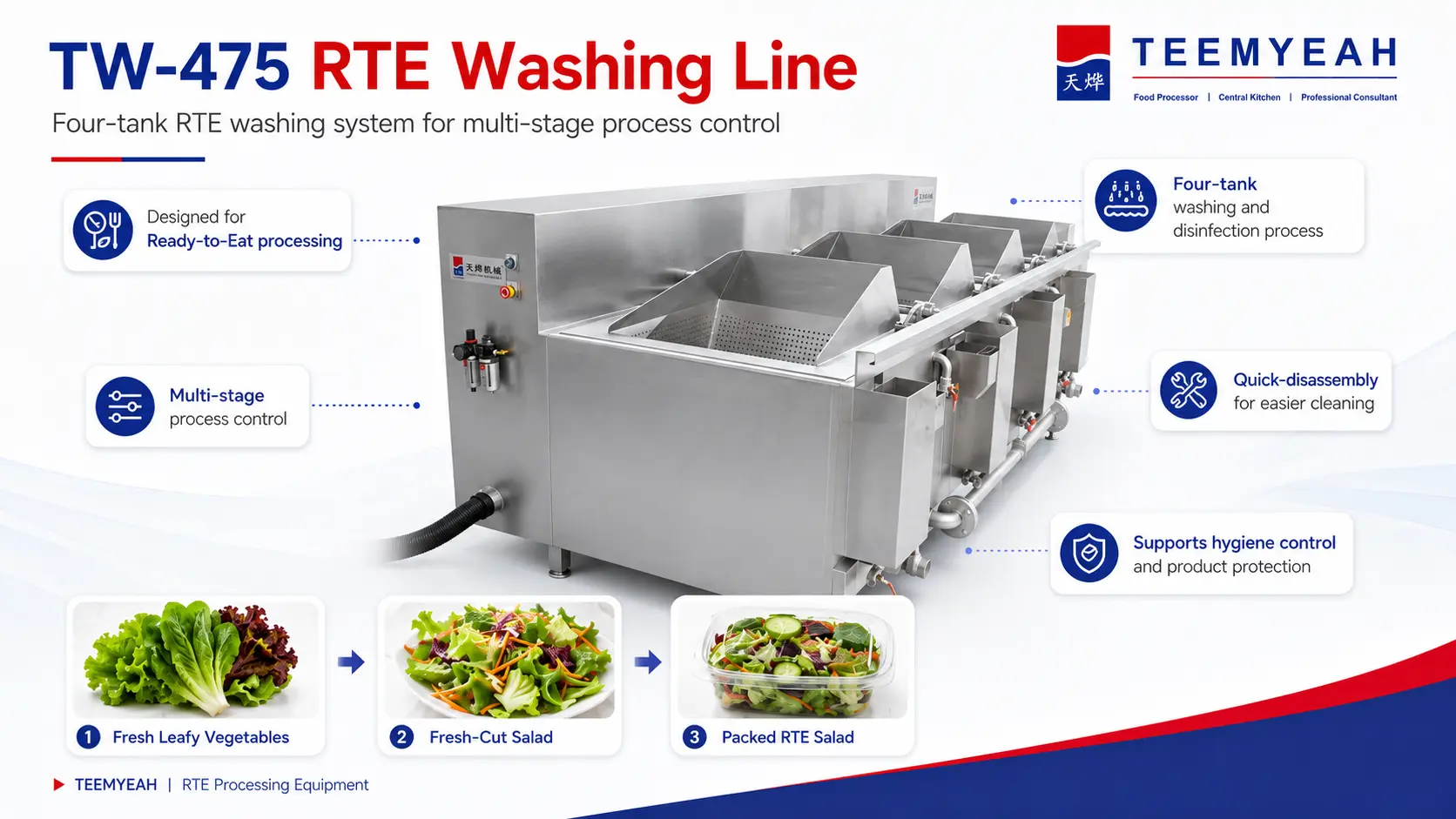
The TEEMYEAH TW-475 is designed for RTE fresh-cut vegetables and ready-to-eat product washing where multi-stage process control is required.
Its four-tank structure allows the production process to be divided into different washing and disinfection stages. For example, the process can be arranged as:
- preliminary washing,
- high-concentration disinfection,
- low-concentration disinfection,
- final rinsing,
depending on the product type, disinfectant system, and customer’s food safety requirements.
This structure is especially useful for RTE products because it avoids relying on a single washing step. Each tank can have a clearer function, making the process easier to control, monitor, adjust, and document.
For fresh-cut vegetables, leafy greens, salads, herbs, and other ready-to-eat products, this multi-stage washing logic can support staged impurity removal, wash-water control, rinsing consistency and the operator’s cleaning-verification program when configured within the facility’s validated process.
The key advantage of TW-475 is not simply that it has more tanks. Its value is that it helps the factory build a more traceable and controllable RTE washing process.
TW-705: Higher-Capacity RTE Washing Line with Three-Stage Cleaning Logic
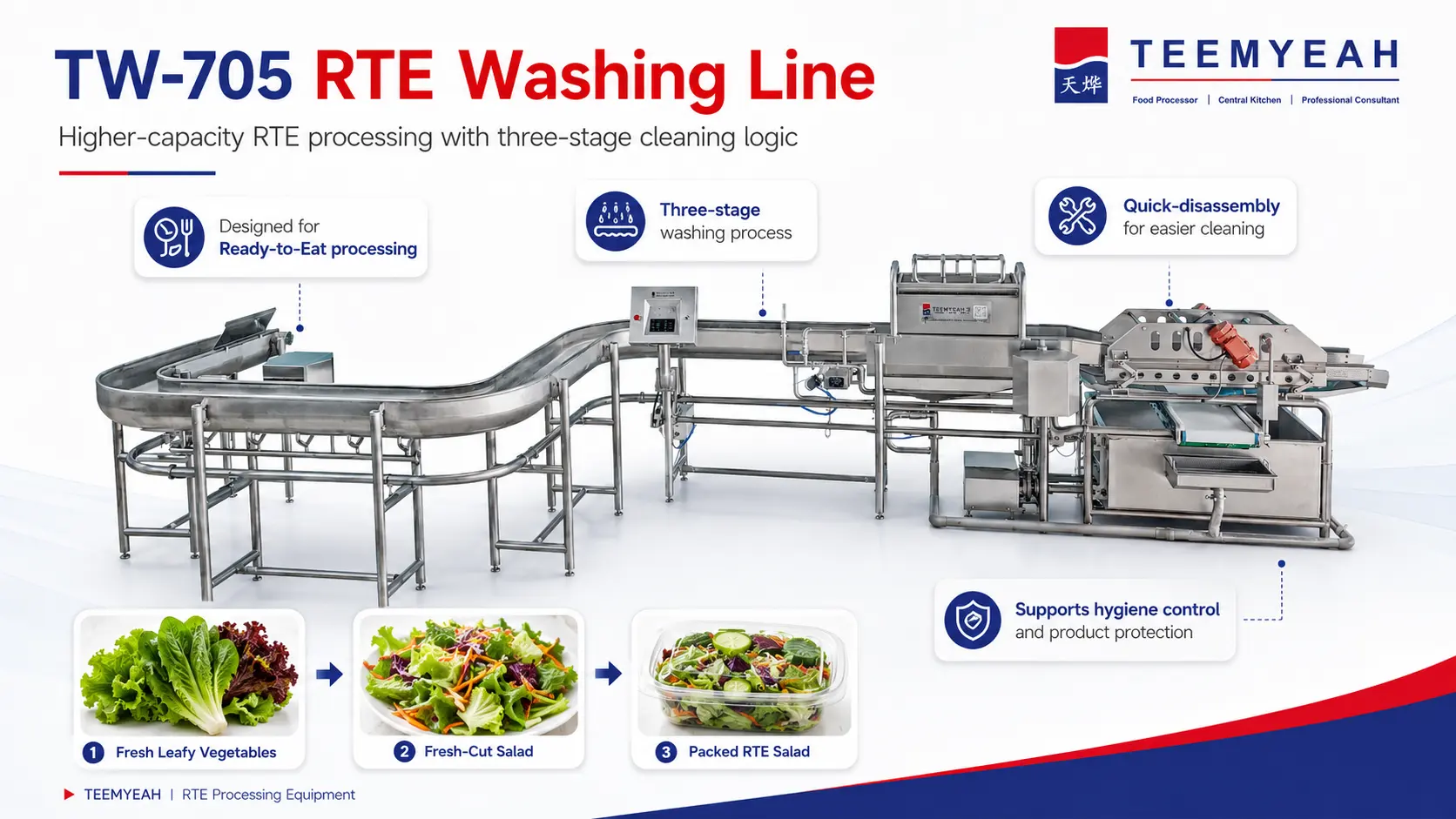
For larger-capacity RTE processing projects, TEEMYEAH can also provide the TW-705 RTE washing line.
Compared with smaller batch-type washing solutions, TW-705 is better suited for continuous or higher-throughput production. It can support a three-stage cleaning logic, such as pre-washing, disinfection washing, and clean water rinsing, depending on the factory’s process design and product requirements.
This makes TW-705 suitable for fresh-cut vegetable factories, central kitchens, food supply chain facilities, and ready-to-eat salad processing projects that require both production efficiency and stronger hygiene control.
In RTE production, capacity alone is not enough. The washing line must also support stable water flow, controlled product movement, proper washing contact, efficient transfer, and reduced product damage. For leafy vegetables and delicate fresh-cut products, the system must remove impurities while avoiding excessive mechanical stress.
TW-705 is designed to support this balance between output, product protection, and hygiene control.
Quick-Disassembly and Easy-Clean Design for RTE Sanitation
For RTE processing equipment, cleanability is one of the most important design factors.
A machine may look clean on the surface, but if vegetable fragments, tissue fluids, residue, or moisture remain in hidden corners, belts, filters, tanks, drains, covers, or transfer points, the equipment may become a long-term contamination source.
This is why TEEMYEAH pays attention to quick-disassembly and easy-clean design in RTE equipment.
Quick-disassembly structures allow operators to open, inspect, wash, and sanitize key areas more efficiently. Easy-clean design helps reduce residue retention, shorten sanitation time, improve cleaning consistency, and support routine verification such as visual inspection, ATP testing, microbial swabbing, and sanitation records.
For RTE production, this is not only a maintenance convenience. It is part of the food safety control system.
Matching Equipment to the Correct RTE Risk Level
Different RTE projects do not always need the same equipment configuration.
Some factories may need a four-tank RTE washing process for stronger stage separation and more detailed disinfection control. Others may need a higher-capacity RTE washing line with three-stage cleaning logic and continuous production flow.
The right solution depends on product type, production capacity, hygiene zoning, available processing space, target shelf life, packaging format, disinfectant choice, cold chain conditions, and customer audit requirements.
TEEMYEAH’s goal is not simply to add more machines to the quotation.
The goal is to help the customer build a process that is technically workable, hygienically controllable, operationally practical, and easier to explain during audits.
For RTC processing, we focus on efficient soil removal, product protection, capacity matching, labor reduction, and preparation for the next cooking or processing step.
For RTE processing, we focus on a higher level of control: separate hygiene zones, dedicated equipment, multi-stage washing, hygienic equipment design, controlled disinfection, easy cleaning, traceable records, and post-washing protection.
This is where equipment design and process design must work together.
A responsible RTE solution should not only wash the product. It should support the operator’s risk controls, documented verification and post-wash protection.
Practical Questions About RTE, RTC and Hygiene Zoning
Can raw and RTE foods be processed in the same area?
Raw and exposed ready-to-eat foods should not be treated as having the same hygiene requirements simply because similar equipment can process both. The facility needs to evaluate contamination routes, zoning, personnel and tool movement, drainage, cleaning controls and product flow based on its products and food-safety plan. Where areas or equipment are shared, the operator must determine whether effective separation, sanitation and verification can be maintained under real production conditions.
Can RTE and RTC products share the same processing equipment?
Mechanical compatibility alone does not establish food-safety suitability. A processor considering shared equipment should evaluate sequencing, hygienic zoning, cleaning and sanitation procedures, tools, personnel movement, waste flow, drainage and changeover verification. The appropriate arrangement depends on product risk, intended use, the processing environment and the facility’s validated food-safety controls.
What should be considered when defining raw and RTE hygiene zones?
Important considerations include where raw-material handling ends, where exposed RTE handling begins, product and personnel routes, tool and container control, drainage, splash and aerosol risks, waste movement, cleaning equipment, environmental conditions and access control. The zoning plan should reflect the actual contamination risks of the facility rather than relying only on walls, room names or machine locations.
Should RTC products be stored separately from RTE products?
Storage arrangements should be based on contamination risk, whether products are exposed or enclosed, packaging integrity, leakage risk, handling practices and the facility’s HACCP or other food-safety control system. A simple rule about placing one category above or below another is not sufficient for every facility or product. Operators should establish storage segregation and handling procedures appropriate to their products, market requirements and applicable regulations.
What sanitation controls are important in an RTE food plant?
RTE sanitation normally requires coordinated control of food-contact surfaces, equipment cleanability, tools, drains, floors, personnel practices, cleaning chemicals, environmental conditions and post-wash handling. Cleaning procedures also need defined verification and corrective-action methods appropriate to the facility. Sanitation should operate together with hygienic zoning and process control rather than being used as a substitute for separation.
Conclusion: RTE/RTC Separation Protects the Product, the Customer, and the Brand
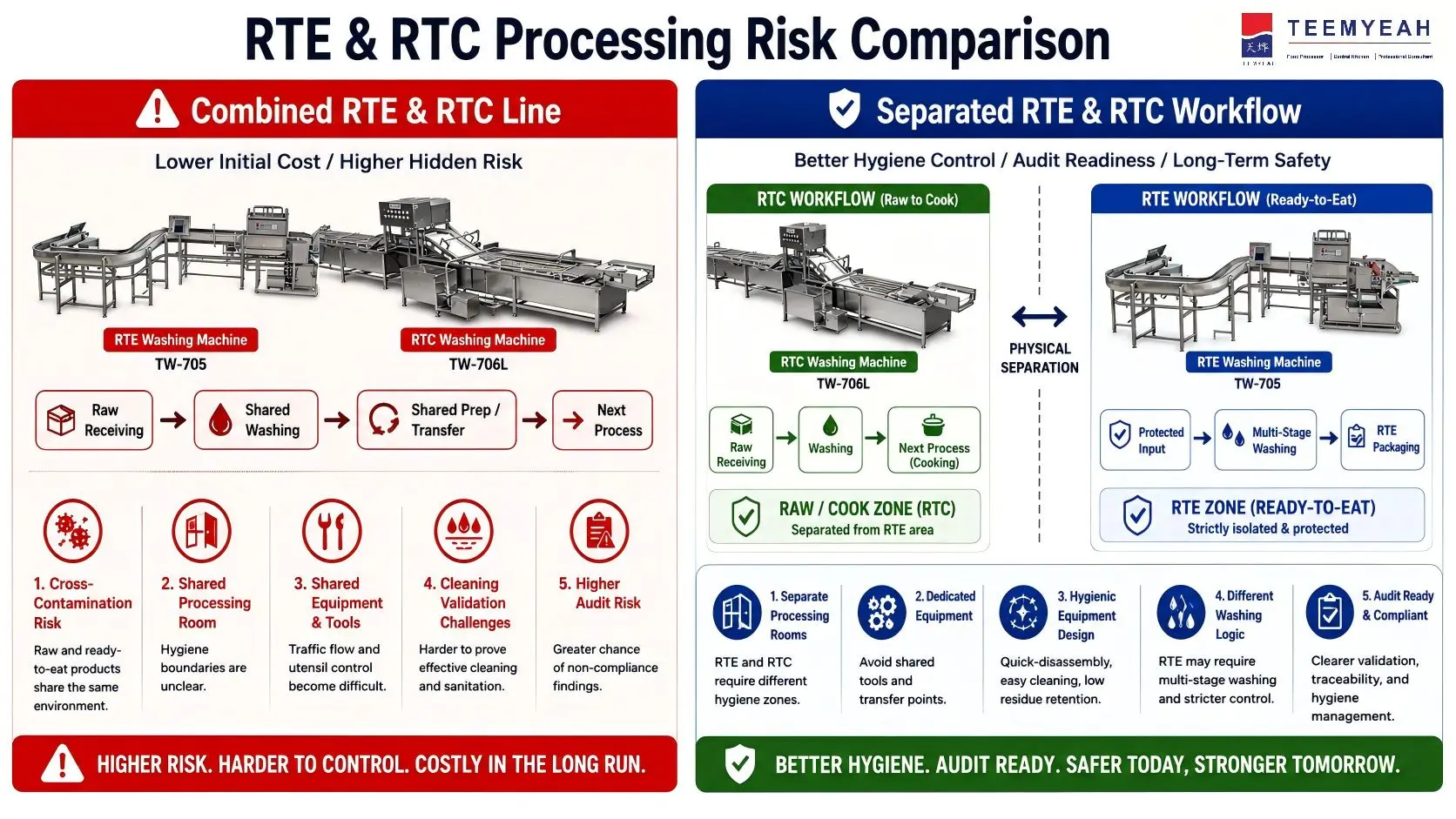
RTE and RTC processing may look similar at the equipment level, but their risk logic is different.
RTE products require stronger protection because they may be consumed without further cooking. This changes the requirements for processing rooms, hygiene zoning, washing logic, equipment design, drainage, personnel flow, cleaning validation, packaging control, cold chain transportation, antimicrobial monitoring, and audit documentation.
Mixing RTE and RTC only to reduce initial equipment cost may make the first quotation look cheaper.
But the hidden cost may appear later through cross-contamination risk, production disruption, audit findings, recalls, legal exposure, customer loss, and brand damage.
A responsible RTE/RTC processing solution should not only run today. It should also protect the factory tomorrow.
For central kitchens and fresh food processing facilities, separation is not only about equipment.
It is about building a safer, cleaner, more controllable, and more audit-ready production system.
References
- FDA Guidance for Industry: Guide to Minimize Biological Hazards in Ready-to-Eat Fresh-Cut Produce.
- FDA Draft Guidance for Industry: Control of Listeria monocytogenes in Ready-To-Eat Foods.
- 21 CFR 117.35: Sanitary Operations.
- 21 CFR 117.40: Equipment and Utensils.
- 21 CFR 173.315: Chemicals Used in Washing or to Assist in the Peeling of Fruits and Vegetables.
- 21 CFR 173.300: Chlorine Dioxide.
- 21 CFR 173.368: Ozone.
- Regulation (EC) No 852/2004 on the Hygiene of Foodstuffs.
- CDC: Multistate Outbreak of Listeriosis Linked to Whole Cantaloupes from Jensen Farms, Colorado.
- FDA: Outbreak Investigation of Listeria monocytogenes — Dole Packaged Salad, December 2021.
- FDA: Outbreak Investigation of Listeria monocytogenes — Fresh Express Packaged Salad, December 2021.
- CDC: Multistate Outbreak of Listeriosis Linked to Blue Bell Creameries Products.
- U.S. Department of Justice: Blue Bell Creameries Ordered to Pay $17.25 Million in Criminal Penalties.
- CDC: Listeria Outbreak Linked to Meats Sliced at Delis, 2024.

