







Summary
A successful fresh-cut business for produce distributors is not created by placing a vegetable cutter and washing machine inside an existing warehouse. It requires a different operating model: the distributor becomes responsible not only for sourcing and delivery, but also for product specifications, processing yield, hygiene controls, production scheduling, shelf-life management, traceability and finished-product consistency.
The strongest expansion opportunities usually begin with a defined customer problem. A restaurant group may need portion-ready vegetables. A supermarket may require retail packs. An institutional caterer may want standardized ready-to-cook ingredients. Each market leads to a different process flow, hygiene standard, packaging format and investment level.
Distributors should therefore evaluate the business in five connected dimensions:
- customer and product strategy;
- raw-material and finished-product specifications;
- process flow and sustainable throughput;
- food safety, sanitation and traceability;
- commercial return under realistic operating conditions.
Manual production can remain appropriate for low volumes or highly variable orders. Semi-automation often provides the best first step when one or two processes create most of the labor or capacity pressure. An integrated vegetable processing line becomes commercially meaningful when demand is stable enough to justify continuous flow, matched equipment capacity and dedicated sanitation systems.
The objective is not maximum automation. It is a controlled, repeatable and profitable value-added process.
From Produce Distribution to Food Processing

Consider a produce distributor that receives lettuce, cabbage, carrots, onions and potatoes in bulk. The company already has growers, procurement staff, refrigerated storage, delivery routes and relationships with foodservice buyers.
A large restaurant customer now asks for shredded cabbage, washed lettuce and peeled onions in standardized packs. Another buyer wants diced vegetables delivered five mornings per week. These requests appear to be natural extensions of the existing distribution business.
Operationally, however, they represent a major change.
Whole produce can often be graded, stored and shipped with limited transformation. Fresh-cut products must be trimmed, peeled, cut, washed, dewatered, inspected, weighed and packed according to a repeatable specification. Cutting breaks the produce’s natural protective surface, releases plant fluids and creates additional opportunities for contamination or microbial growth. Many fresh-cut products, particularly ready-to-eat items, do not receive a later cooking or other lethal treatment before consumption.
The distributor is no longer selling only a commodity. It is selling a processing outcome:
- a particular cut size;
- an agreed usable weight;
- acceptable appearance and damage level;
- controlled surface moisture;
- an established use-by period;
- documented batch identity;
- reliable delivery at the customer’s required time.
That outcome can create greater value than bulk distribution, but it also transfers more operational risk to the processor.
What Is a Fresh-Cut Business for Produce Distributors?
A fresh-cut business is a value-added operation that converts whole fruits or vegetables into prepared products through activities such as trimming, peeling, cutting, washing, dewatering, mixing, portioning and packing.
The final products may include:
- washed whole vegetables;
- peeled potatoes, carrots or onions;
- shredded cabbage;
- sliced or diced root vegetables;
- cut lettuce and salad components;
- ready-to-cook stir-fry packs;
- portioned vegetable ingredients for central kitchens;
- ready-to-eat salad mixes;
- cut fruit or mixed produce packs.
The term “fresh-cut” is often used broadly in commercial discussions, but the product’s intended use matters more than its label.
A peeled and diced potato that will be cooked in a central kitchen has a different risk profile from a salad mix intended to be eaten without further treatment. The first is generally a ready-to-cook product. The second is ready-to-eat. This distinction affects process separation, environmental controls, wash-water management, employee movement, sanitation procedures and packaging-room requirements.
A distributor should define the business using three questions:
- Who will buy the processed product?
- What preparation is the customer expecting to avoid?
- What safety, quality and delivery responsibility will the distributor assume?
Without clear answers, equipment selection becomes premature.
Why Produce Distributors Have a Strategic Starting Advantage
Produce distributors often possess assets that a new food processor would need years to develop:
- established grower and supplier relationships;
- knowledge of seasonal availability and price variation;
- incoming quality inspection experience;
- refrigerated storage and dispatch systems;
- customer relationships in foodservice or retail;
- delivery routes and order-management infrastructure;
- purchasing scale across multiple produce categories.
These capabilities can reduce some barriers to market entry. They do not remove the need to build processing expertise.
Food and beverage manufacturing depends on the combined use of raw materials, labor, machinery, energy and technical knowledge. USDA Economic Research Service data show that food and beverage processing represented 16.8% of sales and 15.4% of employment across U.S. manufacturing establishments in 2021. These figures describe the wider U.S. manufacturing sector rather than the economics of a particular fresh-cut plant, but they illustrate that processing is a substantial industrial activity—not a minor extension of warehousing.
The strategic advantage of a distributor is therefore access: access to produce, customers, storage and logistics. The operating challenge is converting that access into a controlled manufacturing system.
Choose the Business Model Before Choosing the Equipment
The same raw vegetable can support several business models. Each requires a different level of capital, process control and market development.
| Business model | Typical output | Customer value | Operational complexity | Suitable entry situation |
|---|---|---|---|---|
| Washed and graded produce | Cleaned whole produce in bulk packs | Less dirt, sorting and handling at the customer site | Low to moderate | Distributor has demand for cleaner, preparation-ready whole produce |
| Peeled or trimmed RTC ingredients | Peeled onions, potatoes, carrots or trimmed vegetables | Reduces customer labor and waste | Moderate | Stable foodservice or central-kitchen demand |
| Cut RTC components | Diced, sliced, shredded or julienned vegetables for cooking | Standardizes preparation and cooking results | Moderate to high | Repeat orders with defined cuts and volumes |
| RTE fresh-cut products | Salad mixes, washed leafy greens, raw vegetable packs | Ready for direct consumption or final assembly | High | Dedicated hygiene controls, cold chain and validated operating procedures are available |
| Retail-ready value-added packs | Branded trays, bags, meal components or mixed packs | Convenience, portioning and merchandising | High | Distributor has retail access, packaging capability and demand planning |
| Contract processing | Processing customer-owned or customer-specified produce | Customer avoids building its own facility | Variable | Processor can manage specifications, scheduling and confidentiality |
A company may eventually operate more than one model, but the first investment should be built around a narrow commercial proposition.
A plant attempting to launch twenty products for six customer segments at the same time usually creates excessive changeovers, inconsistent work instructions and uncertain demand. A more controllable entry might begin with three high-volume ready-to-cook products for one restaurant or institutional customer.
Use a Fresh-Cut Business Model Canvas
Before developing a line concept, management should complete a business model canvas using operational—not merely marketing—answers.
| Canvas area | Questions to answer |
|---|---|
| Target customer | Which buyers have a measurable preparation problem? What order frequency and contract duration are realistic? |
| Product promise | Is the product washed, peeled, cut, dewatered, mixed, portioned, packed or ready to eat? |
| Product specification | What varieties, grades, cut dimensions, tolerances, pack weights and defect limits apply? |
| Raw-material supply | Which growers or suppliers can provide suitable varieties and consistent maturity, size and condition? |
| Process route | Which steps occur before and after cutting? Where are inspection, washing, treatment and dewatering positioned? |
| Hygiene classification | Is the product RTC or RTE? Which clean and dirty zones are required? |
| Capacity requirement | What are average, peak and minimum economic volumes by hour, shift and day? |
| Labor model | Which tasks remain manual? What skills, staffing and supervision are required? |
| Facility requirements | How much space, drainage, water, electricity, refrigeration and waste handling are needed? |
| Commercial model | What are the selling price, raw-material cost, yield, labor cost and preparation cost per saleable kilogram? |
| Route to market | Will products be supplied in bulk, retail packs, customer-branded packs or returnable containers? |
| Risk controls | How will the business manage supplier variation, contamination, recalls, equipment failure and demand volatility? |
| Expansion path | Which modules may be added after demand is proven? |
The canvas should expose uncertainty. An unanswered question about customer volume, product shelf life or raw-material specification is not a minor omission. It may be the factor that determines whether the project is viable.
Start With the Customer’s Preparation Problem
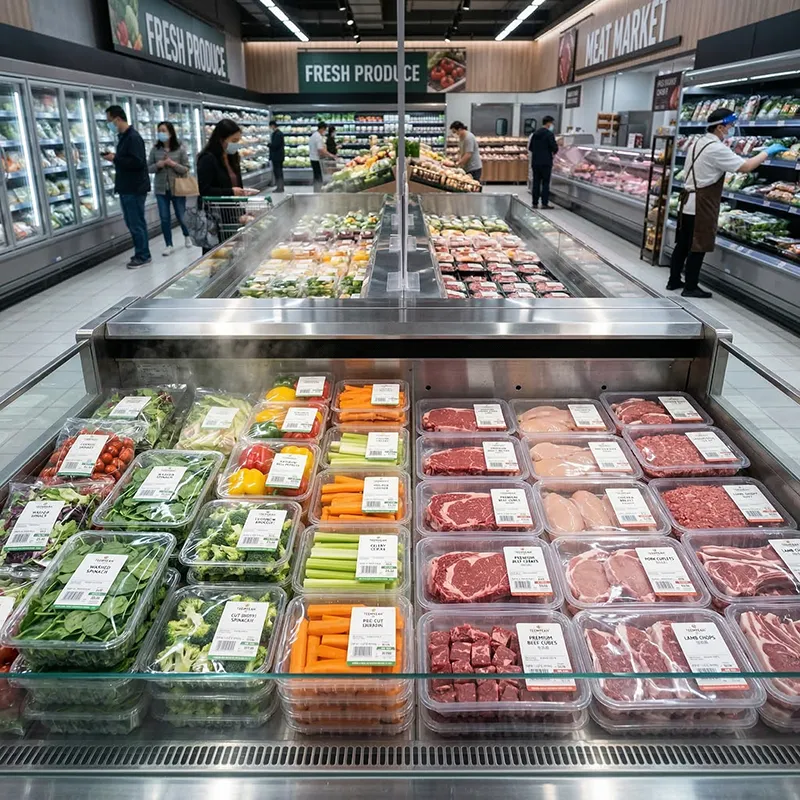
A distributor should avoid launching fresh-cut products simply because competitors offer them. The more useful approach is to identify preparation work that customers are motivated to remove.
A restaurant chain may struggle to maintain the same cut size across dozens of outlets. A caterer may lose production time because vegetables arrive late from manual preparation. A food factory may need calibrated ingredients that feed evenly into cooking or mixing equipment. A supermarket may want convenience packs but lack space for back-of-store processing.
These problems can support a value-added service because their cost extends beyond hourly wages. Decentralized preparation may create:
- repeated training across locations;
- variable trim loss;
- inconsistent portions;
- uneven cooking;
- food waste;
- local hygiene variation;
- delivery and menu delays;
- difficulty forecasting usable ingredient quantities.
The distributor’s commercial proposition should specify which of these problems it solves.
“Fresh-cut vegetables” is a category description. “Standardized 10 mm diced carrots delivered in production-sequenced returnable containers before 5:00 a.m.” is a service specification.
Select Products Through Operational Screening
Not every product in the distribution catalogue should enter the processing programme.
A practical screening method evaluates each proposed SKU against six factors:
Demand stability
Is there a repeatable weekly volume, or is the product based on occasional spot orders? Automated or semi-automated equipment is easier to justify when the processing task recurs frequently.
Raw-material suitability
Different varieties may behave differently during peeling, cutting, washing and storage. Size, maturity, firmness, soil load, leaf structure and temperature all affect processing performance.
Specification complexity
A single vegetable requested in five cut formats may create more operational complexity than five vegetables using one common format. Each blade change, washdown, recipe adjustment and label change consumes production time.
Yield exposure
Expensive produce, irregular shapes or high trimming requirements can make small yield differences commercially significant. The incoming specification must be aligned with the intended finished form.
Hygiene requirement
RTE products demand more stringent control than products intended for validated downstream cooking. A facility that is suitable for peeled cooking onions may not automatically be suitable for packaged salad.
Shelf-life and delivery distance
The product must retain acceptable quality through processing, packing, cold storage, delivery and the customer’s own holding period. Equipment cannot compensate for an uncontrolled cold chain or unrealistic distribution window.
A useful launch portfolio often contains products with relatively stable supply, measurable demand and compatible processing requirements.
Design the Process Flow Around the Product

A fresh-cut vegetable processing line is a sequence of controlled operations rather than a collection of machines.
A typical flow may include:
Receiving → incoming inspection → chilled holding → pre-trimming → peeling or cutting → washing → antimicrobial treatment where applicable → final rinse → dewatering → inspection → mixing or portioning → packing → finished-product cold storage → dispatch
The correct sequence depends on the material.
Leafy vegetables may be cut before multi-stage washing so loose material and cut-surface residues can be removed. Soil-heavy root vegetables may require pre-washing and stone removal before precision cutting. Some products need peeling before washing; others need an initial wash before entering a cutting machine.
The process should answer four questions at every stage:
- What condition should the product have when it enters?
- What transformation occurs?
- Which quality or safety parameter must be controlled?
- What condition must the product have before it moves downstream?
This prevents a common investment error: selecting a machine because it can process the material, without confirming whether its output is suitable for the next stage.
RTC and RTE Products Should Not Be Treated as Equivalent
Ready-to-cook vegetables will receive further preparation, commonly cooking, before consumption. Ready-to-eat vegetables may be consumed without a later kill step.
That difference changes the significance of post-cut contamination.
FDA’s fresh-cut guidance notes that breaking the external surface of produce can release plant fluids and create conditions in which microorganisms, if present, may survive or grow. It also highlights the combination of high moisture, extensive handling and the absence of a lethal process in many fresh-cut operations.
A facility considering both RTC and RTE products should evaluate:
- separate raw and finished-product traffic;
- employee and utensil movement;
- drainage direction;
- airborne or splash transfer;
- wash-water management;
- cleaning sequence;
- high-care or controlled post-wash zones;
- packaging-room conditions;
- environmental monitoring requirements where applicable;
- production scheduling when physical separation is limited.
Sharing certain infrastructure may be technically possible, but “cleaning between products” is not automatically an adequate separation strategy. The actual hazards, building layout, sanitation validation and regulatory framework must be assessed.
Nominal Machine Capacity Is Not Production Throughput
Equipment quotations commonly describe capacity in kilograms per hour. That figure may represent performance under a defined test condition, continuous feeding or a particular product format.
Commercial output is the amount of acceptable finished product produced during the available operating period.
A line with a cutter rated at 1,000 kg/h, a washer rated at 1,500 kg/h and a dewatering system rated at 600 kg/h does not have a sustainable capacity of 1,500 kg/h. Its output may be limited by the dewatering stage, feeding method, batch transitions, inspection workload, product behaviour or packaging operation.
Use the following distinction:
Theoretical throughput
The output a machine or line could produce under specified continuous conditions.
Actual gross throughput
The raw quantity processed during real production time.
Accepted finished throughput
The quantity meeting the finished-product specification after trimming, rejection, moisture adjustment and process loss.
A useful measurement is:
Accepted throughput per hour = accepted finished kilograms ÷ actual production hours
Production hours should be defined consistently. Managers should decide whether breaks, planned changeovers and sanitation are included or reported separately.
Identify the Constraint Before Adding Capacity
A bottleneck is the stage that limits the output of the whole process under current operating conditions.
It may be a machine, but it can also be:
- manual trimming;
- crate movement;
- waiting for wash water to be changed;
- loading and unloading a batch machine;
- insufficient inspection space;
- a slow weighing or packing station;
- inadequate finished-product refrigeration;
- a sanitation procedure;
- label preparation;
- delayed raw-material release;
- lack of operators at a particular workstation.
The constraint should be observed over several representative production days. One unusually clean batch of produce does not describe normal operations.
A basic line-balance study can record:
| Stage | Scheduled capacity | Observed input | Accepted output | Queue time | Downtime | Main loss |
|---|---|---|---|---|---|---|
| Trimming | kg/h | kg/h | kg/h | minutes | minutes | Labor or raw variation |
| Cutting | kg/h | kg/h | kg/h | minutes | minutes | Feeding or blade changes |
| Washing | kg/h | kg/h | kg/h | minutes | minutes | Water management or transfer |
| Dewatering | kg/h | kg/h | kg/h | minutes | minutes | Batch loading or cycle time |
| Packing | packs/h | kg/h | kg/h | minutes | minutes | Weighing, film or labels |
Adding a faster cutter will not improve line output when packed product is already accumulating before the cold room.
Line Balance Must Account for Product Mix
Line balancing becomes more difficult when the plant runs many SKUs.
A cutter may process cabbage quickly but require a different blade and feed method for carrots. Leafy greens may pass through washing gently, while dense cut roots require different agitation or residence time. Dewatering parameters suitable for sturdy cabbage can damage delicate leaves.
Capacity planning should therefore use a product-capacity matrix rather than one headline figure.
For each product, record:
- normal batch size;
- preparation sequence;
- target cut;
- machine settings;
- expected raw-to-finished yield;
- sustainable kilograms per hour;
- changeover time;
- sanitation class;
- packaging rate;
- operator requirement.
A plant that changes SKU every twenty minutes may lose more capacity through transitions than it gains from purchasing a faster machine.
Control Yield Before Calculating Revenue
Value-added processing creates revenue from finished kilograms, not raw kilograms.
Yield percentage = saleable finished weight ÷ raw input weight × 100
Yield losses may result from:
- incoming defects;
- soil and foreign material;
- trimming;
- peeling;
- core or stem removal;
- cutting damage;
- product retained inside equipment;
- rejection for incorrect dimensions;
- excessive water loss;
- inspection removal;
- spillage;
- expired or unsold finished stock.
Yield should be measured by product, supplier, variety and season. A single annual average can conceal costly patterns.
For example, a potato supplier offering a lower raw price may deliver irregular or deeply damaged tubers that require more trimming. The apparent purchasing saving may disappear after the processor calculates usable output.
The commercially relevant measure is often:
Raw-material cost per saleable kilogram = raw-material purchase cost ÷ saleable finished kilograms
This connects procurement decisions with processing performance.
Prevent Over-Trimming and Product Damage
Manual preparation can produce inconsistent trimming because workers make individual decisions about defects and acceptable appearance. Some workers remove too much material to avoid complaints. Others retain defects to maintain speed.
Equipment can improve repeatability when the raw material and machine are appropriately matched, but it can also create systematic damage at a much higher rate.
Potential equipment-related losses include:
- crushing delicate leaves;
- excessive peeling;
- bruising during transfer;
- ragged cuts from unsuitable or worn blades;
- broken pieces from excessive agitation;
- product lodging in inaccessible areas;
- damage caused by falls between conveyors;
- excessive centrifugal force during dewatering.
Product testing should therefore evaluate both throughput and acceptable output. A machine that processes 1,500 kg/h but creates unacceptable breakage is not a high-capacity solution for that product.
Cut Consistency Affects More Than Appearance
Uniform cutting is often discussed as a visual requirement, particularly for retail packs. Its operational impact is wider.
Consistent dimensions can support:
- more predictable cooking time;
- repeatable seasoning or marinade coverage;
- stable portion weights;
- even mixing;
- reduced connected or uncut pieces;
- predictable packaging density;
- better customer acceptance.
For ready-to-cook products, cut variation may transfer cost to the customer. Thick and thin pieces can cook unevenly, forcing the kitchen to extend cooking time or accept inconsistent texture.
The specification should define measurable tolerances. “Diced” is insufficient. A useful specification might state the nominal dimension, permitted range, maximum percentage of connected pieces, maximum fines and acceptable defect level.
Washing Is a Controlled Process, Not a Cosmetic Step
Produce washing may remove soil, debris and some contamination, but it must be designed within a broader food safety system.
Important variables can include:
- incoming soil load;
- water quality;
- water temperature;
- product-to-water ratio;
- water replacement or filtration;
- agitation intensity;
- contact time;
- antimicrobial concentration where used;
- pH or other chemistry-related parameters;
- spray-rinse configuration;
- recirculation and cross-contamination control.
FDA guidance stresses that processing water can become a source of contamination if it is not properly managed. It also recommends training employees who monitor disinfectant levels, pH and wash-water temperature so they understand the limits, records and corrective actions associated with those controls.
An antimicrobial wash is not a guarantee of safety. Its use must be consistent with local regulations, chemical instructions, product requirements and the facility’s hazard analysis.
Dewatering Is Part of Product and Packaging Control
Fresh-cut operations often focus on cutting and washing while treating dewatering as a secondary step. Excess surface water can interfere with weighing, mixing, packaging appearance and finished-product stability.
The objective is not complete dehydration. It is controlled removal of excess surface water without unacceptable product damage.
The appropriate method depends on the product:
- centrifugal systems may suit many leafy and cut vegetable applications;
- vibration, drainage or air-assisted systems may suit other products;
- delicate materials may require lower mechanical force;
- batch and continuous methods create different flow and labor requirements.
Measure dewatering performance through defined outcomes rather than visual impressions. These may include:
- weight before and after dewatering;
- free water in the pack;
- product breakage;
- cycle time;
- moisture consistency between batches;
- packaging-seal contamination;
- finished-product quality during the intended holding period.
Labor Cost Is Only One Part of Labor Dependency
The commercial case for food preparation automation is sometimes reduced to the number of workers replaced. That approach is incomplete and can lead to unrealistic savings estimates.
A manual fresh-cut operation also depends on:
- recruitment;
- onboarding;
- knife and equipment training;
- hygiene training;
- supervision;
- attendance;
- temporary labor availability;
- rework caused by variable performance;
- overtime during seasonal peaks;
- ergonomic risk;
- staff movement between clean and raw areas.
U.S. Bureau of Labor Statistics data indicate that food and beverage manufacturing employed 16% of U.S. manufacturing workers in 2024. BLS projects continued sector employment growth over the 2024–2034 period, although national employment patterns cannot predict the staffing conditions of an individual processor or country.
The appropriate labor measure is not simply “employees before and after.”
Use:
Labor hours per 1,000 kg = total direct preparation labor hours ÷ accepted kilograms × 1,000
The calculation should include employees who trim, move, load, unload, inspect, rework and clean the process—not only operators standing beside the main machine.
Ergonomics and Occupational Safety Belong in the Business Case
Produce preparation frequently involves repetitive knife work, lifting wet crates, prolonged standing, reaching, bending and pushing containers.
OSHA identifies forceful exertion, awkward postures, repetitive movement and handling of heavy loads as ergonomic risk factors. It recommends controls such as workstation redesign, task rotation, appropriate lifting practices and reduction of prolonged repetitive work. These recommendations are general occupational-safety principles and must be adapted to the specific facility and jurisdiction.
Automation can reduce some exposure, but it may introduce new hazards:
- rotating blades;
- conveyors and pinch points;
- automatic loading mechanisms;
- electrical equipment in wet areas;
- elevated platforms;
- chemical dosing systems;
- maintenance access;
- unexpected machine start-up.
A project must include guarding, lockout procedures, operator training, safe access and maintenance planning. Replacing repetitive knife work with poorly controlled mechanical hazards is not an improvement.
Food Safety Must Be Designed Into the Business Model
Fresh-cut processing concentrates material from multiple fields, suppliers or lots into a common facility. Each additional contact surface, worker, container and water circuit can influence contamination risk.
For facilities subject to the U.S. Preventive Controls for Human Food rule, covered businesses generally need a written food safety plan containing hazard analysis and risk-based preventive controls, unless an exemption applies. The rule describes process, sanitation, allergen and supply-chain controls, together with monitoring, corrective actions and verification requirements. Applicability must be assessed for the individual facility and market.
Even where that U.S. rule does not apply, the management logic remains useful:
- identify reasonably foreseeable hazards;
- determine which controls are necessary;
- define operating limits;
- monitor performance;
- document deviations;
- take corrective action;
- verify that controls work as intended.
Equipment supports these activities, but it does not create the food safety system.
Sanitary Design Affects Daily Capacity
Sanitary design is sometimes treated as a compliance feature added after production requirements are defined. In fresh-cut operations, it directly affects available production time.
Equipment that is difficult to open, drain, inspect or reassemble may extend sanitation shifts and increase the risk of incomplete cleaning.
Evaluate:
- accessibility of food-contact surfaces;
- tool requirements for disassembly;
- hollow or difficult-to-drain structures;
- weld condition;
- water retention;
- access beneath belts and rollers;
- blade removal;
- cleanability of guards;
- cable and control-box placement;
- suitability for the cleaning method;
- ability to visually inspect after cleaning.
Sanitation time should appear in the capacity model.
A line capable of 1,000 kg/h for eight hours theoretically processes 8,000 kg. If production must stop for two product changeovers, a wash-water change, unplanned maintenance and final sanitation preparation, the commercial output may be substantially lower.
Traceability Should Be Built for Operations, Not Only Compliance
Fresh-cut processors must connect incoming produce to production batches, transformation records and outgoing customers.
A practical traceability structure may capture:
- supplier;
- farm or source identification where available;
- incoming lot;
- receipt date and time;
- raw-material inspection;
- production order;
- transformation batch;
- processing date and line;
- finished-product lot;
- packaging material lot where relevant;
- cold-storage location;
- customer and dispatch record.
The FDA Food Traceability Rule identifies fresh-cut fruits, fresh-cut vegetables and fresh-cut leafy greens among foods on the Food Traceability List. The rule uses Critical Tracking Events, Key Data Elements and traceability lot codes to support faster supply-chain tracing.
As of July 2026, Congress has directed FDA not to enforce the Food Traceability Rule before July 20, 2028, and FDA states that it intends to follow that direction. The rule should therefore not be described as currently enforceable during this period. Preparation remains commercially relevant because supply-chain coordination, record retrieval and lot-level data design take time to implement. FDA’s 2026 readiness exercises found that coordination between supply-chain partners, rather than any single technology, was the strongest contributor to successful record retrieval.
Compare Manual, Semi-Automated and Integrated Processing
The correct automation level depends on the product portfolio, volume, facility and commercial certainty.
| Operating model | Appropriate conditions | Main advantages | Main limitations and risks |
|---|---|---|---|
| Predominantly manual | Low volume, short production runs, highly variable products, uncertain demand | Low initial investment, flexible handling, fast launch | High labor dependence, inconsistent yield, limited throughput, ergonomic exposure |
| Standalone machines | One clear bottleneck in cutting, peeling, washing or dewatering | Targeted investment, easier testing, limited facility disruption | Manual transfer remains; machine capacities may not match |
| Semi-automated processing cell | Stable product family with moderate volume; several related tasks need control | Balances flexibility and productivity; easier phased expansion | Requires disciplined scheduling and operator coordination |
| Integrated processing line | High repeat volume, standardized products, limited changeovers, dedicated facility | Continuous flow, lower manual transfer, better line-level control | Higher capital commitment, greater dependence on line balance and maintenance |
| Multiple dedicated lines | Large, stable demand with materially different product or hygiene categories | Strong separation and specialized settings | Highest space, staffing and capital requirement |
An integrated line is not automatically the most advanced business choice. A semi-automated cell that runs reliably at high utilization may produce a better return than a large line operating intermittently.
When Manual Processing Is Still Rational
Manual production may remain commercially reasonable when:
- daily volume is low;
- orders are irregular;
- products change frequently;
- processing specifications are difficult to standardize;
- raw materials are unusually variable;
- the business is testing market demand;
- labor is available and manageable;
- the facility cannot yet support industrial drainage or utilities;
- products require skilled visual decisions that machines cannot perform economically;
- the investment would create excessive fixed cost.
The right response to a manual bottleneck is not always machinery. Better work instructions, raw-material specifications, workstation design, knives, containers, scheduling and employee training may improve performance at lower risk.
When Semi-Automation Is Usually the Better Step
Semi-automation is often appropriate when one or two repetitive processes create most of the constraint.
Examples include:
- installing a cutter while retaining manual inspection and feeding;
- adding a brush peeler while workers trim remaining defects;
- using a continuous washer with manual loading and unloading;
- introducing a dewatering unit before manual weighing and packing;
- connecting two machines with a conveyor while retaining flexible batch handling elsewhere.
This approach can establish real operating data before a larger investment. Management learns which products run well, how much accepted throughput is achieved, how long sanitation takes and whether demand is stable.
The risk is creating disconnected equipment islands. Each new machine should be assessed against upstream feeding, downstream capacity, floor movement and future integration.
When an Integrated Line Becomes Commercially Meaningful
A full line is more likely to make sense when most of the following conditions are present:
- repeat contracts or credible demand forecasts;
- stable product specifications;
- sufficient volume per production run;
- limited SKU changes during the shift;
- recurring labor or throughput constraints;
- a defined RTC or RTE hygiene concept;
- appropriate utilities, drainage and refrigeration;
- packaging capacity matched to processing output;
- maintenance resources and spare-parts planning;
- enough working capital for raw materials, packaging and finished inventory;
- management commitment to production records and process control.
The decision should be based on accepted finished throughput and customer demand—not the highest machine capacity available.
Automation Can Introduce New Business Risks
Automation changes the risk profile rather than removing risk.
Potential new risks include:
- excessive dependence on one critical machine;
- production stoppage from a minor component failure;
- poor performance on seasonal or irregular produce;
- insufficient flexibility for short runs;
- longer cleaning procedures;
- operator skill gaps;
- unavailable spare parts;
- overproduction because the line runs faster than sales;
- product damage at higher speed;
- utilities that cannot support the installed load;
- a packaging bottleneck;
- supplier dependence for software or proprietary components.
A manual process may degrade gradually when staffing is short. An integrated line can stop immediately when a single essential unit fails. Maintenance capability, bypass options and critical-spares planning must therefore be included in the business model.
Facility Layout Determines Whether the Line Can Perform
A machine layout drawing should not be limited to equipment footprints.
The facility plan needs to consider:
- incoming and finished-product doors;
- raw, intermediate and finished-product flow;
- employee entrances and hygiene transitions;
- packaging-material movement;
- waste removal;
- drainage;
- hose and cleaning-tool storage;
- chemical storage;
- electrical and water connections;
- inspection space;
- temporary buffers;
- maintenance access;
- cold storage;
- laboratory or quality-control activities;
- forklift and pedestrian separation.
Poor layouts create work-in-process accumulation. Wet product waits in containers. Workers cross raw and clean zones. Packaging materials travel through wash areas. Finished packs wait for cold-room space.
These losses may not appear in the machine specification, but they determine actual throughput and hygiene performance.
Measure WIP and Waiting Time
Work in process, or WIP, is product that has entered processing but has not yet become released finished goods.
Excessive WIP may indicate:
- unbalanced equipment;
- oversized production batches;
- insufficient containers;
- slow downstream inspection;
- packaging delays;
- poor scheduling;
- too many simultaneous SKUs.
Fresh-cut products should not wait unnecessarily between operations. Waiting can affect temperature, moisture, appearance and production traceability.
Record the time at which representative batches enter and leave each stage. This creates a process-time map and helps distinguish transformation time from waiting time.
A line may require only twenty minutes of actual cutting, washing and dewatering but take ninety minutes from raw release to packed storage because of queues and handling.
Build an Operating Dashboard Before Calculating ROI
A fresh-cut business needs a small group of operational measures that connect production with commercial performance.
| Metric | Formula | What it reveals |
|---|---|---|
| Accepted throughput | Accepted finished kg ÷ production hours | Sustainable saleable output |
| Yield percentage | Saleable finished kg ÷ raw input kg × 100 | Material conversion performance |
| Labor hours per 1,000 kg | Direct labor hours ÷ accepted kg × 1,000 | Labor dependency |
| Preparation cost per kg | Relevant processing costs ÷ saleable kg | Unit economics |
| Downtime rate | Unplanned downtime ÷ scheduled production time × 100 | Reliability |
| Capacity utilization | Actual accepted output ÷ demonstrated sustainable capacity × 100 | Demand and asset use |
| Changeover ratio | Changeover time ÷ scheduled shift time × 100 | SKU complexity |
| On-time production rate | Orders completed by required release time ÷ planned orders × 100 | Delivery reliability |
| Customer rejection rate | Rejected or credited kg ÷ shipped kg × 100 | Specification performance |
| Sanitation time | Cleaning labor hours and elapsed time per line or SKU | Hygiene-related capacity cost |
These metrics should be established during manual or pilot operation where possible. Otherwise, the investment model may be based on assumptions that cannot be verified later.
Calculate Preparation Cost Per Saleable Kilogram
A processing cost model should include more than direct labor.
Preparation cost per saleable kilogram =
(direct labor + supervision allocation + utilities + water treatment + cleaning chemicals + packaging-related processing consumables + maintenance allocation + waste handling + quality-control cost + relevant depreciation or lease cost) ÷ saleable kilograms
Raw materials and outbound logistics may be calculated separately or included, depending on the business’s accounting approach. The method must remain consistent when comparing alternatives.
The calculation should also recognize the cost of rejected or expired finished goods. Producing faster does not improve profitability if demand planning causes unsold stock.
Use a Conservative Payback Model
A simple payback calculation is:
Payback period = net initial investment ÷ annual net cash benefit
This method is easy to understand but does not account for financing cost, tax, time value of money, terminal value or changing demand. Larger projects should also be assessed using discounted cash flow, sensitivity analysis and working-capital requirements.
Illustrative calculation
A hypothetical distributor considers a semi-automated processing cell with a total installed investment of RMB 2,400,000.
Estimated annual benefits:
- labor and overtime reduction: RMB 520,000;
- improved saleable yield: RMB 310,000;
- reduced outsourced processing and rework: RMB 210,000.
Estimated additional annual operating costs:
- maintenance and spare parts: RMB 120,000;
- utilities and sanitation: RMB 100,000;
- technical staffing and training: RMB 80,000.
Annual net benefit:
RMB 1,040,000 − RMB 300,000 = RMB 740,000
Simple payback:
RMB 2,400,000 ÷ RMB 740,000 = approximately 3.24 years
This is a hypothetical example, not a benchmark. Actual results depend on local wages, raw-material value, yield, utilization, maintenance, product pricing and customer demand.
Test the Business Under Different Demand Scenarios
The financial model should include at least three scenarios:
Conservative case
- slower customer acquisition;
- lower line utilization;
- limited yield improvement;
- higher maintenance and training cost;
- more changeovers than expected.
Base case
- contracted or reasonably forecast demand;
- demonstrated operating performance;
- normal raw-material variation;
- planned labor and sanitation requirements.
Expansion case
- additional customers;
- second shift;
- improved purchasing scale;
- new products using compatible equipment.
A project that is only viable in the expansion case may be too dependent on uncertain future sales. A project that remains manageable in the conservative case has greater resilience.
Build the Operation in Phases
A phased expansion path allows the distributor to prove commercial demand and operational competence before committing to a complete line.
Phase 1: Validate the market
Begin with a narrow product range, defined specifications and controlled customers. Production may remain manual or use a small number of machines.
Measure:
- orders;
- yield;
- labor hours;
- rejection;
- sanitation time;
- shelf-life performance;
- customer complaints;
- gross contribution.
Phase 2: Remove the main constraint
Automate the process creating the largest recurring cost or instability. This may be peeling, cutting, washing or dewatering.
Confirm that upstream and downstream stages can absorb the new output.
Phase 3: Connect compatible processes
Add conveyors, inspection tables, controlled transfer and standardized containers. Reduce unnecessary handling and WIP.
Phase 4: Strengthen hygiene and traceability
Improve zoning, drainage, employee flow, record capture, batch identification, environmental controls and sanitation verification.
Phase 5: Integrate around proven demand
Develop a balanced line using real product and production data. Match processing, inspection, dewatering, weighing, packing and refrigeration capacity.
Phase 6: Expand customers or product families
Add products only when their process compatibility and commercial contribution are understood.
Evaluate Suppliers as Process Partners, Not Catalogue Vendors
Once the project reaches equipment evaluation, the supplier should be asked to respond to the actual process requirement.
Provide:
- raw-material list and photos;
- seasonal size and condition variation;
- finished-product specifications;
- daily and hourly capacity targets;
- product schedule;
- batch sizes;
- RTC or RTE classification;
- facility drawing;
- available utilities;
- cleaning method;
- packaging interface;
- relevant local standards;
- expansion plans.
Supplier evaluation should address:
- whether product testing is available;
- which capacity assumptions are being used;
- how accepted throughput is calculated;
- whether equipment capacities are balanced;
- how changeovers occur;
- which components contact food;
- how equipment is opened and cleaned;
- what maintenance is required;
- which spare parts are critical;
- how installation and commissioning are handled;
- what operator and sanitation training is provided;
- how performance will be accepted.
A supplier’s highest quoted capacity is not evidence of the best line concept. The stronger proposal is the one that explains assumptions, constraints, interfaces and operating responsibilities.
The Central Decision: Are You Building Products or Installing Machines?
Produce distributors build a value-added fresh-cut business by converting customer preparation problems into controlled product specifications and repeatable operations.
The sequence matters:
customer demand → product definition → raw-material specification → process flow → hygiene concept → capacity model → facility design → automation level → equipment selection → validation
Reversing that sequence creates risk. A company may purchase machines before it knows which products generate sufficient volume, whether the line can be cleaned within the available time, or whether packaging and cold storage can handle the output.
Automation is therefore a form of process redesign. It can reduce handling, improve consistency and support higher throughput when the business is ready. It cannot replace supplier control, sanitation management, employee training, customer development or disciplined production planning.
Evaluate Your Fresh-Cut Expansion Path
Distributors at an early stage can begin by mapping the current preparation process, identifying the main bottleneck and completing the fresh-cut business model canvas. The first decision may be a better manual process, a pilot production cell or a phased facility upgrade rather than a complete line.
Businesses with defined products, target capacities and facility information can move to a preliminary process discussion covering raw-material testing, process flow, line balance, sanitary design considerations, equipment matching and layout.
TEEMYEAH supports produce distributors and packhouses as a food pre-processing equipment supplier, vegetable processing equipment manufacturer and customized food preparation solution provider. Project evaluation can begin with the product list, raw and finished specifications, required output, available space and intended RTC or RTE market.
FAQ
1. Is a Fresh-Cut Business for Produce Distributors Profitable?
A fresh-cut business can be profitable when customers are willing to pay for preparation, consistency, portioning and delivery reliability, and when the processor controls yield and operating cost. Profitability cannot be inferred from the difference between bulk and processed selling prices alone. The distributor must calculate raw-material cost per saleable kilogram, labor, packaging, sanitation, utilities, waste, refrigeration, quality control and rejected stock. Stable repeat orders are usually more valuable than a high theoretical margin supported by irregular demand. Before investing, model conservative, base and expansion scenarios using actual customer volumes wherever possible.
2. What fresh-cut products should a produce distributor launch first?
The strongest starting products usually combine repeat demand, stable raw-material availability, measurable specifications and compatible processing steps. Examples may include peeled onions, diced carrots, shredded cabbage or washed ready-to-cook vegetables for a central kitchen. Beginning with a narrow product family reduces blade changes, cleaning transitions, packaging variation and production scheduling complexity. Ready-to-eat salads should not automatically be the first product because they can require more advanced hygiene zoning, environmental controls and shelf-life validation. Product selection should be driven by a defined customer preparation problem rather than the distributor’s full produce catalogue.
3. How much production capacity does a new fresh-cut facility need?
Capacity should be based on peak confirmed demand, realistic production hours and accepted finished output. Add the expected volume of each SKU, account for yield loss, then allocate the products to actual production windows. Equipment nameplate capacity is not enough. Changeovers, inspection, wash-water management, dewatering cycles, packing and sanitation reduce available time. A new business may benefit from modular capacity that can expand after demand is demonstrated. Oversizing creates low utilization and unnecessary fixed cost, while undersizing can cause overtime, WIP accumulation and late deliveries. Capacity should be calculated by product, not as one universal kilogram-per-hour figure.
4. What is the difference between theoretical and actual fresh-cut line capacity?
Theoretical capacity is the output a machine may achieve under specified test or continuous operating conditions. Actual line capacity is the sustainable quantity of acceptable finished product produced during normal shifts. It reflects raw-material variation, worker feeding, inspection, machine settings, product loss, changeovers, cleaning, downtime and downstream packaging. The slowest stage or most unstable interface normally limits the line. For investment decisions, processors should use accepted finished kilograms per production hour. A line rated at 1,500 kg/h may deliver substantially less when processing multiple SKUs, irregular produce or products requiring frequent sanitation transitions.
5. Should a produce distributor separate RTC and RTE processing?
Separation should be determined through hazard analysis, product use, facility design and applicable regulations. Ready-to-cook products receive further cooking or another customer-controlled preparation step. Ready-to-eat products may be consumed without a later lethal treatment, making post-cut contamination particularly important. Separation may involve dedicated rooms or lines, controlled scheduling, separate utensils, employee-flow controls, drainage management and validated sanitation. Merely cleaning the same equipment between products may not be sufficient in every operation. A distributor planning both categories should develop the hygiene concept before finalizing the equipment layout or building modifications.
6. Is full automation always better than semi-automation?
No. Full automation is most effective when products, volumes and operating sequences are sufficiently stable to support continuous flow. Semi-automation may provide a better balance when the company has moderate volume, many SKUs or uncertain demand. A standalone cutter, peeler, washer or dewatering system can remove a specific bottleneck while preserving manual flexibility. The risk is purchasing isolated machines with incompatible capacities or excessive manual transfer. Automation should be selected according to the constraint, required accepted throughput, available space, sanitation method and expansion plan—not according to the number of machines that can be placed in the facility.
7. How should a distributor calculate fresh-cut processing yield?
Yield is calculated by dividing saleable finished weight by raw input weight and multiplying by 100. The measurement should include all losses from soil, defects, trimming, peeling, cutting, rework, equipment retention and rejection. It should be reported separately by product, supplier, variety and season because incoming condition can materially change the result. Managers should also calculate raw-material cost per saleable kilogram. A lower-priced raw material may be more expensive after processing when it produces greater trim loss or damage. Yield data should come from representative production batches rather than a single supplier test.
8. What information is needed before requesting a processing-line proposal?
Prepare a raw-material list, representative product photos, incoming size and condition ranges, finished cut specifications, daily and hourly output, production schedule, batch sizes and RTC or RTE classification. The supplier also needs a facility plan, ceiling height, drainage, water and electrical information, cleaning method, packaging interface and future expansion requirements. Where possible, include current labor hours, yield and bottleneck observations. This information allows the supplier to evaluate process sequence and line balance. Asking only for a “one-ton-per-hour vegetable line” is unlikely to produce a reliable proposal because different vegetables and finished forms require different operating conditions.
9. How can a distributor prepare for fresh-cut traceability requirements?
The processor should connect incoming supplier lots with transformation batches, finished-product codes and customer dispatch records. Map receiving, transformation, packing, storage and shipping events, then identify which data are created at each point. Records should be retrievable in a consistent format and tested through mock trace exercises. As of July 2026, FDA states that it does not intend to enforce the Food Traceability Rule before July 20, 2028, following Congressional direction. This period can still be used to improve lot-code logic, supply-chain data exchange and recall readiness rather than waiting until the enforcement date approaches.
10. What is the most common mistake when starting a fresh-cut business?
The most common mistake is buying equipment before defining the customer, product specification and operating model. This can produce a line that is too large, too inflexible, difficult to clean or mismatched with packaging and cold storage. Other common errors include using nominal machine capacity as finished throughput, assuming yield improvements without testing, combining RTC and RTE products without a hygiene plan, and underestimating changeover time. The project should begin with demand, raw-material testing, process mapping and unit economics. Equipment selection becomes meaningful only after those requirements are sufficiently clear.
Data and Source Note
The following sources support the regulatory, safety, labor and industry context used in this article. Their data should not be applied mechanically to an individual facility.
- U.S. Food and Drug Administration, Guidance for Industry: Guide to Minimize Microbial Food Safety Hazards of Fresh-cut Fruits and Vegetables, 2008. Covers microbial hazards, personnel, facilities, sanitation, processing water, records and traceback in fresh-cut operations. It is nonbinding guidance and does not replace product-specific hazard analysis or applicable regulation.
- U.S. Food and Drug Administration, FSMA Final Rule for Preventive Controls for Human Food, final rule issued 2015. Describes CGMP, hazard-analysis, preventive-control, monitoring and verification requirements for covered U.S. facilities. Applicability and exemptions must be assessed case by case.
- U.S. Food and Drug Administration, Food Traceability Rule At-A-Glance, March 2025. Summarizes listed foods, Critical Tracking Events, Key Data Elements and traceability-plan concepts. It does not by itself provide a complete legal interpretation.
- U.S. Food and Drug Administration, Traceability Readiness Tabletop Exercises update, June 2026. Reports on industry readiness exercises and emphasizes supply-chain coordination. The participating firms and simulated exercises are not representative performance benchmarks for every processor.
- U.S. Food and Drug Administration, current Food Traceability Rule implementation information, July 2026. States that Congress directed FDA not to enforce the rule before July 20, 2028 and that FDA intends to comply. This timing may change through future legislative or regulatory action.
- USDA Agricultural Marketing Service, Fresh-Cut Produce Inspection Instructions. Provides common inspection definitions and guidance while noting that the United States has no general federal grade standards specifically for fresh-cut products. Customer specifications may therefore remain contract-specific.
- USDA Economic Research Service, Food and Beverage Manufacturing overview, updated 2025. Provides U.S. manufacturing sales, employment and establishment context based on government datasets. It is sector-level data and does not predict the costs or profitability of one fresh-cut facility.
- U.S. Bureau of Labor Statistics, food and beverage manufacturing employment analysis, 2026. Describes U.S. employment conditions and projections. Labor availability and cost differ substantially by occupation, region and country.
- U.S. Occupational Safety and Health Administration, ergonomics resources. Identifies repetitive motion, force, awkward posture and manual handling as ergonomic risk factors and outlines general control approaches. These resources do not replace a site-specific safety assessment.

