Summary
For a frozen-spinach project, the right pre-IQF configuration starts with the finished product specification and works backward to the incoming spinach. Whole leaf, cut leaf, chopped leaf and puree-like products create different requirements for trimming, washing, cutting, transfer, blanching coordination, surface-water removal and feeding into the next stage. A buyer therefore needs to define not only which machines are required, but also the material condition each machine receives and the condition that must be delivered to the following process.
The practical purchasing question is not simply which spinach processing equipment has the highest rated output. It is whether the selected equipment can accept the actual raw material, produce the required intermediate form, transfer spinach consistently, and hand off product under conditions agreed with the owner of the downstream process.
Seven decisions usually determine the pre-IQF configuration: the frozen product definition; incoming spinach and manual preparation; washing and transfer; cutting route; coordination with blanching and cooling; surface-water removal and controlled feeding; and the way capacity, trials and responsibility boundaries are specified. TEEMYEAH can configure and evaluate pre-processing equipment and interfaces within the agreed project scope. IQF freezing machinery itself is outside TEEMYEAH’s supply, so freezer design, freezing parameters and final frozen-product acceptance need to be coordinated with the processor or the relevant downstream equipment supplier.
1. Define the Frozen Spinach Product Before Selecting Equipment
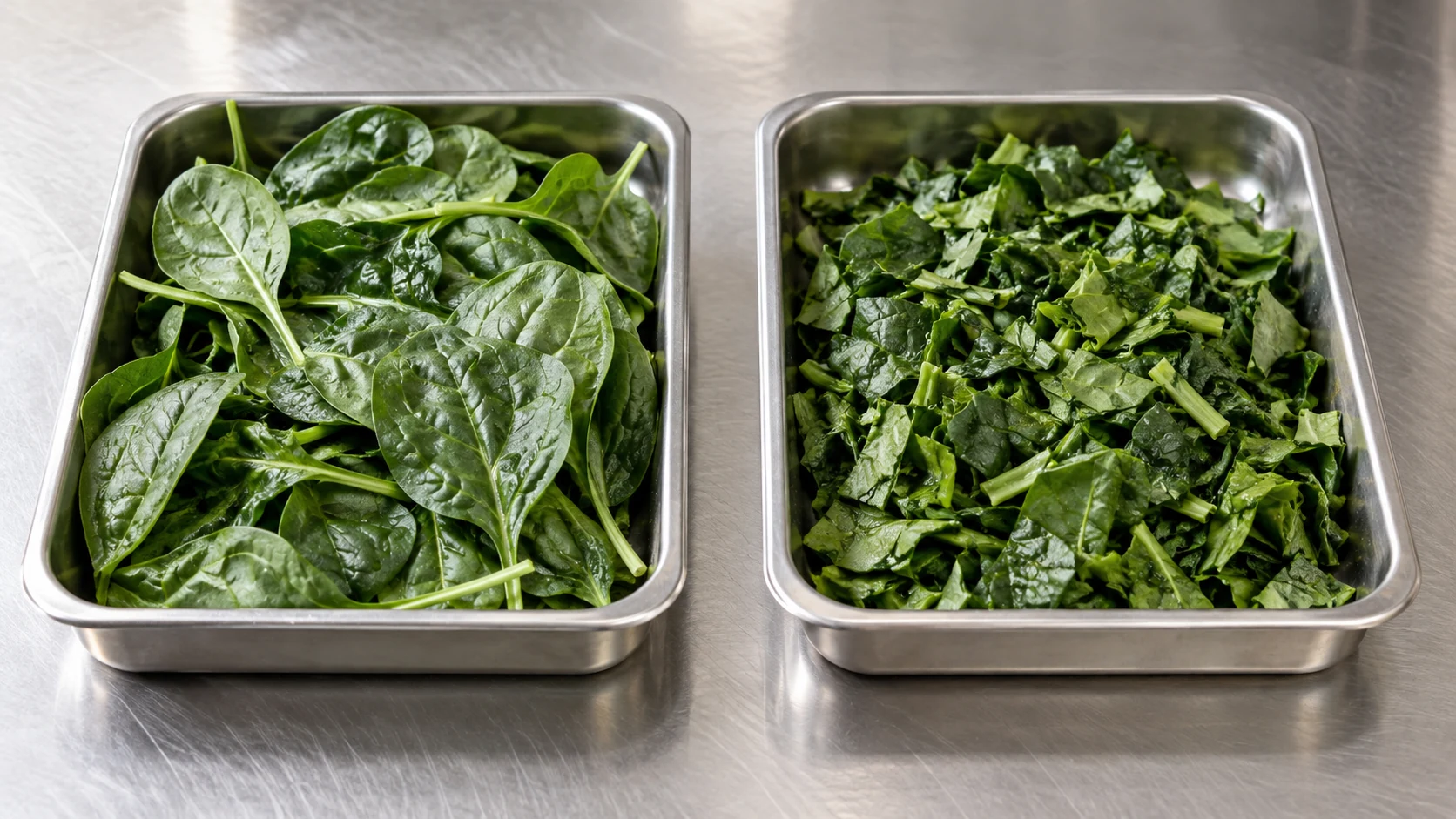
A purchasing specification should begin with the commercial product that the factory intends to make. “Frozen spinach” is too broad for machine selection because whole-leaf spinach, cut-leaf spinach, chopped spinach and puree-like spinach are not interchangeable products. A cutter suited to long sections may be inappropriate for a product evaluated as small irregular leaf pieces, while a fine chopper can create a material state that no longer resembles a conventional cut-leaf IQF product.
The applicable product specification also matters. Codex CXS 320-2015, Annex on Spinach (amended 2022), for example, distinguishes chopped spinach from puree and describes chopped spinach in terms of pieces ranging from 3 to 10 mm in their largest dimension. The voluntary USDA AMS Frozen Leafy Greens grade standard describes chopped product as less than approximately 20 mm in the longest dimension. The difference is important because neither description should automatically be imposed on every project. The buyer should identify the customer specification, voluntary grade standard, regulation or internal acceptance rule that actually applies. The Codex standard excludes products specifically indicated for further processing or other industrial purposes, so its applicability must be checked against the intended sale and use.
That distinction also prevents a common RFQ error: treating a machine’s cut-length setting as if it were automatically the longest dimension of every spinach piece. Spinach leaves fold, overlap and enter a cutter in irregular orientations. A cutter can control the movement of product past the cutting mechanism, but irregular leaf geometry means the resulting pieces are not necessarily described by a single nominal dimension.
The buyer should therefore define how the product will actually be checked. Is the relevant inspection made immediately after cutting? After blanching and cooling? At the freezer discharge? Or during finished-product quality inspection? The answer determines what an upstream equipment trial can reasonably demonstrate.
This becomes especially important when commercial terminology is loose. A processor may say “chopped spinach” but actually want short strips, small leaf fragments, a relatively coarse chopped texture or a much finer filling-like preparation. Those are different equipment problems. Supplying a representative accepted sample, photographs of the desired product and a written inspection method can reduce ambiguity before any machine is selected.
2. Map Incoming Spinach and Manual Preparation Responsibilities
The second decision concerns the spinach arriving at the factory. A line designed around loose trimmed leaves can behave very differently when the incoming material consists of tied bunches, plants with roots or crowns attached, long stem clusters, soil, weeds and mixed foreign matter. Even within the same product, seasonal and farm-to-farm differences can change the amount of manual preparation required before spinach reaches the first powered machine.
A useful RFQ describes the incoming material operationally rather than simply writing “fresh spinach.” Relevant details include whether spinach arrives in bunches or loose form, whether roots or crowns have already been removed, the typical stem condition, the level and type of visible soil, common weeds or field debris, and the proportion of yellow, damaged or rejected leaves normally removed by operators.
Manual responsibilities should be made explicit in the process flow. Root or crown trimming, opening bunches, removing damaged leaves and rejecting foreign material should not disappear from the project simply because automated equipment is being considered. If the incoming condition requires these tasks, the line needs an appropriate inspection or trimming position and a clear definition of what operators are expected to remove.
The distinction between manual preparation and machine function is commercially important. Automatic root removal, crown trimming or defect recognition should not be assumed unless the proposed machine is specifically designed and supported for that task. In many frozen-spinach plants, a controlled manual inspection stage remains a practical part of the pre-processing route.
3. Choose Washing and Transfer Around the Actual Feed State
Washing is not a single universal operation for spinach. The correct arrangement depends on whether the plant intends to wash relatively intact plants or leaves before cutting, wash a cut product, or use more than one washing stage for a defined process reason. Equipment selection also depends on how soil and floating debris are removed, how water is filtered and refreshed, how lightweight spinach is retained, and how the product is transferred without excessive accumulation or loss of small pieces.
TEEMYEAH’s TW-706L whole-vegetable washing system conveys whole spinach through washing and transfers it to the next process. Match the washing arrangement to the incoming leaf and stem condition, soil load, water-management requirements and downstream equipment. When the line receives whole plants or bunches, include the necessary trimming and sorting before machine feeding.
The distinction between whole-product and cut-product washing is particularly relevant with spinach because cutting can increase the number of small pieces entering the water system. Product retention, screening and accessible filter cleaning can become more important when the line handles shorter fragments. Water carryover into the next stage can also change after cutting because a greater surface area and more irregular pieces may hold water differently.
The whole-leaf versus cut-leaf washing guide compares the two washing sequences. For a frozen-spinach line, choose the sequence around the required leaf form, incoming soil and debris, cutting stage and downstream handoff.
The transfer between washing and cutting deserves as much attention as the washer itself. Spinach is lightweight, flexible and easily accumulated. A conveyor or lift should be selected with the actual product state in mind: long leaves, short sections, wet blanched product and fine chopped material do not necessarily transfer in the same way. Accumulation at an interface can create short-term feed surges even if the average hourly output appears acceptable.
Sanitizing chemistry, where used by the processor, should be treated as part of the processor’s validated food-safety program rather than assumed from the washing machine alone. The equipment configuration can address washing action, water circulation, filtration and transfer. Chemical concentration, contact conditions and verification procedures depend on the plant’s own operating and regulatory requirements.
4. Match Spinach Processing Equipment to the Required Cutting Route
The cutting section is where superficially similar frozen-spinach projects can become technically different. A buyer requesting “cut spinach” may need simple transverse sections. Another may require smaller two-dimensional pieces. A third may be producing a finely chopped or paste-like filling product. These outputs call for different cutting mechanisms and, just as importantly, different feed conditions.
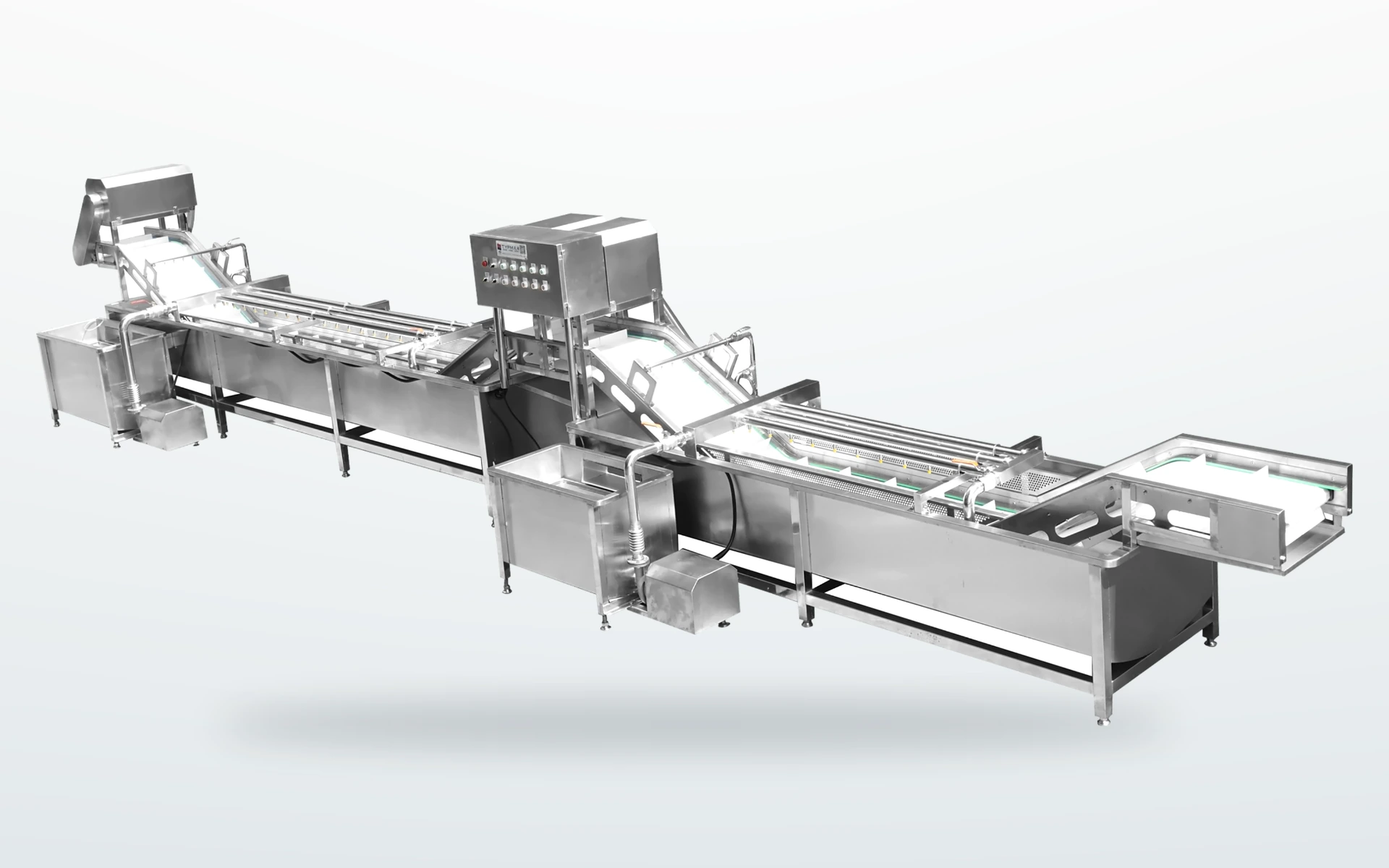
Selecting spinach processing equipment starts with matching the cutting mechanism to the required leaf form. Section cutters, two-dimensional cutters and fine choppers have different roles; compare them using the actual feed material and the product specification.
The TW-806 large vegetable cutter processes spinach and other leafy or long produce into slices, shreds or sections. Its standard adjustable cut length is 1–45 mm, while an optional 1–60 mm configuration requires project confirmation. The belt is 165 mm wide. Check how the incoming spinach fits the feed arrangement, and select the cut setting against an accepted product sample. Confirm sustainable output with the actual feed density, preparation requirements and connected equipment.
The TW-805 is another option for cutting fresh spinach into sections. Compare the required section length, feed arrangement and operating output with the needs of the intended route.
| Machine or route | Preparation role | What the buyer still needs to establish |
|---|---|---|
| TW-806 section cutter | Spinach section cutting. Adjustable length is 1–45 mm, with optional 1–60 mm project customization. Belt width is 165 mm. | Actual spinach feed condition, required commercial cut definition, accepted sample appearance and required project output. |
| TW-805 section-cut route | Fresh spinach section cutting. | Whether the observed section style matches the buyer’s specification and intended process order. |
| TW-1000NS 2D cutting route | Two-dimensional cutting of sheet-form or small-piece feed using circular and crosscut components. | Suitability for the buyer’s actual blanched/cooled spinach, desired particle form and stable feeding behavior. |
| TY-923 fine chopping route | Fine or paste-like spinach preparation for fillings, with speed adjustment, replaceable cutting parts and an optional lifting feeder. | Whether the required product is genuinely fine or paste-like rather than cut-leaf or conventional chopped IQF spinach, and whether the intended feed condition is suitable. |
The TY-923 filling chopper prepares finely chopped or paste-like spinach for filling applications. Consider this route when that texture matches the required product. Agree the required finish with a representative sample: a paste-like filling and an IQF chopped-leaf product need different output specifications.
For a two-dimensional cutting route, review the TW-1000NS, which uses circular and crosscut components to cut sheet-form or small-piece feed. Where cutting is planned after blanching and cooling, confirm the feed arrangement, tooling and resulting cut with the spinach in that actual condition. Include feeding stability, leaf clumping and the accepted particle form in the trial criteria.
When comparing spinach processing equipment, the useful question is therefore not “Which cutter makes the smallest number?” It is “Which cutting mechanism matches the required product form when receiving the actual material state used in this factory?” Feed state, moisture, softness, leaf overlap and the location of cutting in the process can all influence that answer.
5. Coordinate Cutting, Blanching and Cooling as One Process-Order Decision
A pre-IQF spinach line should not be specified by treating washing, cutting, blanching and cooling as independent boxes. Their order affects feed texture, water pickup, transfer behavior and the condition presented to the next machine. A cutter receiving fresh leaves is handling a different material from a cutter receiving softened, wet, cooled spinach after blanching.
Codex CXC 8-1976, the Code of Practice for the Processing and Handling of Quick Frozen Foods, treats preparation before freezing, delays before freezing, product condition, shape, initial temperature and feed quantity as relevant factors in the overall freezing process. It does not prescribe one spinach-machine arrangement, but it reinforces the need to coordinate upstream preparation with the downstream freezing stage.
A 2019 study by Wójcik-Stopczyńska and Kiedos also illustrates why raw material and process order should be considered together. Their cultivar-specific spinach experiment compared whole and hand-cut material and raw versus blanched preparation before frozen storage. The study used one cultivar and small batches of hand-cut material. For line planning, the practical implication is that changing the preparation state and process sequence changes the material entering later stages, so the buyer should evaluate the actual spinach and intended process order together rather than assume that one arrangement transfers unchanged to another.
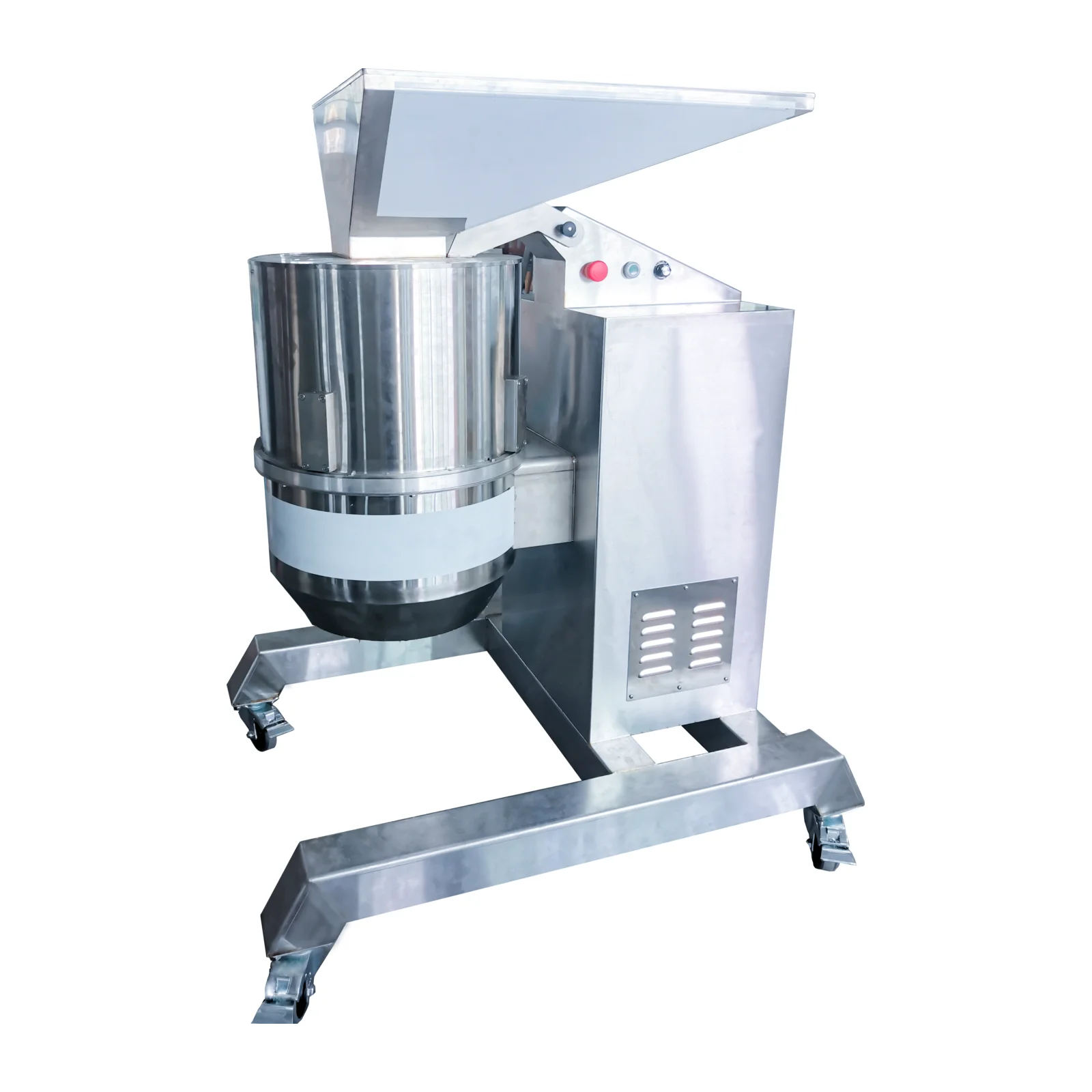
The TW-35 steam blancher/washer uses an external steam supply, temperature control, water agitation and a variable-speed conveyor. It can also operate in a separate non-heated washing mode. For a spinach project that includes this module, confirm the steam and electrical supply, loading condition, operating temperature, residence time and downstream cooling arrangement. These settings should follow the processor’s product and process requirements.
If the customer intends to keep an existing blancher or cooling system, that does not automatically prevent a new upstream washing or cutting section from being added. The important issue is the interface. The project should document the existing blancher’s inlet height, acceptable feed form, feeding rhythm, current loading method, discharge state and the condition of spinach after cooling. A new cutter or transfer system can then be evaluated around that real handoff instead of requiring replacement of equipment that may still be suitable.
Cutting after blanching deserves particular attention because softened leaves may fold, compress or feed differently from raw spinach. If this route is being considered, testing with the customer’s actual blanched and cooled product can provide more useful information than relying on fresh spinach or a different leafy vegetable.
6. Define Surface-Water Removal and Controlled Feeding Before IQF
After washing or cooling, the project needs a precise definition of what “dewatering” means. Removing free surface water is not the same as drying spinach, pressing it or mechanically expressing water from the tissue. Each mechanism can create a different product state, and that state affects the equipment that follows.
An equipment-supplier article from OctoCore discusses dewatering and subsequent loosening or distribution as separate tasks in an IQF spinach route. The useful point for specification is that surface-water removal and preparation of an even downstream feed are not necessarily one mechanical operation.
Before a buyer specifies a centrifuge, vibrating dewaterer, press or another moisture-removal device, the downstream supplier or plant engineering team should describe the inlet condition that it actually expects. Relevant questions include acceptable surface-water condition, product temperature, degree of clumping, layer or spreading requirement, instantaneous feed behavior and whether the next stage expects continuous or batch delivery.
This prevents the word “dewatering” from becoming a substitute for an engineering requirement. A centrifuge may remove surface water but introduce a batch cycle. A press can alter the physical state of the leaves. A downstream spreading step may still be required even if water removal is effective. Those functions should be separated in the RFQ so that each supplier understands what it is expected to deliver.
7. Size and Validate the Complete Pre-Processing Scope
Capacity should be specified at defined process points rather than as one headline number. “1,000 kg/h spinach line” is ambiguous unless the parties state whether it refers to raw incoming spinach, accepted product after manual sorting, wet spinach after washing, cut product at a particular stage or accepted output delivered to the next process.
Those quantities can differ because of roots, crowns, foreign matter, rejected leaves, rework, retained wash water, batch accumulation and process transfers. Machine nameplate figures should not simply be added together or assumed to produce the same effective output when machines operate under different feed and cleaning conditions.
The line should instead be reviewed as an operating rhythm. Where does manual inspection occur? Can one machine feed the next continuously? Does a batch dewatering step interrupt an otherwise continuous line? Where can product accumulate if a downstream stage temporarily slows? How is accumulated spinach cleared without mixing lots or creating uncontrolled residence time? These operating questions often reveal more than a catalogue-capacity comparison.
For expansion projects, the starting point should be the real constraint in the current factory. The bottleneck may be washing, cutting, trimming, blancher feeding, cooling discharge, dewatering or downstream intake. Adding a higher-capacity cutter does not solve the problem if the retained blancher cannot accept the resulting feed rhythm or if the downstream stage regularly stops.
A practical RFQ for spinach processing equipment should therefore include:
- raw spinach format and normal incoming condition, including roots, crowns, bunching, soil and rejected leaves;
- representative variation between farms, suppliers or seasons where that variation affects feed preparation;
- the required frozen-product category and the specification used to judge whole, cut, chopped or puree-like material;
- the desired cut or texture and the process stage at which it will be inspected;
- the intended order of sorting, trimming, washing, cutting, blanching, cooling and surface-water removal;
- raw incoming kg/h and required accepted output at the agreed pre-processing handoff;
- whether each interface operates continuously or in batches;
- the downstream intake condition for moisture, temperature, clumping and feed rhythm;
- which existing machines are being retained and their relevant inlet and outlet interfaces; and
- which modules and responsibilities are included, excluded or supplied by others.
Representative trials can then be designed around the decisions that matter. For a cutter, the trial may examine feeding behavior and the accepted intermediate cut. For a washing stage, the team may examine transfer, retention of spinach and water-management behavior. If the planned route involves blanched/cooled spinach entering a cutter, the customer’s actual material should be used where practical rather than substituting a materially different feed.
Operational RFQ Questions Buyers Should Resolve Before Ordering
Should representative spinach samples come from more than one farm or supplier?
If farm-to-farm variation materially changes roots, stem length, soil load, bunching or leaf size, evaluating more than one representative source is useful. The goal is not to test every possible harvest condition, but to avoid selecting equipment around one unusually clean or uniform batch. A practical approach is to identify the normal range of incoming material and include samples that represent the conditions the factory expects to handle routinely.
When should the customer’s actual blanched and cooled spinach be used in a cutting trial?
It is particularly valuable when the proposed cutter will operate after blanching and cooling in production. Blanched spinach can differ from fresh spinach in softness, folding, moisture and feeding behavior. If the customer already has an established blanching and cooling process, supplying representative output from that process allows the cutting evaluation to focus on the material the machine will actually receive. Where transporting that material is impractical, the parties should at least document the relevant feed condition and agree which uncertainties remain to be checked during commissioning.
What handoff should be agreed if the IQF freezer or another downstream stage stops?
The upstream and downstream suppliers should define what happens to spinach already in process. The line may need a controlled stop sequence, a temporary accumulation point, a method for preventing upstream machines from continuing to discharge into a blocked interface, or a procedure for separating product affected by an extended interruption. The correct arrangement depends on the plant layout and process owner, but responsibility should be agreed before commissioning rather than discovered during the first downstream stoppage.
How should wash-water pickup be handled when comparing output figures?
Use clearly defined weighing points. Raw spinach weight, accepted trimmed weight, wet weight immediately after washing and weight after surface-water removal can all differ for reasons unrelated to true finished-product yield. When suppliers quote or test kg/h, the buyer should record where the measurement was taken and the product condition at that point. This makes competing proposals easier to compare and prevents retained surface water from being mistaken for additional usable spinach output.
Which checks should be repeated after a blade change or a change in spinach supplier?
Repeat the checks most directly affected by the change. After replacing or changing cutting parts, inspect the resulting cut form, feeding behavior and any increase in tearing or irregular pieces. If the spinach supplier changes substantially, review stem length, leaf size, bunching, soil load and how the product enters the washer and cutter. A material change does not automatically require revalidating every machine, but the plant should recheck the process characteristics that depend on that variable.
Can an existing blancher be retained when new spinach processing equipment is installed upstream?
Yes, provided the interface can be defined and the existing blancher remains suitable for the processor’s intended operation. The project should record its inlet geometry, acceptable product form, loading method, normal feed rhythm, discharge condition and connection to cooling. New washing, cutting and transfer equipment can then be configured around those conditions. Retaining the blancher should be treated as an interface-design task, not as an assumption that a new pre-processing section automatically requires replacement of the existing thermal equipment.
How should buyers compare quotations when suppliers omit different modules?
Create a responsibility matrix beside the equipment comparison. List sorting and trimming, washing, filtration, cutting, inter-machine transfers, blanching, cooling, surface-water removal, accumulation, control integration, utilities, installation and the final downstream handoff. Mark each item as included, customer-supplied or supplied by another contractor. This exposes differences that a machine-price comparison can hide and makes it easier to see whether one quotation genuinely covers more of the required process or simply leaves more interfaces unresolved.
From Frozen-Product Specification to a Practical Equipment Request
For a frozen-spinach processor, the most useful equipment discussion begins with four concrete descriptions: what arrives at the factory, what spinach form must leave the pre-processing section, in what order the product will be washed, cut, blanched and cooled, and what condition the next stage expects to receive. Once those are defined, individual machines can be evaluated as parts of a connected route rather than as isolated catalogue items.
To request a project configuration, use the TEEMYEAH custom project form and Share Your Spinach Cut and IQF Intake Requirements. In the text fields, describe the raw feed condition, target cut or texture, required hourly output, intended process order and downstream intake requirements. If representative product photos are available, mention them for follow-up. TEEMYEAH can then evaluate suitable pre-processing modules and the interfaces between them against the stated project requirements.
Source Note
Process context in this article draws on Codex CXC 8-1976 for quick-frozen-food handling, Codex CXS 320-2015, Annex on Spinach (amended 2022) and the voluntary USDA AMS Frozen Leafy Greens grade standard for product-description context, the 2019 Wójcik-Stopczyńska and Kiedos cultivar-specific spinach study for the relationship between preparation state and subsequent frozen storage, and an OctoCore supplier article for the distinction between surface-water removal and subsequent product distribution.