







Summary
A reliable industrial leafy vegetable processing line depends on far more than installing individual machines. Product quality, food safety, labor efficiency, production consistency, and business scalability are all influenced by how cutting, washing, sanitizing, dewatering, inspection, conveying, packaging, sanitation management, and production planning work together as one process. Whether producing fresh-cut lettuce, spinach, cabbage, baby leaves, herbs, or mixed salad products, processors must balance product protection with operational efficiency while adapting to seasonal raw-material variation and changing customer requirements.
This leafy vegetable processing guide explains the complete processing framework used by central kitchens, fresh-cut vegetable processors, food manufacturers, and ready-to-cook (RTC) and ready-to-eat (RTE) production facilities. It discusses why each processing step matters, what operational problems commonly occur, which performance indicators should be measured, and when manual preparation, semi-automation, or integrated production lines may each be commercially appropriate. The guide also explains the different food safety expectations for RTC and RTE products, common causes of quality loss, and practical considerations for equipment selection, line balance, hygienic design, and future capacity expansion.
Rather than treating automation as a goal by itself, this guide approaches equipment selection as part of overall process design. The objective is to help project teams evaluate their current preparation process, identify operational bottlenecks, and understand which improvements deliver the greatest long-term value for their specific products, production volume, and business strategy.
Leafy Vegetable Processing Is a Process, Not a Single Machine
Leafy vegetables appear simple to process, yet they present some of the most demanding challenges in commercial food preparation. Unlike root vegetables, leafy greens have delicate cellular structures, high surface area, natural variation in size and shape, and relatively short shelf life. Small changes in handling can affect appearance, moisture retention, texture, yield, and microbial risk.
Commercial processors therefore manage far more than cutting vegetables into smaller pieces. Every processing decision influences downstream operations. A cutting method affects washing efficiency. Washing influences sanitizer performance. Dewatering changes package appearance and shelf stability. Production scheduling affects product residence time before packaging. Even facility layout can influence cross-contamination risk and cleaning efficiency.
For organizations supplying supermarkets, restaurant chains, hospitals, schools, airline catering, industrial catering, or ready-meal manufacturers, consistent production often becomes increasingly difficult as order volume grows. Manual preparation that performs adequately at several hundred kilograms per day may become difficult to sustain once production expands across multiple shifts or product varieties.
At the same time, increasing automation does not automatically improve performance. Poor process design, incorrect equipment sizing, insufficient sanitation procedures, or inadequate operator training can reduce efficiency despite significant capital investment. Successful projects therefore begin with understanding the complete process flow before selecting equipment.
This pillar guide establishes that framework. Later sections of the complete guide will examine production capacity, line balancing, dewatering, quality control, investment evaluation, maintenance planning, and equipment configuration in greater detail.
What Does Leafy Vegetable Processing Include?
Leafy vegetable processing refers to the controlled sequence of operations that transforms harvested leafy greens into products suitable for commercial food preparation, retail sale, or further manufacturing. Depending on the finished product, processing may include receiving, inspection, trimming, cutting, washing, sanitizing, rinsing, dewatering, sorting, mixing, conveying, packaging, cold storage, and distribution.
The exact workflow differs according to product category, customer requirements, packaging format, and whether additional cooking will occur before consumption. Nevertheless, every commercial process seeks to achieve several objectives simultaneously:
- Maintain product quality throughout production.
- Reduce physical damage to delicate leaves.
- Control food safety risks through validated processing and sanitation procedures.
- Produce consistent cuts and product appearance.
- Support predictable production scheduling and throughput.
- Minimize unnecessary product loss.
- Create a repeatable process that can be monitored and improved over time.
These objectives often compete with one another. Increasing conveyor speed may improve hourly throughput while also increasing mechanical damage. More aggressive washing may remove additional field debris but also shorten leaf life if not carefully controlled. Larger production batches may reduce labor per kilogram while increasing work-in-progress inventory and waiting time before packaging.
Process optimization therefore requires balancing multiple variables rather than maximizing any single production metric.
The Complete Leafy Vegetable Processing Flow
Although facilities differ in size and product mix, a typical commercial process follows a structured sequence designed to reduce contamination risks while preserving product quality.
- Raw material receiving and inspection
- Temporary cold storage where required
- Manual or automated sorting
- Removal of damaged or unsuitable leaves
- Core removal or trimming where applicable
- Cutting or shredding
- Primary washing
- Sanitizing under controlled process conditions
- Final rinsing where required by process design
- Dewatering
- Final inspection
- Mixing for blended products
- Weighing and packaging
- Cold storage before shipment
Each stage prepares the product for the next operation. Problems introduced early in the process often become increasingly difficult to correct later. For example, inconsistent cutting may reduce washing effectiveness, while inadequate dewatering can negatively influence package appearance and storage performance.

Cutting: The First Critical Quality Control Point
Cutting is frequently viewed as a productivity step, yet it is equally a quality and food safety consideration. Every cut creates exposed plant tissue that becomes more susceptible to moisture loss, enzymatic browning, mechanical damage, and microbial attachment. The objective is therefore not simply to achieve the desired product size, but to produce clean, consistent cuts while minimizing unnecessary tissue injury.
Why Cutting Consistency Matters
Commercial customers often specify precise product dimensions because consistent cut size influences downstream cooking, portion control, package presentation, and customer perception. Uniform cuts also improve the consistency of subsequent washing and dewatering processes by reducing excessive variation in product movement through the line.
Inconsistent cutting can create several operational issues:
- Higher percentages of unusable fragments.
- Uneven washing performance.
- Variable moisture removal during dewatering.
- Inconsistent product appearance.
- Reduced yield caused by excessive trimming.
Balancing Productivity and Product Protection
Increasing cutting speed is not always beneficial. Excessive mechanical force, poorly maintained blades, or unsuitable cutting methods may bruise leaves or create irregular edges that accelerate quality deterioration during storage.
Routine blade inspection, preventive maintenance, and standardized operating procedures are therefore as important as machine capacity. Even highly automated systems require ongoing adjustment to accommodate differences in raw material size, maturity, moisture content, and seasonal growing conditions.
Performance Indicators Worth Measuring
Instead of evaluating cutting performance only by kilograms processed per hour, processors often monitor a broader group of operational indicators, including:
- Percentage of product meeting specification.
- Trim loss and overall yield.
- Average blade replacement frequency.
- Product damage observations.
- Downtime related to cutting equipment.
- Operator intervention frequency.
Tracking these measurements over time provides a clearer picture of process stability than production speed alone.
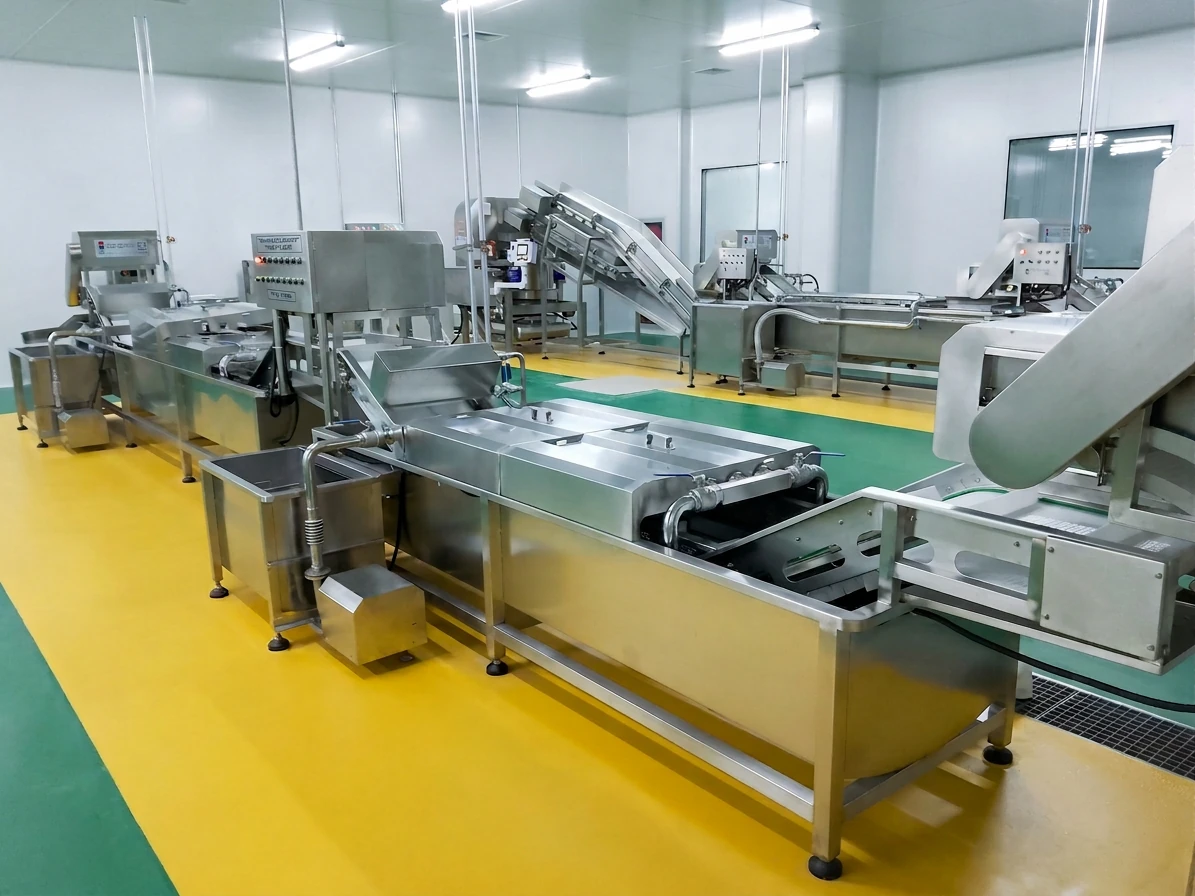
Washing: Removing Field Contamination While Protecting Product Quality
Freshly harvested leafy vegetables typically carry soil particles, organic matter, insects, plant debris, and naturally occurring microorganisms from the growing environment. Washing is intended to remove physical contamination and reduce the microbial load on product surfaces as part of an overall food safety management system. Washing alone, however, does not sterilize fresh produce and should not be viewed as a substitute for good agricultural practices, hygienic facility design, or effective sanitation management.
Water quality plays a central role throughout the washing process. As production continues, wash water can accumulate soil, plant material, and microorganisms released from incoming product. Without effective water management, contamination may be transferred between batches within the washing system. Industry guidance therefore emphasizes maintaining appropriate process controls, monitoring water quality, and managing sanitizer performance throughout production.
Design Objectives of Commercial Washing Systems
- Remove visible soil and foreign material.
- Reduce the accumulation of organic matter in process water.
- Support effective sanitizer performance.
- Minimize physical damage to delicate leaves.
- Maintain consistent product flow through downstream operations.
Common Operational Challenges
Leafy vegetables behave differently depending on species, maturity, harvest conditions, and product format. Baby spinach, romaine lettuce, kale, herbs, and mixed salad leaves each respond differently to water flow, residence time, and mechanical agitation.
Common processing challenges include:
- Floating leaves that reduce washing uniformity.
- Entrapped soil remaining within folded leaves.
- Mechanical bruising caused by excessive turbulence.
- Variable throughput caused by inconsistent product loading.
- Water carryover into downstream equipment.
Rather than relying on a single washing parameter, processors typically evaluate the interaction between water flow, residence time, product loading, agitation, and subsequent dewatering performance.
Sanitizing: Reducing Cross-Contamination Risk During Processing
Sanitizing is closely associated with washing but serves a different purpose. Within commercial fresh-cut processing, sanitizing helps control microbial contamination in process water and reduces the potential for microorganisms to spread from contaminated product to uncontaminated product during washing. Sanitizer effectiveness depends on the specific process, water chemistry, organic load, concentration, contact conditions, and operational control.
No sanitizer can compensate for poor raw material quality or inadequate food safety management. Likewise, sanitizing cannot eliminate every microorganism present on fresh leafy vegetables. Effective food safety depends on preventive controls extending from primary production through processing, packaging, storage, and distribution.
Operational Considerations
Commercial facilities typically establish documented procedures for monitoring sanitizer concentration, water quality, process conditions, corrective actions, verification activities, and employee responsibilities. These procedures should align with applicable regulatory requirements and the facility’s food safety management system.
Routine monitoring is important because sanitizer performance may change during production as water characteristics evolve. Organic matter introduced from harvested vegetables can influence sanitizer effectiveness, making continuous process management more important than a single measurement taken at the beginning of a production shift.
Common Misunderstandings
Several misconceptions appear regularly in discussions about vegetable sanitizing.
- Sanitizers reduce risk but do not create sterile products.
- Increasing concentration beyond validated operating conditions does not necessarily improve food safety.
- Longer exposure times are not automatically beneficial and may negatively affect product quality.
- Equipment sanitation and environmental hygiene remain essential even when produce is washed with sanitizer.
- Employee training, hygienic handling, and process verification remain critical parts of contamination prevention.
Food safety authorities consistently emphasize preventive systems that combine hygienic design, validated operational controls, environmental sanitation, employee practices, and documented monitoring rather than depending on any individual processing step.
Understanding the Difference Between Ready-to-Eat and Ready-to-Cook Processing
One of the most important decisions in designing a leafy vegetable processing operation is determining whether products will be marketed as ready-to-eat (RTE) or ready-to-cook (RTC). Although both categories may begin with similar raw materials, they have different customer expectations, production controls, and risk management priorities.
Ready-to-cook products are intended to undergo a cooking step before consumption. Cooking may significantly reduce microbial hazards when properly performed, although processors should never assume that downstream preparation compensates for poor manufacturing practices.
Ready-to-eat products, including packaged salads and similar fresh-cut leafy greens, are consumed without a further pathogen-reduction cooking step by the end user. Because there is no subsequent kill step after production, contamination introduced or allowed to spread during processing may remain with the finished product. For this reason, RTE processing generally requires more stringent operational controls, hygienic zoning, sanitation verification, environmental monitoring, employee hygiene practices, and process documentation.
| Processing Consideration | Ready-to-Cook (RTC) | Ready-to-Eat (RTE) |
|---|---|---|
| Expected consumer preparation | Cooked before consumption | Consumed without additional cooking |
| Food safety emphasis | Controlled processing with recognition of downstream cooking | Prevent contamination throughout production because no consumer kill step is expected |
| Process documentation | Important for quality and traceability | Typically requires more comprehensive monitoring and verification |
| Facility hygiene expectations | Product-specific | Often involves stricter hygienic zoning and environmental control |
| Customer specifications | Often focused on preparation performance | Frequently include detailed food safety and quality requirements |
The distinction also influences equipment selection, production scheduling, personnel flow, cleaning procedures, and facility layout. A production line designed primarily for RTC ingredients may require different operational controls from one producing packaged salad mixes intended for immediate consumption.
Choosing between manual preparation, semi-automated processing, or an integrated production line should therefore begin with the intended product category and associated food safety objectives rather than production capacity alone.
Dewatering: Removing Excess Surface Water Without Damaging the Product
After washing and sanitizing, leafy vegetables retain surface moisture that can affect packaging performance, appearance, product weight, shelf stability, and downstream handling. Dewatering is intended to remove free water while preserving leaf integrity. It is not a drying process in the conventional sense. The objective is to leave the product clean, fresh-looking, and appropriately drained rather than dehydrated.
Too much residual moisture may encourage water accumulation inside packages, dilute modified atmosphere conditions where applicable, increase package condensation, and reduce visual appeal. Excessively aggressive dewatering, however, may bruise leaves, accelerate moisture loss from damaged tissue, or reduce overall yield if fragile material breaks apart.
Finding the correct operating window requires balancing several variables simultaneously, including product variety, leaf maturity, cut size, moisture content, loading rate, equipment settings, and packaging requirements.
Common Dewatering Objectives
- Reduce free surface water before packaging.
- Maintain leaf freshness and visual quality.
- Avoid excessive mechanical stress.
- Create consistent downstream product flow.
- Improve packaging efficiency.
- Reduce unnecessary product handling.
Operational Mistakes to Avoid
- Using one dewatering setting for every product variety.
- Increasing speed simply to match upstream production.
- Ignoring product temperature during moisture removal.
- Allowing excessive waiting time before packaging.
- Judging performance only by visible dryness instead of overall product condition.
Effective dewatering should always be evaluated together with washing, packaging, storage, and customer acceptance rather than as an isolated process step.
Inspection, Sorting, and Mixing: Where Product Consistency Is Built
Inspection remains essential even in highly automated facilities. Natural agricultural products vary from field to field and season to season. Mechanical processing improves consistency, but it cannot eliminate the need for quality verification.
Inspection activities may include removing damaged leaves, identifying foreign material, confirming cut quality, checking product color, monitoring moisture condition, and verifying that product specifications continue to be met throughout production.
Inspection Priorities
- Foreign material removal.
- Damaged or discolored leaves.
- Cut-size consistency.
- Residual moisture evaluation.
- Visual freshness.
- Product specification compliance.
Mixed salad production introduces additional complexity because multiple ingredients must remain evenly distributed throughout the batch. Uneven mixing may create customer complaints despite every individual ingredient meeting specification.
Process engineers therefore evaluate mixing not only by ingredient ratios but also by product handling. Excessive mixing time can increase mechanical damage, while insufficient mixing reduces batch uniformity.
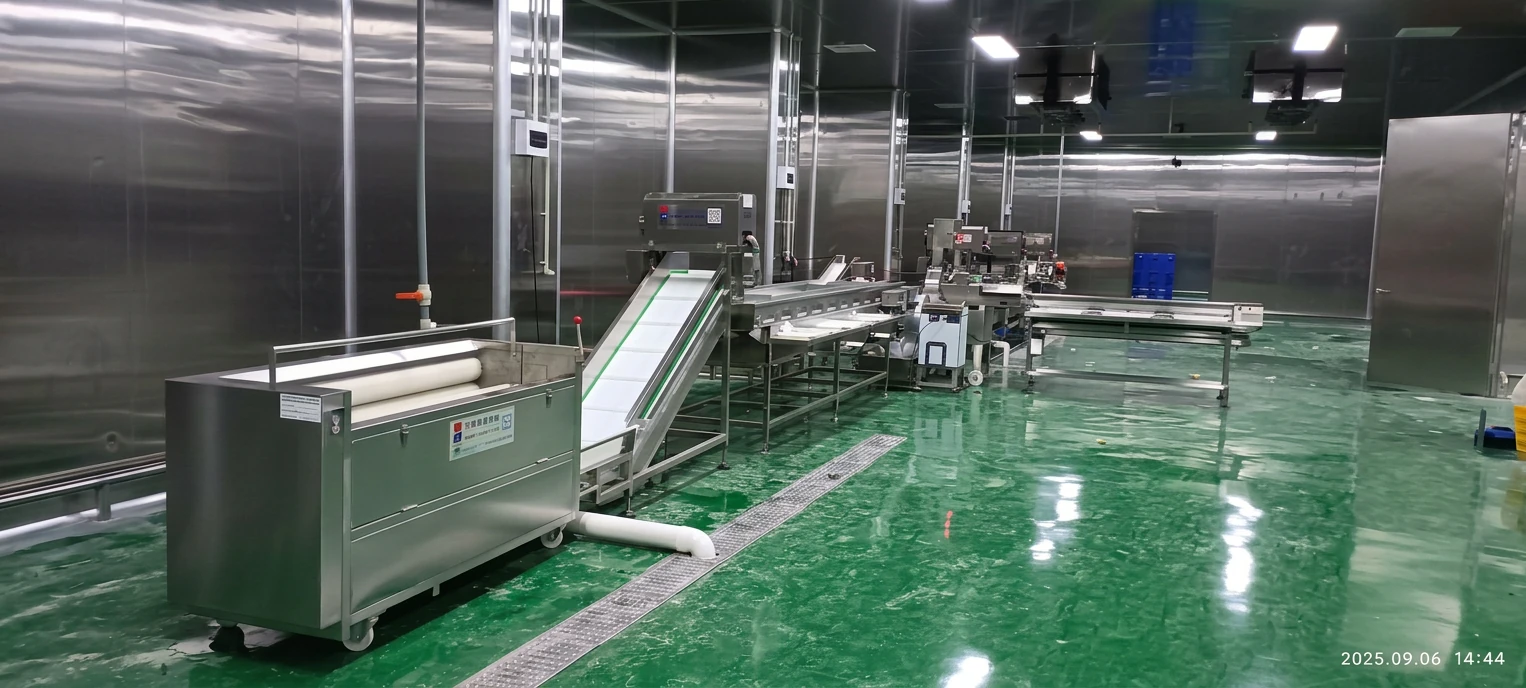
Hygienic Zoning and Sanitary Design Across the Production Line
Food safety depends on much more than the washing system. The overall production environment influences contamination risk before, during, and after processing. Hygienic zoning separates activities according to their relative food safety risk and helps reduce opportunities for cross-contamination between raw materials, personnel, equipment, waste, and finished products.
The exact zoning strategy varies between facilities, product categories, and regulatory requirements, but the underlying objective remains consistent: prevent contaminants from moving into areas where products become increasingly vulnerable.
Typical Hygienic Design Considerations
- Logical product flow from receiving to packaging.
- Controlled personnel movement between production areas.
- Separate waste handling routes where practical.
- Equipment designed for effective cleaning and inspection.
- Accessible surfaces that minimize residue accumulation.
- Drainage that supports sanitary operation.
- Adequate space for cleaning and maintenance.
Sanitary design also influences operational efficiency. Equipment that is difficult to clean often increases sanitation labor, extends production changeovers, and shortens available production time.
Cleaning Time Is Production Time
Many investment discussions focus exclusively on hourly throughput. In practice, available production time also depends on cleaning, inspection, maintenance, product changeovers, and startup verification.
A line capable of high theoretical throughput may deliver lower daily output if sanitation requires lengthy disassembly or if production must stop frequently to remove accumulated product debris.
Evaluating equipment should therefore include questions such as:
- How long does routine cleaning require?
- Which components require manual disassembly?
- How accessible are food-contact surfaces?
- How easily can operators verify cleaning effectiveness?
- How much production time is lost during product changeovers?
Capacity, Throughput, and Line Balance: Why the Fastest Machine Rarely Determines Production
Production capacity is often misunderstood because equipment catalogs typically describe theoretical machine output under standardized operating conditions. Real production depends on the interaction of every processing stage, operator availability, sanitation requirements, raw-material variability, and production scheduling.
The practical objective is not maximizing the speed of individual equipment but achieving balanced flow across the entire processing line.
The Difference Between Capacity and Throughput
Theoretical capacity describes what equipment may process under ideal operating conditions.
Actual throughput reflects what the complete production system consistently delivers after considering product variation, maintenance, inspections, sanitation, changeovers, and normal operational interruptions.
A cutting machine capable of processing significantly faster than the washing system does not increase finished-product output. Instead, it often creates temporary product accumulation, longer waiting times, unnecessary handling, and greater risk of quality deterioration.
Understanding Line Balance
Line balance means matching the practical capacity of each processing stage so that product moves continuously without excessive waiting or bottlenecks.
| Processing Stage | Typical Objective | If Capacity Is Too Low | If Capacity Is Too High |
|---|---|---|---|
| Sorting | Stable product feed | Line starvation | Operator waiting time |
| Cutting | Consistent product preparation | Production bottleneck | Work-in-progress accumulation |
| Washing | Controlled cleaning process | Queue formation | Underutilized investment |
| Dewatering | Stable moisture removal | Packaging delays | Idle upstream equipment |
| Packaging | Continuous finished-product flow | Finished-product backlog | Frequent idle time |
Balanced production usually delivers better long-term performance than isolated equipment upgrades.
Practical Process Flow for Commercial Leafy Vegetable Processing
The following text-based process flow provides a practical framework for evaluating an existing operation or planning a new processing line. Individual facilities may add, remove, or combine steps depending on products and customer requirements.
Raw Material Receiving
          ↓
Inspection and Acceptance
          ↓
Cold Holding (if required)
          ↓
Sorting and Trimming
          ↓
Cutting
          ↓
Primary Washing
          ↓
Sanitizing Under Controlled Conditions
          ↓
Final Washing / Process Verification (where applicable)
          ↓
Dewatering
          ↓
Visual Inspection
          ↓
Mixing (if producing blends)
          ↓
Weighing
          ↓
Packaging
          ↓
Cold Storage
          ↓
Distribution
Each transition should be reviewed for product flow, hygiene, operator movement, material handling, and waiting time. Bottlenecks often occur between major process steps rather than within individual machines.
Comparing Manual, Semi-Automatic, and Integrated Processing Approaches
| Evaluation Factor | Manual Preparation | Semi-Automatic Processing | Integrated Processing Line |
|---|---|---|---|
| Production volume | Low | Low to medium | Medium to high |
| Labor dependence | High | Moderate | Lower, but still requires skilled operators |
| Flexibility for many small batches | Very high | High | Depends on line design and changeover efficiency |
| Consistency | Operator dependent | Improved | Generally more repeatable when properly managed |
| Investment requirement | Lowest | Moderate | Highest |
| Expansion potential | Limited | Incremental | Typically greater when capacity planning is appropriate |
| Process monitoring | Mostly manual | Mixed | Can support broader operational data collection |
No processing approach is universally superior. The appropriate solution depends on business objectives, product mix, customer expectations, available workforce, production schedule, facility constraints, and future expansion plans.
Key Performance Indicators That Matter More Than Equipment Speed
Successful processors evaluate overall process performance rather than focusing on a single production metric. The following indicators provide a more complete picture of operational effectiveness.
| KPI | Purpose | Illustrative Formula |
|---|---|---|
| Labor hours per 1,000 kg | Evaluate labor efficiency | Total labor hours ÷ (Output ÷ 1,000) |
| Yield percentage | Measure usable product recovery | Finished product ÷ Raw material × 100 |
| Throughput per hour | Measure practical production rate | Total finished output ÷ Operating hours |
| Capacity utilization | Compare actual use with planned capability | Actual throughput ÷ Planned capacity × 100 |
| Downtime rate | Identify lost production time | Downtime ÷ Scheduled production time × 100 |
| Preparation cost per kilogram | Evaluate overall operational cost | Total preparation cost ÷ Finished kilograms |
| On-time production rate | Assess schedule reliability | Orders completed as scheduled ÷ Total orders × 100 |
Hypothetical Calculation (Illustrative Example Only)
This example demonstrates how process measurements may be evaluated. It does not represent industry averages or expected project results.
Assume a facility receives 2,000 kilograms of leafy vegetables for one production shift. After trimming and processing, 1,700 kilograms of finished product are packaged. Twelve employees each work an eight-hour shift devoted to production activities.
- Yield percentage = 1,700 ÷ 2,000 × 100 = 85%
- Total labor hours = 12 × 8 = 96 labor hours
- Labor hours per 1,000 kg = 96 ÷ 1.7 ≈ 56.5 labor hours
These figures become meaningful only when compared over time within the same operation or when evaluating process improvements under comparable production conditions.
Looking Beyond Labor: The Economics of Leafy Vegetable Processing
Labor is often the first operational cost discussed during investment planning, but it represents only one component of processing economics. Decisions that improve labor efficiency while reducing yield or increasing product damage may ultimately increase total production cost.
A balanced evaluation typically considers:
- Raw-material utilization.
- Finished-product yield.
- Labor productivity.
- Product consistency.
- Downtime.
- Cleaning requirements.
- Maintenance resources.
- Waste generation.
- Production scheduling flexibility.
- Customer quality requirements.
For many processors, preventing unnecessary product loss may create greater long-term value than simply increasing hourly production speed. Likewise, consistent product quality can support stronger customer relationships even if maximum theoretical throughput is not achieved every day.
When Phased Automation Makes More Sense Than a Complete Line
Automation is not an all-or-nothing decision. Many successful facilities modernize gradually, introducing equipment where measurable bottlenecks exist while retaining manual operations that remain commercially effective.
Manual Processing May Still Be Appropriate When:
- Production volume remains relatively low.
- Products change frequently during the day.
- Highly specialized trimming requires skilled manual judgment.
- Future product demand is uncertain.
- Available production space is limited.
Semi-Automatic Processing May Be Appropriate When:
- One or two process stages consistently limit production.
- Labor shortages affect only selected operations.
- The business plans gradual expansion.
- Management prefers operational learning before larger investments.
An Integrated Processing Line May Be Appropriate When:
- Production demand is consistently high.
- Multiple process stages experience recurring bottlenecks.
- Product specifications require high repeatability.
- Long-term customer growth justifies coordinated capacity planning.
- Facility layout supports efficient material flow.
Phased implementation can also reduce operational disruption because production teams gain experience with standardized procedures before introducing additional automation.
When Automation May Not Be the Right Choice
It is tempting to assume that more automation always produces better business outcomes. In practice, automation introduces new operational responsibilities and should only be implemented where it supports clearly defined business objectives.
Situations where full integration may not be commercially justified include:
- Very low production volumes.
- Highly unpredictable customer demand.
- Frequent product changes involving numerous small batches.
- Facilities with severe space limitations.
- Projects without standardized operating procedures.
- Organizations lacking maintenance resources or operator training.
Risks of Incorrect Equipment Selection
Selecting equipment before fully understanding the production process can create long-term operational challenges that are difficult and costly to correct.
- Oversized equipment may operate well below practical utilization.
- Undersized equipment may become permanent production bottlenecks.
- Poor line balance can increase work-in-progress inventory.
- Incompatible equipment layouts may increase unnecessary handling.
- Difficult-to-clean equipment may reduce available production time.
- Complex systems may exceed available maintenance capability.
- Insufficient flexibility may limit future product diversification.
Equipment also cannot replace sound process design, validated food safety systems, effective sanitation, preventive maintenance, supplier quality management, or workforce training. Sustainable operational improvement comes from integrating people, processes, facilities, and equipment into a coherent production system rather than optimizing only one element.
Leafy Vegetable Processing Guide: Building a Reliable Processing System
A successful leafy vegetable processing operation is built around process design rather than individual equipment. Cutting, washing, sanitizing, dewatering, inspection, hygienic zoning, production planning, and quality verification all influence the final product. Optimizing one step while overlooking the rest of the process often shifts problems downstream instead of solving them.
This leafy vegetable processing guide demonstrates that every facility must balance food safety, product quality, labor availability, production capacity, operational flexibility, and future business growth. The right solution depends on product type, customer expectations, available workforce, production volume, and commercial objectives. Some operations continue to perform well with manual preparation, others benefit from targeted semi-automation, and larger facilities may justify integrated processing lines when supported by sound process planning and realistic capacity analysis.
Automation should therefore be viewed as one element of a broader production strategy rather than a standalone objective. Facilities that evaluate bottlenecks, measure meaningful operational indicators, and align equipment with process requirements are generally better positioned to improve consistency, support expansion, and manage long-term operational risk.
Explore the Complete Leafy Greens Process
If you are evaluating an existing preparation process or planning a new leafy vegetable production project, begin by reviewing the complete process flow before selecting equipment. Understanding raw-material characteristics, production targets, hygienic requirements, facility layout, and future expansion plans provides a stronger foundation for investment decisions than comparing machine specifications alone.
TEEMYEAH supports central kitchens, food manufacturers, fresh-cut processors, and ready-to-cook and ready-to-eat facilities as a food pre-processing equipment supplier and customized food preparation solution provider. You can continue your evaluation by exploring the Leafy Vegetable Processing Line, learning more about Fresh-Cut Vegetable Processing Solutions, or reviewing approaches to Custom Food Pre-Processing Line Planning. If you already have defined production requirements, discussing raw materials, finished products, target capacity, and facility constraints can help determine whether process improvements, phased automation, or a fully integrated line is commercially appropriate.
FAQ
1. What is a leafy vegetable processing guide intended to help processors achieve?
A leafy vegetable processing guide provides a structured framework for designing and improving commercial production rather than focusing on individual machines. It explains how receiving, cutting, washing, sanitizing, dewatering, inspection, packaging, hygiene management, and production planning interact. The objective is to help processors improve consistency, protect product quality, manage food safety risks, and evaluate whether manual preparation, semi-automation, or integrated processing best matches their operational needs.
2. Why are cutting, washing, sanitizing, and dewatering considered connected processes?
Each stage influences the next. Cutting affects leaf condition and washing performance. Washing influences sanitizer effectiveness and product cleanliness. Sanitizing depends on controlled process conditions and water management rather than simply adding a chemical treatment. Dewatering influences packaging appearance and moisture control. Optimizing these operations together generally produces more stable results than adjusting each process independently.
3. What is the difference between ready-to-cook and ready-to-eat leafy vegetable production?
Ready-to-cook products are expected to undergo cooking before consumption, while ready-to-eat products are consumed without an additional pathogen-reduction cooking step. As a result, ready-to-eat production typically requires more comprehensive operational controls, hygienic zoning, environmental sanitation, documentation, and process verification. The distinction influences facility design, equipment selection, workflow, and production management.
4. Does washing completely eliminate microorganisms from leafy vegetables?
No. Commercial washing is an important processing step, but it should not be viewed as sterilization. Washing helps remove soil, debris, and part of the microbial load while supporting broader food safety management. Effective contamination control also depends on raw-material quality, hygienic equipment design, sanitation procedures, employee practices, environmental monitoring, and preventive process management throughout production.
5. Which performance indicators should processors monitor besides hourly output?
Hourly production is only one measure of performance. Facilities often benefit from monitoring labor hours per unit of finished product, yield percentage, downtime, preparation cost per kilogram, capacity utilization, on-time production rate, reject rates, product consistency, sanitation time, and changeover efficiency. Reviewing multiple indicators together provides a better understanding of operational performance than throughput alone.
6. When is manual processing still a practical choice?
Manual preparation may remain appropriate for low production volumes, highly variable product portfolios, specialized trimming tasks, pilot production, or businesses with uncertain demand. In these situations, flexibility may outweigh the benefits of higher automation. The most suitable processing method depends on operational objectives rather than a general preference for manual or automated production.
7. When does semi-automatic processing offer advantages?
Semi-automatic processing is often suitable when only a few operations consistently limit production or when companies prefer gradual modernization. Introducing automation into bottleneck stages can improve consistency while allowing experienced operators to continue managing activities that require visual judgment or frequent product changes. This phased approach can also simplify training and reduce implementation risk.
8. What risks can result from choosing the wrong processing equipment?
Incorrect equipment selection may reduce operational flexibility, create production bottlenecks, increase cleaning time, complicate maintenance, or require unnecessary manual handling. Oversized systems may operate below efficient utilization, while undersized equipment may restrict future growth. Successful projects begin with process analysis, product requirements, capacity planning, and facility layout before equipment specifications are finalized.
9. How should processors estimate future capacity requirements?
Capacity planning should consider more than current order volume. Product mix, seasonal demand, customer growth, sanitation time, maintenance, shift structure, packaging requirements, and future expansion plans all influence practical throughput. Designing around realistic operating conditions rather than theoretical machine ratings usually produces a more balanced and sustainable production system.
10. Can automation replace food safety management and employee training?
No. Automation can support consistency and productivity, but it cannot replace preventive food safety systems, sanitation programs, operator training, maintenance, process verification, or effective supervision. Reliable production depends on people, documented procedures, hygienic design, and continuous monitoring working together with appropriately selected equipment.
Data and Source Note
This article uses publicly available food safety guidance and scientific research to explain general leafy vegetable processing principles. The information is intended for industry education and process evaluation. It is not regulatory or legal advice, and each facility should consider applicable regulations, customer requirements, product characteristics, and validated operating procedures.
The United States Food and Drug Administration publication Guidance for Industry: Guide to Minimize Microbial Food Safety Hazards of Fresh-cut Fruits and Vegetables (2008) provides industry guidance on preventive practices for fresh-cut produce operations, including sanitation, processing controls, and hazard reduction approaches. It is guidance rather than a plant-specific operating standard and does not define performance expectations for individual facilities.
The United States Centers for Disease Control and Prevention publication How Foodborne Outbreaks Happen (2025) explains how foodborne outbreaks are investigated and tracked from a public health perspective. The information describes outbreak processes and contributing factors at a population level rather than measuring the performance of individual processing operations.
The United States Centers for Disease Control and Prevention publication Leafy Vegetables (2024) provides consumer and food safety information related to leafy vegetable risks and handling practices. Its scope focuses on public health guidance and does not provide commercial equipment specifications or production-line requirements.
The Interagency Food Safety Analytics Collaboration, Foodborne Illness Source Attribution Estimates—United States, 2022 report provides population-level estimates of foodborne illness attribution in the United States. These estimates support understanding of broader food safety trends but should not be interpreted as indicators of contamination rates or performance within a specific food processing plant.
The Food and Agriculture Organization publication Processing of Fresh-cut Tropical Fruits and Vegetables: A Technical Guide (2011) provides broad technical guidance on fresh-cut produce processing, with particular emphasis on tropical fruits and vegetables. Its recommendations are general and may require adaptation based on product type, facility design, and local operating conditions.
The research article Whole-head washing, prior to cutting, provides sanitization advantages for fresh-cut Iceberg lettuce (2014) examines washing approaches for Iceberg lettuce under pilot-scale study conditions. The findings provide insights into a specific product and process configuration and should not be directly generalized to all leafy vegetables or commercial systems.
The research article Prevention of Escherichia coli cross-contamination by different commercial sanitizers during washing of fresh-cut lettuce (2009) evaluates sanitizer performance under defined experimental conditions. The results support understanding of microbial control factors but do not replace facility-specific validation and sanitation management.
The research article Effectiveness of a peracetic acid solution on Escherichia coli reduction during fresh-cut lettuce processing at laboratory and industrial scales (2020) studies sanitizer effectiveness under specific laboratory and industrial processing conditions. Its findings are relevant to process evaluation but should be applied according to individual product, equipment, and operating parameters.
The research article Investigation on the Microbial Diversity of Fresh-Cut Lettuce during Processing and Storage Using High Throughput Sequencing and Their Relationship with Quality (2022) examines microbial diversity and quality changes in fresh-cut lettuce during processing and storage. The study provides product-specific scientific insight and does not represent universal results for all leafy vegetable products or production environments.

