




Every finished food product begins with a series of tasks that are easy to overlook.
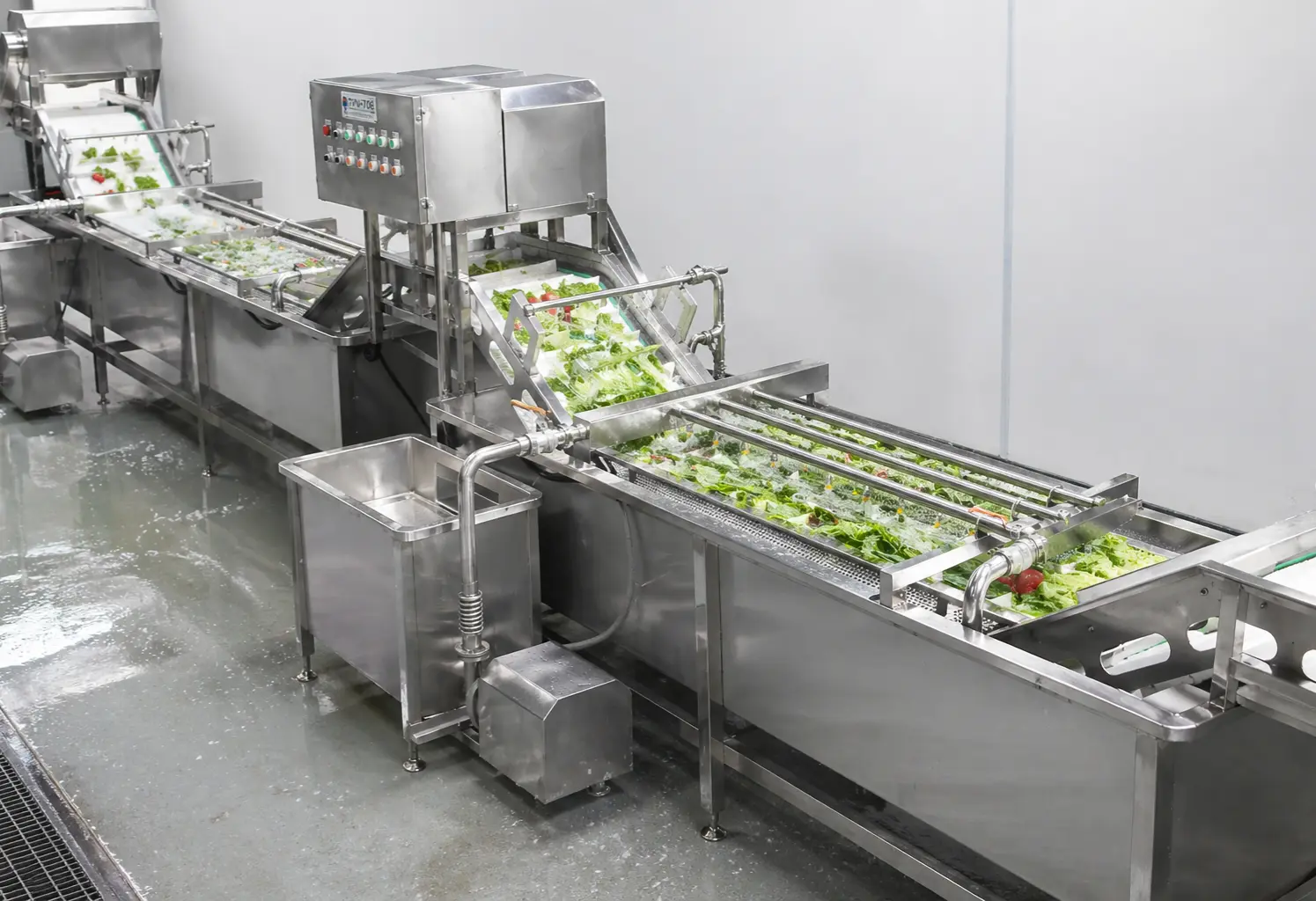
Vegetables must be inspected, trimmed, washed and cut. Potatoes may need to be sorted, peeled and sliced. Meat may have to be thawed under controlled conditions, portioned or diced. Salad leaves need to be cleaned, sanitized, dewatered and maintained at a suitable temperature before packaging or service.
These activities happen before cooking, formulation, seasoning, packaging or final assembly. Together, they form what is commonly described as food pre-processing.
In a small restaurant, food pre-processing may be performed by several kitchen workers using sinks, knives, peelers and cutting boards. In a central kitchen, catering facility or food factory, the same work may involve receiving zones, sorting conveyors, vegetable washing systems, cutting machines, dewatering equipment, temperature controls and documented sanitation procedures.
The purpose, however, remains the same: to transform variable agricultural or animal-based raw materials into controlled, usable ingredients for the next production stage.
Food pre-processing is therefore more than a collection of basic preparation tasks. It is the operational bridge between raw-material receiving and controlled food production. When that bridge is poorly designed, manufacturers experience inconsistent product dimensions, excessive labor, unpredictable yields, cross-contamination risks, production bottlenecks and avoidable waste.
When it is designed correctly, pre-processing becomes one of the foundations of scalable food production.
What Does Food Pre-Processing Mean?
Food pre-processing refers to the physical, hygienic and sometimes chemical preparation of raw food materials before they enter the principal manufacturing, cooking or final-product process.
It can include activities such as:
- receiving and inspecting raw materials;
- sorting and grading;
- removing foreign matter;
- trimming;
- washing;
- peeling;
- cutting, slicing, shredding, dicing or portioning;
- thawing;
- destoning or deseeding;
- sanitizing;
- rinsing;
- draining and dewatering;
- temporary chilled storage;
- transferring prepared ingredients to the next process.
The exact definition depends on the product and the business model.
For a restaurant group, pre-processing may mean washing and cutting vegetables in a central kitchen before distributing them to individual outlets.
For a salad manufacturer, it may include receiving lettuce, removing damaged leaves, cutting, multi-stage washing, applying a controlled antimicrobial treatment, dewatering, inspecting and transferring the product to packaging.
For a frozen-food factory, pre-processing may include peeling potatoes, cutting them into standardized dimensions, removing defective pieces, blanching and preparing them for freezing.
For an institutional caterer, it may involve preparing hundreds or thousands of kilograms of vegetables, meat and other ingredients before cooking meals for schools, factories, hospitals, airlines or remote industrial camps.
A useful way to understand the concept is to distinguish pre-processing from primary production and final processing.
Primary production covers farming, growing, harvesting, fishing or animal production. Pre-processing begins once those raw materials are being prepared for controlled food production. Final processing creates the saleable or service-ready food, such as a cooked meal, frozen product, packaged salad, sauce, bakery product or ready-to-eat dish.
In practice, the boundaries can overlap. Blanching, marinating or portioning may be classified differently depending on the factory and product. What matters operationally is that the pre-processing stage prepares raw material to a defined specification before it reaches the next value-adding process.
Food Pre-Processing Is Not the Same as “Processed Food”
The word “processing” sometimes creates confusion because consumers may associate it with heavily formulated or packaged food.
Food pre-processing has a much broader and more neutral meaning.
Washing spinach, peeling carrots and slicing cabbage are all forms of processing. They change the physical condition of the raw material without necessarily changing its fundamental composition.
The U.S. Food and Drug Administration defines fresh-cut produce as fruit or vegetables that have been physically altered from their whole state through operations such as chopping, dicing, peeling, shredding, slicing, spiralizing or tearing, without an additional process such as cooking or blanching.
A pre-processed ingredient can therefore remain fresh, minimally processed and recognizable. Examples include:
- washed salad leaves;
- peeled potatoes;
- diced onions;
- shredded cabbage;
- sliced carrots;
- trimmed green beans;
- portioned meat;
- cut fruit;
- washed and sorted herbs.
The commercial value is not created by making the ingredient artificial. It is created by removing labor, uncertainty and preparation time from the next user in the supply chain.
That next user may be a restaurant kitchen, supermarket, airline caterer, meal-kit company, hospital kitchen, food manufacturer or another processing facility.
Why Is Food Pre-Processing Important?
The importance of pre-processing becomes clear when food businesses begin to scale.
A kitchen producing 100 meals a day may tolerate differences in how individual employees peel or cut ingredients. A central facility supplying 20,000 meals a day cannot rely on that level of variation.
As throughput increases, apparently minor inconsistencies become expensive.
If workers cut potato pieces to different sizes, cooking times become uneven. If leafy vegetables retain too much surface water, shelf life and dressing adhesion may be affected. If raw materials are washed without proper water management, contamination may be transferred rather than controlled. If yield is not measured, purchasing teams may have no reliable way to compare suppliers or calculate true ingredient costs.
Pre-processing converts raw-material variability into production control.
Its value usually appears in six areas:
- labor productivity;
- production capacity;
- product consistency;
- usable yield;
- food safety;
- production planning.
These areas are interconnected. A company cannot evaluate food pre-processing equipment solely by asking how many kilograms it can process per hour. The real question is whether the complete process can deliver the required volume, specification, hygiene level and yield under actual operating conditions.
The Difference Between Manual and Automated Food Pre-Processing
Manual pre-processing relies primarily on people using hand tools or small standalone appliances.
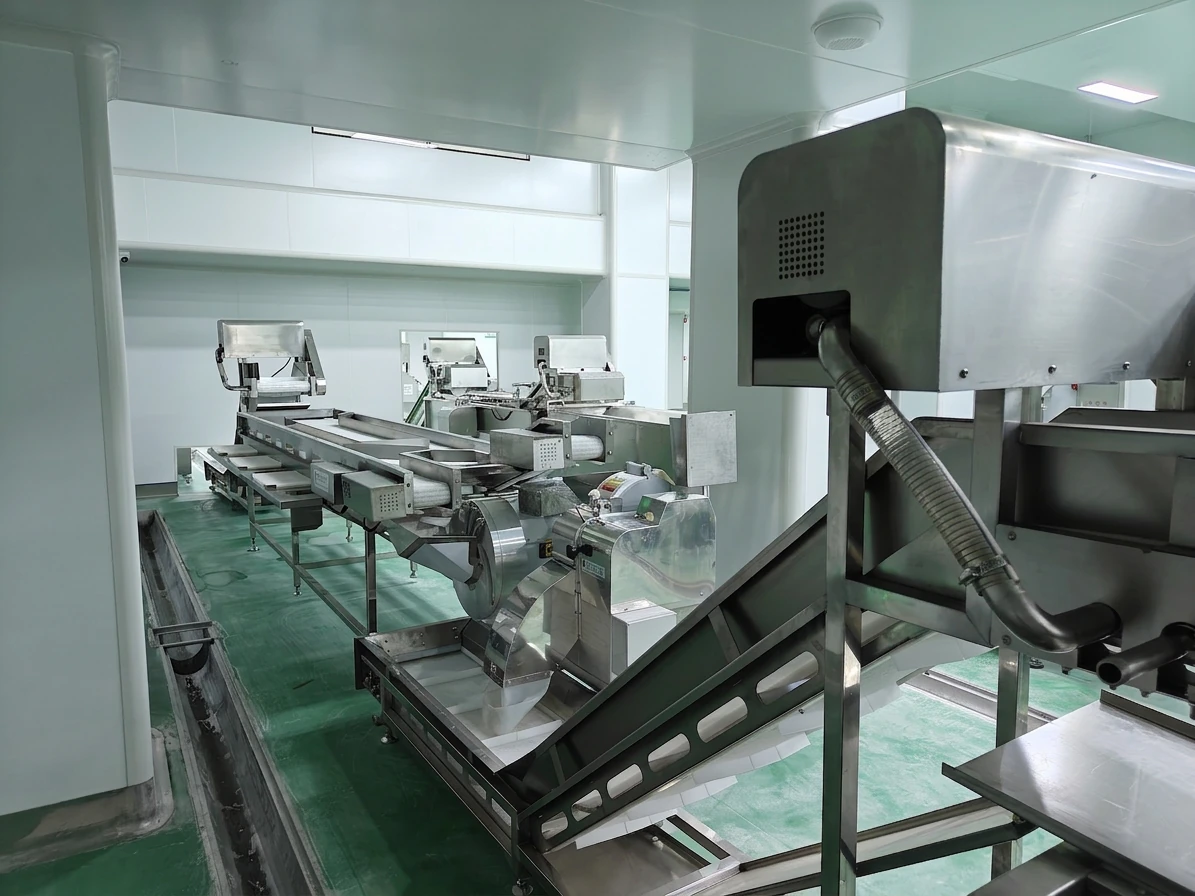
Automated or semi-automated pre-processing uses machines to perform selected repetitive operations, while workers concentrate on inspection, setup, feeding, quality control, material handling and sanitation.
The difference is not simply “people versus machines.”
Most modern food factories still need people. The objective is to assign human labor to tasks where judgment and control add value, rather than using large teams for repetitive washing, peeling, cutting or transferring work.
A manually operated vegetable room may require workers to:
- open incoming crates;
- remove damaged produce;
- fill sinks;
- agitate vegetables by hand;
- move wet products between containers;
- cut each ingredient;
- collect offcuts;
- drain the product;
- clean the area repeatedly;
- deliver prepared ingredients to cooking or packaging.
An integrated pre-processing line can reorganize the same work into a controlled sequence:
Receiving → sorting → trimming → cutting → washing → sanitizing or rinsing → dewatering → inspection → downstream production
Workers remain involved, but their positions become easier to define. Output is less dependent on individual knife skills or physical endurance, and managers can measure throughput by process rather than by employee.
Automation can also improve working conditions. Repetitive cutting, lifting wet baskets and prolonged work in uncomfortable postures can contribute to fatigue and inconsistent performance. A properly designed line reduces unnecessary handling, although it must also introduce machine guarding, safe operating procedures and appropriate training.
What Types of Food Can Be Pre-Processed?
Almost every food production sector uses some form of pre-processing.
Vegetables
Vegetable pre-processing is one of the most visible applications because fresh produce frequently arrives with soil, damaged leaves, roots, stems and considerable variation in size or shape.
Typical operations include:
- sorting;
- trimming;
- root removal;
- peeling;
- cutting;
- washing;
- sanitizing;
- rinsing;
- dewatering;
- inspection.
Leafy vegetables, root vegetables and fruiting vegetables require different handling.
Lettuce and herbs are comparatively fragile. Potatoes and carrots can withstand more mechanical force but create higher soil loads. Tomatoes and peppers may bruise or split if conveyors, spray pressure or drop heights are poorly controlled. One “vegetable processing machine” cannot be assumed to handle all products equally well.
Fruit
Fruit pre-processing may include washing, brushing, peeling, coring, destoning, slicing, dicing and anti-browning treatment.
The process must account for firmness, ripeness, juice release, oxidation and temperature sensitivity. A line suitable for apples may not be appropriate for mangoes, pineapples or berries.
Meat and Poultry
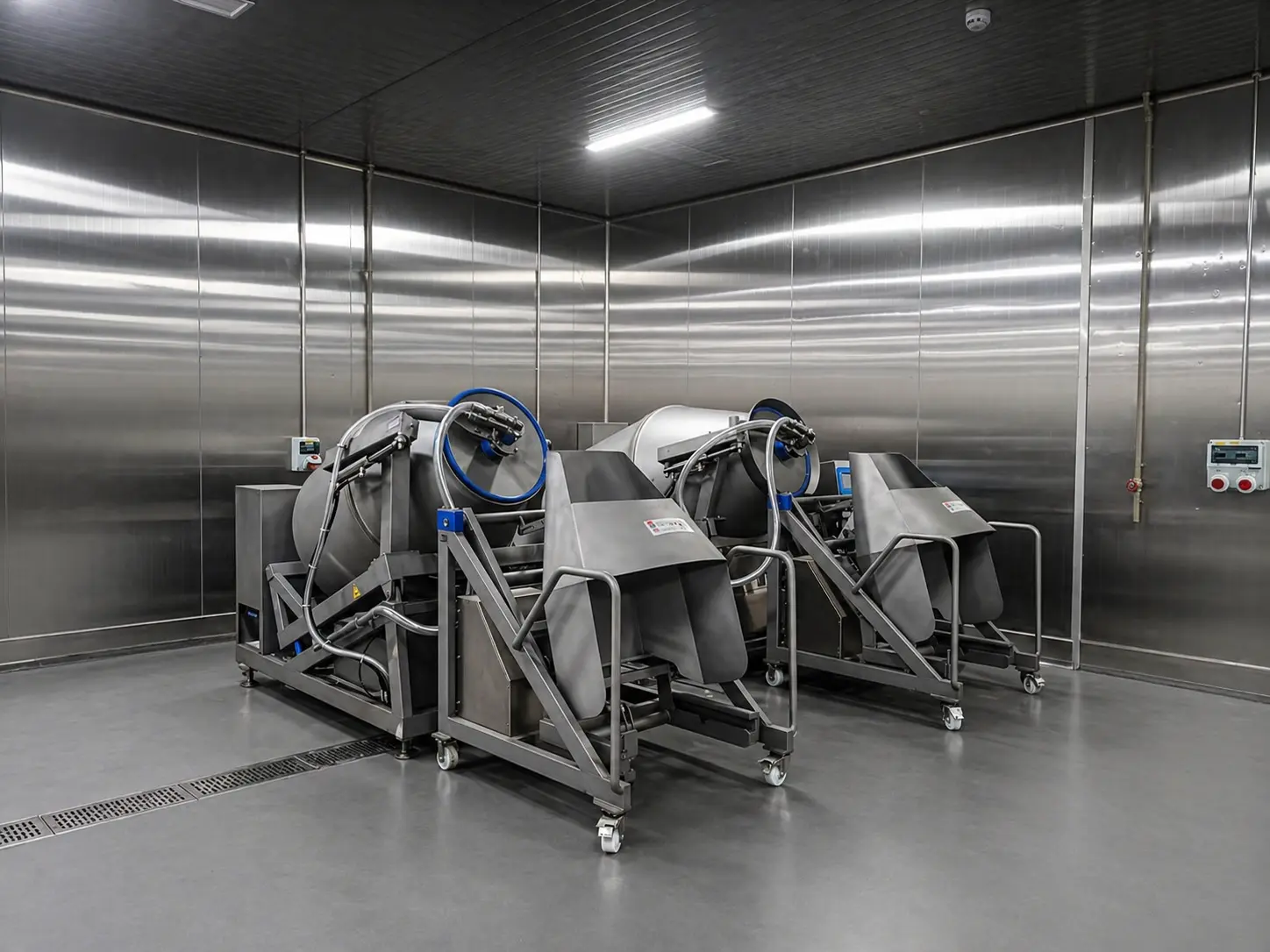
Meat pre-processing can include controlled thawing, deboning, trimming, slicing, cubing, mincing, marinating and portioning.
Temperature is especially important. Product texture, machine performance, microbial risk and cutting accuracy can all change depending on whether meat is frozen, partially frozen, chilled or warm.
Seafood
Seafood preparation may involve washing, descaling, gutting, heading, filleting, shell removal, portioning and temperature-controlled holding.
Because many seafood products are highly perishable, time and temperature control must be integrated into the pre-processing design.
Grains, Pulses and Dry Ingredients
Dry-product pre-processing may involve cleaning, sieving, destoning, grading, milling, soaking or controlled hydration.
Although this work does not resemble a fresh vegetable line, the operational principle is the same: raw material is standardized and prepared before the main transformation stage.
Food Pre-Processing in Foodservice Operations
In traditional foodservice, much of the pre-processing work happens inside each outlet.
Every restaurant receives whole ingredients, prepares them independently and cooks them on site. This model can work for small operations, but it becomes difficult to manage when a company operates many kitchens or serves large meal volumes.
Common problems include:
- duplicated labor across locations;
- inconsistent cuts and portion sizes;
- different yields between kitchens;
- uneven sanitation practices;
- limited production records;
- difficulty training and retaining prep workers;
- high space requirements in each outlet;
- inconsistent use of recipes;
- variable purchasing and inventory control.
Centralized food pre-processing offers an alternative.
A restaurant chain, catering company or institutional foodservice operator can prepare selected ingredients in a central kitchen or commissary, then distribute them to satellite kitchens for cooking or final assembly.
This does not necessarily mean every ingredient should be centralized. The correct degree of centralization depends on shelf life, delivery distance, product sensitivity, menu requirements and local food regulations.
High-volume, repetitive ingredients are often the strongest candidates. Examples include shredded cabbage, peeled potatoes, sliced onions, washed leafy vegetables, diced carrots or standardized meat portions.
The strategic benefit is not only labor reduction. Central preparation creates a point where the business can introduce measurable specifications.
Instead of telling 50 kitchens to “cut the cabbage,” the company can define:
- raw-material grade;
- trim standard;
- cut dimension;
- acceptable defect rate;
- washing procedure;
- dewatering target;
- pack size;
- storage temperature;
- distribution time;
- traceability code.
That is a fundamental change in operating model. Food preparation becomes an engineered process rather than a collection of local habits.
Food Pre-Processing in Food Manufacturing
Food manufacturers use pre-processing to stabilize the inputs entering their principal production line.
Consider a company producing frozen mixed vegetables. The freezer may have sufficient capacity, but it cannot perform efficiently if incoming vegetables arrive at irregular sizes, contain excessive soil or are supplied inconsistently.
The freezing system is not necessarily the true production bottleneck. The bottleneck may exist earlier in washing, cutting, inspection or material transfer.
The same logic applies to:
- ready-meal factories;
- sauce manufacturers;
- salad processors;
- potato-product factories;
- bakery filling producers;
- fruit processors;
- soup manufacturers;
- pet-food facilities;
- meat-processing plants.
A food factory may invest heavily in cooking, filling or packaging equipment while continuing to operate an underdeveloped preparation area. The result is an imbalance: the expensive downstream equipment waits for ingredients, while the pre-processing team struggles to maintain supply.
A well-designed factory therefore evaluates the complete mass flow.
If a packaging machine requires 1,000 kilograms of finished product per hour, managers must work backward:
- How much prepared ingredient is required?
- What is the raw-to-finished yield?
- How long does washing, cutting or thawing take?
- What happens during product changeovers?
- How much time is required for cleaning?
- Which process determines the actual line capacity?
Rated machine capacity is only one part of the answer. Sustainable plant capacity depends on the weakest stage in the total process.
What Are the Main Stages of Food Pre-Processing?
Although each product requires a different process, most pre-processing systems contain several common stages.
1. Raw-Material Receiving
Receiving is the first control point.
The facility verifies product identity, supplier, lot number, condition, temperature where applicable, packaging integrity and visible contamination.
Poor raw materials cannot always be corrected by better machinery. Overripe fruit, damaged vegetables, warm meat or heavily contaminated produce may reduce yield and increase processing risk.
A strong pre-processing system therefore starts with supplier and incoming-material specifications.
2. Sorting and Inspection
Sorting removes unsuitable materials before they enter more expensive downstream processes.
Workers or automated systems may remove:
- damaged produce;
- stones;
- soil clumps;
- foreign objects;
- discolored pieces;
- incorrect varieties;
- undersized or oversized materials.
Early removal prevents defective material from consuming washing water, cutting capacity, energy and labor.
3. Trimming and Peeling
Trimming removes roots, stems, outer leaves, fat, bones or other unwanted portions.
Peeling may be performed manually or through abrasive, knife, steam or other mechanical methods, depending on the ingredient and required finish.
The process must balance removal quality against yield. Aggressive peeling may increase throughput but remove too much saleable product.
4. Size Reduction
Cutting converts raw material into the required shape.
Common specifications include slices, strips, dices, shreds, cubes, wedges and florets.
Cut quality affects more than appearance. It influences:
- cooking uniformity;
- product weight;
- texture;
- packaging density;
- surface area;
- oxidation;
- moisture release;
- shelf life.
Cutting must therefore be evaluated by product damage and dimensional consistency, not only speed.
5. Washing
Washing removes soil, debris and other unwanted material. Depending on the process, it may also help reduce microbial loads or prevent cross-contamination when combined with validated control measures.
Washing equipment may use:
- water immersion;
- agitation;
- air bubbling;
- sprays;
- flumes;
- rotating drums;
- brushes;
- product-specific mechanical action.
More aggressive action is not automatically better. Fragile ingredients may be bruised, torn or broken. Heavy root vegetables may require stronger soil-removal mechanisms than lettuce or herbs.
6. Antimicrobial Treatment or Controlled Rinsing
Some fresh-cut operations use approved antimicrobial agents in process water. The correct chemical, concentration, contact time, pH, temperature and monitoring method depend on the product, local regulations and validated food-safety plan.
A sanitizer does not replace clean equipment, hygienic zoning or good raw materials.
It must be treated as one control within a broader system.
For fresh-cut vegetables, poor process-water management can spread contamination from one piece of produce to another. The FDA’s fresh-cut guidance consequently addresses water quality, equipment sanitation, employee hygiene, facility design and processing controls as connected parts of the same hazard-management system.
7. Dewatering or Drying
After washing, excess water must often be removed.
Methods can include centrifugal dewatering, vibration, air systems, draining conveyors or combinations of these methods.
The correct residual moisture depends on the product and next process. Too much retained water can dilute sauces, reduce packaging quality, affect shelf life or create handling problems. Excessive mechanical dewatering, however, may damage delicate leaves.
8. Inspection and Transfer
Prepared food should be inspected before cooking, mixing or packaging.
The transfer method also matters. High drop heights, narrow chutes, unsuitable pumps or overloaded conveyors can damage a product after it has already been processed correctly.
Good line design preserves product quality from receiving through final discharge.
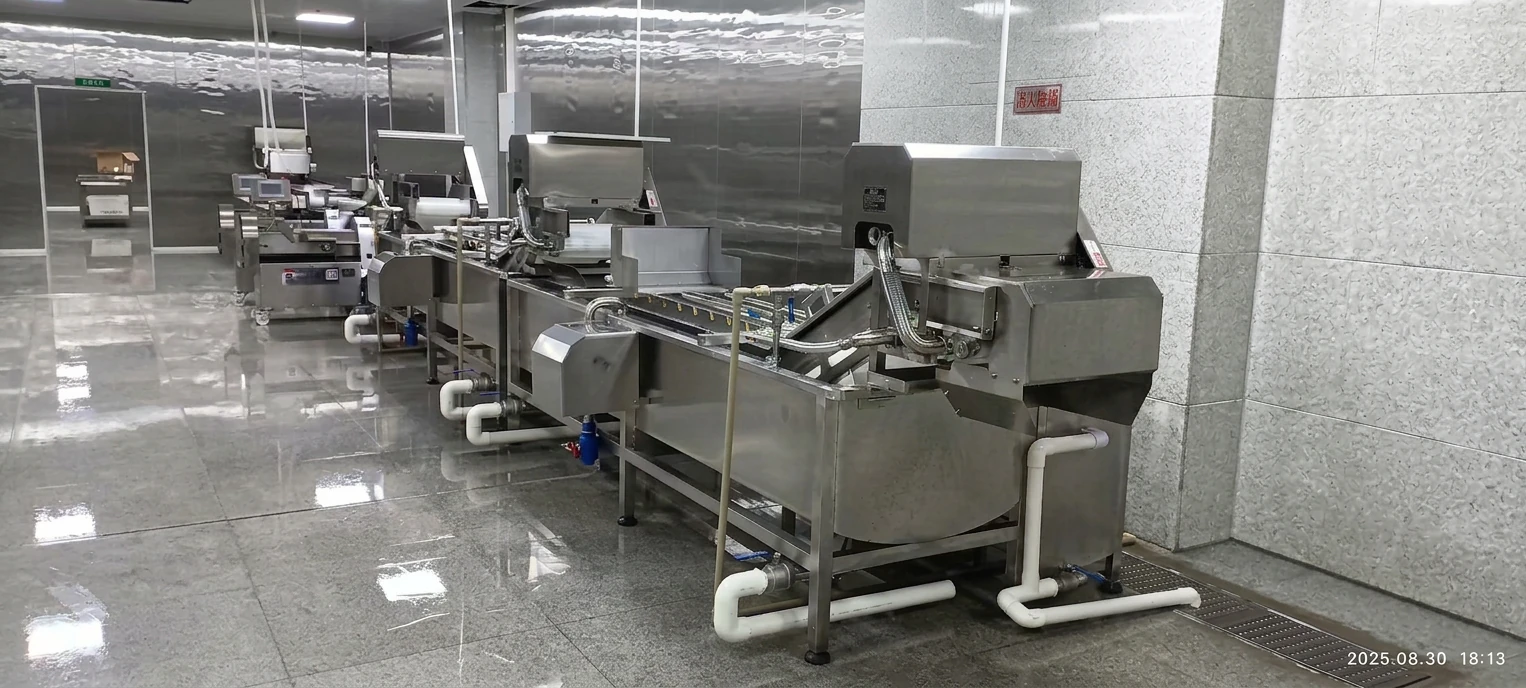
Food Safety Risks During Pre-Processing
Pre-processing can improve control, but it can also introduce hazards if it is poorly managed.
Cutting and peeling break natural protective surfaces. Internal tissue is exposed, moisture and nutrients become more accessible, and contaminated surfaces or equipment may transfer microorganisms to the edible portion.
The FDA notes that when fruits or vegetables are peeled or cut, microorganisms present on the exterior can be transferred to the inside.
This is one reason fresh-cut and ready-to-eat operations require more than visible cleanliness.
Important controls may include:
- separation of raw and processed areas;
- hygienic employee and material flow;
- potable or otherwise suitable process water;
- prevention of water-mediated cross-contamination;
- sanitation of food-contact surfaces;
- temperature control;
- chemical concentration monitoring where sanitizers are used;
- foreign-material control;
- allergen management;
- traceability;
- environmental monitoring where appropriate;
- documented cleaning and verification.
Codex’s General Principles of Food Hygiene describe Good Hygiene Practices and HACCP-based control as fundamental elements of food safety management across the food chain.
HACCP does not mean that every machine becomes a critical control point. It means the company systematically identifies biological, chemical and physical hazards, determines how they should be controlled and verifies that the controls work.
Pre-processing equipment must support this system.
A machine may have adequate production capacity but still be unsuitable if it contains inaccessible areas, retains product residue, cannot be cleaned within the available sanitation window or causes raw and ready-to-eat products to cross paths.
Why Ready-to-Eat and Ready-to-Cook Products Need Different Thinking
Ready-to-cook, or RTC, ingredients receive a cooking step before consumption. Ready-to-eat, or RTE, products may be consumed without a subsequent kill step.
That distinction changes the risk profile.
A prepared vegetable used in soup will later be heated. A packaged salad may not receive any further microbial reduction step before it reaches the consumer.
This does not mean RTC production can be careless. It means an RTE line normally requires stricter control over zoning, equipment hygiene, water management, environmental conditions, temperature and post-wash handling.
Combining RTE and RTC products on one line may appear efficient, but the decision must be based on hazard analysis, cleaning validation, product sequence, raw-material condition and facility layout—not simply on whether the machine can physically process both products.
A production line can be mechanically capable yet operationally unsuitable.
How Food Pre-Processing Improves Labor Efficiency
Labor savings are often the most visible reason companies begin investigating automation.
Food preparation is labor intensive because it involves repeated physical actions, product handling and cleaning. The required workforce also changes with product mix, incoming quality and daily volume.
Automation can reduce direct labor in selected operations, but responsible investment analysis should avoid exaggerated claims.
A machine does not automatically remove every employee previously assigned to a task. Workers may still be required to:
- feed raw materials;
- perform trimming;
- inspect product;
- change cutting tools;
- monitor water or chemical parameters;
- collect finished ingredients;
- clean the equipment;
- manage records;
- respond to abnormal conditions.
The more useful calculation compares labor per unit of acceptable output.
For example:
Labor productivity = acceptable kilograms produced ÷ total direct labor hours
This measurement includes both output and quality. A line producing more kilograms is not genuinely more productive if it also creates greater damage, lower yield or additional rework.
Staffing pressure is nevertheless a real operational concern. In one USDA survey of school food authorities, 73% reported staffing challenges, illustrating how labor availability can affect institutional foodservice operations.
The implication is not that every kitchen should immediately automate. It is that repetitive preparation work deserves closer analysis when labor shortages are limiting meal capacity, menu consistency or business expansion.
How Pre-Processing Affects Yield and Food Cost
Raw-material price alone does not determine ingredient cost.
The true cost depends on how much usable product remains after sorting, trimming, peeling, cutting and washing.
A basic yield calculation is:
Yield percentage = usable prepared product ÷ incoming raw material × 100
Suppose a factory buys 1,000 kilograms of potatoes. After removing soil, defects, peel and trim, it obtains 820 kilograms of usable product. The yield is 82%.
If another process produces 860 kilograms from the same incoming quality, the difference is 40 kilograms per batch. Across hundreds of batches, that variation may exceed the savings achieved through negotiating a slightly lower equipment price.
Yield is affected by:
- incoming product quality;
- supplier grading;
- storage conditions;
- peeling method;
- blade condition;
- cut specification;
- operator technique;
- product damage;
- inspection standards.
This is why food pre-processing equipment should be tested with the customer’s actual raw materials whenever possible.
A carrot grown in one region may differ in diameter, firmness and soil load from a carrot grown elsewhere. The same machine setting may not produce the same yield.
Food Pre-Processing and Food Loss Reduction
Food loss occurs throughout production, post-harvest handling, storage, transport, wholesale and processing. FAO estimates that 13.3% of food was lost globally between post-harvest and retail stages in 2023.
Fruit and vegetables are particularly vulnerable because they are perishable, physically delicate and variable.
Pre-processing cannot solve every cause of food loss, but it can help businesses:
- identify defects earlier;
- process surplus produce into value-added formats;
- standardize trimming;
- improve yield visibility;
- shorten preparation time;
- match pack sizes to customer demand;
- convert cosmetically imperfect produce into cut ingredients;
- maintain more stable temperature and handling conditions.
A processor, for example, may convert cabbage that is unsuitable for whole-head retail into shredded foodservice packs. Carrots with irregular external appearance may still be usable after peeling and cutting.
USDA research has long described fresh-cut products as value-added produce: relatively simple physical preparation can transform bulk commodities into higher-value, more convenient products, although sophisticated products such as packaged salads require considerably greater investment in plant, machinery and process control.
The commercial opportunity is real, but it must be supported by food-safety controls and a viable market. Cutting unsold produce does not automatically make it profitable. Shelf life, packaging, cold-chain distribution and customer demand must be considered together.
What Companies Benefit Most from Food Pre-Processing Automation?
Automation becomes most relevant when preparation work is repetitive, measurable and sufficiently consistent in volume.
Potential users include:
- central kitchens;
- restaurant groups;
- institutional catering companies;
- airline caterers;
- school and hospital meal providers;
- fresh-cut produce processors;
- ready-meal manufacturers;
- frozen-food factories;
- supermarket commissaries;
- meal-kit companies;
- fruit and vegetable distributors;
- agricultural cooperatives;
- remote-site and industrial catering operators.
Several operational signals suggest that a company should examine its pre-processing system:
- preparation labor is difficult to recruit or retain;
- output varies significantly between shifts;
- kitchens cannot keep pace with sales growth;
- multiple outlets repeat the same preparation work;
- raw-material yield is unknown;
- cut dimensions are inconsistent;
- washing and cutting areas are congested;
- downstream machines wait for prepared ingredients;
- sanitation takes too long;
- the company plans to launch RTE or RTC products;
- customers require stronger traceability or audit documentation;
- expansion would require a disproportionate increase in labor.
These signals do not necessarily justify a complete automated line. They indicate that the current process should be measured.
Sometimes the correct solution is a single cutting or peeling machine. In other cases, purchasing one machine merely moves the bottleneck to washing, inspection, dewatering or packing.
How to Evaluate a Food Pre-Processing Process Before Buying Equipment
Equipment selection should begin with process definition, not machine catalogues.
A company should document at least the following information:
Raw Materials
What products will be processed?
Record variety, size range, firmness, soil level, incoming temperature, seasonality and packaging format.
Finished Specifications
What must the prepared product look like?
Define cut shape, dimensions, acceptable defects, residual peel, moisture, pack size and downstream use.
Required Capacity
Capacity should be expressed by product, not as one general number.
A machine may process 1,000 kilograms per hour of dense root vegetables but far less leafy product by weight because bulk density, feeding behavior and damage limits differ.
Product Mix
How often will products change?
A facility producing one ingredient continuously has different requirements from a central kitchen handling 30 ingredients in small batches.
Cleaning and Changeover
How much time is available for cleaning? Are tools and conveyors easy to remove? Can operators inspect food-contact areas? Are incompatible products processed on the same line?
Yield
What is the existing raw-to-prepared yield? What percentage of loss is unavoidable, and what percentage is caused by inconsistent work?
Labor
How many employees work in each process? How many hours are spent on production, transfer, waiting and cleaning?
Facility Conditions
Available space, drainage, electrical supply, water supply, ventilation, refrigeration, floor loading, ceiling height and traffic flow can determine whether a proposed line is practical.
Food-Safety Requirements
Is the product RTE, RTC, frozen, chilled or hot-filled? What standards, customer audits or regulatory requirements apply?
Without these inputs, equipment comparisons tend to focus on price and nominal capacity. Both are important, but neither can prove process suitability.
Common Misunderstandings About Food Pre-Processing
“Automation Means a Fully Unmanned Factory”
Most food pre-processing lines are not unmanned. They redistribute labor and improve control.
Inspection, product feeding, exception handling, sanitation and quality decisions still require people unless a company invests in a much higher level of robotics and sensing technology.
“One Machine Can Process Every Product”
Versatility has limits.
A machine capable of handling several vegetables may still require different belts, blades, speeds, water settings or process sequences. Products with significantly different hygiene risks may need physical separation.
“Higher Capacity Is Always Better”
An oversized line can increase capital cost, water use, floor-space requirements and cleaning burden. It may perform poorly when the factory runs many small batches.
The correct capacity matches realistic peak demand, product mix and operating hours.
“Washing Makes Produce Safe”
Washing is not a sterilization step.
It can remove soil and help manage contamination, but its effectiveness depends on incoming contamination, equipment condition, water quality, sanitizer control where applicable, contact conditions and prevention of recontamination.
“The Cheapest Equipment Has the Lowest Cost”
Purchase price is only one component.
Long-term cost includes:
- product loss;
- downtime;
- blade and spare-part consumption;
- water and energy;
- cleaning labor;
- maintenance;
- operator requirements;
- damaged product;
- production interruptions;
- inability to meet future specifications.
A low-cost machine that reduces usable yield or cannot be cleaned effectively may create a higher total operating cost.
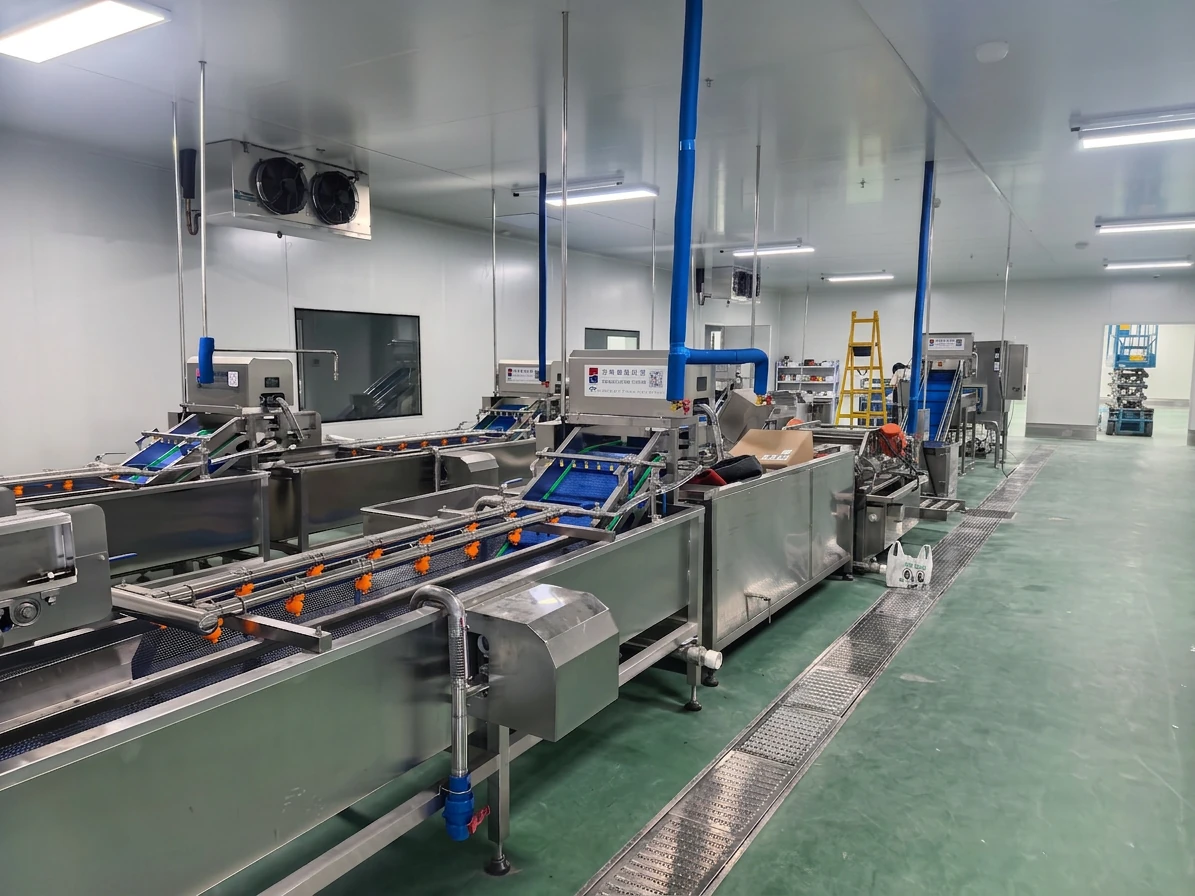
A Practical Example: From Restaurant Preparation to Central Processing
Consider a restaurant group operating 40 outlets.
Each outlet employs workers to receive whole vegetables, trim them, wash them, cut them and clean the preparation area. The group experiences different cut sizes, inconsistent yields and difficulty recruiting kitchen staff.
Centralization may allow the company to move selected high-volume tasks into one facility.
The central kitchen could:
- receive vegetables under common specifications;
- inspect and record each lot;
- trim and cut ingredients to defined dimensions;
- wash them using a controlled process;
- remove excess water;
- pack them in outlet-sized quantities;
- distribute them under refrigerated conditions;
- retain traceability records.
The outlet kitchens would continue cooking and finishing meals, but their raw preparation burden would decrease.
The business case would need to include more than machinery. Management would have to evaluate:
- central-facility investment;
- packaging;
- refrigerated delivery;
- shelf life;
- delivery frequency;
- food-safety controls;
- inventory planning;
- outlet demand forecasting.
This example illustrates a central principle: food pre-processing is an operating-system decision, not merely a machine purchase.
What Does a Well-Designed Pre-Processing Facility Look Like?
There is no universal layout, but strong facilities usually demonstrate clear process logic.
Raw materials enter through a designated receiving area. Waste and soil are removed early. Product progresses from dirtier to cleaner stages without unnecessary backtracking. People, ingredients, packaging and waste follow controlled routes.
Wet operations have suitable drainage. Food-contact equipment is accessible for cleaning. Inspection points are positioned where defects can be removed before they affect later processes.
For RTE production, higher-hygiene areas are protected from raw-material traffic and uncontrolled personnel movement.
The layout should also allow the company to manage abnormal situations:
- What happens when one machine stops?
- Where is product held?
- Can a batch be isolated?
- Can operators access the machine safely?
- Can cleaning teams reach all surfaces?
- Is there enough space to remove belts or cutting assemblies?
- Does wastewater flow away from cleaner areas?
- Can future equipment be added without compromising hygiene?
These questions often determine whether a line works reliably after installation.
The Business Value of Food Pre-Processing
The strongest pre-processing projects support more than one business objective.
They may enable a company to:
- increase production without proportionally increasing labor;
- supply more outlets from one facility;
- introduce standardized products;
- improve yield measurement;
- reduce preparation time at customer sites;
- develop RTE or RTC product ranges;
- strengthen traceability;
- improve audit readiness;
- create value-added products from agricultural materials;
- reduce dependence on individual workers;
- support expansion into B2B food supply.
The value is therefore strategic as well as operational.
A vegetable distributor may evolve into a fresh-cut ingredient supplier. A catering company may develop a central production facility. A restaurant group may convert decentralized preparation into a standardized supply network. A food factory may remove a preparation bottleneck that has been limiting its packaging or cooking capacity.
Not every company needs the same level of automation. Yet every growing food business benefits from understanding how raw materials are converted into production-ready ingredients.
Final Perspective
Food pre-processing is where agricultural variability meets industrial discipline.
It includes the washing, sorting, peeling, cutting, portioning, dewatering and handling operations that prepare food for cooking, packaging or further manufacturing. These tasks may appear basic, but they directly influence labor demand, production capacity, yield, consistency and food safety.
The most effective pre-processing systems are not defined by the number of machines they contain. They are defined by how well the complete process matches the product, required output, hygiene standard and business model.
For companies exploring central kitchens, ready-to-eat production, ready-to-cook ingredients or higher-volume food manufacturing, the starting point should not be:
“Which machine should we buy?”
It should be:
“How should raw material move through our facility, what specification must each process achieve, and where are we currently losing time, labor, product or control?”
Once those questions are answered, automation becomes easier to evaluate—and far more likely to create lasting operational value.
Planning a Food Pre-Processing Project?
TEEMYEAH develops food pre-processing equipment and integrated solutions for vegetable washing, cutting, peeling, dewatering and centralized food preparation.
Rather than selecting equipment only from a nominal capacity figure, our team evaluates the raw material, finished-product specification, production target, facility layout and intended application—including RTE, RTC, central-kitchen and food-manufacturing operations.
Share your product list, required cut specifications, hourly capacity and available layout with our team to begin a preliminary process assessment.
Website: teemyeah.com
Email: [email protected]
WhatsApp: +86 131 1273 2696
Frequently Asked Questions About Food Pre-Processing
What is food pre-processing?
Food pre-processing is the preparation of raw food materials before cooking, formulation, packaging or final manufacturing. It can include sorting, trimming, washing, peeling, cutting, thawing, portioning, sanitizing, dewatering and inspection.
What is the difference between food processing and food pre-processing?
Food processing is the broader transformation of raw materials into food products. Food pre-processing refers specifically to the preparation stages that occur before the principal cooking, manufacturing, mixing, freezing or packaging process.
What are examples of food pre-processing?
Examples include washing lettuce, peeling potatoes, shredding cabbage, dicing onions, trimming meat, portioning poultry, slicing fruit, cleaning grains and removing excess water from washed vegetables.
Why is food pre-processing important in a central kitchen?
Centralized pre-processing allows multiple kitchens or outlets to receive ingredients prepared to common specifications. It can reduce duplicated preparation work, improve portion and cut consistency, centralize food-safety controls and make yield easier to measure.
Can food pre-processing reduce labor costs?
It can reduce the amount of direct labor required for repetitive operations such as washing, peeling, cutting and transferring ingredients. Actual savings depend on product mix, volume, equipment utilization, inspection needs, cleaning requirements and the existing process.
What equipment is used for vegetable pre-processing?
Typical equipment includes sorting tables, trimming conveyors, vegetable cutting machines, root-vegetable peelers, washing machines, sanitizing or dosing systems, rinsing units, centrifugal dewatering machines, vibration dewatering conveyors and inspection tables.
Is washed produce safe to eat?
Washing can remove soil and help control contamination, but it does not guarantee sterility. Food safety also depends on raw-material quality, process-water management, sanitation, temperature control, hygienic handling and prevention of recontamination.
What is the difference between RTE and RTC food pre-processing?
Ready-to-eat food is consumed without a further cooking step, while ready-to-cook food is cooked before consumption. RTE pre-processing usually requires stricter hygienic zoning, environmental control and post-wash handling because there may be no later microbial kill step.
How is food pre-processing capacity calculated?
Capacity should be calculated using the actual product, incoming condition, required cut, acceptable damage level, cleaning time and complete line balance. A general machine rating may not represent sustainable capacity for every ingredient.
When should a food company automate pre-processing?
Automation should be considered when preparation volume is growing, labor is difficult to obtain, product consistency is poor, multiple sites duplicate the same work, downstream production is waiting for ingredients or yield and hygiene controls need to become more measurable.
Does food pre-processing extend shelf life?
It can support shelf-life control when combined with suitable raw materials, hygienic processing, temperature management, dewatering, packaging and cold-chain distribution. Cutting can also accelerate respiration, oxidation and microbial growth, so pre-processing alone does not automatically extend shelf life.
How should a company choose food pre-processing equipment?
The company should define its raw materials, finished specifications, hourly demand, product mix, yield target, hygiene classification, facility conditions, cleaning requirements and downstream process. Equipment should then be tested or evaluated against those requirements rather than compared only by price and nominal capacity.

