Government-designated food processing parks operate under a different set of pressures. The volumes are high, the regulations are strict, the food safety documentation is audited regularly, and the public accountability is absolute. When the product is going into schools and public institutions, there is zero tolerance for error.
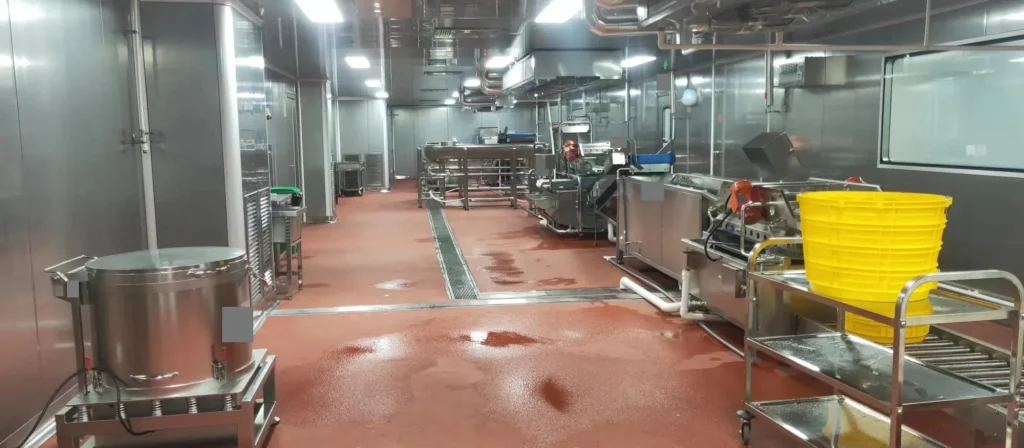
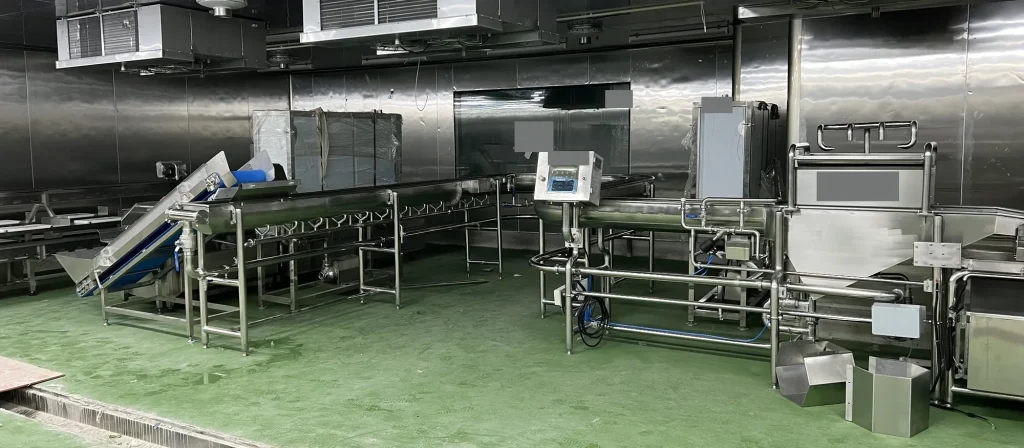
This project was a provincial-level prepared food industrial park, a multi-building complex housing fresh vegetable processing, prepared meal manufacturing, cold-chain distribution, and institutional meal service under one operational umbrella. TEEMYEAH was responsible for the fresh vegetable processing core: the engine room that converts raw agricultural produce into the clean, uniform, food-safe ingredients that feed every downstream operation in the park.
Scope: From Field Produce to Institutional Kitchen
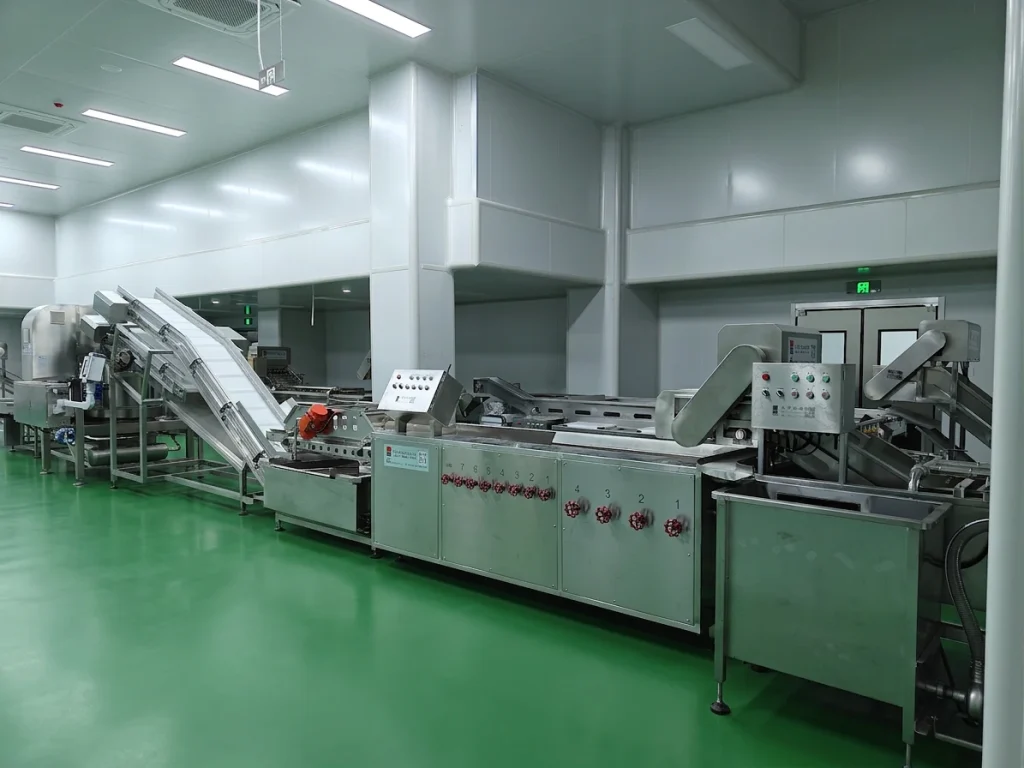
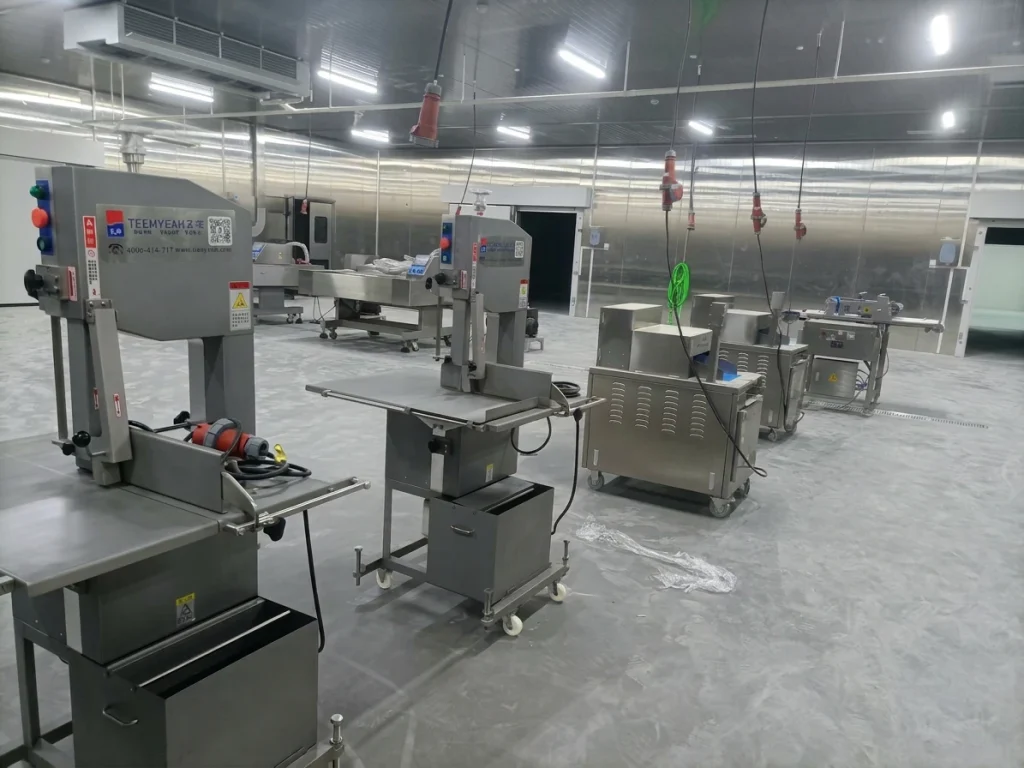
The vegetable processing section handles 20+ tons daily, producing 150,000 standardized portions for distribution to schools, university campuses, and social organizations. TEEMYEAH delivered the complete process: engineering design, construction guidance for the processing zone, all equipment specification and supply, installation, commissioning, and operator training. Commissioned in January 2022, the facility has operated continuously since.
The line architecture follows the standard TEEMYEAH integrated approach: parallel tracks for leafy greens and root vegetables, each with matched-speed conveyors connecting every stage from sorting through packaging. The root vegetable track features TY-1500A brush-roller peelers achieving 92 to 95 percent flesh retention, a critical metric for operations processing tens of tons of potatoes and carrots daily, where every percentage point of yield improvement translates directly to recovered revenue.
Government Compliance: Built In, Not Bolted On
In a government-audited operation, hygiene compliance cannot be a preparation exercise. It has to be a permanent state. Every TEEMYEAH machine in this facility is specified with full SUS304 stainless steel construction, IP65 washdown rating, and tool-free quick-release on all food-contact components. The facility passes inspection any day, any time, because the equipment is designed to be audit-ready at all times, not cleaned up for special occasions.
Digital monitoring integration provides the batch traceability data that government food safety authorities require. Every production run is documented with timestamps, equipment parameters, and quality metrics that can be pulled up for any delivery on demand.
What 85% Labor Reduction Looks Like in Practice
The fresh vegetable processing section operates with 10 to 15 machine operators. A manual operation producing the same output would require 60 to 80 workers. The savings extend beyond direct labor cost: fewer workers means a smaller changing room, fewer lockers, a simpler break room, less management overhead, and a dramatically reduced food safety risk profile. In institutional food processing, every person on the production floor is a potential contamination vector. Fewer people touching product means fewer audit findings.
Results
| 20+ T Daily Vegetables | 150,000 Portions/Day |
| 85% Labor Reduction | Jan 2022 Commissioned |
 centralized food preparation facility” width=”1195″ height=”896″ />
Planning a similar project? Request a tailored processing proposal from TEEMYEAH.