Summary
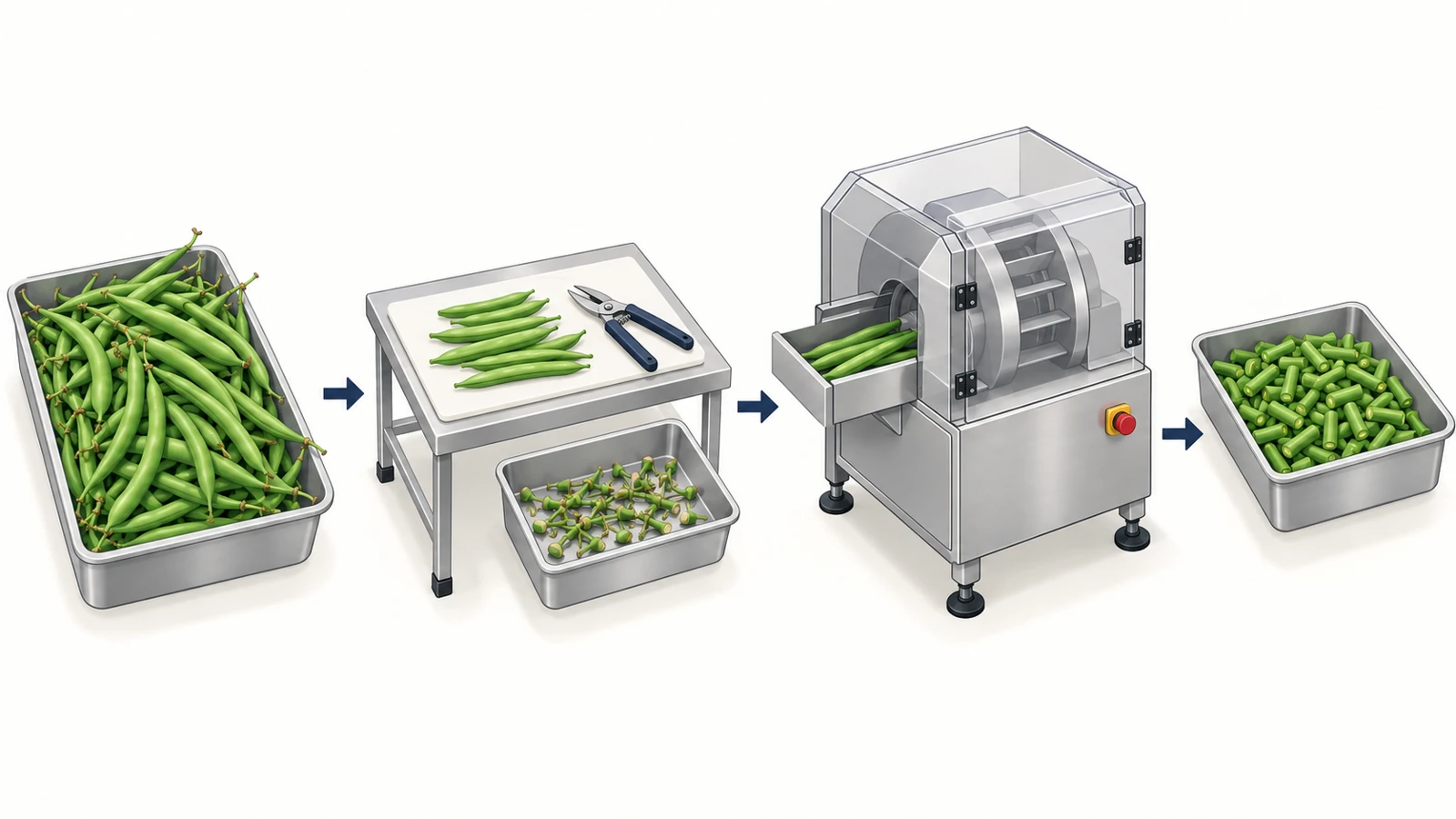
Choose green bean processing equipment around the condition of the beans arriving at your factory and the preparation work your operation will retain. Whole, untrimmed pods require a defined arrangement for removing stems and tips, separating attached clusters, rejecting unsuitable pods and checking foreign material. Accepted supplier-trimmed pods can enter a shorter preparation route, provided receiving inspection confirms the agreed condition. Segment cutting is a separate operation in both cases.
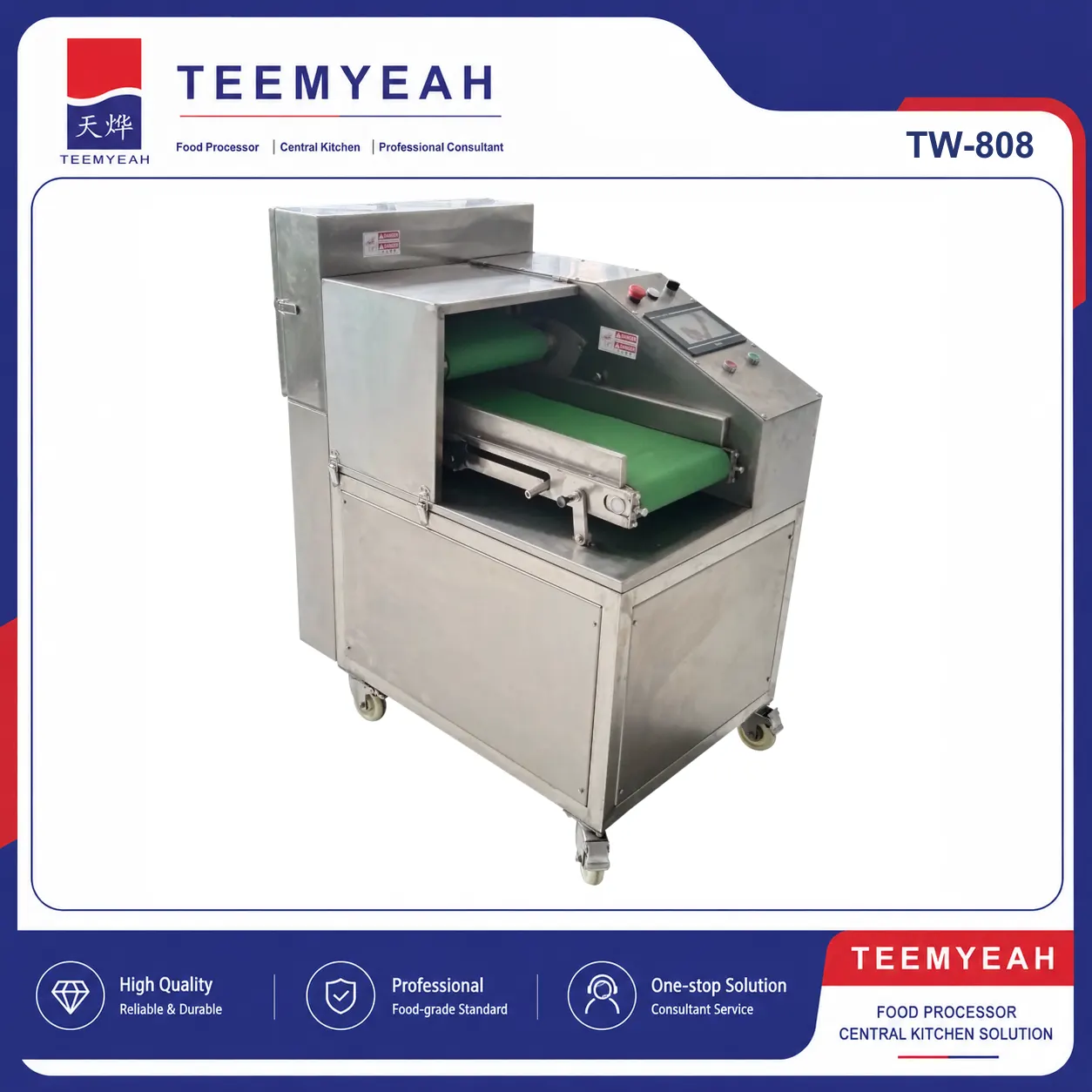
For a preparation cell using TEEMYEAH equipment, manual preparation, whole-pod washing, draining, TW-808 segment cutting and final inspection provide a configuration to assess against your product. The cutter’s adjustable length setting and catalogue capacity are starting specifications; accepted bean segments depend on representative feed, presentation, cutting conditions and the buyer’s product requirements.
Before ordering, assign responsibility for each preparation task, test the required segment lengths and define the receiving conditions of the next process. Blanching, cooling and freezing require their own scope and interface. This gives the buyer a comparable equipment proposal and a practical basis for assessing output.
1. Choose Green Bean Processing Equipment Around Incoming Pod Condition
A request for “beans cut for freezing” describes the intended product but leaves the equipment supplier without a decisive input: how much preparation remains when the beans arrive. Two processors seeking the same finished segment length may need different staffing, preparation space and equipment interfaces because they purchase different raw materials.
Describe incoming beans through representative photographs, samples and purchasing specifications. Identify whether stems and tips remain, whether pods arrive attached in clusters, and which unsuitable pods or foreign materials receiving inspection must address. “Whole beans” and “clean beans” are too broad to establish these responsibilities.
Route A: whole, untrimmed pods
This route needs preparation before the pods become accepted cutter feed. Operators or separately specified equipment must perform the required end trimming and cluster separation. Inspection also needs a place in the route: removing a stem does not establish that the remaining pod meets the buyer’s requirements.
A manual preparation arrangement can be assessed where the proposed staffing and working method can sustain the required feed. TEEMYEAH’s TW-806-2P is documented as a six-station manual inspection and preparation table with upper product transfer and a lower waste conveyor. Its role is to organize preparation and waste handling; six stations do not establish a bean-specific labor rate.
If automatic snipping or declustering is required, identify it as a separate procurement item. The confirmed TW-808 application is segment cutting. Its reviewed documentation does not establish automatic removal of stems and tips or separation of attached clusters.
Route B: accepted supplier-trimmed pods
Pretrimmed purchasing can reduce the preparation work performed inside the factory. The receiving specification should state which ends are removed, whether attached clusters are acceptable, and how residual defects are handled. A supplier’s description of “trimmed” needs to match the condition your preparation cell expects.
Provide an inspection and correction arrangement for deliveries that need attention. Otherwise, occasional trimming work can migrate to the cutter operator, interrupting feeding and obscuring the actual labor requirement. Record these corrections separately from normal cutting activity during a trial.
The useful purchasing comparison is therefore the cost and reliability of delivering accepted pods to the cutter. Include incoming material cost, preparation labor, removed material and handling requirements. Comparing untrimmed and pretrimmed purchase prices alone leaves the factory’s remaining work outside the decision.
2. Specify Each Preparation Task and Its Equipment Owner
A complete request for quotation should name both the operation and the party responsible for delivering it. This makes proposals comparable when one supplier offers a cutter, another includes washing and transfer, and the processor already owns downstream equipment.
The following matrix provides a practical scope structure. Use the final column to turn a list of machines into conditions that the buyer and supplier can review together.
| Operation | Whole, untrimmed pods | Accepted pretrimmed pods | RFQ and acceptance requirement |
|---|---|---|---|
| Receiving and inspection | Assess end condition, clusters, unsuitable pods and foreign material. | Verify the agreed trimming and incoming quality specification. | Name the inspection point, responsible team and rejected-material route. |
| End trimming and cluster separation | Provide manual preparation or separately specified equipment. | Provide correction work where receiving inspection requires it. | State who supplies the labor or equipment and the required prepared-pod condition. |
| Whole-pod washing | Assess washing after the agreed preparation step. | Assess washing against actual incoming condition. | Confirm bean loading, retention, discharge and the proposed operating rate through trial. |
| Draining and transfer | Connect washing to controlled cutter feeding. | Use the same interface checks for the accepted material. | Define residual-water expectations, transfer method and responsibility for connecting equipment. |
| Segment cutting | Feed prepared pods meeting the agreed condition. | Feed inspected pods meeting the same cutting requirements. | Test specified lengths, presentation, cut completeness and accepted output. |
| Final inspection and downstream processing | Separate accepted segments from agreed rejects. | Apply the same finished-segment criteria. | Assign inspection, blanching, cooling and freezing scope and define the receiving interface. |
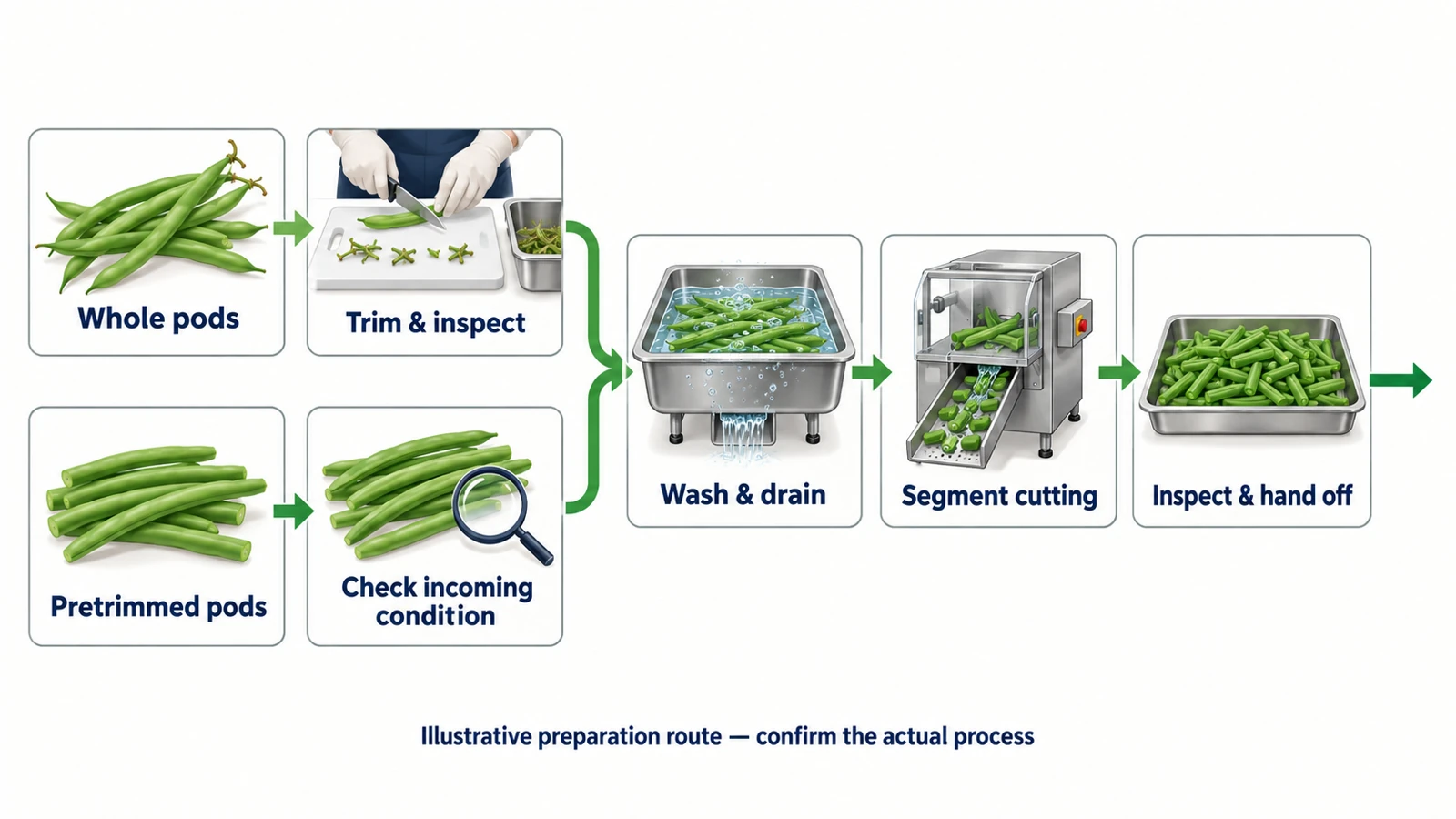
For washing, the TW-606-3 vegetable washing machine has documented water-jet and bubble action, a through conveyor, and external circulation and debris removal. Its catalogue range is 800–2,000 kg/h. Bean-specific loading, retention and operating rate require assessment with the intended product.
The washer trial should show how pods enter, move through and leave the machine. Check whether the discharge provides manageable feed for draining and cutting, including how operators handle the beginning and end of a batch. Draining removes free water; the required condition for the next operation must be specified separately.
A route worth evaluating is independent bean receiving, manual end trimming, whole-pod washing by batch, draining, segment cutting and final inspection. This defines a preparation concept, rather than an installed-project result. It also avoids automatically sending beans through a root-vegetable line’s post-cut washing arrangement simply because that equipment is nearby.
Where several machines need connecting, custom food preparation line planning can organize the layout and task interfaces. Mark existing equipment, proposed additions and separately supplied downstream operations directly on the scope drawing so that transfer responsibilities remain visible.
3. Specify Accepted Segments as Well as the Cutter Setting
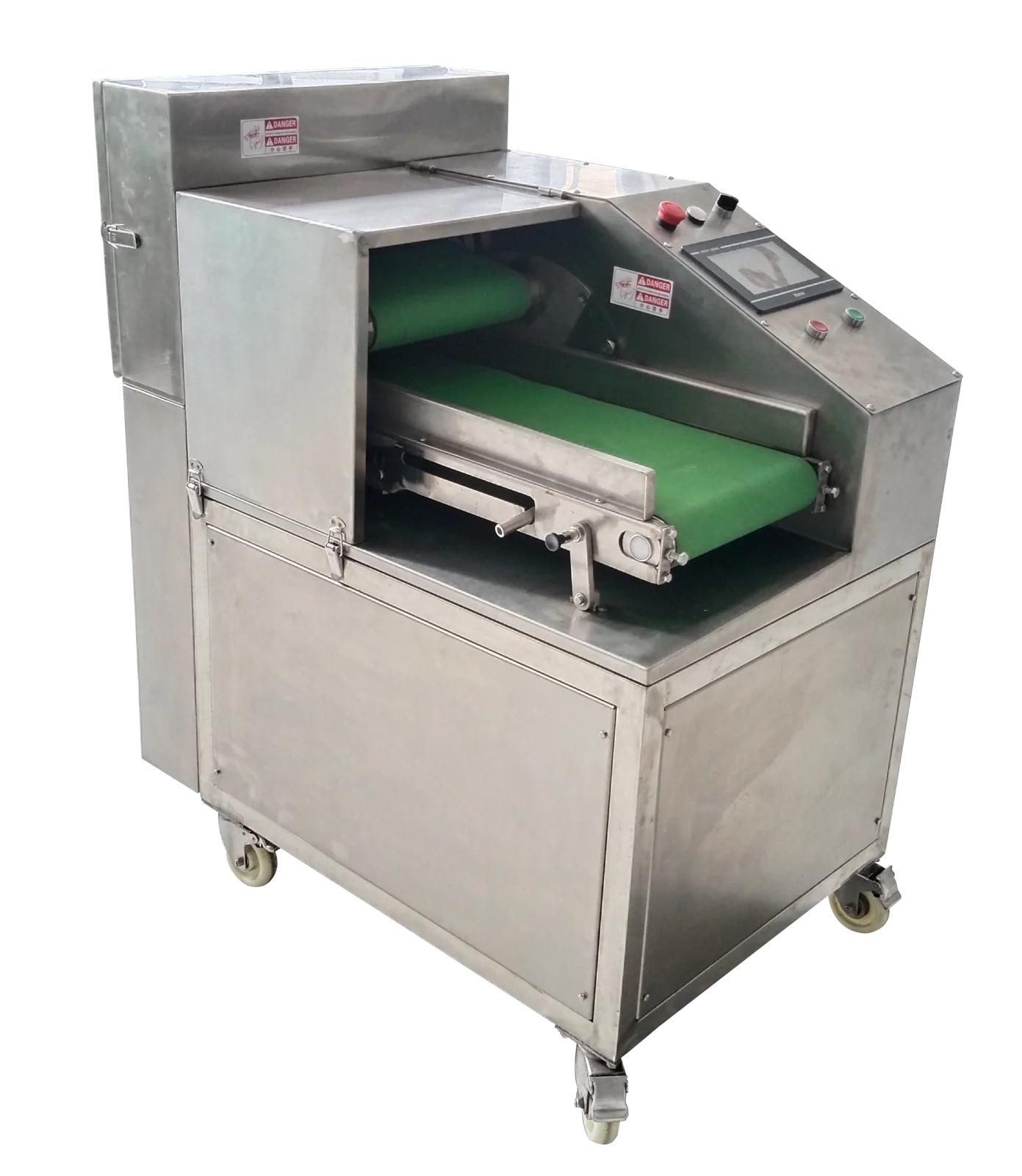
The TW-808 vegetable segment cutter explicitly lists bean segments among its documented applications. Its segment-length setting is continuously adjustable from 2–60 mm. The documented infeed width is 300 mm, with a maximum infeed height of 80 mm.
The machine uses PLC and touchscreen control with variable-frequency and servo control. Material advances on a stepping belt and is cut inside the knife housing; the documented slicing blade is used for segments or slices. These features establish a basis for evaluating prepared-bean cutting, while the sample trial establishes the result for your feed and product specification.
A length setting alone does not describe an accepted batch. Curved pods, the direction in which pods are presented, short end pieces and incomplete cuts all belong in the assessment. The maximum infeed envelope also does not define the best bean loading depth or presentation method.
Write the output requirement so that both parties measure the same thing. For curved segments, agree how length will be measured. Define the permitted length distribution, treatment of short pieces and criteria for incomplete cuts or visibly damaged material. The buyer should supply these requirements from the intended product specification rather than adopting arbitrary machine-test thresholds.
- List each segment length required for production and identify the corresponding product.
- Provide reference photographs or physical examples showing acceptable and unacceptable pieces.
- Agree how trial samples will be collected across the run, including any startup material.
- Record fines, short end pieces and incomplete cuts as separate observations.
- State whether each output category is accepted, rejected or assigned to another product.
Keep the feed condition and machine settings alongside the output observations. If a supplier changes presentation or loading during the trial, identify which collected samples came from each condition. This gives the buyer a repeatable operating basis and makes it possible to distinguish a setup improvement from variation in the incoming beans.
Raw, blanched and frozen material also represent different test conditions. The reviewed TW-808 documentation does not establish validated cutting performance for blanched or frozen beans. If the proposed process places blanching before cutting, request a separate technical suitability assessment and trial using material in that intended condition.
A useful acceptance record therefore connects incoming pod condition, preparation, cutting setup and collected output. A close-up photograph of attractive segments can support that record, but it cannot show the distribution of pieces or explain how consistently the machine was fed.
4. Size the Cell Around Sustained Prepared Feed and Accepted Output
The TW-808 catalogue lists 2–3 t/h, while its September 2024 operating manual states that output depends on material and cutting length. Treat that catalogue figure as a machine specification, not a measured rate for your beans or a commitment for the complete preparation cell.
The relevant production question is how much accepted material the cell can deliver during the available operating window. Whole-pod preparation, washing batches, draining, cutter feeding, inspection and the receiving rhythm of the next process all affect that answer.
Record three quantities separately: incoming beans, prepared beans entering the cutter and accepted segments leaving inspection. They answer different questions. Incoming mass helps explain raw-material use; prepared-feed mass isolates the cutting step; accepted output shows what can proceed under the agreed product criteria.
For a trial, accepted-output rate can be expressed as accepted segment mass divided by the agreed elapsed operating time. Define that time before the run. A calculation based only on moments when the belt carries beans answers a different question from one that includes normal feed pauses and batch handling.
Keep cleaning and product changeovers visible in the production schedule as well. A short cutting trial cannot establish shift output unless the remaining activities are accounted for. No bean-specific cleaning or changeover times are established here; those observations belong in the buyer’s operating assessment.
The most useful trial log includes:
- Operator numbers and their assigned preparation, feeding and inspection tasks.
- Incoming and prepared material weights, with trimming waste recorded separately.
- Cutting settings, actual feeding method and the start and finish of each run.
- Pauses caused by preparation, transfer, inspection or downstream receiving.
- Accepted output and separately identified reject or alternative-use categories.
- Observed cleaning and changeover activities relevant to the proposed production schedule.
Do not add equipment ratings together or present the lowest catalogue rating as a measured line capacity. A washer and cutter can have different rating assumptions, and neither figure captures manual trimming interruptions. The proposed arrangement needs assessment as connected work, even when the machines are purchased separately.
The equipment capacity verification guide provides broader purchasing context. For this bean cell, the decisive evidence is the relationship between prepared feed, accepted segments and elapsed time under the agreed staffing and receiving conditions.
5. Agree the Sample Plan and Downstream Handoff Before Ordering
A useful sample assessment begins with a written question. For example: can the proposed cutter configuration produce the required segment distribution from these prepared pods, using a feeding arrangement the factory can maintain? This is more actionable than requesting a general cutting demonstration.
Send information about the actual purchasing condition, including photographs showing the range of pod shapes, sizes and trimming states. Identify the desired segment lengths, expected production schedule and whether the proposed cutting step receives raw material or material that has already undergone another process.
Agree machine availability, sample quantity and the shipping address before dispatch. Confirm whether the samples should arrive untrimmed for preparation assessment or already trimmed for a cutting-focused trial. If the supplier trims the sample, record that work so the factory can reproduce the feed condition later.
The sample specification should cover:
- Bean variety or commercial description, supplier lot identification and representative physical condition.
- Required treatment of stems, tips, clusters, unsuitable pods and foreign material.
- Washing and draining condition before cutting, with any preceding process identified.
- Required segment lengths, measurement method and acceptance categories.
- Target production requirement and the time basis on which it will be assessed.
- Planned downstream process, receiving equipment and the team responsible for its criteria.
The supplier can use these inputs to assess the proposed cutting configuration, feed presentation and equipment interfaces. The buyer retains ownership of the finished-product criteria and should involve the downstream equipment supplier where receiving conditions affect the process.
Define the handoff physically as well as commercially. Identify the receiving height and position, conveyor or container arrangement, acceptable delivery rhythm and residual-water requirements. If the next process stops, state where preparation stops or where material may wait under the factory’s established operating procedures.
Blanching, cooling and freezing should appear as separately defined operations in the project scope. Resolve whether cutting occurs before or after blanching with the responsible process team and relevant equipment suppliers. A trial of raw-bean cutting does not answer the separate question of suitability for cutting blanched beans.
Utility and maintenance checks complete the equipment decision. The documented TW-808 electrical specification is 2.5 kW and 380 V, three-phase, five-wire. Confirm compatibility with the site supply and any agreed configuration changes before ordering. Upper and lower belts are removable for cleaning; cleaning requires isolation, and controls must not be hosed.
Attach the agreed preparation responsibilities, trial conditions and downstream interface to the proposal. This gives purchasing, production and engineering the same definition of what the equipment package must deliver.
Buyer FAQs
Can the proposed cutter accept untrimmed beans if the ends will be removed afterward?
Ask for a technical assessment of that exact workflow. Segment cutting does not identify and selectively remove stems or tips, so the proposed final inspection would need to distinguish unwanted end pieces from accepted segments. Define how that separation would work and assess its labor requirement. The confirmed TW-808 scope is prepared-bean segment cutting; any alternative feed condition needs explicit agreement.
How should green bean processing equipment be specified when deliveries alternate between trimmed and untrimmed pods?
Request two operating routes within the same proposal. Identify the preparation staffing and waste handling needed for untrimmed deliveries, plus the inspection route for accepted pretrimmed pods. Both routes should deliver the same agreed cutter-feed condition. Assess each receiving scenario separately so that a trial using pretrimmed beans is not treated as evidence of output when manual trimming is also required.
Should samples come from one delivery or several suppliers?
Use samples that represent the purchasing conditions the equipment must handle. If suppliers deliver materially different pod shapes, sizes or preparation states, keep those samples identified and assess the relevant differences. Combining everything into one sample can hide which incoming condition causes a feeding or acceptance issue. Agree the sample plan with the supplier before arranging shipment.
How should short end pieces be treated when comparing quotations?
Apply the same product categories across all supplier assessments. State whether short pieces are accepted in the main product, separated for another use or rejected. Ask suppliers to report those categories separately rather than folding all discharge into one output weight. This makes the comparison reflect your commercial product specification and prevents different accounting methods from creating an apparent performance advantage.
Can one preparation cell produce both whole trimmed beans and bean segments?
A shared preparation arrangement can be considered, with an agreed route around the cutting operation for whole-pod production. That route requires suitable transfer and receiving arrangements; an integrated TW-808 bypass should not be assumed. Specify how operators select the route, keep product identities separate and deliver each product to its next process. Confirm the physical arrangement during layout review.
Should cut beans automatically return through the washer?
No automatic return should be included without a defined process requirement. Whole-pod washing followed by draining, cutting and inspection is one preparation arrangement to assess. If the processor requires post-cut washing, specify its purpose, equipment, product handling and additional water-removal interface. Evaluate that route with the responsible process team rather than inheriting a wash sequence designed for another vegetable.
How can a buyer distinguish trimming losses from cutting losses?
Weigh and identify material at separate boundaries. Record received beans and preparation removals before measuring prepared feed entering the cutter. Collect and classify the cutter output under the agreed acceptance rules. Document sampling and residual-water conditions so that weight comparisons remain interpretable. This separates raw-material and trimming decisions from cutting performance without assigning every removed kilogram to the cutter.
Which cleaning and changeover checks belong in the purchase review?
Ask the supplier to demonstrate the documented operator cleaning procedure, including isolation and removal of the upper and lower belts. Confirm cleaning access, handling of removed parts and the checks required before restarting. For length changes, assess the authorized operating procedure and the resulting product. Record observed time only under stated conditions; avoid accepting an unsupported universal cleaning or changeover duration.
Send Bean Samples and Required Segment Lengths
Share your incoming bean condition, required segment lengths, production requirement and downstream process with TEEMYEAH. These details support assessment of a preparation and cutting configuration, including the work assigned to operators and separately supplied equipment.
Use Send Bean Samples and Required Segment Lengths to begin the discussion. Agree machine availability, sample quantity and the shipping address before sending material, together with the output criteria you want the assessment to address.
Source Note
TEEMYEAH equipment specifications are based on the original TW-808 product documentation and September 2024 operating manual, together with the TW-606-3 and TW-806-2P equipment sheets. Catalogue ratings are not measured bean acceptance results.
For industrial terminology, Cabinplant documents automatic end snipping and optional declustering in its bean snipper information, and predefined segment cutting with oriented feeding in its bean cutter information. Tabanli’s snipping and declustering comparison discusses configuration choices by incoming bean condition. These references describe their respective manufacturers’ equipment, not TEEMYEAH capabilities or performance.