







Summary
Visiting a food preparation and processing equipment factory near Canton Fair can make an existing Guangzhou trip useful for equipment selection if the appointment is built around a defined product question. Before confirming travel, agree on the material, the machine or process stage to evaluate, the output to inspect and the observations to record. A visit is worth scheduling when the available equipment and representative samples can help you decide whether to proceed, repeat a test or revise the proposed configuration.
Send your preferred dates, ingredient and incoming condition, intended finished product, target cut and accepted-output requirement with the initial request. Ask for confirmation of the actual onsite venue, equipment availability and responsibility for supplying and handling samples. The useful outcome is a documented feasibility decision with named follow-up actions; a demonstration does not become formal factory acceptance testing simply because a buyer attends.
For root vegetables, focus on accepted mass, peel coverage and remaining trimming. For washed leaves, agree how to assess surface moisture, visible damage and elapsed time. These observations can support the next equipment discussion when the sample conditions and measurement boundaries are recorded alongside them.
Choosing a Food Preparation & Processing Equipment Factory Near Canton Fair: Define the Visit Outcome
Start with the decision your team needs to make after returning home. A processor evaluating peeled carrots needs different evidence from a central kitchen checking washed lettuce before packing. An importer may need to understand which customer materials require separate testing. “See the machines” leaves those questions open; “check whether this preparation stage produces an acceptable sample for our next operation” gives the appointment a practical purpose.
Write one primary question and identify the person who can judge the output. That might be a production manager assessing remaining manual work, a quality colleague defining acceptable damage or a packing colleague specifying the required product condition. If that person cannot attend, agree beforehand which photographs, measurements and sample observations they need.
The official 140th Canton Fair dates are October 15–19, October 23–27 and October 31–November 4, 2026, across its three phases. Check the official Canton Fair website when coordinating your trip. During your Guangzhou trip, you can also arrange a visit to TEEMYEAH in Foshan to discuss your equipment requirements and sample testing.
Use the TEEMYEAH arrival guide for headquarters and R&D visitor directions. Confirm the actual meeting and demonstration venue through booking before arranging the journey; fair traffic can affect the itinerary.
Keep wider company checks in the separate equipment supplier evaluation process. This appointment should resolve a product-handling question without becoming an unfocused factory audit or a substitute for contracted acceptance.
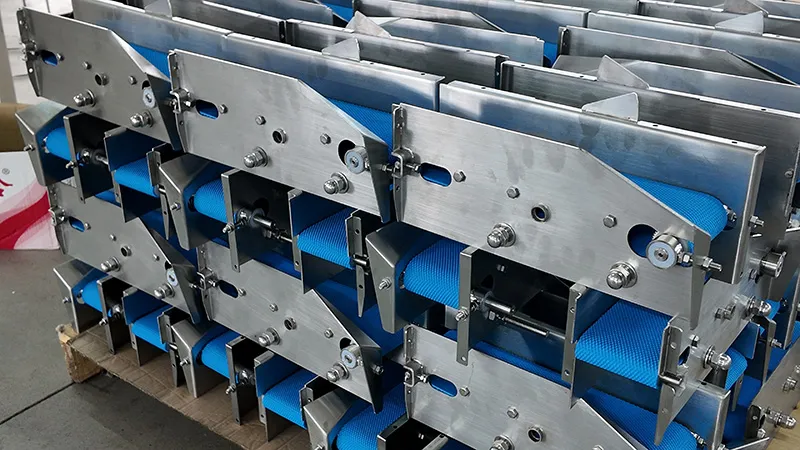
Your visit brief can cover vegetables, fruit, meat or seafood. Describe each ingredient separately, including its incoming condition and required finished form. Confirm the suitable machine and handling arrangements for each product group. The root-vegetable and leafy-product trials below show how to turn those requirements into practical observations.
Prepare a Sample Brief That Represents Your Production
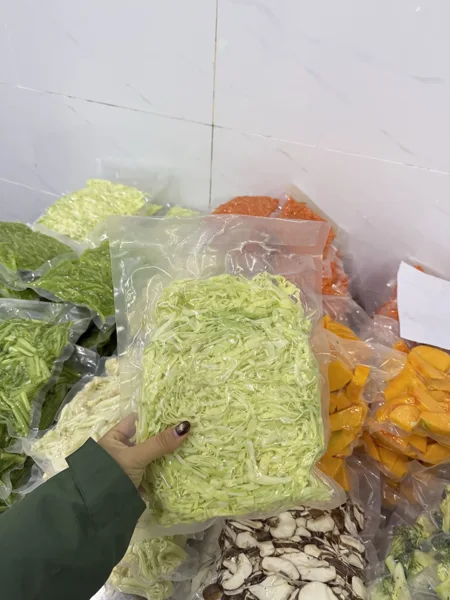
A useful sample resembles the material your operation actually receives. Uniform demonstration samples may leave the difficult part of your purchasing question unanswered. Describe normal variation, including size, firmness, temperature, trimming and the form in which each ingredient arrives. For meat or seafood, specify whether the sample is fresh, chilled or frozen and whether it contains bones, skin or shells, so the proposed machine and test conditions can be reviewed before your visit.
State whether the intended product is ready-to-cook (RTC) or ready-to-eat (RTE), and describe the operation immediately after the equipment under discussion. A washing or dewatering demonstration does not validate an RTE process. Its contribution is narrower: showing product handling and documenting the condition delivered to the next stage.
Copy the following sheet into your preparation notes. It is a planning worksheet, not a minimum sample specification. The required quantity depends on the selected equipment, proposed runs and observations, so confirm it after reviewing the trial scope.
| Sample brief field | Information to provide | Decision it supports |
|---|---|---|
| Ingredient and type | Ingredient name, variety or cut where relevant, and differences between supplies. | Whether one material can represent the purchasing question. |
| Incoming condition and size | Whole or cut, washed or unwashed, fresh/chilled/frozen condition where applicable, size range and photographs. | Whether the proposed starting point matches production. |
| Trim state | Peel, tops, stems, skin, bones or shells already removed, as applicable; manual preparation still expected. | Where the trial begins and which losses belong to it. |
| Intended finished product | RTC or RTE use, next processing stage and photographs of acceptable output. | How the visitor will judge suitability. |
| Cut target and tolerance | Requested shape and dimensions, acceptable variation and unacceptable pieces, where cutting is relevant. | Whether output can be evaluated against a shared definition. |
| Accepted-output basis | Required accepted product per hour or batch, distinguishing it from incoming raw weight. | Which mass and time boundaries must be recorded. |
| Lot identification | Lot reference, source description and any known differences between sample portions. | Whether successive runs are comparable. |
| Arrival and handling | Proposed sample arrival date and named owners for supply, receipt, storage and disposal. | Whether material will be ready and suitable for the agreed session. |
Separate essential products from optional ones. If several ingredients are under consideration, identify which purchasing decision each one represents. Bring clearly labelled lots linked to distinct questions, and agree handling and changeover requirements between product groups. Where representative material cannot be supplied, agree whether an available substitute can answer a limited question and record the difference explicitly.
Include photographs before dispatching or sourcing samples. They allow discussion of size, trim and condition while changes remain practical. Do not assume that sending material establishes an appointment or that an unconfirmed delivery can be received and stored.
Propose a Visit Block With Clear Time Boundaries
Build the schedule backwards from the observations required. There must be time to identify the material, witness the relevant handling sequence, inspect output and agree what the result means. Travel and preparation should not silently consume the time assigned to measurement.
Use this example 110-minute agenda to plan your visit, and confirm the available time with TEEMYEAH before booking. It assumes the agreed material and equipment are ready at the start; transport, unloading, machine setup and full cleaning are excluded and require separate allocation. Equipment availability, the number of runs and the applicable procedure may require a different schedule.
| Proposed block | Minutes | Working output |
|---|---|---|
| Confirm question and sample | 15 | Identify lot, starting condition, acceptance criteria and measurement boundaries. |
| Review setup and recording | 10 | Record settings, observation positions and responsibility for timing and weighing. |
| Run and observe | 40 | Carry out the feasible agreed run sequence; capture masses, times and output observations. |
| Inspect and compare | 25 | Review retained output, photographs and any limitations in comparability. |
| Agree disposition | 20 | Select proceed, retest or revised configuration; assign an owner and date. |
If cleaning or changeover duration is central to the purchase, request a separate observed block with an explicit start and finish. Do not compress a full procedure into a brief access demonstration. Observation should follow the supplied procedure and safe, isolated access arrangements; visitors should not treat the session as hands-on servicing instruction.
Protect the final discussion even if an earlier activity overruns. A short session with an accurately bounded result can still support a decision. A longer session without an agreed interpretation often leaves the quotation team guessing which observation mattered.
Root Washing and Peeling: Measure the Product Left to Use
For potatoes, carrots and similar roots, surface appearance alone cannot describe the preparation result. The buyer needs to see what remains usable, what still needs trimming and which losses occurred within the observed stage. Define an acceptable piece before the run, including the required peel coverage and any remaining manual correction.
The TY-1000A cleaning and peeling machine is an example of a root preparation machine with a seven-brush chamber. Typical materials include potatoes, carrots, sweet potatoes, lotus roots and taro. When booking, specify your product and ask which configuration is available for testing.
Weigh the agreed input and separate the output into accepted material and defined reject categories. Record remaining trim as a distinct observation. If a piece must be manually corrected before it meets the target, specify whether the accepted mass is measured before or after that correction. Otherwise, two people can report different yields from the same run without either noticing the difference.
Inspect peel coverage across a defined sample rather than photographing only the best pieces. Record the number inspected, how they were selected and the areas considered unacceptable. Note variation associated with size or shape so the result can be discussed in relation to the submitted lot.
A root trial can lead to a useful configuration question even when the output is not yet acceptable. The next step may be to reconsider incoming preparation, adjust one permitted operating variable or investigate the remaining trimming requirement. Preserve those distinctions instead of turning every rejected piece into a general verdict on the machine.
Leaf Dewatering: Connect Moisture, Damage and Elapsed Time
A dewatering trial should begin with the product condition after washing and finish at a clearly defined handoff point. Describe the leaf type or mixture, cut state and how the sample reaches the dewatering stage. Differences in the incoming material can obscure the effect of a setting change.
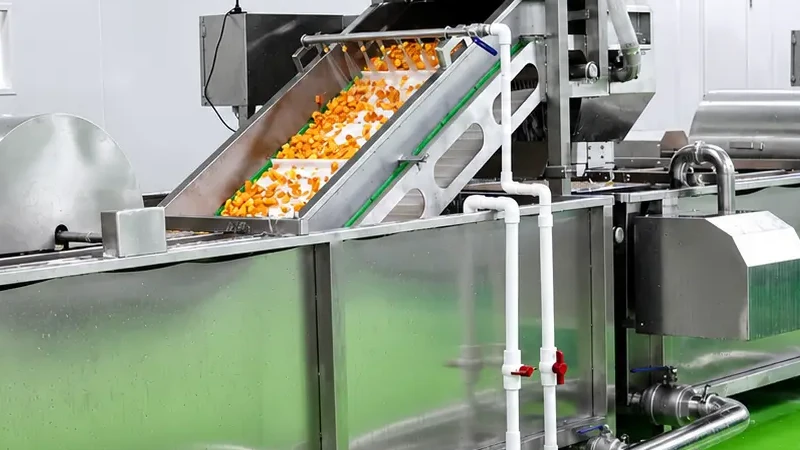
The TW-980LB vegetable dewatering line provides an example of post-wash centrifugal dewatering. Applications include lettuce, cabbage, mixed salad and julienned potato, with product programs and a conveyor designed for cleaning access. Use those features to frame questions about the proposed trial, rather than assuming a particular program or machine is available for your visit.
Agree a surface-moisture assessment method with the colleague responsible for packing or downstream handling. Record the method, sample selection and observation timing. If the session uses only visual inspection, identify it as visual evidence; do not convert “looks dry” into an unsupported moisture percentage.
Assess visible damage on a defined sample using a shared scoring description. For example, the team can agree how it will distinguish an acceptable leaf from one showing unacceptable tearing or bruising. Record damage already present before the run so incoming defects are not automatically attributed to dewatering.
Capture total elapsed time as well as the machine interval. Loading, discharge and agreed transfers may affect the practical handoff even when the processing stage is brief. A satisfactory discussion considers moisture condition and damage together with that time boundary; the driest-looking sample is not sufficient evidence by itself.
Use a Blank Trial Record to Make Comparisons Usable
A visit to a food preparation and processing equipment factory near Canton Fair is more useful when you leave with a clear trial record that your colleagues can review. Copy one version per run and fill it with the observations actually collected; mark unmeasured items clearly.
| Record field | Blank entry to complete |
|---|---|
| Run identity | Run ID: ______; date: ______; machine/configuration: ______; sample lot: ______. |
| Input condition and mass | Starting condition: ______; input kg: ______; preparation before weighing: ______. |
| Accepted output | Accepted kg: ______; acceptance definition: ______; measurement before/after manual correction: ______. |
| Rejects and other losses | Categories and kg: ______; trim allocation: ______; uncollected or unmeasured material: ______. |
| Timed interval | Start: ______; end: ______; elapsed minutes: ______; included tasks: ______; excluded tasks: ______. |
| Cut distribution, if applicable | Target/tolerance: ______; sample size: ______; selection method: ______; observed size groups/counts: ______. |
| Visible damage | Scoring definition: ______; sample size: ______; incoming observations: ______; output scores: ______. |
| Surface moisture, if applicable | Method agreed with packer: ______; sample selection: ______; observation timing: ______; result: ______. |
| Cleaning and changeover | Procedure/scope: ______; cleaning start/end: ______; changeover start/end: ______; overlapping activities: ______. |
| Settings and evidence | Settings/program: ______; changed variable: ______; photograph/video references: ______. |
| Observation acknowledgement | Buyer observer: ______; supplier observer: ______; signatures/acknowledgements: ______; unresolved observations: ______. |
Change one variable at a time where practical. If both the material lot and operating setting change, the difference in output cannot be assigned confidently to either. Divide comparable material into identified portions and document any unavoidable variation. Agreement about comparability matters more than the number of runs.
Keep incoming raw mass separate from accepted output. Calculate accepted-output proportion by dividing accepted kilograms by input kilograms and multiplying by 100. The calculation is meaningful only when the stage boundary and acceptance definition are stated.
Likewise, an observed accepted-output rate can be calculated as accepted kilograms divided by elapsed minutes, multiplied by 60. Label it with the measured interval and included tasks. A short demonstration interval does not establish sustained production performance, especially when preparation, interruptions or cleaning sit outside the denominator.
Avoid double counting. Material logged as trim must not also be added again to a reject total. For wet processing, record the condition in which masses were measured and disclose uncollected material; unexplained differences should remain visible rather than being forced into a convenient category.
The TEEMYEAH resources page can support discussion of handling and operating sequence. A demonstration video without recorded conditions is not a capacity record or factory acceptance test report. Attach relevant visual evidence to the run sheet so its purpose and limits remain clear.
Turn Observations Into a Configuration Decision
Close the technical discussion with one of three dispositions: proceed, retest or request a revised configuration. “Proceed” means the observations support the next defined purchasing step, such as preparing a scoped quotation. It does not mean every production requirement has been proven.
Choose “retest” when the setup remains plausible but a specific uncertainty prevents a decision. Name that uncertainty: an unrepresentative lot, an undefined moisture assessment or an output sample too limited to judge cut variation. State what must change before repeating the work so the next session produces additional evidence.
Request a revised configuration when the observations point to a different preparation sequence, an unresolved manual task or an unsuitable handoff to the adjacent operation. Describe the required output and the observed gap. The quotation discussion can then address the gap rather than simply selecting a larger machine.
Prepare a short handoff containing the run references, agreed interpretation, remaining question, action owner and target date. Have the observers acknowledge the recorded facts while leaving disagreements explicit. This creates a usable basis for follow-up without turning a preliminary trial sheet into contractual acceptance.
Send the same record to colleagues involved in the equipment decision. A purchasing team needs to know which configuration the observations concern and which conditions remain open before treating the visit as support for an order.
Questions to Resolve Before Confirming Your Appointment
Can we request a visit before our sample supply is settled?
Yes. Describe the intended material and identify sample supply as unresolved. Ask whether the session can be planned provisionally around that question. Keep travel and material commitments separate from the inquiry until the venue, equipment and feasible sample arrangements have been confirmed.
How much material should we send for several possible runs?
Provide the proposed run sequence and assessment needs before agreeing quantity. Material used for setup, comparison runs and retained inspection samples must be considered together. Request a quantity appropriate to that scope; a universal kilogram figure would conceal differences between equipment and products.
Should we bring several ingredients if we have only one available visit window?
Rank them by purchasing consequence and explain whether they represent different configurations or variations of one requirement. Ask which can be evaluated meaningfully within the confirmed session. Keep lower-priority ingredients for a later review if including them would prevent complete records for the main decision.
Can substitute samples support a decision if our normal ingredient is unavailable?
It may support a limited handling observation if the relevant differences are documented. Identify what the substitute cannot establish, such as the result for your normal size range or trim condition. Use the record to specify a later representative trial rather than treating the substitute as equivalent.
How early should we arrange the visit and transport?
Submit preferred dates while your itinerary still has flexibility and include alternative windows. There is no fixed booking lead time established here. Arrange the journey against the confirmed venue and appointment, allowing for fair-period traffic and any separately agreed sample receipt or preparation requirements.
Can we evaluate cleaning if the trial finishes close to departure?
Only within a scope that fits the confirmed schedule and supplied procedure. Decide beforehand whether you need an access explanation or a timed cleaning observation. If the full procedure cannot be observed, record it as incomplete and arrange the missing evidence separately.
Can a colleague assess the result remotely?
Include that need in the request, with the colleague’s role, time zone and required evidence. Ask whether a suitable session or relevant video is available. Agree who will make the output judgement locally if the remote colleague cannot participate; do not leave acceptance criteria dependent on an unconfirmed connection.
Does a successful sample run replace formal factory acceptance testing?
No. Keep the run record as evidence for the specific material, configuration and conditions observed. If formal acceptance is required for a purchase, define that separately through the relevant purchasing process. A visitor’s acknowledgement of observations should not be relabelled as completion of contracted acceptance.
Send a Visit Request That Can Be Confirmed
When choosing a food preparation and processing equipment factory near Canton Fair, make the inquiry specific enough to establish whether an onsite evaluation is feasible. The useful commitment is a confirmed venue and workable session built around your material and decision criteria.
Book a Canton Fair Week Factory Visit Send your preferred visit dates and trial requirements using the request form. TEEMYEAH can then review equipment availability, sample arrangements and the proposed onsite venue with you.
In the Message field, mention your planned Canton Fair visit and include:
- Your preferred visit dates, alternative windows and main equipment decision.
- The ingredient or product, variety or cut if relevant, temperature condition, size range and preparation state.
- The intended RTC or RTE product, next operation, target cut and tolerance where applicable.
- The required accepted-output basis, clearly separated from raw input weight.
- The sample lot, proposed arrival date, available photographs and proposed owners for supply, storage and disposal.
- The measurements requested and a short action record: decision needed, open question, responsible person and target follow-up date.
Request confirmation of the actual venue, selected equipment, sample quantity and handling arrangements, allocated trial time and any separate setup or cleaning block before finalizing the appointment.

