




Summary
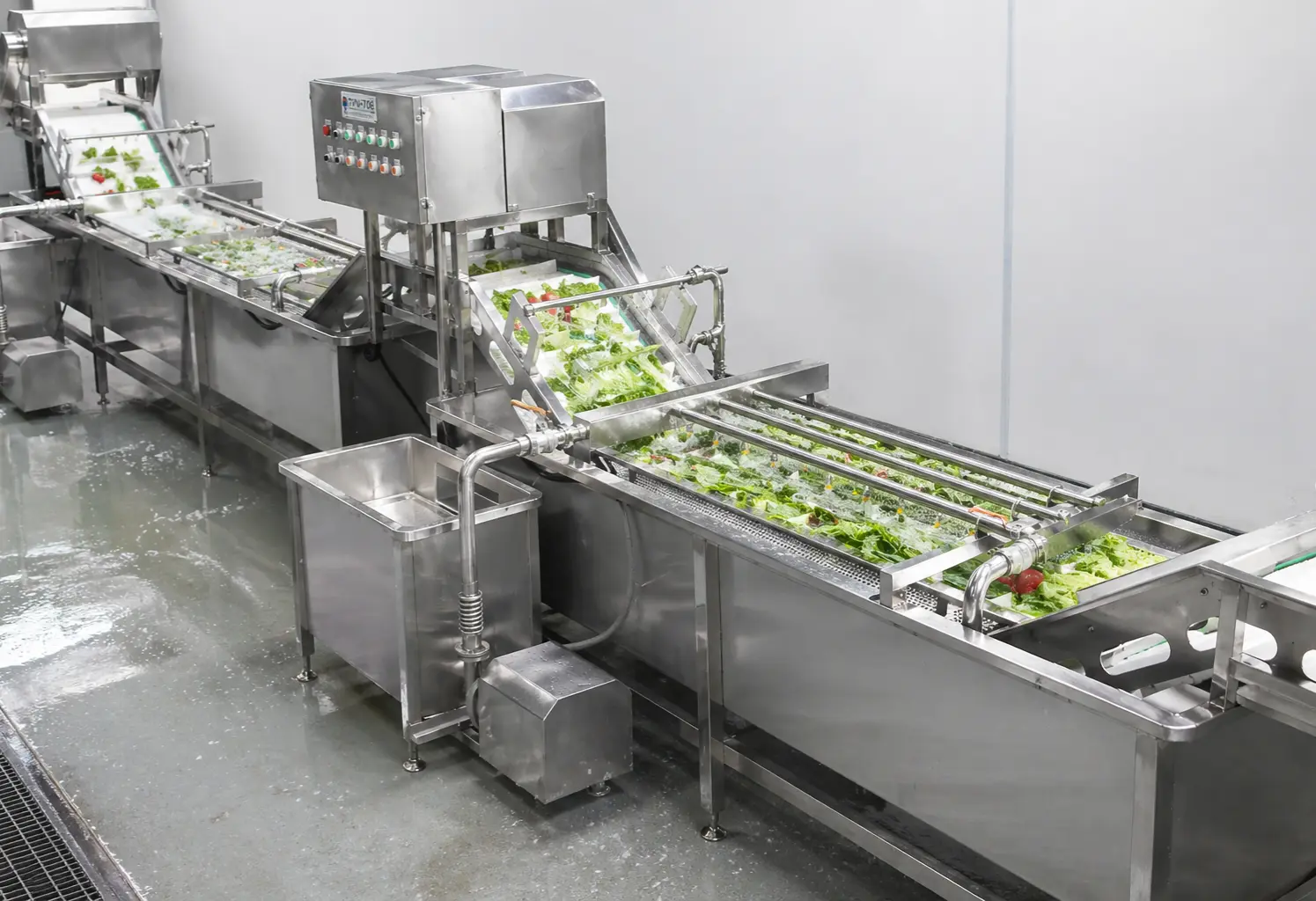
A root vegetable processing line should be configured from the incoming product and final format, not from one generic machine list. This root vegetable processing line configuration changes with soil load, shape, skin condition, firmness, trimming needs and downstream use for potatoes, carrots, beetroot, taro and cassava. Start with dirty intake, pre-soaking or stone removal, washing, optional peeling, inspection, cutting, optional second washing or dewatering, and the packing, cooking or freezing interface. Separate RTC, RTE fresh-cut, IQF pre-treatment and packhouse outputs because they require different boundaries. Send photos, size distribution, hourly and daily weight, cut specification, peel requirement and accepted-product examples before TEEMYEAH prepares a trial plan.
Root Vegetable Line Configuration Decision Matrix
The following matrix is a project-definition tool rather than a universal process recipe. Every row still requires confirmation against the processor’s product specification, local food rules, downstream process and representative raw-material trials.
| Product | Functions that may be shared | Likely dedicated module, bypass or control | Supplier acceptance focus |
|---|---|---|---|
| Potato | Receiving conveyor, soil and stone removal, pre-wash, controlled transfer and general wash infrastructure | Green/sprout/defect inspection; adjustable peeling route; eye and defect trimming; product-specific cutter and post-cut handling | Accepted yield after trimming, residual peel, gouging, breakage, cut dimensions and rejected incoming defects |
| Carrot | Receiving, loose-soil removal, pre-wash, certain brush-washing equipment and common utilities | Diameter grading where needed; top/tip trimming; light brush, stronger peel or peeling bypass; carrot-appropriate cutter feeding | Surface finish, tip damage, snapping, diameter-dependent cut consistency, excessive flesh removal and rework |
| Cultivated edible taro | Verified receiving area, controlled raw-zone conveying, initial soil removal and potentially shared washing infrastructure after testing | Supplier identity gate; rejection of wild or unidentified plants; taro-specific peeling/contact settings; inspection and downstream route control | Documented identity, peel completion, surface damage, usable yield, handling stability, cleaning effectiveness and route segregation |
| Cassava | Receiving logistics, selected soil-removal equipment, raw-zone wash utilities and some controlled conveying where geometry permits | Variety and supplier-lot gate; outer-layer removal and inspection; cassava-suitable cutting or grating; controlled transfer to validated downstream treatment; release interlock or hold status | Identity and lot records, peeling completeness, damaged-root rejection, accepted yield, cutting result and proof that the line cannot bypass the required safety process |
The most important word in the matrix is “may.” Shared infrastructure is acceptable only when sample tests, cleaning validation and operating controls demonstrate that sharing is practical. A washer that handles potatoes successfully may trap long cassava roots, damage carrots or provide uneven contact on taro. Conversely, purchasing four entirely independent lines can create unnecessary capital cost, floor-space demand and maintenance complexity when several early-stage functions could have been shared.
Define the Product Before Selecting the Modules
Finished specification
The supplier needs more than a product name. For each SKU, define whether the output is washed whole, peeled whole, sliced, diced, julienned, shredded or otherwise prepared. Record the target dimensions, permitted variation, acceptable residual skin, defect tolerance, maximum visible damage and whether manual correction is allowed.
“Fully peeled” is not sufficiently inspectable. One buyer may tolerate small residual surface patches before cooking; another may require an almost uniform appearance for retail fresh-cut packs. Extending peeling until every irregularity disappears can remove usable flesh from otherwise acceptable roots. Photographic reference standards—acceptable, borderline and reject—give the supplier and buyer a common test language.
Incoming specification
A raw-material specification should include size distribution, shape, curvature, soil load, stones and foreign matter, firmness, maturity, storage condition, visible damage and typical seasonal changes. Product identity and approved suppliers must be added for cultivated edible taro and cassava. Potato criteria should identify the receiving response to green, strongly sprouting, shrivelled, bitter or damaged material.
These observations are not minor purchasing details. A narrow sample of clean, uniform roots can make almost any demonstration look easier than normal factory production. If the operating season includes wet clay, mixed diameters or irregular roots, those conditions belong in the test plan.
Downstream use and release status
The same cut vegetable can carry a different process requirement depending on whether it will be cooked by the factory, supplied as a ready-to-cook ingredient or released as a ready-to-eat product. A carrot component intended for a raw salad has a different downstream risk profile from carrots entering a validated cooking process. Potatoes, taro and cassava should not be casually routed into a raw-product system merely because the cutting equipment can produce the required shape.
The line proposal should show where product status changes, who authorizes release and how material is prevented from taking the wrong route. For cassava, the equipment supplier should receive the processor’s validated downstream-treatment requirement as a design input. The pre-processing supplier should not invent a universal detoxification recipe or imply that its washer and peeler complete the safety process.
Line Balance Must Be Evaluated Separately for Each Product
Nameplate capacity describes equipment under defined conditions. It does not establish the accepted output of a multi-product line. Potatoes may be limited by peeling and eye trimming, carrots by orientation and cutting, taro by irregular feeding or manual finishing, and cassava by controlled downstream treatment.
The root vegetable line capacity framework explains why the slowest sustainable stage governs a connected line. For configuration purchasing, the same principle should be applied four times—once for each product and specification.
Useful calculations include:
Accepted throughput (kg/h) = accepted finished-product mass ÷ measured production time × 60
First-pass accepted yield (%) = product accepted without rework ÷ raw-material input × 100
Rework rate (%) = product requiring additional correction ÷ inspected machine output × 100
Direct labor hours per 1,000 kg = direct preparation labor hours ÷ accepted output × 1,000
Measured production time should include agreed routine interruptions but separately identify starvation, blockages, inspection stops, blade changes and downstream congestion. A machine can appear fast when product is weighed before rework or when the demonstration excludes the time needed to clear accumulated material.
Buyers should also calculate changeover-adjusted daily output:
Net available production time = scheduled shift time − sanitation − changeover − planned inspection − routine planned stoppages
A high-speed fixed line may deliver less daily output than a moderately rated modular configuration if product changes require prolonged dismantling, repeated manual adjustment or extensive cleaning.
Supplier Testing Required Before Accepting a Proposal
Build a representative sample plan
The purchaser—not the supplier alone—should define the samples. Include the normal size distribution, difficult shapes, expected soil load and more than one procurement lot where seasonal variation is material. Samples should be labelled by supplier, variety or commercial designation, harvest or receipt date, storage condition and relevant visible defects.
Testing the easiest potatoes and assuming the result applies to carrots, taro and cassava is unacceptable. Each product needs its own test sheet. If a crop is unavailable during proposal evaluation, the offer should identify that gap and make final confirmation conditional on a later witnessed trial.
Establish a manual reference and photographic standard
A trained team should prepare a matched reference sample to the minimum acceptable finished specification. Removed material can be separated into necessary peel, defective tissue and apparently sound flesh. Machine output is then judged against the same acceptance standard after any required rework.
This is particularly valuable for potato and carrot peeling. The potato peeling yield analysis shows why discharge weight alone can hide residual defects or excessive sound-flesh removal.
Measure the complete result
| Test measure | How to record it | Decision it supports |
|---|---|---|
| Accepted throughput | Mass meeting the final specification divided by measured operating time | Whether the configuration supplies usable output at the required rate |
| First-pass yield | Accepted product before manual correction divided by raw input | Whether apparent speed depends on hidden rework |
| Total accepted yield | Accepted product after agreed correction divided by raw input | Material-use comparison between settings or proposals |
| Rework labor | Operator minutes per 1,000 kg of accepted output | Whether automation actually reduces labor dependency |
| Damage and off-specification cuts | Count or mass by agreed defect category | Product quality, cooking consistency and customer acceptance |
| Changeover and sanitation time | Time from last acceptable product A to first acceptable product B | Multi-SKU daily capacity and labor planning |
| Foreign-material and reject accuracy | Foreign matter removed, product incorrectly rejected and defects escaping inspection | Receiving and sorting effectiveness |
| Utilities and waste | Water, energy and waste mass within an agreed test boundary | Facility compatibility and operating-cost estimation |
A trial should document machine settings, installed brushes or abrasive components, residence time, feed rate, water conditions, blade set, operator count and product temperature where relevant. Otherwise, a favourable result may be impossible to reproduce after installation.
Where a combined washer and peeler is being considered, equipment such as the TY-1500A cleaning and peeling machine should be treated as a candidate for product trials, not as proof that one setting will serve every root equally. The test must determine which products and specifications fit the machine’s practical operating window.
What the Final Supplier Proposal Should Contain
A technically complete proposal should make its assumptions visible. At minimum, request:
- a process flow for each product and finished SKU;
- a shared-versus-dedicated equipment schedule;
- all product bypasses, change parts and operating recipes;
- raw-material conditions used for sizing and testing;
- capacity stated at defined inlet and accepted-output boundaries;
- trial results for yield, finish, damage, rework and throughput;
- inspection positions, reject handling and lot-status controls;
- the interface to validated downstream cassava treatment;
- the sourcing and identity gate for cultivated edible taro;
- water, drainage, power, compressed-air and waste assumptions;
- cleaning access, dismantling procedure and changeover estimate;
- layout dimensions, operator positions and maintenance clearances;
- controls, alarms, emergency stops and safe isolation points;
- installation, commissioning and operator-training responsibilities;
- factory and site acceptance criteria;
- recommended spare parts, warranty scope and after-sales process.
The root vegetable processing line page provides a broader commercial framework for matching equipment to raw material and finished output. Projects requiring non-standard routing can also be developed through a custom food pre-processing line concept. Where the output enters fresh-cut production, the surrounding zoning and downstream handling should be evaluated within the facility’s fresh-cut vegetable processing plan.
Make Acceptance Criteria Part of the Purchase Order
A successful sample demonstration is useful only if its conditions follow the project into the commercial agreement. The purchase order or technical annex should identify the test products, sample ranges, machine configuration, measurement boundary, permitted settings and required outputs.
Capacity acceptance should be based on accepted product, not gross inlet flow. Yield should include rework and final trimming. Quality criteria should use written tolerances and reference photographs. If several products share a machine, acceptance should cover each approved configuration rather than allowing one successful potato test to represent carrots, taro and cassava.
The agreement should also address products or seasonal conditions that were not available before manufacturing. One practical solution is a conditional acceptance stage using a later sample, accompanied by documented adjustment responsibilities. If the machine cannot meet the agreed result across the specified raw-material range, the contract should state whether the remedy is adjustment, component replacement, reconfiguration or another mutually defined response.
Site acceptance must confirm more than mechanical operation. It should examine line balance, utility stability, actual product transfers, cleaning access, operator workflow, alarms, rejects, records and output at the agreed factory boundary. A machine that passes individually may still fail as part of a connected process if feeding, drainage, inspection or downstream capacity was not coordinated.
Build the Process Branch from Raw Material to Final Product
| Decision point | When the module is needed | Buyer input required |
|---|---|---|
| Pre-soak, destoning or heavy-soil removal | Field soil, stones or long receiving windows can overload a downstream brush washer. | Photos, soil class, foreign-material description and peak receiving rate |
| Washing and optional peeling | Potatoes, carrots, beetroot, taro and cassava require different skin-removal and trimming decisions. | Size distribution, skin condition, peel target, acceptable loss and before/after photos |
| Inspection and cutting | Cut format, maximum infeed size and defect trimming determine the cutter and operator workload. | Target dimensions, tolerance, accepted-product photo and expected reject type |
| Second washing or dewatering | Cut roots may require starch, cell-fluid or surface-water removal before packing, cooking or freezing. | Final product state, downstream interface and buyer-owned acceptance method |
| Packing, cooking or IQF handoff | The pre-processing line must stop at a defined transfer condition. | Height, belt speed, batch/continuous signal, temperature and scope owner |
Where TEEMYEAH Equipment Evidence Fits
The TY-1000A and TW-1500A family is documented as brush washing and peeling equipment for root-vegetable duties, but model capacity and peel-loss performance remain product- and project-specific. TW-307 naming is ambiguous across historical files and should not be used without confirming the current model. A documented 2026 project sequence used wash/peel, manual sorting, cutting, two post-cut washes, centrifugal dewatering, inspection, metal detection, weighing and palletizing; that sequence is evidence of one project configuration, not a universal root line. TEEMYEAH therefore uses the submitted product pack to decide which modules, bypasses and trial measurements belong in the proposal.
Frequently Asked Project Questions
Which product data is needed before choosing a brush washer or peeler?
Provide product photos, diameter and length distribution, soil load, skin condition, daily and hourly demand, peel target and accepted-loss method.
Should RTC and RTE fresh-cut roots use the same line boundary?
No. Define whether the product will be cooked or otherwise processed after transfer, or distributed ready to eat. Washing, dewatering, segregation and validation responsibilities can differ.
When is a sample trial required?
Use a trial when shape, firmness, skin condition, soil load, cut quality or product loss could change the module choice or accepted-output capacity.
Can one cutter cover every root product and cut?
Only after maximum infeed size, cut tools, tolerance, product condition and changeover time are confirmed. A shared cutter can still become the bottleneck for a mixed SKU schedule.
What should the proposal state about capacity?
State the product, incoming condition, cut, raw-input or accepted-output basis, run period, planned stops and bottleneck stage.


