







Summary
The whole produce vs fresh-cut business decision is not simply a choice between selling vegetables intact or cutting them before delivery. It is a choice between two different operating and economic models. A whole-produce distributor primarily creates value through sourcing, grading, inventory availability, cold-chain logistics and delivery. A value-added fresh-cut business takes responsibility for additional outcomes: usable yield, cut specification, washing, preparation consistency, packaging, sanitation, shelf life, traceability and production reliability.
Fresh-cut products can command a higher selling price per kilogram because customers are purchasing preparation work as well as produce. That higher price does not automatically mean higher profit. Processing creates trim loss, labor, packaging, sanitation, utilities, shorter inventory windows, quality failures, additional cold-chain exposure and greater consequences when forecasts are wrong.
For some distributors, remaining focused on whole produce is economically stronger. Others may justify a limited fresh-cut pilot around a few stable foodservice SKUs. A scaled processing operation becomes more defensible when demand, raw-material supply, yield, food-safety controls, cold-chain capacity and production economics have all been demonstrated.
The key question is therefore not, “Can we process vegetables?” It is, “Which responsibilities are customers willing to pay us to assume, and can we control those responsibilities profitably?”
A Pallet of Lettuce Can Support Two Very Different Businesses
Imagine two distributors receiving the same refrigerated shipment of lettuce.
The first inspects the heads, grades them, places them into cold storage, consolidates customer orders and delivers cases to restaurants and institutional kitchens. The customer remains responsible for trimming, cutting, washing where required, portioning and managing preparation labor.
The second distributor buys similar lettuce but converts it into shredded lettuce, salad components or portioned fresh-cut packs. The product passes through trimming, cutting, washing or other controlled treatment where applicable, dewatering, inspection, weighing, packaging, cold storage and dispatch. The customer receives something closer to a production input than an agricultural commodity.
The raw material may be nearly identical. The business is not.
The second operator has moved farther into the customer’s preparation process. That can create commercial value because a central kitchen, restaurant chain, food manufacturer or institutional caterer may prefer to buy consistent usable product rather than perform the same preparation at multiple locations.
The processor has also accepted responsibilities that previously belonged to the customer.
That transfer of responsibility is the central issue in comparing these models.
Whole Produce vs Fresh-Cut Business: The Core Commercial Difference
A whole-produce operation earns money primarily by making agricultural products available in the right specification, quantity, place and condition.
A fresh-cut operation also sells transformation.
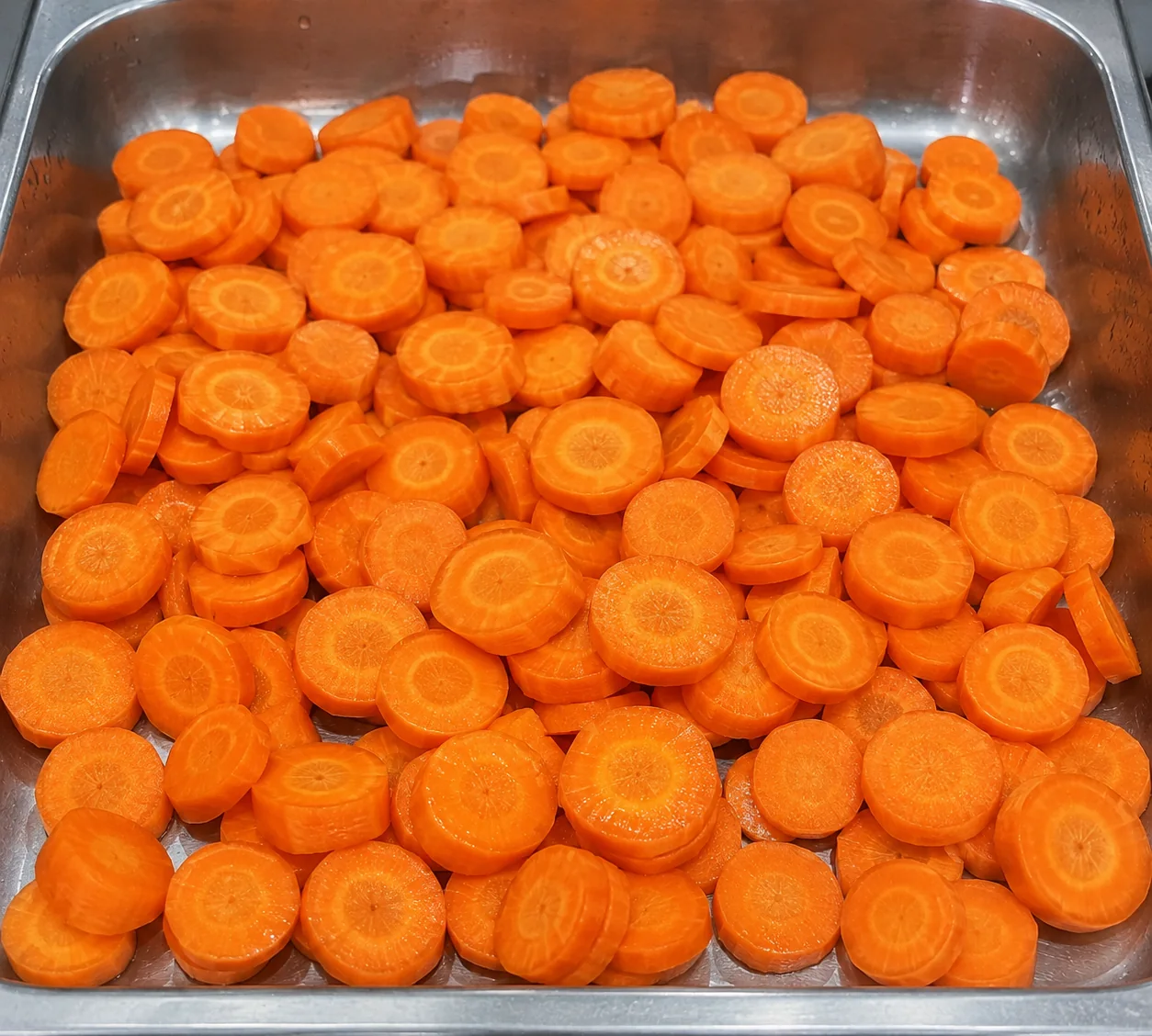
The buyer is no longer evaluating only whether a case contains acceptable cabbage, carrots or lettuce. The buyer may expect shredded cabbage within a defined size range, peeled onions with specified defect tolerances, diced carrots that cook consistently, lettuce with controlled surface moisture, accurate pack weights and sufficient remaining shelf life when the delivery arrives.
That difference changes almost every part of the business.
| Business Dimension | Whole Produce Model | Value-Added Fresh-Cut Model |
|---|---|---|
| Core value sold | Sourcing, availability, grading and logistics | Produce plus preparation outcome |
| Typical customer specification | Variety, grade, size, origin, condition | Cut, trim, usable weight, moisture, packaging, shelf life and batch consistency |
| Revenue logic | Commodity price plus distribution/service margin | Product value plus processing/service value |
| Yield exposure | Mainly sorting, grading and shrink | Trimming, peeling, cutting, rejection, dewatering and finished-product shrink |
| Labor | Receiving, picking, packing, logistics | Additional preparation, sanitation, QC, packing and technical labor |
| SKU complexity | Primarily commodity and pack-size variation | Product × cut × pack × customer × hygiene requirement |
| Forecast risk | Unsold product may sometimes be redirected | Customer-specific processed SKUs can be harder to redirect |
| Shelf-life exposure | Commodity dependent | Usually more time-sensitive after cutting |
| Cold-chain burden | Important | More tightly connected to finished-product life and quality |
| Food-safety control | Receiving, storage, handling, distribution and traceability | Adds processing-water, food-contact surfaces, personnel flow, sanitation and process controls |
| Traceability | Supplier-to-customer chain of custody | Must also connect raw lots with transformation and finished batches |
| Quality failure | Wrong grade, condition, temperature or quantity | Adds incorrect cut, damage, moisture, pack weight, contamination and shelf-life failures |
| Capital requirement | Warehousing, refrigeration, material handling and transport | May add processing rooms, drainage, utilities, equipment, sanitation and packaging infrastructure |
| Operational flexibility | Relatively high for many commodities | Lower when products are highly customer-specific |
| Main management discipline | Procurement, inventory and distribution | Procurement plus manufacturing discipline |
Whole produce therefore should not be viewed as the “basic” business and fresh-cut as the automatically “advanced” version. They solve different customer problems and carry different risk structures.
A strong whole-produce distributor can be substantially more profitable than a poorly utilized fresh-cut plant.
Higher Selling Price Does Not Automatically Mean Higher Margin
Fresh-cut products often sell at a higher price per kilogram because part of the customer’s labor and preparation burden has moved upstream.
That price difference is easy to see.
The less visible question is how much additional cost and risk must be absorbed to create one saleable kilogram.
This is where raw purchase price alone becomes misleading.
Yield-adjusted raw-material cost
A useful starting formula is:
Yield-adjusted raw-material cost per saleable kg = Raw-material purchase price per kg ÷ Saleable yield
If carrots cost $1.00/kg and 80% becomes acceptable finished product:
$1.00 ÷ 0.80 = $1.25 raw-material cost per saleable kg
If seasonal quality reduces usable yield to 70%:
$1.00 ÷ 0.70 = $1.43 per saleable kg
Nothing changed on the supplier invoice. The effective ingredient cost increased by more than 14%.
This is one reason yield deserves far more attention in fresh-cut economics than a simple buying-price comparison.
Preparation cost per kilogram
Processing cost should also be measured against accepted finished output:
Preparation cost per saleable kg = Direct preparation costs ÷ Accepted finished kilograms
Direct preparation costs may include:
- trimming and processing labor;
- supervision allocated to production;
- sanitation labor and consumables;
- processing water and utilities;
- packaging labor;
- routine production consumables;
- variable maintenance;
- waste handling;
- quality-control activity associated with production.
The exact accounting treatment varies by company, but the denominator should remain consistent. Comparing one month using raw kilograms and another using saleable kilograms makes operational improvement almost impossible to interpret.
Contribution margin per saleable kilogram
A practical commercial formula is:
Contribution margin/kg = Selling price/kg − yield-adjusted raw cost − preparation cost/kg − packaging cost/kg − variable cold-chain and distribution cost/kg − expected shrink/return cost/kg
Consider a hypothetical example, not an industry benchmark.
A processor buys vegetables for $1.00/kg and achieves 75% saleable yield. The effective raw cost is therefore $1.33 per saleable kilogram.
Assume:
- selling price: $2.20/kg;
- yield-adjusted raw cost: $1.33/kg;
- preparation cost: $0.35/kg;
- packaging: $0.18/kg;
- incremental refrigerated handling/distribution: $0.12/kg;
- expected finished-product shrink and returns: $0.08/kg.
Contribution before fixed overhead would be:
$2.20 − $1.33 − $0.35 − $0.18 − $0.12 − $0.08 = $0.14/kg
The product sells for more than twice the incoming raw price, yet the contribution is only $0.14/kg under these assumptions.
That is the economic trap behind the statement that “fresh-cut has better margins.” Sometimes it does. Sometimes the added selling price is consumed by yield loss, labor, packaging, sanitation and shelf-life exposure.
The model must be calculated SKU by SKU.
Fresh-Cut Changes What the Customer Is Actually Buying
Whole produce customers normally retain considerable control over final preparation.
If cabbage arrives as whole heads, a restaurant can decide how much outer leaf to remove, how finely to shred it, whether it is used today or tomorrow, and which menu item consumes it.
A fresh-cut supplier removes part of that flexibility and replaces it with standardization.
The customer is effectively purchasing promises such as:
- “the usable weight is predictable”;
- “the vegetables arrive in the required format”;
- “staff do not need to repeat this preparation in every outlet”;
- “the cut is consistent between deliveries”;
- “the product can enter our cooking, mixing or assembly process with limited additional work.”
For restaurant chains and central kitchens, this can have value well beyond direct labor savings. Standardized pieces can support portion control, recipe repeatability and more consistent downstream cooking.
The commercial consequence is important: the more preparation the supplier performs, the more precisely the finished specification has to be defined.
“Carrots” may be sufficient for a whole-produce order.
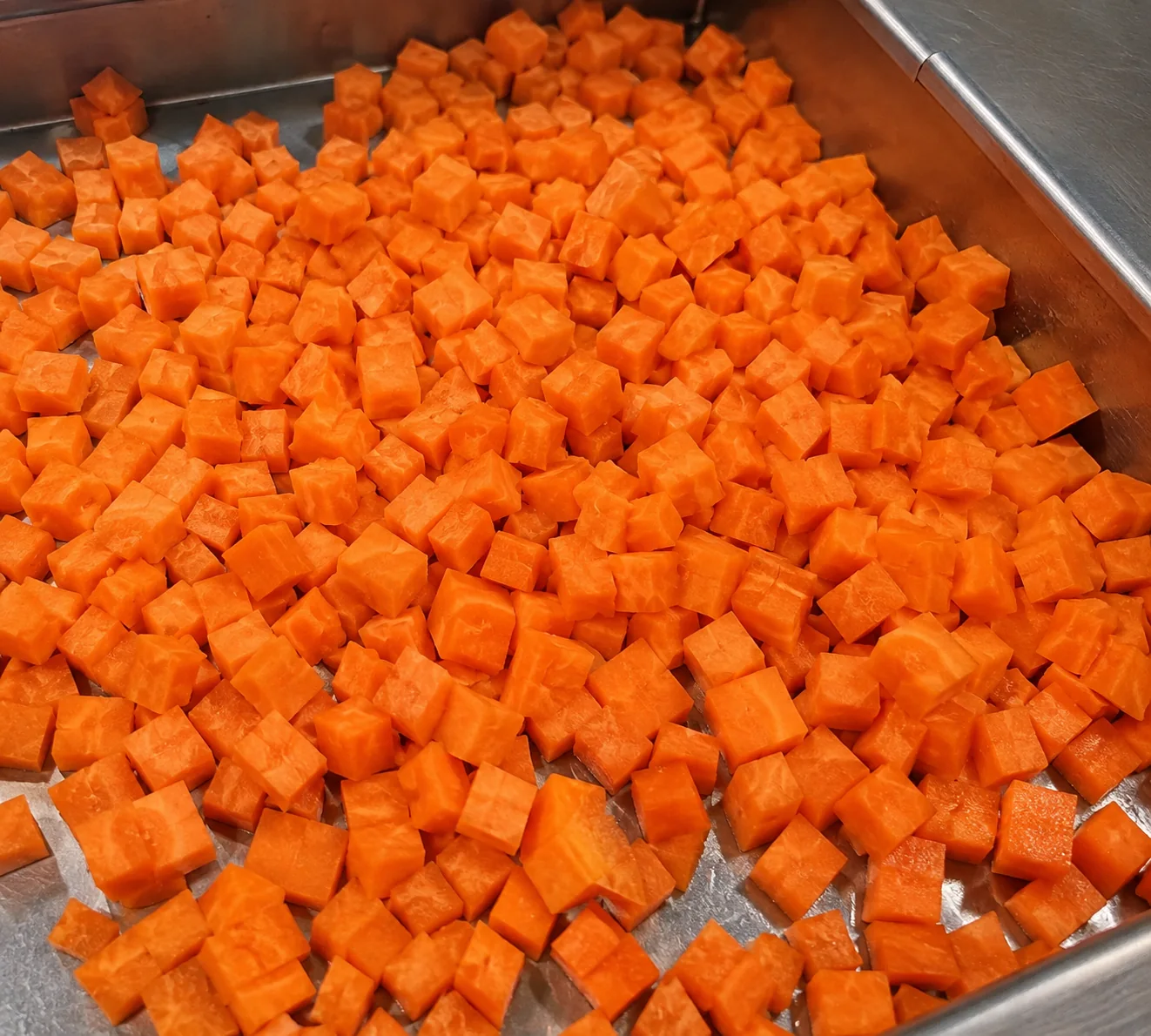
“10 mm diced carrots” is still incomplete for a processor. Acceptance may depend on dimensional tolerance, maximum fines, peel removal, defect level, pack weight, product temperature, packaging format and remaining shelf life.
Fresh-cut therefore often moves sales teams away from commodity quotation and toward specification management.
Sales Mix Becomes More Valuable — and Potentially Less Flexible
Whole produce can often serve several customer categories from the same inventory.
A case of acceptable onions might be redirected from one restaurant customer to another wholesaler, a food manufacturer or a retail account, depending on specification and commercial arrangements.
A customer-branded 5 kg bag of peeled and sliced onions is much less interchangeable.
A salad mix formulated for one restaurant chain may have limited alternative demand.
This creates a trade-off.
Fresh-cut can deepen customer relationships because the processor becomes integrated into the buyer’s operating process. At the same time, customer-specific SKUs can increase demand-concentration risk and make forecasting errors more expensive.
The questions change from:
“How many cases can we sell?”
to:
“How many kilograms of each exact SKU must we process, on which day, through which process route, with what usable yield, and how much finished inventory can we safely hold?”
That is manufacturing planning rather than conventional produce trading.
Raw-Material Variation Matters More After Processing
Agricultural products are inherently variable.
Variety, maturity, size, shape, soil load, weather, field conditions, transport damage and storage history can all affect how a crop behaves during preparation.
A whole-produce distributor may manage variation through grading and customer allocation. Product that is unsuitable for one specification may still be sellable elsewhere.
Fresh-cut processing exposes more of that variation.
A misshapen root vegetable may require heavier trimming. A leafy product arriving with more damaged outer material may produce lower saleable yield. A crop with different firmness can behave differently during cutting or dewatering.
The correct metric is therefore not only supplier price.
Track:
Yield % = Accepted finished weight ÷ Raw input weight × 100
But avoid relying on one plant-wide yield number.
Useful yield analysis separates results by:
- commodity;
- supplier;
- variety;
- season;
- incoming grade;
- finished cut;
- production shift;
- rejection reason.
A procurement saving can disappear if cheaper raw material produces more trimming waste.
Conversely, a higher-priced raw specification can sometimes lower effective cost when it produces more saleable output.
This relationship between procurement and production is much stronger in fresh-cut operations.
Labor Changes from Warehouse Handling to Production Dependency
Whole produce distribution is already labor dependent. Receiving, inspection, pallet movement, order picking, repacking and loading still require people.
Fresh-cut adds another labor system.
Depending on the products and process, employees may be needed for:
- manual trimming;
- peeling;
- inspection;
- machine feeding;
- cutting;
- transferring product between stages;
- washing;
- dewatering;
- weighing;
- mixing;
- packaging;
- sanitation;
- quality control;
- waste handling;
- equipment setup;
- maintenance.
This changes recruitment and training requirements.
A warehouse employee who can pick produce accurately is not automatically trained to work around cutting equipment, monitor wash conditions, identify unacceptable cut quality or execute a documented sanitation procedure.
Absence also becomes more operationally significant when a particular production stage depends on a few trained people.
A useful metric is:
Labor hours per 1,000 kg = Direct preparation labor hours ÷ Accepted finished kg × 1,000
Include more than the operators standing next to machines. Trimming, inspection, internal movement, changeovers, rework and sanitation are part of the labor required to create the finished product.
When labor hours rise, determine why before assuming automation is the answer. Unstable raw materials, poor scheduling, excessive SKUs, inconvenient material flow or a slow packaging operation can create labor pressure even when cutting capacity is adequate.
The Production Model Moves from Handling Product to Transforming Product
A whole produce warehouse typically revolves around a relatively short operational chain:
Receive → inspect → grade/repack where required → store → pick → dispatch
A fresh-cut operation may include:
Receive → inspect → pre-sort → trim → peel or cut → wash or controlled treatment → drain/dewater → inspect → mix → weigh → pack → finished cold storage → dispatch
Not every product requires every step, and the correct sequence varies by commodity and intended use.
This is where the distinction between having machines and having a functioning process becomes important.
A cutter may produce 1,000 kg/h under one set of conditions, but the operation cannot deliver 1,000 kg/h of saleable product if manual trimming provides only 650 kg/h, dewatering sustains 500 kg/h, or packaging accepts 400 kg/h.
Theoretical capacity is not actual throughput
Theoretical capacity describes the output achievable under specified machine or process conditions.
Actual throughput describes what is processed during real operating conditions.
Accepted finished throughput is more commercially useful:
Accepted throughput per hour = Accepted finished kilograms ÷ Actual production hours
Production hours should be defined consistently. Changeovers, wash-water replacement, breaks, sanitation and planned downtime can either be included or reported separately, but the accounting method should not change whenever results look unfavorable.
Line Balance Matters More as SKU Count Increases
Fresh-cut businesses rarely process only one product indefinitely.
One customer requests shredded cabbage. Another requires diced onions. A third needs lettuce. Another wants julienned carrots.
Every additional SKU can add:
- different trimming requirements;
- different cutting tools or settings;
- different wash characteristics;
- different dewatering conditions;
- different batch sizes;
- different packaging;
- different labels;
- different sanitation requirements;
- additional changeover time.
A line therefore has no meaningful single capacity unless the product mix is defined.
The correct planning question is not:
“What is the capacity of this vegetable processing line?”
It is:
“What sustainable output can this process achieve across our actual SKU sequence after changeovers, sanitation, yield loss, feeding limitations and packaging constraints?”
This matters particularly when businesses buy equipment based on headline kilograms per hour. Faster equipment at one stage does not improve commercial output when another stage remains the constraint.
Fresh-Cut Quality Is Created During Processing
Whole produce quality can often be assessed through characteristics such as maturity, grade, size, external condition and temperature.
Processing creates additional quality attributes.
Cut products can be:
- too large;
- too small;
- ragged;
- bruised;
- broken;
- excessively wet;
- excessively dry;
- unevenly peeled;
- poorly mixed;
- outside pack-weight tolerance.
USDA Agricultural Marketing Service inspection guidance specifically treats issues such as mechanical damage, large pieces, excessive water, drying, discoloration and decay as relevant fresh-cut quality or condition factors. It also notes that unsuitable cutting conditions, including poor blade condition or excessive processing rate, can contribute to rough or torn cuts.
The important business lesson is that automation can create systematic quality failures.
One worker trimming slightly too much produces a localized loss.
A poorly configured machine damaging product at 1,000 kg/h can amplify the same problem throughout a production run.
That is why equipment output should be evaluated as acceptable output, not merely kilograms processed.
Cut Consistency Can Affect the Customer’s Kitchen
Uniformity is not only a retail appearance issue.
Consider ready-to-cook vegetables entering a central kitchen.
Pieces with substantially different thickness may cook at different rates. One part of a batch can soften while another remains underprocessed. Variation can also change how ingredients mix, absorb seasoning or occupy packaging volume.
The processor is therefore influencing downstream production consistency.
That is one reason food manufacturers, central kitchens and restaurant chains may be willing to pay for prepared ingredients: they are buying a narrower process variation range.
The value is strongest when the customer can actually measure what improved consistency changes in its own operation.
If a customer does not care about cut tolerance, preparation time or usable yield, an expensive fresh-cut specification may be solving a problem that does not exist.
Fresh-Cut Adds a Different Food-Safety Burden
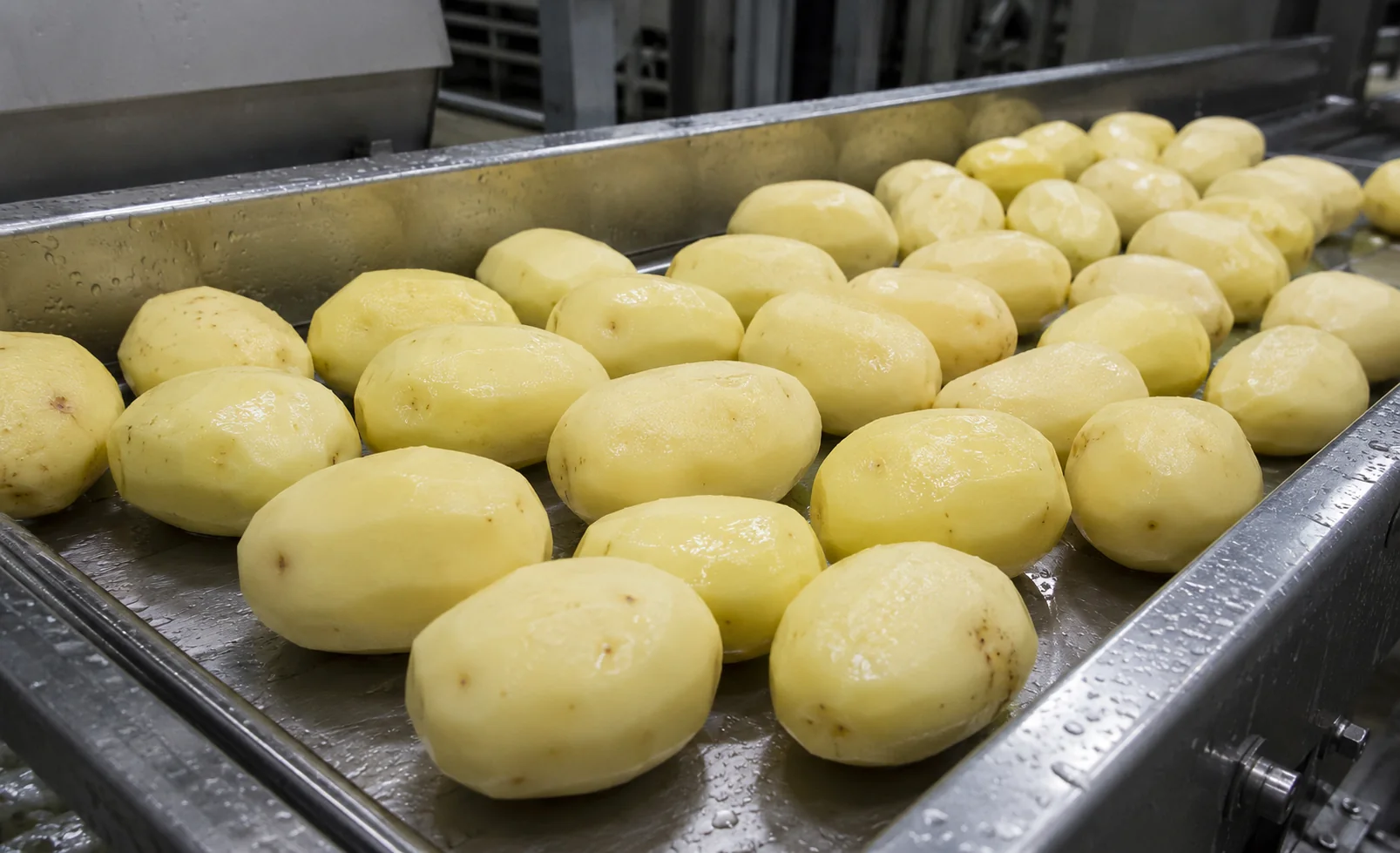
Whole produce is not risk-free. Produce can become contaminated during growing, harvesting, packing, transport, distribution or preparation. CDC describes contamination as possible throughout the food production chain and notes that contaminated water, food-contact surfaces, transport conditions and food preparation practices can all contribute.
Fresh-cut processing introduces additional opportunities for control — and additional opportunities for failure.
FDA guidance describes fresh-cut fruits and vegetables as produce that has been altered through operations such as peeling, slicing, chopping, shredding, coring or trimming. The agency explains that cutting disrupts the natural exterior barrier, exposes plant fluids and can create conditions in which microorganisms already present may survive, grow or spread. Many fresh-cut products also lack a later lethal treatment such as cooking.
This is why moving into fresh-cut should be treated as a food-processing decision rather than merely installing preparation equipment inside a warehouse.
Processing water needs to be controlled
Water is used extensively for washing, cooling and conveying many fresh-cut products. FDA guidance warns that although water can help remove contamination, poorly managed water can also introduce or spread contaminants. It recommends controls appropriate to the process and training for employees responsible for parameters such as disinfectant level, pH and water temperature where those controls apply.
A larger washing machine does not create a food-safety program.
The program includes water quality, product flow, contamination prevention, sanitation, monitoring, records and corrective actions.
Facility and personnel flow matter
USDA’s buyer-oriented guidance for evaluating fresh-cut processors includes controls around receiving, processing, facility condition, processing water, sanitation, employee hygiene, packaging, refrigeration, recall systems and traceability. It also recommends avoiding cross-contamination between unwashed and washed product and separating washing/sorting activities from later cutting and packing areas where appropriate.
Those requirements have physical consequences.
A warehouse layout designed to move sealed produce cases efficiently may not automatically provide suitable drainage, personnel segregation, washable surfaces, sanitation access or controlled product flow for fresh-cut processing.
RTC and RTE Fresh-Cut Products Should Not Be Treated as Equivalent
Commercially, the phrase fresh-cut is sometimes used broadly enough to include both ready-to-cook and ready-to-eat prepared vegetables.
Their risk profiles are different.
A ready-to-cook (RTC) product is intended to receive further preparation, commonly cooking, before consumption.
A ready-to-eat (RTE) salad or prepared vegetable may be consumed without a later cooking step capable of controlling pathogens.
For an RTE operation, contamination introduced after the last effective control step can reach the customer without a subsequent kill step. FDA’s fresh-cut guidance emphasizes precisely this concern for products consumed without further processing.
This changes decisions around:
- zoning;
- employee traffic;
- utensil movement;
- raw-to-clean product flow;
- drainage;
- sanitation;
- processing-water management;
- finished-product handling;
- packaging areas;
- refrigeration;
- monitoring and records.
An RTC vegetable-processing room cannot simply be assumed suitable for RTE salad production because both products are vegetables.
Equipment also cannot substitute for separation strategy, hygienic design, validated procedures or trained personnel.
Fresh-Cut Carries More Shelf-Life and Cold-Chain Exposure
Whole produce deteriorates. Fresh-cut produce generally becomes more commercially time-sensitive because cutting alters plant tissue and often increases respiration and quality deterioration.
USDA AMS’s 2016 inspection instructions state that fresh-cut products generally have a shelf life of approximately 6 to 21 days, depending primarily on the product, packaging, and temperatures during storage and transport. That range is a U.S. inspection-guidance observation, not a shelf-life guarantee for an individual product. Actual shelf life must be established for the specific commodity, process, packaging and distribution conditions.
The same document notes that fresh-cut products generate respiratory gases more readily than whole products, while FDA also associates physical alteration with increased respiration and shorter shelf life.
That changes inventory economics.
Whole vegetables that fail to ship today may sometimes remain commercially acceptable tomorrow or be redirected to another buyer.
A customer-specific fresh-cut SKU may lose meaningful remaining life every day it remains in storage.
Measure cold-chain exposure
One useful non-financial metric is:
Chilled inventory exposure = Average finished inventory kg × Average chilled dwell time in days
Expressed as kg-days, it shows how much finished product is tied up in refrigerated inventory.
Two plants selling the same weekly volume may have very different exposure:
- Plant A makes close to order and holds 2,000 kg for one day.
- Plant B builds inventory ahead and averages 6,000 kg for three days.
Plant B carries nine times the kg-day exposure.
That does not automatically mean its model is wrong. Long production campaigns may reduce changeovers. The point is to make the trade-off visible.
Working Capital Also Changes
Processing ties cash into more than produce.
Before the customer pays, money may already have been committed to:
- raw materials;
- packaging;
- labor;
- sanitation;
- utilities;
- finished stock;
- refrigerated storage;
- distribution.
A simplified working-capital model is:
Operating cash exposure ≈ Average daily variable cash cost × Net cash-conversion days
Where net cash-conversion days reflect the time between paying for inputs and collecting cash from customers, adjusted for supplier payment terms.
This is an illustrative management formula, not a financial-reporting standard.
Fresh-cut can improve revenue per incoming kilogram yet still pressure cash flow if inventory grows, customers receive longer payment terms or finished goods expire before sale.
This is another reason to separate revenue growth from economic quality.
Traceability Moves from Distribution Records to Transformation Records
Whole-produce distributors already need traceability.
USDA FNS guidance for fresh produce distributors highlights chain-of-custody, receiving records, storage practices and the ability to trace product backward and forward through the supply chain.
Processing adds another layer.
The business must be able to answer questions such as:
- Which incoming lot entered this production batch?
- Were several suppliers combined?
- Which line or production period processed it?
- Which finished lot resulted?
- Which customers received that lot?
- Which packaging materials were used where relevant?
- What process, sanitation or temperature records relate to the batch?
The more raw lots are combined into processed products, the more important batch architecture becomes.
Traceability is therefore not just administrative compliance. It influences the potential size of a withdrawal, the speed of investigation and the business’s ability to isolate affected product instead of treating a much larger amount of inventory as suspect.
The exact legal requirements depend on the country, market, product and facility. In the United States, covered food facilities may also be subject to requirements under 21 CFR Part 117 for current good manufacturing practice and risk-based preventive controls, with exemptions and applicability conditions that must be assessed individually.
Commercial Liability Becomes More Closely Linked to Process Performance
Whole produce suppliers make product promises.
Fresh-cut processors make more of them.
If the supplier specifies cut size, usable weight, shelf life, packaging condition, temperature and production lot, failures can generate:
- rejected deliveries;
- customer rework;
- production delays;
- credit claims;
- disposal;
- product withdrawal;
- loss of future business.
Actual legal liability varies by jurisdiction, contract and circumstances, so it should not be reduced to a generic formula.
Commercially, however, the pattern is straightforward: the farther a supplier moves into the customer’s preparation process, the more of the outcome it owns.
That can strengthen customer value and account retention.
It can also make weak process control much more expensive.
Sanitation Time Is Production Time
A fresh-cut business can appear productive while a machine is running and still have poor daily capacity.
Cleaning and changeover time belong in the capacity model.
Suppose a process can theoretically run at 800 kg/h for an eight-hour production window:
Theoretical daily output = 6,400 kg
But the actual schedule includes:
- 30 minutes of setup;
- two 25-minute SKU changeovers;
- 35 minutes of water or process adjustment;
- 30 minutes of minor stoppages;
- 45 minutes preparing equipment for sanitation.
Effective running time becomes roughly 5.8 hours.
At the same nominal rate:
Potential production during effective running time ≈ 4,640 kg
Yield loss still has to be applied after that.
The example is hypothetical, but it illustrates why catalogue capacity is not commercial plant capacity.
Sanitary design therefore has an economic role. Equipment that is difficult to access, inspect, drain, disassemble or reassemble can consume valuable production time as well as make cleaning more difficult.
Equipment Reliability Becomes a Business-Continuity Issue
A whole produce warehouse often has some ability to improvise.
If one packing table is unavailable, work may be redirected. If one forklift fails, another may be used. The flexibility depends on the operation, but product transformation is relatively limited.
Integrated fresh-cut processing can create tighter dependencies.
If the only cutter fails, downstream washing may stop.
If dewatering stops, washed product can accumulate.
If packaging cannot keep pace, upstream production may have to slow even though the processing equipment itself remains available.
That makes equipment selection partly a reliability decision.
Important questions include:
- Are wear parts available?
- How long does routine maintenance take?
- Can operators access components safely?
- Which failure stops the entire process?
- Is there manual or alternative capacity during downtime?
- What technical support is available?
- Which spare parts should be held onsite?
Buying the fastest machine is not necessarily the same as building the most reliable operation.
When Manual Processing Still Makes Commercial Sense
A comparison of whole produce and fresh-cut should not assume automation is the destination.
Manual preparation may remain rational when:
- volumes are low;
- orders are irregular;
- product mix changes constantly;
- ingredients require high levels of visual judgment;
- the facility is testing whether customers will actually buy prepared products;
- seasonal processing operates for only short periods;
- capital is more valuable elsewhere;
- sanitation or utilities are not yet suitable for an automated line.
Manual work also offers flexibility. A trained employee can switch between products and unusual cuts with far less setup than a specialized machine.
The trade-off is labor dependency.
As volume rises, businesses may encounter recruitment pressure, training burden, inconsistent trimming, variable cuts, absence-related capacity loss, occupational strain or excessive workstation space.
Those problems should be measured rather than assumed.
When Semi-Automation Is Often the Better Step
A distributor does not have to choose between knives and a complete processing line.
Semi-automation can make sense when one or two tasks are clearly constraining the business.
Examples might include:
- mechanizing repetitive cutting while retaining manual inspection;
- automating washing while retaining manual loading and packing;
- introducing batch dewatering while preserving flexible product handling;
- adding conveyors where repeated crate movement is consuming labor.
This approach is particularly useful when demand has been demonstrated but is not yet sufficient to justify a continuous integrated line.
It also allows the business to learn.
Actual raw-material behavior, changeover requirements, sanitation time, yield and customer specifications can be measured before more capital is committed.
The main mistake is automating an isolated task without checking downstream capacity.
A faster cutter can simply create a larger queue in front of washing or packing.
When an Integrated Fresh-Cut Line Becomes More Defensible
Higher automation becomes more logical when several conditions appear together:
- substantial repeat volume;
- stable customer specifications;
- predictable production schedules;
- compatible high-volume SKUs;
- measured yields;
- known sustainable throughput;
- reliable raw-material supply;
- suitable utilities and refrigeration;
- established sanitation procedures;
- sufficient technical and maintenance capability;
- downstream packaging capacity;
- customer demand strong enough to keep the system utilized.
The justification should come from system economics, not from replacing a certain number of people.
Automation can improve repeatability and throughput when correctly applied, but it creates new dependencies on maintenance, spare parts, utilities, trained operators and process control.
It can also introduce mechanical hazards, more difficult sanitation points or widespread product damage if equipment is poorly matched.
A Three-Stage Decision Framework for Produce Distributors
A useful decision is often not “whole or fresh-cut?” but how far should we move along the value-added spectrum now?
| Stage | Remain Whole-Produce-Only | Pilot Limited Value-Added SKUs | Scale Fresh-Cut Processing |
|---|---|---|---|
| Customer demand | Mainly asks for whole produce | Several customers request repeat prepared products | Contracted or highly repeatable volume across meaningful production periods |
| SKU stability | Highly fragmented or unpredictable | Small group of repeat products | Defined portfolio with production sequencing |
| Raw-material knowledge | Good trading knowledge, limited processing yield data | Pilot yield data being collected | Supplier/season/product yield patterns understood |
| Production volume | Too low or irregular for dedicated processing | Enough to test selected operations | Enough to utilize dedicated processing resources |
| Food-safety system | Appropriate for distribution | Processing controls can be established in a limited area | Full process controls, zoning, sanitation and documentation support scaled operation |
| Refrigeration | Designed mainly for whole inventory | Additional chilled capacity available | Raw, WIP and finished-product refrigeration capacity planned |
| Facility | Warehouse optimized | Small dedicated processing space feasible | Drainage, utilities, product flow and sanitation support industrial processing |
| Labor | Flexible warehouse/manual preparation labor adequate | Bottlenecks beginning to appear | Manual model creates sustained capacity or consistency constraints |
| Commercial certainty | Fresh-cut demand unproven | Trial orders or anchor customer | Repeat customers and defensible forecast |
| Capital position | Better deployed elsewhere | Modular investment appropriate | Integrated investment supported by measured economics |
| Recommended decision | Protect the strong whole-produce model | Learn before scaling | Engineer the process around proven demand |
Remaining a whole-produce distributor is not failure to modernize.
If customers value availability, assortment and logistics more than outsourced preparation, adding processing may create complexity without sufficient willingness to pay.
Readiness Should Be Tested Through Capability Gates
Before moving from distribution into value-added production, management can test the business against several gates.
Commercial gate
Can the company identify specific customers, products, weekly volumes, pack formats and target prices?
“Foodservice is growing” is not enough.
Yield gate
Has raw-to-saleable yield been measured using representative raw materials across more than one production period?
Capacity gate
Can the business translate daily demand into hourly stage loads and identify the likely bottleneck?
Food-safety gate
Can the proposed product flow be operated under the hygiene, sanitation, water-control and documentation requirements appropriate to the product?
RTE deserves particular scrutiny because the finished product may not receive subsequent cooking.
Cold-chain gate
Is sufficient refrigerated capacity available not only for incoming produce but also for work-in-process and finished product?
SKU gate
Can the portfolio be scheduled without excessive changeovers, washing, blade changes and packaging transitions?
Technical gate
Does the business have people capable of operating, cleaning, troubleshooting and maintaining the process?
Financial gate
Does the contribution margin remain acceptable when yield, labor, selling price and finished-product shrink are stress-tested?
A “no” does not always mean abandon the idea.
It often identifies what must be proven before moving farther.
Use Sensitivity Analysis Instead of One ROI Number
Fresh-cut investment proposals are particularly vulnerable to optimistic assumptions.
A payback model may assume:
- maximum quoted equipment capacity;
- ideal yield;
- full customer volume from the first month;
- minimal downtime;
- no unsold finished product;
- stable raw-material price;
- perfect staffing;
- negligible changeovers.
The resulting ROI can look attractive and still have little relationship to real operation.
A basic simple-payback formula is:
Simple payback period = Incremental investment ÷ Annual incremental operating cash contribution
The useful work happens before applying the formula.
Test what happens when:
- yield falls by 5 percentage points;
- sales volume is 70% of forecast;
- labor is higher than expected;
- one shift cannot achieve the nominal cycle;
- packaging cost increases;
- sanitation removes another hour from production;
- a major customer changes its order pattern.
If the project is viable only under ideal assumptions, the business model is fragile.
The Wrong Equipment Can Make Fresh-Cut Economics Worse
Automation is often discussed as a response to labor cost. It can also destroy value.
An incorrectly selected system may:
- peel too aggressively;
- damage delicate vegetables;
- produce excessive fines;
- cut outside tolerance;
- create bottlenecks between stages;
- require long sanitation periods;
- consume excessive floor space;
- leave difficult-to-clean areas;
- fail to handle seasonal raw-material variation;
- process faster than packing can accept;
- require technical skills the facility does not have.
The result may be higher installed capacity but lower saleable yield, more downtime or higher operating cost.
Fresh-cut automation should therefore be treated as process redesign, not machine replacement.
The business case begins with product, demand, yield and process flow. Equipment selection comes later.
How the Business Model Changes as Customers Grow
One reason distributors consider value-added processing is that their customers themselves are becoming more standardized.
A restaurant group expanding from 20 to 200 outlets may no longer want every location trimming vegetables differently.
A central kitchen supplying multiple stores may want ingredients delivered in production-ready specifications.
A food manufacturer may require predictable cut dimensions because vegetables feed into automated downstream cooking or mixing.
An institutional caterer may prioritize labor planning and portion predictability.
These customers can create an attractive market for prepared produce.
They can also impose stronger requirements for:
- documentation;
- traceability;
- audits;
- temperature;
- packaging;
- production continuity;
- delivery windows;
- product specifications.
Winning a larger account can therefore require an operating capability upgrade, not merely a bigger sales commitment.
This is where business-model analysis becomes important. The additional revenue should be compared with the capabilities the customer expects the supplier to build and maintain.
Whole Produce and Fresh-Cut Can Coexist
The models do not have to be mutually exclusive.
A distributor may keep the majority of its portfolio in whole produce while processing a narrow group of high-volume products.
This can preserve trading flexibility while creating a controlled entry into value-added production.
The portfolio could evolve as evidence develops:
Whole produce → washed/graded products → peeled or trimmed RTC → cut RTC → selected RTE products
That sequence is not mandatory. Some companies may never need to move beyond the first two stages.
The advantage of staged expansion is that demand, yield, labor, hygiene requirements and production economics become observable before the business commits to greater complexity.
The danger is allowing temporary pilot practices to become permanent industrial processes without redesigning the facility and controls as volume increases.
A preparation room handling a few hundred kilograms occasionally may require a different operating structure when it becomes responsible for several tonnes every day.
So Which Business Model Is Better?
Neither in isolation.
Whole produce is often the better business when the distributor’s advantage lies in procurement, assortment, market coverage, storage and logistics — and customers prefer to retain preparation themselves.
Fresh-cut can become attractive when customers are demonstrably willing to pay for preparation, consistency and usable yield, and when enough repeat demand exists to justify the added processing burden.
The decision should be made using saleable kilograms rather than raw kilograms, sustainable throughput rather than equipment ratings, and contribution margin rather than selling price.
More fundamentally, fresh-cut changes what the company is.
The business moves from controlling inventory and logistics to controlling a transformation process.
That requires new disciplines in yield, production planning, sanitation, cold chain, product specification, maintenance, traceability and food safety.
Automation may eventually support that model, but automation is not the model itself.
The strongest fresh-cut projects begin when the company can clearly explain which customer preparation problem it is taking over, how much the customer values that service, and whether the processor can deliver it repeatedly without transferring hidden costs into waste, downtime or risk.
Compare the Two Business Models
If you are evaluating whether to remain focused on whole produce, introduce a few prepared SKUs, or move toward a dedicated fresh-cut operation, begin by comparing your current and target volumes, customer specifications, yield, labor requirement, cold-chain capacity and main preparation bottleneck.
TEEMYEAH supports produce distributors, packhouses and food processors as a food pre-processing equipment supplier, customized food preparation solution provider and vegetable processing equipment manufacturer. The useful first discussion is not which machine to purchase, but whether the proposed processing model is commercially and operationally justified.
You can review the broader decision framework for produce distribution and packhouse processing or, once the business case is clearer, explore how a value-added fresh-cut business can be developed for produce distributors.
FAQ
1. What is the main difference in a whole produce vs fresh-cut business model?
A whole-produce business primarily earns value through sourcing, grading, inventory availability and distribution. A fresh-cut business also sells preparation: trimming, peeling, cutting, washing where applicable, dewatering, portioning or packaging. That additional service can support a higher selling price, but it also introduces yield loss, production labor, sanitation, packaging, shorter inventory windows and more finished-product specifications. The important comparison is therefore contribution margin and operating risk per saleable kilogram, not simply the selling price of whole vegetables versus cut vegetables.
2. Is fresh-cut produce always more profitable than selling whole vegetables?
No. Fresh-cut products may have a higher selling price, but processing creates additional costs and losses. A processor must account for raw-to-finished yield, labor, packaging, sanitation, utilities, refrigeration, maintenance, finished-product shrink and customer returns. Low utilization can make the economics even weaker because fixed processing costs are spread across fewer kilograms. A distributor with efficient procurement and logistics may earn better returns from whole produce than from an underutilized fresh-cut operation. Profitability should be calculated by SKU using realistic yield and sales-volume assumptions.
3. How should a produce distributor calculate fresh-cut yield?
Use saleable finished weight rather than the weight leaving the cutting machine. The basic formula is: Yield % = accepted finished kilograms ÷ raw input kilograms × 100. Rejected pieces, trimming, peel, cores, damaged product, fines and process losses should therefore reduce yield. Results should ideally be tracked by product, supplier, variety, season and finished specification because an annual average can hide important differences. Yield is commercially important because a lower percentage immediately raises the effective raw-material cost of every saleable kilogram.
4. When does manual vegetable preparation still make sense?
Manual preparation can remain appropriate when volume is low, demand is irregular, products change frequently or the work requires considerable visual judgment. It is also useful during an early market test because the company can learn about customer specifications, yield and production problems before committing substantial capital. Automation becomes more relevant when repetitive tasks create sustained labor, capacity, consistency or ergonomic problems. Even then, automating the specific constraint is often more sensible than replacing an entire manual process without first understanding where capacity is actually being lost.
5. When should a distributor consider semi-automation instead of a complete line?
Semi-automation is often suitable when customer demand has become repeatable but remains insufficient or too variable for a continuous integrated line. A company might automate cutting, washing or dewatering while retaining manual inspection, loading or packing. This can remove a measurable bottleneck and provide real operating data about throughput, sanitation, yield and changeovers. The main requirement is line balance: improving one stage has little value if product simply accumulates before the next stage. The semi-automated configuration should therefore be evaluated as part of the complete process flow.
6. Why is RTE fresh-cut production different from RTC vegetable processing?
Ready-to-cook vegetables are expected to receive additional preparation, commonly cooking, before consumption. Ready-to-eat fresh-cut products may be consumed without a later cooking or other lethal step. This makes post-process contamination especially important for RTE production. Facility zoning, product and personnel movement, sanitation, processing-water control, finished-product handling and cold-chain management may therefore require greater control. Equipment alone does not make an RTC processing area suitable for RTE production; the facility, procedures, food-safety system and applicable regulatory requirements must be evaluated together.
7. What is the best way to compare whole-produce and fresh-cut margins?
Compare contribution per saleable kilogram. For fresh-cut products, convert incoming raw-material cost into yield-adjusted cost and then subtract preparation labor, packaging, sanitation-related variable costs, refrigerated handling, distribution and expected finished-product shrink. A product that sells for significantly more per kilogram than whole produce can still generate a modest contribution if usable yield is poor or customer-specific inventory expires. Running sensitivity scenarios for yield, selling price, labor and volume is more useful than relying on a single forecast margin.
8. Does buying higher-capacity equipment automatically increase fresh-cut throughput?
No. Production throughput is constrained by the slowest effective stage under real operating conditions. Manual trimming, machine feeding, washing, dewatering, inspection, packing, changeovers, sanitation or cold-storage availability can all become bottlenecks. A cutter rated above 1,000 kg/h cannot create a 1,000 kg/h finished process if packaging sustains only 500 kg/h. Capacity planning should therefore measure accepted finished kilograms per actual production hour and examine each stage under representative products rather than relying on the highest equipment rating.
9. Why does fresh-cut processing increase inventory risk?
Cut produce generally has a more limited commercial holding window than its intact raw material, while finished SKUs may also be specific to one customer, cut or package. That reduces the processor’s ability to redirect excess stock after a forecasting error. Cash has also been added through labor, packaging and processing before the product reaches finished inventory. Businesses should therefore track finished-stock age, remaining shelf life at dispatch, forecast accuracy, customer-specific inventory and chilled inventory kg-days in addition to conventional warehouse inventory value.
10. What should a produce distributor prove before scaling fresh-cut production?
The company should be able to demonstrate repeat customer demand, workable selling prices, representative raw-material yields, sustainable production throughput, sufficient refrigeration, appropriate sanitation and food-safety controls, manageable SKU changeovers, and the technical ability to operate and maintain the process. It should also understand how weaker assumptions affect the economics. If the investment only pays back when yield, capacity utilization and sales volume remain near their theoretical maximums, the business case needs further testing before large-scale automation is justified.
Data and Source Note
U.S. Food and Drug Administration — “Guidance for Industry: Guide to Minimize Microbial Food Safety Hazards of Fresh-cut Fruits and Vegetables,” February 2008. Scope: U.S. FDA non-binding guidance for domestic and foreign firms processing fresh-cut produce for the U.S. market. Used for the definition of fresh-cut produce, the effect of cutting on the protective plant surface, the absence of a lethal process in many fresh-cut products, processing-water risks, sanitation, personnel practices, records and traceback considerations. The guidance is not a substitute for determining current regulatory applicability to an individual facility.
USDA Food and Nutrition Service — “Food Safety Practices to Expect from Your Fresh-Cut Produce Processor,” page updated August 15, 2025. Scope: U.S. buyer-oriented guidance designed primarily to help school nutrition programs evaluate fresh-cut suppliers. Used to support discussion of receiving, processing-room control, separation between unwashed and washed produce, sanitation, packaging, refrigeration, training, traceability and supplier evaluation. Its checklist should not be treated as a universal regulatory specification for every country or product.
USDA Agricultural Marketing Service — “Shipping Point and Market Inspection Instructions for Fresh-Cut Produce,” September 2016. Scope: U.S. inspection instructions focused on fresh-cut quality and condition rather than a complete food-safety standard. Used for the general 6–21 day fresh-cut shelf-life observation, with the document itself stating dependence on product, packaging and storage/transit temperatures; also used for examples of mechanical damage, excessive moisture, drying, cut-size and other condition defects. The shelf-life range must not be applied as a guaranteed shelf life for a specific commercial SKU.
Centers for Disease Control and Prevention — “How Foodborne Outbreaks Happen,” July 30, 2025. Scope: general U.S. public-health explanation of contamination across production, processing, distribution and preparation. Used to support the statement that food-safety risk exists across the full chain and is not unique to fresh-cut processing.
USDA Food and Nutrition Service — “Food Safety Practices to Expect from Your Fresh Produce Distributor,” page updated May 30, 2024. Scope: U.S. guidance for evaluating fresh-produce distributors. Used to distinguish the receiving, storage, hygiene, chain-of-custody and traceability responsibilities already present in the whole-produce model from the additional processing responsibilities created by fresh-cut operations.
U.S. Food and Drug Administration — “FSMA Final Rule for Preventive Controls for Human Food,” current FDA page reviewed during research. Scope: U.S. facilities covered by the Preventive Controls for Human Food requirements. Used only to establish that covered facilities may require hazard analysis and risk-based preventive controls under 21 CFR Part 117, while recognizing that exemptions and applicability conditions exist and must be determined for the individual operation.

