




Summary
A central kitchen should not automate simply because machinery is available, labor is becoming expensive or another food business has installed an automated production line.
Automation becomes commercially meaningful when the current preparation process can no longer produce the required volume, consistency, food safety control and delivery reliability without repeatedly adding labor, overtime, floor space or management intervention.
The most common warning signs include:
- output increasing only when more workers are added;
- preparation departments delaying cooking or packing;
- significant differences in daily throughput;
- inconsistent trimming, cutting, portioning or yield;
- growing sanitation and traceability requirements;
- frequent overtime or difficulty staffing repetitive jobs;
- work-in-process accumulating between production stages;
- new customers demanding higher capacity or tighter specifications;
- expansion becoming impossible within the existing layout.
There is no universal threshold such as 2,000, 5,000 or 10,000 meals per day at which every central kitchen should automate. A kitchen producing 3,000 highly standardized meals may be easier to automate than one producing 1,000 meals across hundreds of variable recipes.
The right time to automate arrives when the cost and risk of maintaining the current process begin to exceed the cost and risk of redesigning it.
The Question Is Not Whether Automation Is Possible
Almost any repetitive food preparation task can be mechanized to some degree.
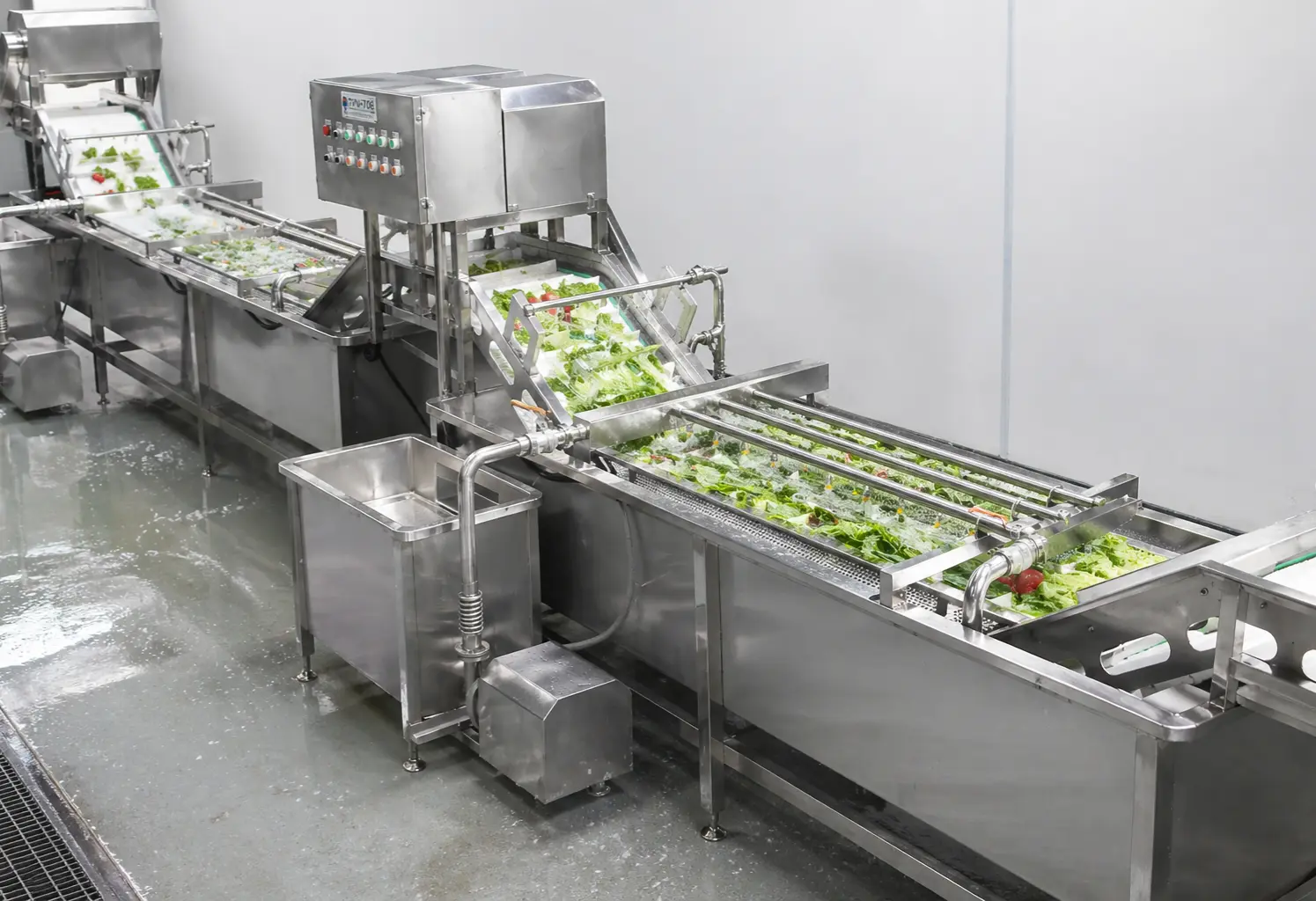
Vegetables can be washed, peeled, cut, conveyed and dewatered. Meat can be diced, sliced or portioned. Sauces can be mixed and dosed. Ingredients can be weighed, transported and packed using different levels of mechanical or automatic control.
That does not mean every task should be automated.
A central kitchen processing a stable menu for a restaurant chain faces different conditions from a catering kitchen preparing hundreds of changing dishes. A fresh-cut vegetable facility has different hygiene and shelf-life requirements from a commissary that sends ingredients to restaurants for cooking.
The more useful question is:
Which parts of the preparation process have become repetitive, measurable and commercially important enough to justify automation?
This distinction matters because central kitchen automation is rarely a single purchase.
It may involve:
- replacing one manual cutting operation;
- mechanizing vegetable washing;
- adding a peeling machine;
- connecting washing and cutting stages;
- introducing automatic ingredient dosing;
- redesigning an entire preparation department;
- building separate ready-to-cook and ready-to-eat processing zones.
The decision should begin with the process, not with a machine catalog.
What Does Food Preparation Automation Mean in a Central Kitchen?
Automation is often imagined as a fully robotic kitchen operating without people.
That is not how most central kitchens develop.
In practice, food preparation automation exists on a spectrum.
Manual Preparation
Workers perform most operations using knives, sinks, tubs, tables, baskets and small utensils.
This model provides flexibility and requires relatively little initial investment. It also makes output highly dependent on worker availability, skill and pace.
Mechanized Preparation
Individual machines support specific tasks, while loading, unloading, inspection and transfer remain manual.
Examples include:
- vegetable cutting machines;
- root vegetable peelers;
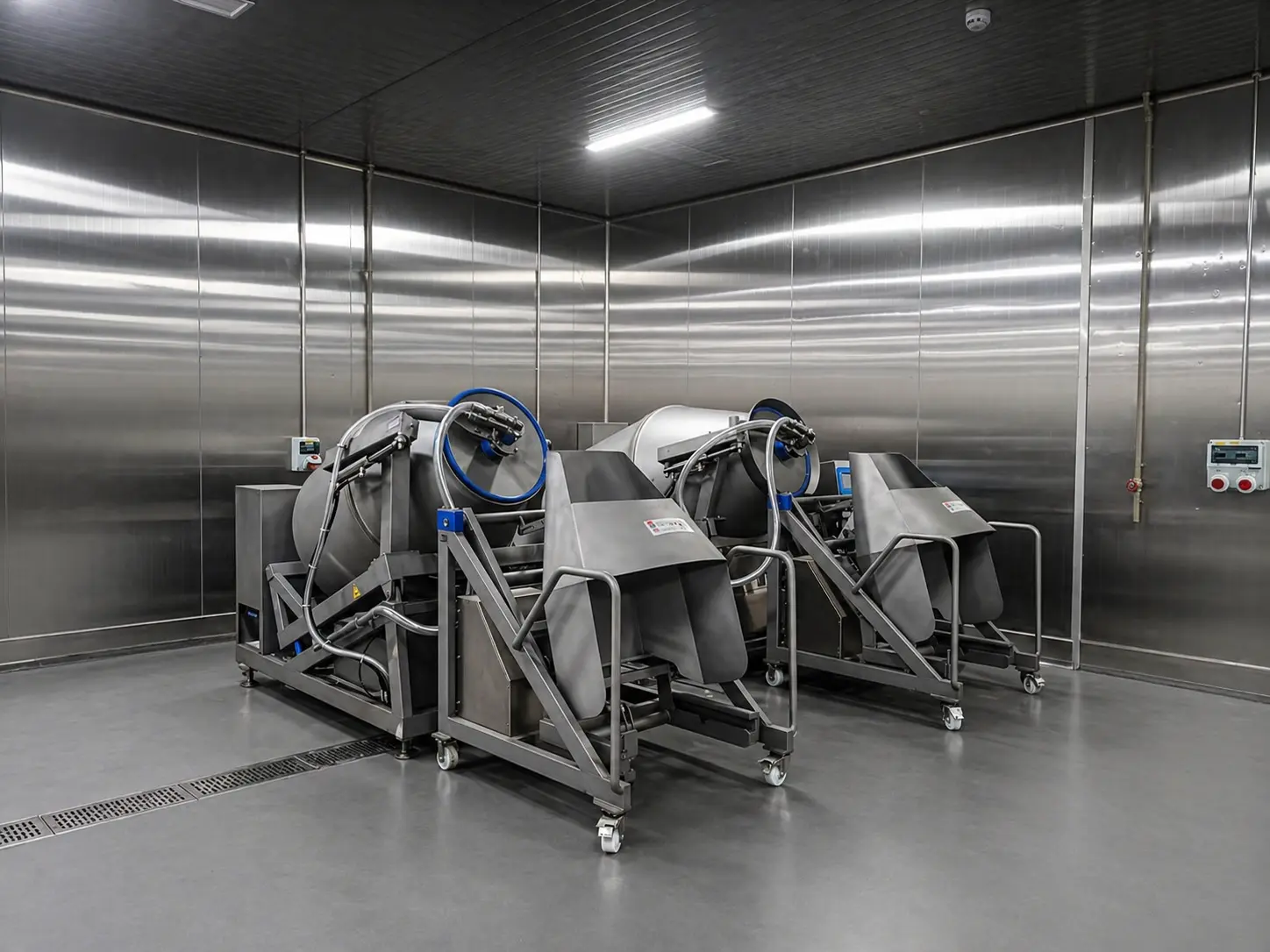
- meat dicers;
- mixers;
- centrifugal dewatering machines;
- vegetable washing machines.
Semi-Automated Processing
Several operations are connected, but employees still perform inspection, sorting, recipe changes, quality control or batch handling.
A typical vegetable process might be:
Manual sorting → mechanical cutting → automated washing → mechanical dewatering → manual inspection
Integrated Automation
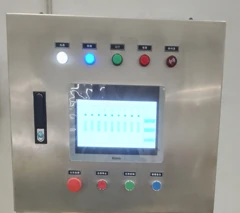
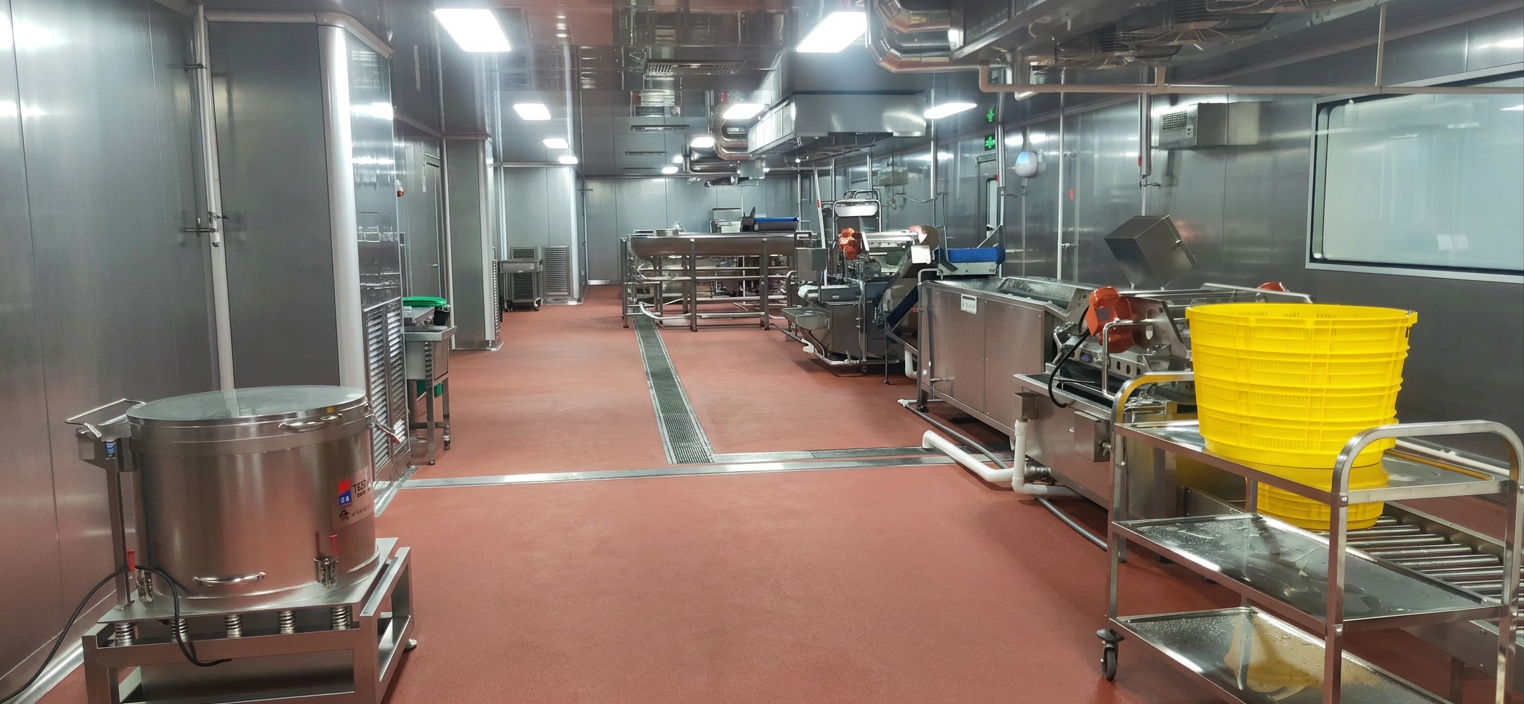
Multiple stages are designed as one production system, using conveyors, sensors, controlled processing parameters and automatic transfers.
This level is more suitable when the product range, production schedule and specifications are sufficiently stable.
A central kitchen does not need to move directly from manual production to a fully integrated line. In many cases, selective or phased automation produces a better return with less operational disruption.

There Is No Universal Meal-Volume Threshold
Managers often ask:
“How many meals per day do we need before automation makes sense?”
The question is understandable, but meal count alone is an unreliable measure.
Ten thousand meals built around a limited menu may require fewer preparation processes than three thousand meals containing many vegetables, proteins, sauces and portion specifications.
Meal volume also says little about raw-material condition.
A central kitchen receiving pre-washed, pre-cut ingredients has a very different workload from one receiving whole vegetables directly from farms.
The automation threshold depends on a combination of factors:
- kilograms of raw material processed;
- number of SKUs;
- frequency of product changeovers;
- degree of raw-material variation;
- finished-product specification;
- required food safety level;
- available production hours;
- labor availability;
- facility layout;
- downstream cooking and packing capacity.
For this reason, kilograms per labor hour, yield, cycle time, downtime and on-time completion rate are usually more useful than meals per day.
1. Production Can Grow Only by Adding More Workers
One of the clearest signs that a central kitchen should investigate automation is when production capacity increases only through additional headcount.
At low volume, this can be practical.
When orders rise, management adds several preparation workers. When demand rises again, another shift or more overtime is introduced.
Eventually, the relationship stops being linear.
Adding 20% more workers does not necessarily produce 20% more output because workers begin competing for:
- cutting tables;
- wash tanks;
- weighing stations;
- floor space;
- baskets;
- supervisors;
- raw materials.
Coordination becomes a limiting factor.
The kitchen may technically have enough people, yet production remains late because those people are not arranged within an efficient material flow.
Labor cost also includes more than wages.
The U.S. Bureau of Labor Statistics reported a median hourly wage of $16.45 for food preparation workers in May 2024. This does not represent the cost structure of every country, and it excludes many employer-side costs, but it illustrates why a labor-intensive preparation department can become a substantial recurring expense as headcount grows.
A proper analysis should include:
- regular working hours;
- overtime;
- supervisors;
- temporary labor;
- training;
- employee turnover;
- absence coverage;
- uniforms and protective equipment;
- non-productive cleaning and waiting time.
The warning sign is not simply that labor is expensive.
It is that every unit of growth requires a nearly proportional increase in recurring labor cost.
2. Preparation Is Delaying the Rest of the Kitchen
A central kitchen may already own high-capacity cooking, chilling or packing equipment while continuing to prepare ingredients manually.
This creates an imbalanced production system.
A cooker capable of processing 500 kilograms per batch adds little value if the preparation team cannot supply cleaned and cut ingredients on schedule.
Common symptoms include:
- cooking equipment waiting for ingredients;
- packing workers waiting for finished batches;
- production starting unusually early;
- trucks departing late;
- overtime occurring at the same preparation stage;
- supervisors moving workers between departments to recover delays.
This is a throughput problem, not merely a labor problem.
The preparation department has become the system constraint.
Buying the largest available machine is not automatically the solution. The correct intervention is the one that increases the capacity of the constrained process while matching upstream and downstream operations.
For example, a high-capacity vegetable cutting machine may simply move the bottleneck to washing. A powerful washing system may overwhelm a small dewatering department.
Automation must therefore be evaluated through line balance.
3. Daily Throughput Is Too Unpredictable
A central kitchen may know how many workers are scheduled without knowing how much they will actually produce.
Manual throughput can change because of:
- worker experience;
- absence;
- fatigue;
- raw-material size;
- vegetable maturity;
- soil contamination;
- trimming requirements;
- recipe complexity;
- interruptions;
- changes in batch size.
If the kitchen cannot confidently predict how long preparation will take, every downstream schedule contains uncertainty.
The issue becomes particularly important when the central kitchen supplies:
- restaurant branches;
- convenience stores;
- hospitals;
- schools;
- airline catering operations;
- hotels;
- factories;
- supermarkets;
- meal-delivery businesses.
These customers do not only need food. They need food at a defined time.
Automation becomes relevant when production reliability is more commercially valuable than maximum flexibility.
The aim is not to make every shift identical regardless of raw-material conditions. Agricultural products naturally vary.
The aim is to reduce avoidable process variation so that planning is based on measurable capacity rather than individual performance.
4. Product Quality Depends Too Heavily on Individual Workers
A skilled worker can perform complex preparation tasks extremely well.
The problem arises when the required quality depends on having the same skilled worker present every day.
Central kitchens often experience variation in:
- slice thickness;
- dice size;
- shred width;
- trimming depth;
- ingredient weight;
- mixing time;
- product damage;
- final portion size.
This variation has operational consequences.
Unevenly cut vegetables may cook at different rates. Inconsistent portions affect food cost. Excessive trimming lowers yield. Poorly standardized ingredients make the final product less predictable across outlets.
Automation is especially relevant when the business promises consistency across multiple locations.
A chain customer expects a dish prepared in one branch to resemble the same dish prepared elsewhere. If ingredient preparation is centralized, the central kitchen becomes the control point for that consistency.
A machine cannot replace every quality decision, especially when raw materials are irregular. It can, however, standardize repetitive specifications once the acceptable range has been clearly defined.
5. Yield Is Inconsistent or Poorly Measured
Central kitchens frequently monitor labor and ingredient purchasing while paying less attention to preparation yield.
That can conceal a significant cost.
Consider a root vegetable purchased by weight.
Its final usable yield depends on:
- raw-material grade;
- peeling depth;
- trimming method;
- operator skill;
- damage;
- cutting losses.
A small difference in yield can become significant at high volume.
The relevant formula is:
Yield percentage = Saleable prepared output ÷ Raw-material input × 100
Yield should be measured by:
- product;
- supplier;
- season;
- shift;
- preparation method;
- finished specification.
Automation should not be assumed to improve yield automatically.
An unsuitable peeler, cutter or washing system may damage the product or remove excessive usable material.
The central kitchen is ready to evaluate automation when it knows its current yield and can compare that baseline with tested equipment performance.
Without the baseline, claims about labor saving or waste reduction are difficult to verify.
6. SKU Complexity Is Overwhelming the Existing Workflow
High volume is not the only source of pressure.
A central kitchen may struggle because it prepares too many products through the same limited space.
One production day might include:
- whole leafy vegetables;
- shredded cabbage;
- diced carrots;
- peeled potatoes;
- sliced onions;
- mixed salad ingredients;
- marinated meat;
- multiple sauces.
Every additional SKU creates operational requirements:
- production scheduling;
- tools or machine settings;
- allergen controls;
- cleaning;
- container identification;
- traceability;
- changeover;
- quality inspection.
A kitchen with many low-volume SKUs should be cautious about installing an inflexible dedicated line.
Yet remaining entirely manual may also become inefficient.
The more suitable solution may be modular semi-automation:
- flexible cutting equipment with interchangeable blades;
- separate washing processes for different product groups;
- batch-based mixing;
- manual inspection around mechanized core operations.
Automation should match the product portfolio rather than force every product through the same process.
7. Food Safety Depends on Too Many Manual Controls
Automation does not guarantee food safety.
Poorly designed equipment can be difficult to clean. An automated line can spread contamination rapidly if sanitation, water management or zoning is inadequate.
Manual processes also create risk when food safety depends on many individual actions being performed correctly every time.
Potential contact points may include:
- hands and gloves;
- knives;
- cutting boards;
- baskets;
- tables;
- sinks;
- tubs;
- transfer carts;
- weighing containers.
FDA guidance for fresh-cut fruits and vegetables states that contamination on incoming produce can spread to additional produce during processing. It also explains that washing, even with disinfectants, can reduce but cannot be assumed to eliminate pathogens.
This is particularly important for ready-to-eat products that will not receive a later cooking step.
The broader public-health consequences are substantial. CDC estimates that foodborne illness causes approximately 48 million illnesses, 128,000 hospitalizations and 3,000 deaths annually in the United States, although these figures cover the entire food system rather than central kitchens alone.
A 2018 outbreak linked to romaine lettuce from the Yuma growing region resulted in 210 reported illnesses, 96 hospitalizations and five deaths. The contamination was linked to the growing region, not to central kitchen preparation, but the event demonstrates the consequences of contamination entering a ready-to-eat produce supply chain.
For a central kitchen, automation becomes relevant when it can support a more controlled system through:
- defined process flow;
- fewer unnecessary transfers;
- controlled washing parameters;
- hygienic separation;
- traceable batches;
- standardized process times;
- documented monitoring;
- cleanable equipment.
The central kitchen still needs trained personnel, sanitation procedures and hazard controls.
FDA’s preventive-controls framework requires covered food facilities to analyze hazards and implement risk-based controls to minimize or prevent identified hazards. Current Good Manufacturing Practice requirements also address the cleaning and sanitizing of food-contact surfaces and equipment.
Automation should strengthen the food safety system, not replace it.
8. Repetitive Work Is Creating Safety or Ergonomic Concerns
Manual food preparation can involve:
- repetitive knife movements;
- lifting baskets;
- prolonged standing;
- bending;
- reaching;
- working in wet areas;
- carrying heavy ingredients.
OSHA identifies knives, repetitive movements, prolonged standing and lifting as common hazards in food preparation environments.
A documented OSHA investigation from 2021 involved a restaurant employee who suffered a finger laceration while cutting carrots. One incident cannot establish an industry-wide injury frequency, but it demonstrates that ordinary preparation work can create real occupational exposure.
At the wider industry level, U.S. Bureau of Labor Statistics data recorded 3.3 total recordable injury and illness cases per 100 full-time workers in food manufacturing in 2024. This rate includes many operations beyond central kitchen preparation, but it provides context for the importance of workplace safety in food production.
Automation introduces its own risks, including moving parts, electrical systems and cleaning hazards. Proper guarding, training and maintenance remain essential.
The objective is not to claim that machines are inherently safe.
It is to reduce continuous exposure to tasks that are repetitive, physically demanding or difficult to staff safely.
9. Work-in-Process Is Consuming Too Much Space
Manual preparation does not only use labor.
It also creates containers and waiting stages.
A congested central kitchen may follow a pattern such as:
Receiving → waiting → sorting → waiting → washing → waiting → cutting → waiting → weighing → waiting
Each waiting point creates work-in-process.
Work-in-process requires:
- baskets;
- crates;
- carts;
- labels;
- staging space;
- movement;
- supervision.
The kitchen may appear to need a larger building when the deeper problem is fragmented flow.
Automation or mechanical transfer can reduce some of these interruptions by connecting suitable operations.
Layout must come before equipment selection.
A poorly planned automated line can block walkways, cross raw and finished-product routes or make cleaning more difficult. The purpose of automation is not to place more stainless steel inside the room. It is to create a more controlled movement of food, people, waste and equipment.
10. New Customers Require More Than the Existing Process Can Reliably Deliver
A central kitchen may operate adequately until it wins a large contract.
A hotel group, retailer, airline caterer, restaurant chain or institutional customer may require:
- higher daily capacity;
- standardized specifications;
- documented traceability;
- defined delivery windows;
- more frequent microbiological testing;
- stronger supplier controls;
- auditable production records.
The existing process may technically produce the required volume during a trial.
The real question is whether it can repeat that performance every day without depending on overtime, exceptional supervision or unusually favorable raw materials.
Automation becomes strategically important when the business is no longer selling only food.
It is selling reliable production capacity.
Central Kitchen Automation Readiness Table
| Operational Signal | What to Measure | What the Signal May Mean | Possible Response |
|---|---|---|---|
| Capacity rises only with headcount | Labor hours per 1,000 kg or per 1,000 meals | Growth is tied to recurring labor cost | Mechanize high-labor preparation stages |
| Cooking or packing waits for ingredients | Waiting time and downstream utilization | Preparation is the bottleneck | Increase and balance preparation capacity |
| Daily output varies significantly | Output per hour by product and shift | Process depends too heavily on worker performance | Standardize methods and automate repetitive work |
| Product dimensions are inconsistent | Size tolerance, rejection and rework rates | Manual cutting is affecting quality | Introduce standardized cutting equipment |
| Yield changes by worker or shift | Raw input versus saleable output | Trimming or peeling is uncontrolled | Conduct yield trials and improve specifications |
| Overtime is recurring | Overtime by department and cause | Base capacity is insufficient | Redesign workflow or add suitable equipment |
| Too much product waits between stages | Work-in-process volume and waiting duration | Material flow is fragmented | Connect selected operations or revise layout |
| Sanitation takes too long | Cleaning labor and changeover time | Too many tools or difficult-to-clean equipment | Simplify processes and evaluate sanitary design |
| Injuries or ergonomic complaints increase | Incidents, near misses and task exposure | Repetitive work is creating operational risk | Mechanize suitable lifting, cutting or transfer tasks |
| New contracts exceed reliable capacity | Required volume versus demonstrated sustainable output | Sales growth may exceed operational capability | Plan phased capacity expansion |
| Traceability is difficult | Time required to identify ingredients and batches | Process control is insufficient for larger customers | Improve batch control and digital records |
| SKU growth disrupts scheduling | Changeovers, cleaning time and batch complexity | Current system lacks flexibility | Use modular rather than highly dedicated automation |
No single row proves that automation is necessary.
When several signals appear together, the kitchen is likely approaching a structural capacity limit.
A Real-World Lesson: Automate the Task, Not the Idea of Automation
Chipotle provides a useful example of selective automation.
The company worked with restaurant managers to identify repetitive and less-preferred preparation tasks rather than attempting to automate every kitchen activity.
Its Autocado system was designed to cut, core and peel avocados before employees completed the guacamole preparation manually. Chipotle reported that the prototype processed the fruit inside an avocado in approximately 26 seconds. The scale of the task was commercially relevant because the company expected to use approximately 5.18 million cases of avocados, or 129.5 million pounds of fruit, in 2024.
Chipotle also tested an automated makeline for bowls and salads. The company said approximately 65% of its digital orders were bowls or salads, making those products logical targets for automation while employees continued preparing burritos, tacos and other items.
The lesson is not that every central kitchen needs an avocado robot.
The lesson is that automation becomes more compelling when a task has:
- high repetition;
- significant total volume;
- a defined process;
- limited need for subjective decisions;
- measurable labor consumption;
- strategic importance to output.
The same example also shows why trials matter.
Chipotle previously tested an automated tortilla-chip system, but reported that setup and cleanup costs offset much of the expected labor benefit.
A machine can operate quickly while still producing a poor business case if it requires excessive:
- preparation;
- cleaning;
- changeover;
- supervision;
- maintenance.
Cycle speed is only one part of productivity.
When a Central Kitchen Is Not Ready to Automate
Some kitchens automate too early.
The following conditions suggest that process preparation should come before major equipment investment.
The Menu Changes Constantly
Highly unstable products and recipes make it difficult to define equipment requirements.
Demand Is Uncertain
A large line with low utilization can create a higher unit cost than a flexible manual system.
The Current Process Has Not Been Measured
Without baseline data, management cannot calculate whether automation improves labor, yield, throughput or quality.
Product Specifications Are Undefined
A supplier cannot configure suitable cutting, washing or mixing equipment if the acceptable result is unclear.
The Layout Is Still Changing
Installing equipment before confirming product, personnel, waste and sanitation flows can create expensive rework.
Maintenance Capability Is Absent
Automation creates dependence on equipment availability. A kitchen without preventive maintenance, spare-parts planning or trained operators may exchange labor risk for downtime risk.
Management Expects Machinery to Fix Every Problem
Automation cannot compensate for:
- poor production planning;
- weak raw-material control;
- unclear recipes;
- inadequate sanitation;
- untrained operators;
- insufficient downstream capacity.
Do not automate a process that has not yet been understood.
What Should a Central Kitchen Automate First?
The most suitable starting point is usually the most repetitive and measurable bottleneck.
Typical candidates include:
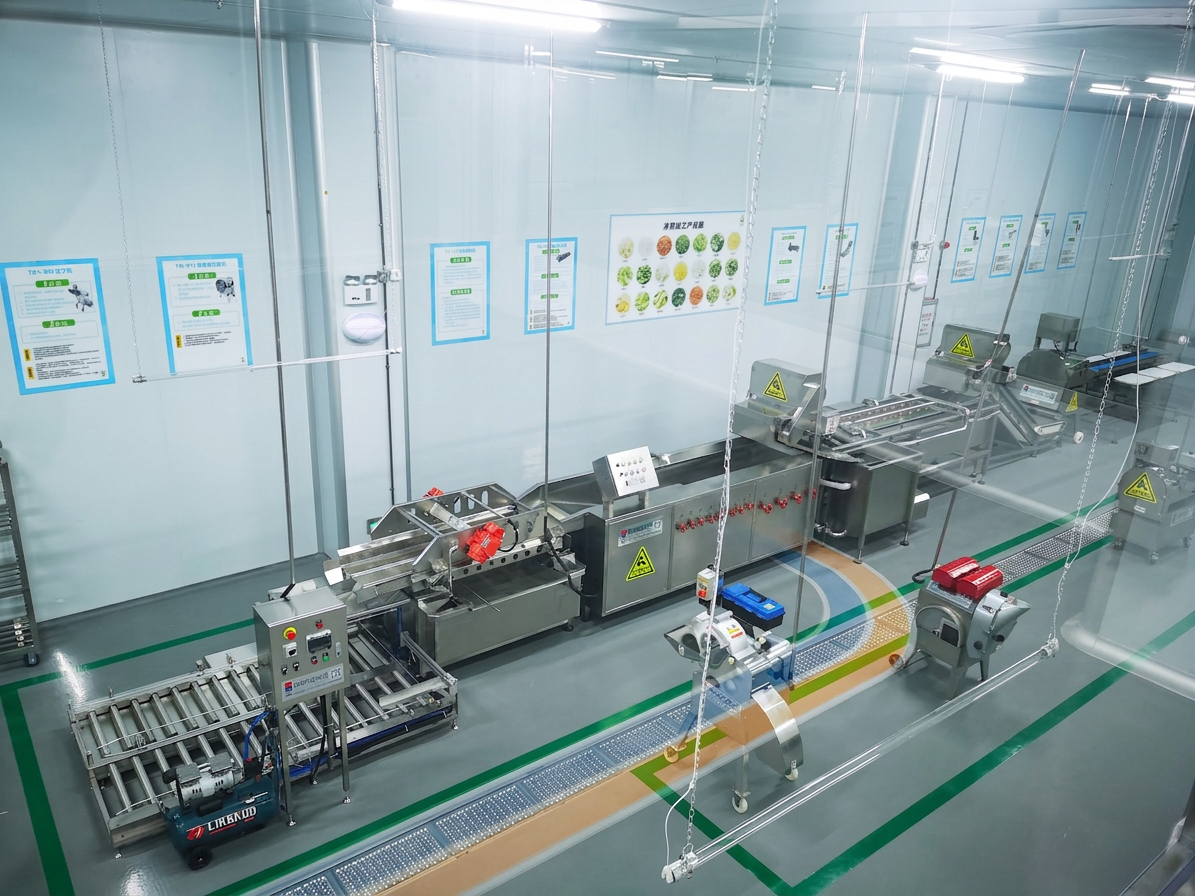
Vegetable Washing
Suitable when large volumes require repeated washing and manual tanks are limiting throughput or process control.
Vegetable Cutting
Suitable when a limited number of specifications consume substantial labor and inconsistent dimensions affect cooking or presentation.
Root Vegetable Peeling
Suitable when peeling volume is high and manual yield, labor or ergonomic exposure is problematic.

Dewatering
Suitable when manual draining or handling delays downstream preparation and packing.
Mixing
Suitable when recipes require repeatable mixing time and uniform ingredient distribution.
Ingredient Transfer
Suitable when workers spend significant time carrying baskets or moving materials between fixed operations.
Quality inspection, selective trimming and final product checks may remain manual.
The best early automation project often changes the work people perform rather than eliminating people entirely.
Workers can move from continuous repetitive preparation into:
- inspection;
- machine operation;
- process monitoring;
- quality control;
- sanitation verification;
- production coordination.
A Phased Central Kitchen Automation Strategy
Phase 1: Measure the Existing Process
Collect data for representative products and production days.
Record:
- raw-material input;
- finished output;
- direct labor hours;
- preparation time;
- waiting time;
- yield;
- waste;
- overtime;
- downtime;
- cleaning time.
Phase 2: Identify the Constraint
Determine which operation limits total output.
The stage with the most workers is not always the real bottleneck. A small washing area or slow batch transition may cause more delay than cutting.
Phase 3: Standardize Before Mechanizing
Define:
- product specifications;
- batch sizes;
- acceptable damage;
- target yield;
- cleaning procedures;
- operating parameters.
Machines perform defined processes more effectively than undefined ones.
Phase 4: Test Representative Raw Materials
Equipment should be tested using products that reflect real production conditions.
A demonstration using ideal vegetables may not represent:
- seasonal variation;
- field soil;
- different sizes;
- damaged leaves;
- supplier variation.
Phase 5: Automate One High-Value Process
Start with an operation where performance can be measured clearly.
Phase 6: Confirm the Downstream Effect
Check whether the investment increased total kitchen output or merely moved the bottleneck.
Phase 7: Integrate Gradually
Connect operations only after individual stages and product flows are stable.
How to Calculate Whether Automation Is Financially Justified
A central kitchen automation ROI calculation should consider more than labor reduction.
Current Annual Preparation Cost
Include:
- direct labor;
- overtime;
- supervision;
- temporary workers;
- recruitment and training;
- waste and yield loss;
- rework;
- sanitation labor;
- injury-related cost;
- external processing;
- delays and missed production.
Automated System Cost
Include:
- purchase price;
- installation;
- shipping;
- building modification;
- operators;
- utilities;
- sanitation;
- maintenance;
- spare parts;
- financing;
- expected downtime.
Annual Operational Benefit
Potential benefits may include:
- fewer direct labor hours;
- lower overtime;
- higher capacity;
- improved yield;
- lower rejection;
- shorter preparation time;
- avoided expansion;
- ability to accept additional orders.
Simple Payback Period
Net investment ÷ annual net operational benefit
Simple payback is useful, but it should not be the only measure.
A central kitchen may accept a longer payback when automation is necessary to:
- secure a major contract;
- meet food safety requirements;
- solve an unavailable-labor problem;
- standardize a growing chain;
- avoid moving to a larger facility.
Those benefits should be documented rather than converted into exaggerated savings claims.
Equipment Price Is Not the Same as Automation Cost
A low quotation does not automatically create a low-cost system.
Before comparing quotations, review our food processing equipment buying guide and this overview of automated food pre-processing line costs.
Central kitchens should evaluate:
- realistic capacity;
- product compatibility;
- yield;
- product damage;
- cleaning access;
- changeover time;
- maintenance requirements;
- spare-parts availability;
- technical support;
- upstream and downstream compatibility.
A machine with impressive theoretical capacity can become expensive if it:
- damages the product;
- requires excessive cleaning;
- cannot process normal raw-material variation;
- stops the entire line when one component fails;
- operates far above the capacity of surrounding equipment.
The objective is not to purchase the fastest machine.
It is to reduce the total cost and uncertainty of producing acceptable food.
The Final Decision: Automate When the Process Has Become the Constraint
A central kitchen is ready to automate when its preparation process is limiting the business in measurable ways.
The strongest business cases usually combine several conditions:
- stable or growing demand;
- repetitive preparation tasks;
- measurable labor concentration;
- clear product specifications;
- recurring capacity constraints;
- quality or yield variation;
- a suitable layout;
- available maintenance support;
- enough production volume to use the equipment.
Automation should be delayed when the operation lacks stable products, process data or clear specifications.
The decision is not fundamentally about replacing workers.
It is about deciding whether the kitchen can continue meeting its commercial obligations through the existing production model.
When managers repeatedly solve capacity problems by adding people, overtime, baskets, tables and temporary work areas, the operation may already be paying for automation—just through fragmented expenses that do not appear on a machinery invoice.
The right question is no longer:
“Can we continue preparing this food manually?”
In many cases, the answer is technically yes.
The more important question is:
“Can the current process deliver our future volume, quality and food safety requirements reliably enough to support the business we are trying to build?”
That is the point at which central kitchen automation becomes a strategic decision.
Planning Central Kitchen Automation?
TEEMYEAH provides food pre-processing equipment and customized preparation solutions for:
- central kitchens;
- restaurant groups;
- catering companies;
- fresh-cut vegetable processors;
- ready-to-cook production;
- ready-to-eat salad production;
- institutional and group-meal operations.
A suitable equipment recommendation begins with your actual production requirements rather than a standard machine list.
Useful project information includes:
- raw materials;
- incoming product condition;
- finished specifications;
- current and target capacity;
- daily operating hours;
- number of SKUs;
- existing bottlenecks;
- available floor space;
- food safety requirements.
Based on these details, TEEMYEAH can evaluate individual washing, cutting, peeling, mixing or dewatering equipment, as well as more integrated food preparation lines.
Discuss your project with TEEMYEAH
Frequently Asked Questions
1. At how many meals per day should a central kitchen automate?
There is no universal number.
Meal count does not show ingredient complexity, raw-material condition, SKU variation or preparation intensity. Kilograms processed per labor hour, yield, preparation cycle time, overtime and on-time completion are more useful decision metrics.
2. Is automation only suitable for very large central kitchens?
No.
Smaller central kitchens may benefit from individual machines that remove a specific bottleneck, such as vegetable cutting, peeling or dewatering.
A complete integrated line normally requires greater volume and process stability than a single machine.
3. What is the best first process to automate?
The best starting point is usually the repetitive operation that consumes substantial labor or limits downstream capacity.
For many central kitchens, this may be vegetable washing, cutting, peeling, mixing or dewatering.
A process study should confirm the constraint before equipment is selected.
4. Does automation always reduce labor?
Automation can reduce labor hours in a particular operation, but it does not remove the need for employees.
People may still be required for:
- loading;
- inspection;
- changeovers;
- quality control;
- sanitation;
- machine operation;
- maintenance.
The correct metric is total labor hours per unit of acceptable output.
5. Can automation improve food safety?
Automation can support food safety by standardizing process parameters, reducing unnecessary handling and improving traceability.
It does not eliminate contamination risk. Equipment must be hygienically designed, cleaned correctly and included in the facility’s hazard-control system.
6. Should ready-to-cook and ready-to-eat products use the same preparation line?
This depends on the products, process sequence and food safety assessment.
Ready-to-eat products may receive no later cooking step, making hygienic zoning, cross-contamination control and sanitation particularly important.
Shared equipment should not be assumed acceptable merely because it is technically capable of processing both product types.
7. How can a central kitchen calculate automation ROI?
Compare the current annual cost of labor, overtime, waste, low yield, delays and external processing with the full cost of the proposed system.
Include installation, utilities, maintenance, spare parts, sanitation and downtime.
The calculation should use actual facility data rather than generic labor-saving percentages.
8. What information does an equipment supplier need?
A supplier should understand:
- raw-material type;
- raw-material dimensions and condition;
- required final product;
- target capacity;
- daily operating hours;
- available space;
- upstream and downstream equipment;
- acceptable product damage;
- cleaning and food safety requirements.
Capacity claims are difficult to evaluate without this information.
9. What is the difference between mechanization and automation?
Mechanization uses equipment to perform physical work while people continue controlling loading, unloading and decisions.
Automation adds a greater level of process control, sensing, automatic transfer or programmed operation.
Many central kitchens use a combination of both.
10. Can a central kitchen automate gradually?
Yes.
A phased approach is often less risky than building a fully integrated line immediately.
The kitchen can measure its current process, automate one bottleneck, verify the result and connect additional stages as demand becomes more stable.
11. What are the biggest mistakes in central kitchen automation?
Common mistakes include:
- selecting equipment before mapping the process;
- relying on theoretical capacity;
- ignoring cleaning and changeover time;
- failing to test real raw materials;
- automating one stage without balancing the line;
- buying equipment that is too inflexible for the SKU mix;
- assuming automation automatically solves food safety issues.
12. How do I know whether automation has been successful?
Success should be measured against the original baseline.
Relevant metrics include:
- labor hours per 1,000 kilograms;
- throughput per hour;
- yield;
- rejected product;
- overtime;
- preparation lead time;
- on-time completion;
- cleaning time;
- equipment availability;
- product specification compliance.
A faster machine is not a successful investment unless it improves the overall operation.
Data and Source Note
External evidence in this article is drawn from the U.S. Bureau of Labor Statistics, OSHA, FDA, CDC and publicly released corporate information. Industry-level figures provide context and should not be treated as guaranteed performance outcomes for an individual central kitchen.
Equipment capacity, labor reduction, yield improvement and payback must be evaluated using the facility’s own products, operating conditions and verified production data.

