This client had the contracts. School districts and corporate cafeterias had signed on for 100,000 meal portions of fresh-cut vegetables per day. What they did not have was a factory.
They had a lease on a 3,000 square meter warehouse. They had a deadline that was already uncomfortably close. And they had a decision to make: hire 80 to 100 workers and fill the warehouse with cutting boards, or build an automated facility from scratch and do it right from the start.
Why “Automate from Day One” Was the Only Viable Option
At 100,000 portions per day, manual processing would require approximately 80 to 100 workers operating across an extended production shift. In most markets, finding, training, and retaining that many food prep workers is already nearly impossible. Staff turnover in manual food prep runs 40 to 60 percent annually. By the time you train the last cohort, the first cohort has already left.
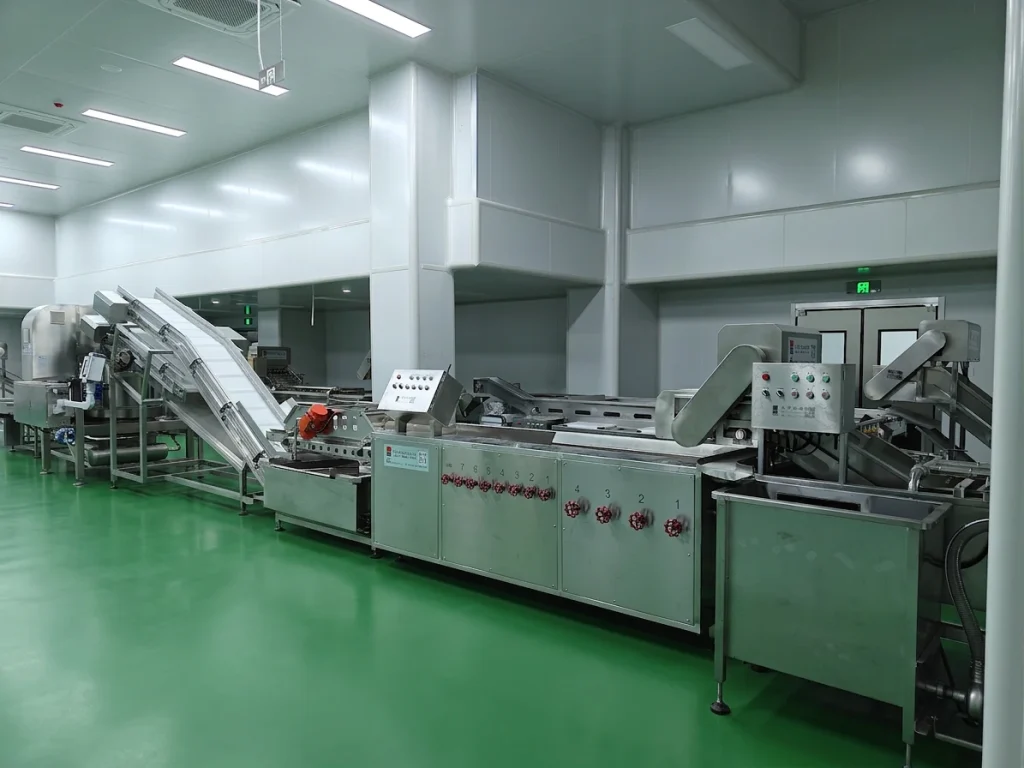
The client chose to bypass this entirely. TEEMYEAH was engaged to deliver a complete turnkey solution: transform the empty warehouse into a fully operational, food-safety-certified processing facility. Scope included production process engineering (material flow, clean/dirty zone separation, drainage design, utility positioning), equipment specification and supply, on-site installation, commissioning, and operator training.
The 6-Month Build
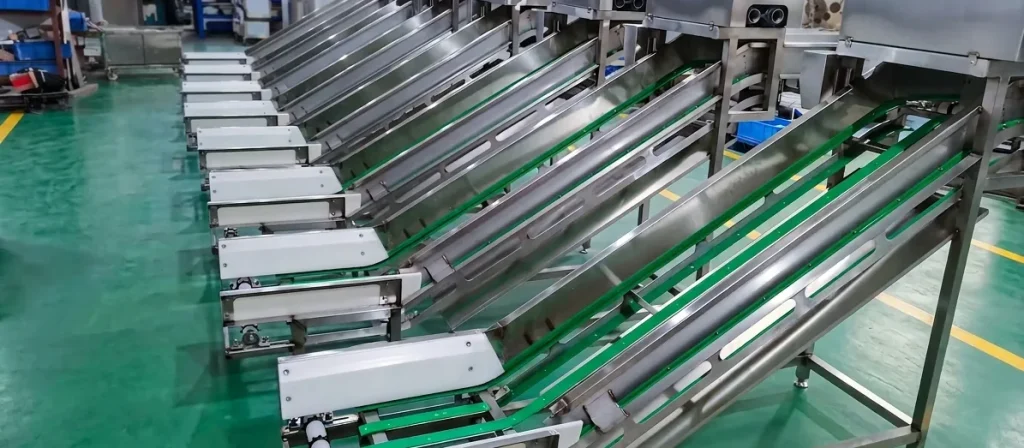
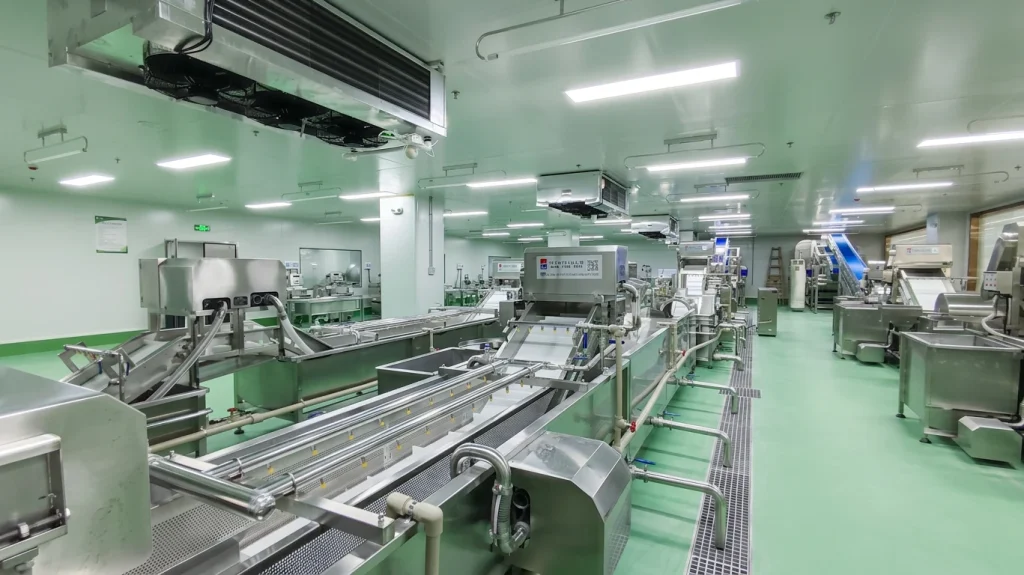
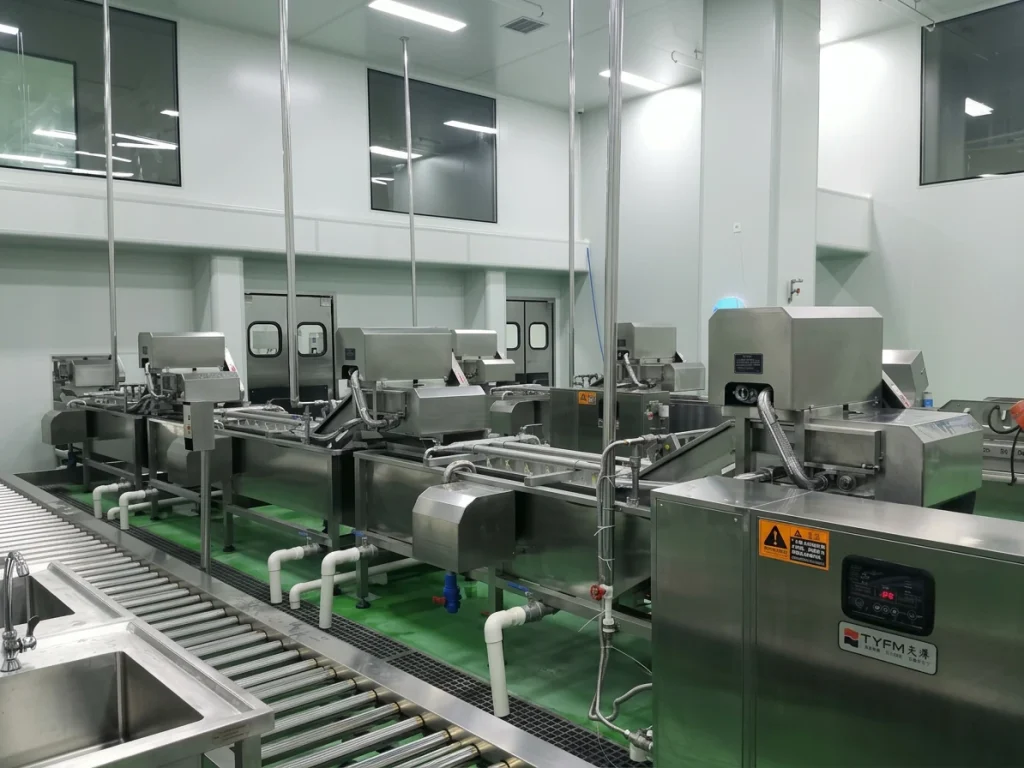
TEEMYEAH’s engineering team designed the production layout around two parallel processing tracks: one for leafy greens (TW-902P cutters feeding into TW-506L three-stage bubble washers, EOS8132-SD ozone sterilization, and TW-980LB VFD dewatering) and one for root vegetables (TY-1500A brush-roller peelers, TW-506L stone-removal washers, and TD-1500 dicers). Both tracks converge at a centralized weighing and packaging zone.
The layout was designed to support 30+ vegetable varieties per shift with quick-release blade changeover in under 2 minutes. The TW-902P’s dual-frequency modulation system handles everything from 5 millimeter lettuce shreds to 30 millimeter potato chunks, giving the facility the flexibility it needs to serve diverse institutional menus.
Six months after the warehouse was empty concrete, the facility was producing 100,000 portions per day with 15 to 20 machine operators.
The Economics
The math is straightforward. If the client had gone manual, they would have hired 80 to 100 workers. At a regional average fully-loaded labor cost of roughly 500 to 600 USD per month, that is 480,000 to 720,000 USD per year in labor alone. The automated facility runs with 15 to 20 operators at a fraction of that cost.
Beyond labor, material waste in manual cutting operations typically runs 10 to 15 percent. The automated lines achieve 3 to 5 percent. On 10 to 15 tons of daily throughput, that difference adds up to 40,000 to 80,000 USD in recovered product value annually. Shelf life extension from 1 to 2 days (manual) to 5 to 7 days (automated with ozone sterilization and VFD dewatering) further reduces downstream waste and customer returns.
Full equipment ROI was achieved within 12 months of commissioning.
Results
| 6 Months to Production | 100,000 Meals/Day |
| < 12 mo Full ROI | 80–100 Workers Avoided |
 central kitchen production area” width=”1194″ height=”896″ />
Planning a similar project? Request a tailored processing proposal from TEEMYEAH.