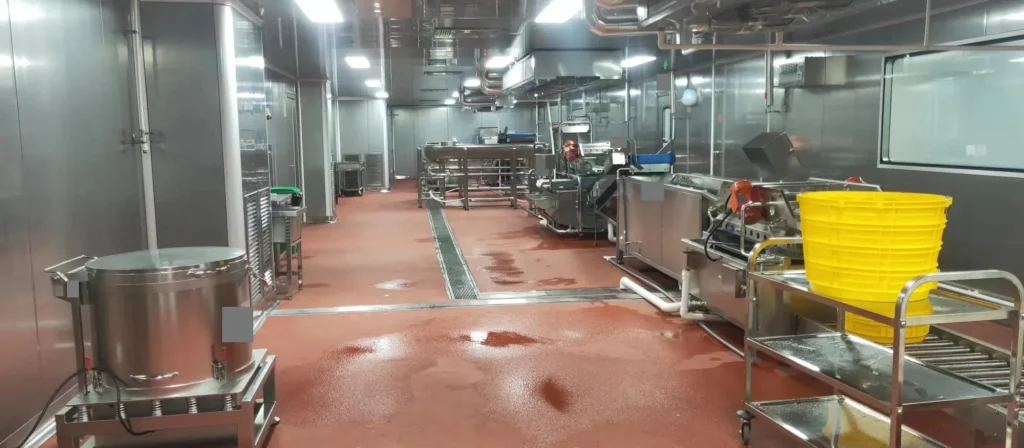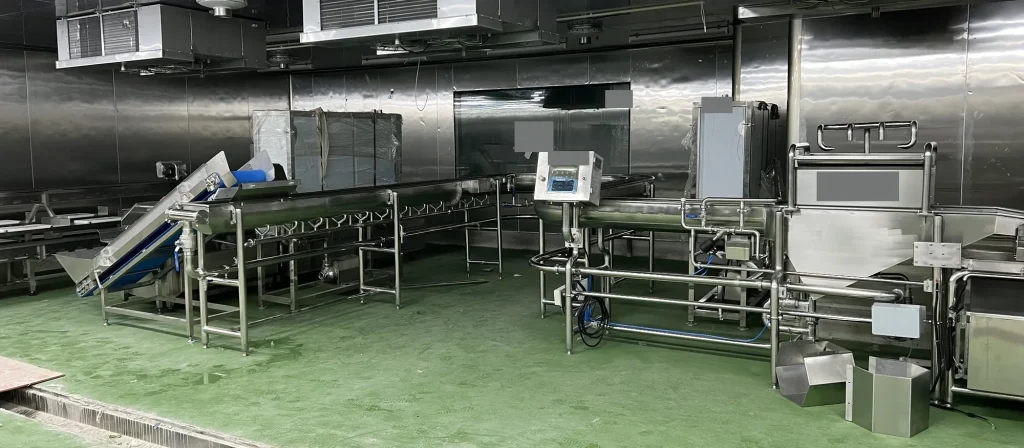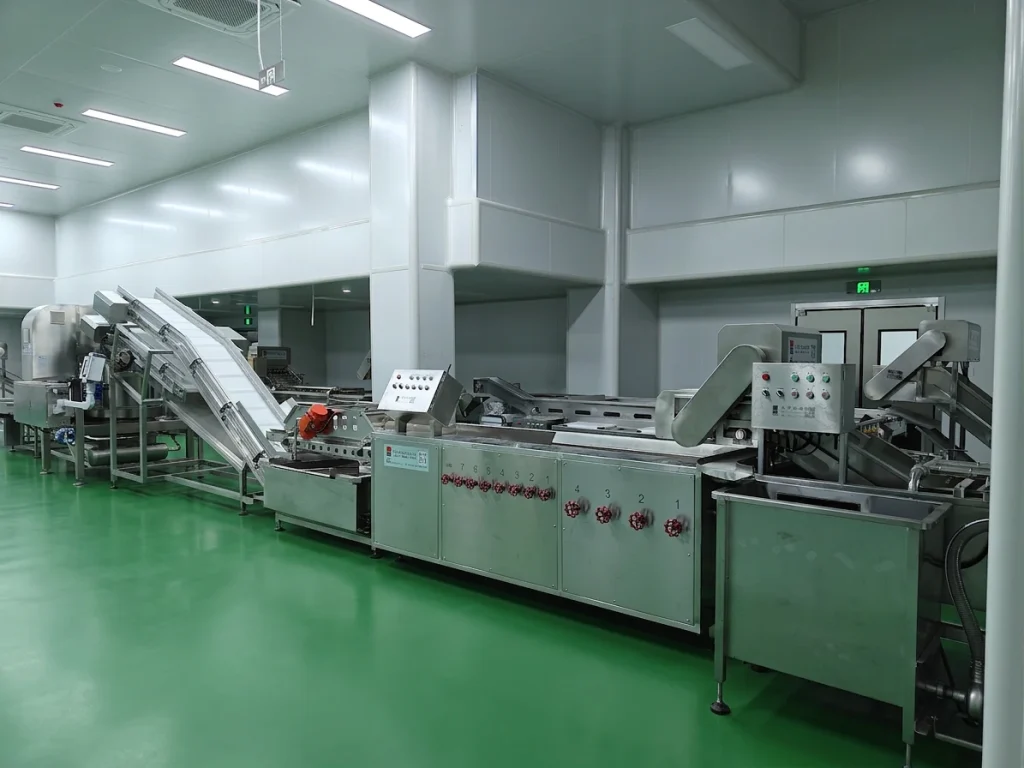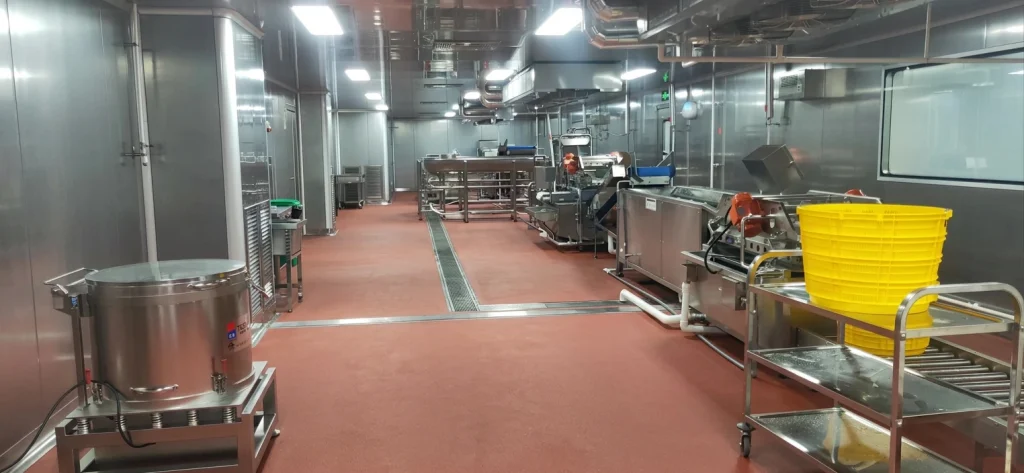
Most food processing case studies talk about tons per hour. This one talks about what happens when you need to produce 200,000 individually portioned meal components in a single production cycle, replicate that across 10 separate facilities in 4 cities, and have everything packed, loaded, and on delivery trucks within 4 hours.
The client is one of the largest institutional catering groups in the country, operating 10 A-grade certified central kitchens serving corporate campuses, schools, and government facilities. TEEMYEAH supplied the semi-finished vegetable and multi-category processing equipment for all 10 facilities.
The 4-Hour Window Problem
Institutional catering operates on a brutally simple constraint: food must be produced fresh, in massive quantity, within a narrow morning production window to meet delivery schedules. There is no inventory buffer. There is no next-day production. If the line goes down at 2 AM, 200,000 people do not eat lunch.
This requires processing infrastructure that can handle 6 ingredient categories simultaneously: leafy vegetables, root vegetables, meat, seafood, fruits, and mixed ingredients. Each category follows a different processing path, but all must complete within the same 4-hour window. TEEMYEAH designed separate equipment configurations for each category, running in parallel, with shared digital monitoring for real-time visibility across all lines.
Standardization Across 10 Facilities
The operational requirement is that facility number 7 in city C must produce output identical to facility number 3 in city A. Same cut sizes, same wash protocol, same sterilization parameters, same portion weights. TEEMYEAH addressed this by deploying identical equipment configurations across all 10 sites, with standardized processing parameters documented in unified SOPs. This also simplifies spare parts logistics, operator training, and quality auditing across the entire network.
The Scale Economics
At this scale, labor reduction is measured in hundreds. Each facility replaced an estimated 100 to 150 manual workers with 20 to 30 machine operators, a 75 to 80 percent reduction. Across 10 facilities, that is 800 to 1,200 manual positions eliminated. The yield improvement, even at a conservative 5 percent across 200,000 portions per batch, represents extraordinary recovered value when compounded daily across the network.
Results
| 10 A-Grade Kitchens | 200,000 Portions/Batch |
| 6 Product Categories | < 4h Full Batch Cycle |

Planning a similar project? Request a tailored processing proposal from TEEMYEAH.