







Fresh Food Processing Methods and Equipment Logic
Fresh-food processing lines are rarely defined by one machine or one standard flow. The useful starting point is the processing task: what must happen to the raw material, in what sequence, under what operating conditions, and how each stage affects the next.
Explore fresh food processing methods to plan how your raw material moves from receiving and preparation through cutting, washing, process control, dewatering, inspection and packing. Compare the requirements of each stage before selecting equipment for your processing plant, central kitchen, fresh-cut facility or packhouse.
The sequence cannot be selected in isolation. Raw-material condition, finished-product specification, RTE or RTC use, cut geometry, sanitation strategy, output target, available space, existing equipment and downstream packing requirements may all change the appropriate process logic.
TEEMYEAH therefore does not apply one standard processing sequence to every project.
What a Process Decision Actually Involves
A process decision is more than choosing whether a vegetable should be washed, cut or dried. Each stage introduces operating questions that influence equipment configuration, product handling and the stages around it.
For example, a washing decision may require investigation of soil load, leaf fragility, flotation behavior, water circulation, product residence time and how the product will leave the washer. A cutting decision depends on the incoming product form, required cut specification, orientation, trim strategy and the condition in which the product must enter the following wash or packaging stage. Dewatering cannot be evaluated independently of the amount and location of retained surface water, the product’s sensitivity to mechanical handling and the feed pattern arriving from upstream.
For an RTE vegetable salad project, assess pretreatment, washing, optional cutting, sanitizing where applicable, rinsing, surface-water removal, assembly or packing and cold-chain handling together. The process needs to address more than basic washing and cutting. Selecting TEEMYEAH equipment alone does not establish compliance with a food-safety standard; process validation and applicable requirements must be evaluated for your product, facility and market.
The operator and project team remain responsible for evaluating process conditions, sanitation procedures, zoning, water management, cleaning practices, product handling and the food-safety or regulatory requirements applicable to the actual product and market.
Inputs that change the route
Complete Process-Stage Overview
A useful conceptual flow for many fresh-food projects is:
Raw material / receiving → inspection / preparation → cutting → washing → process control / sanitizing where applicable → draining / dewatering → inspection / mixing → packaging interface
This is a reasoning framework, not a universal TEEMYEAH line diagram. Individual stages can move, repeat, disappear or be expanded depending on the material and finished product.
Receiving / Raw Material
Main decision question
What condition is the product in when processing starts?
Key selection factors
Soil, field debris, temperature, packaging form, batch or continuous feed
Inspection / Preparation
Main decision question
What must be removed or prepared before mechanical processing?
Key selection factors
Sorting, trimming, peeling, coring, manual intervention, waste routing
Cutting
Main decision question
What finished geometry is required, and when should cutting occur?
Key selection factors
Product orientation, cut size, yield, wash sequence, downstream handling
Washing
Main decision question
What must be removed or controlled during washing?
Key selection factors
Soil load, floating or sinking behavior, agitation, spray action, water condition
Process Control / Sanitizing
Main decision question
Is an additional controlled treatment stage required?
Key selection factors
RTE/RTC context, treatment chemistry, concentration control, contact conditions, rinsing requirements
Draining / Dewatering
Main decision question
How much surface water must be removed before the next stage?
Key selection factors
Product type, retained water, batch/continuous flow, mechanical sensitivity
Inspection / Mixing
Main decision question
What needs to be checked, sorted or combined before packing?
Key selection factors
Defect removal, recipe/SKU logic, accumulation, transfer and operator access
Packaging Interface
Main decision question
In what condition and flow pattern must product reach packaging?
Key selection factors
Weighing, metal detection, buffering, packing rate, container or pack format
This overview should be treated as a project-definition aid. It is not a promise that every stage is required, nor that the same equipment architecture is appropriate for every raw material.
Browse by Processing Task
Vegetable Washing
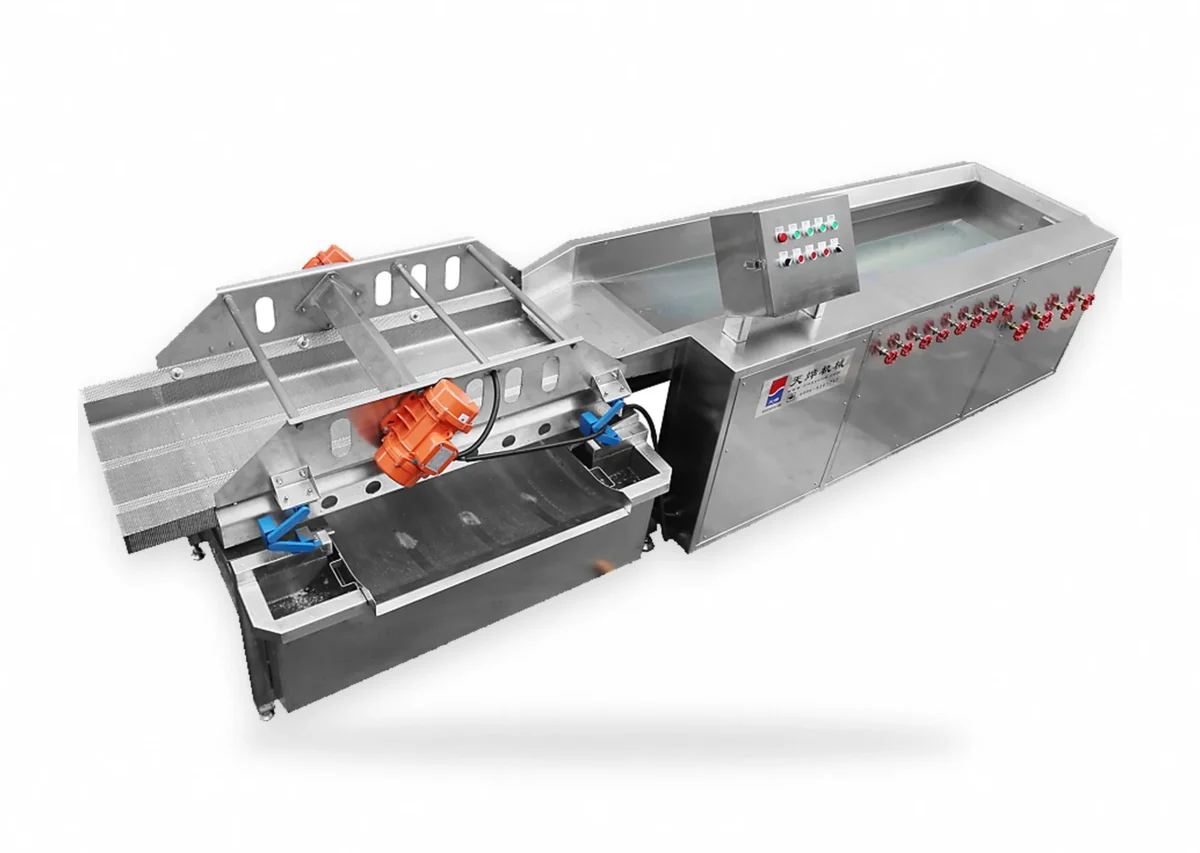
Investigate vegetable washing when the main question is how to remove soil, field debris or other unwanted material while moving the product toward the condition required by the next process stage.
The selection problem is broader than choosing a washer. Product buoyancy, leaf or surface sensitivity, incoming contamination load, whether the product is whole or cut, water circulation, spray requirements, residence time, transfer between wash stages and downstream drainage all influence the washing concept.
Some projects use more than one washing step. In one root-vegetable line configuration, for example, washing and peeling were followed by manual sorting and cutting, after which the cut product passed through a first bubble/spray wash and a second bubble/spray wash. That sequence is a project example rather than a standard architecture.
Vegetable Cutting
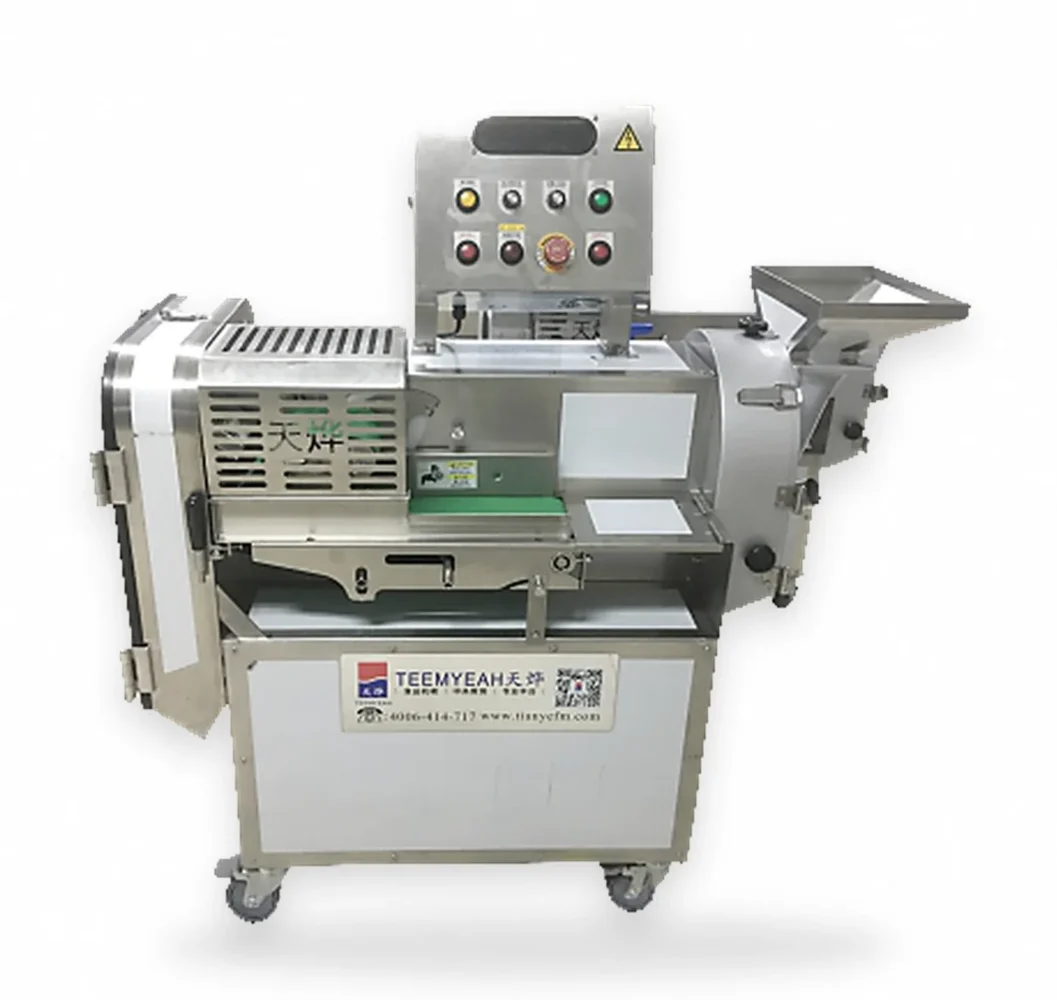
Cutting should be investigated as part of the process sequence rather than as an isolated machine-selection exercise.
Questions include whether the product should be washed before or after cutting, how incoming size and orientation affect feeding, which cut specification is commercially required, what trim or yield loss occurs, and whether the downstream washing, dewatering or packing stages can accept the resulting product consistently.
In one whole-vegetable line configuration, washing, treatment and air drying occurred before cutting, followed by inspection, metal detection, weighing/crating and downstream packing. This is one example of why “cut first” or “wash first” cannot be treated as a universal rule.
Vegetable Dewatering
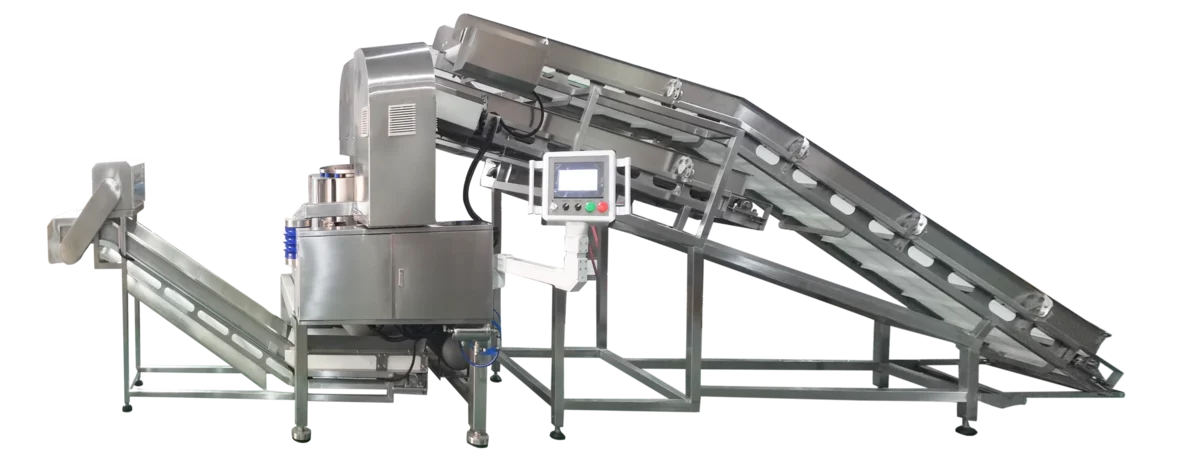
Dewatering is the transition between wet processing and downstream inspection, mixing or packing.
The engineering question is not simply how much water a machine can remove. Product geometry, surface-water retention, upstream washing conditions, batch size, feed consistency, mechanical sensitivity and the requirements of downstream handling all need to be considered.
Examples of leafy-vegetable and root-vegetable lines used automatic centrifugal dewatering after two washing stages and before inspection. Those examples demonstrate one possible process position; they do not establish that centrifugal dewatering or that sequence is suitable for every product.
Vegetable Sanitizing
Sanitizing, where applicable, introduces process-control questions beyond general washing.
A project may need to define the treatment objective, chemistry permitted for the intended market, concentration and monitoring method, contact conditions, water management, rinsing requirements, product exposure and how the stage interacts with downstream dewatering and packaging.
In one leafy-vegetable line configuration, the second bubble/spray washing stage incorporated sanitizing before automatic centrifugal dewatering. This is a project-specific example rather than a prescribed RTE process.
RTE / Salad Process Engineering
RTE processing should be investigated as an integrated process-control problem rather than a collection of individual machines.
Pretreatment, cutting, washing, sanitizing where applicable, rinsing, surface-water removal, inspection, assembly or mixing, packing and cold-chain handling can introduce dependencies that need to be evaluated together. Applicable regulations, plant hygiene programs and validation requirements remain project-specific.
Salad Washing
Salad Cutting
Salad Dewatering & Drying
Sanitizer Dosing & Control
Inspection / Mixing / Packaging Integration
RTE Hygiene Zoning & Wash-Water Management
Browse by Product/Application
The same processing task can require different logic when the raw material or application changes.
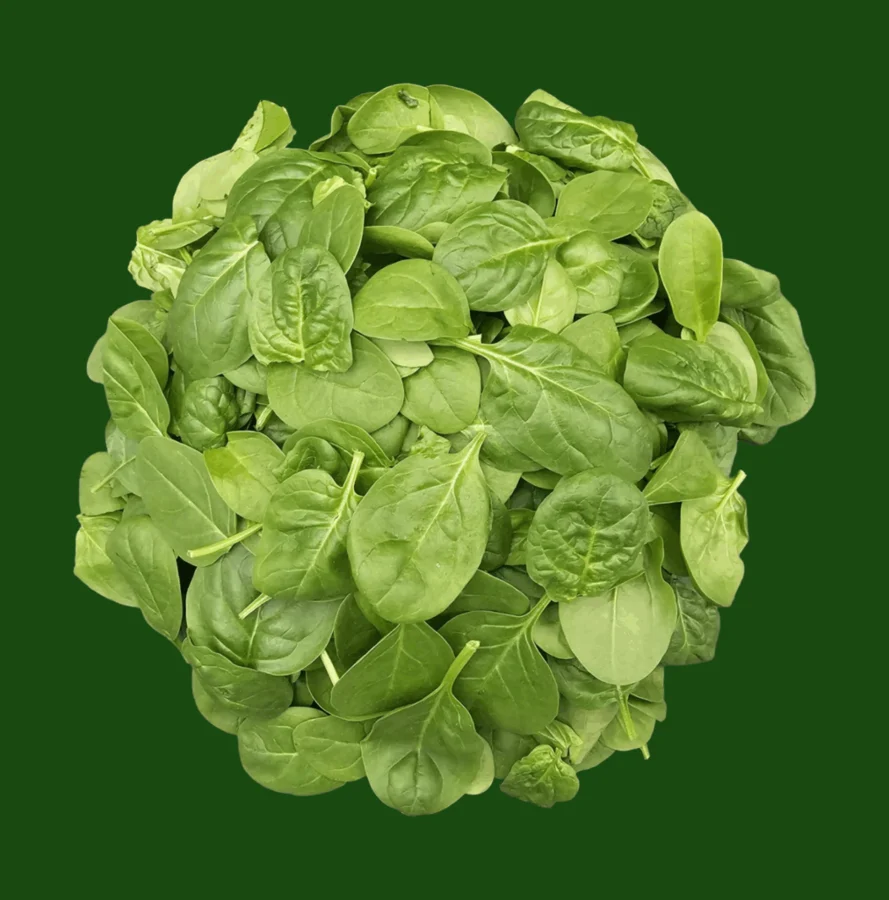
Leafy vegetables
Leafy vegetables may require investigation of sorting, cut specification, flotation behavior, gentle transfer, multi-stage washing, treatment strategy and surface-water removal. One leafy-vegetable line configuration used sorting → cutting → first bubble/spray wash → second bubble/spray wash with sanitizing → automatic centrifugal dewatering → inspection → metal detection → weighing/crating → palletizing.
For a complete-line application view, see the Leafy Vegetable Processing Line.
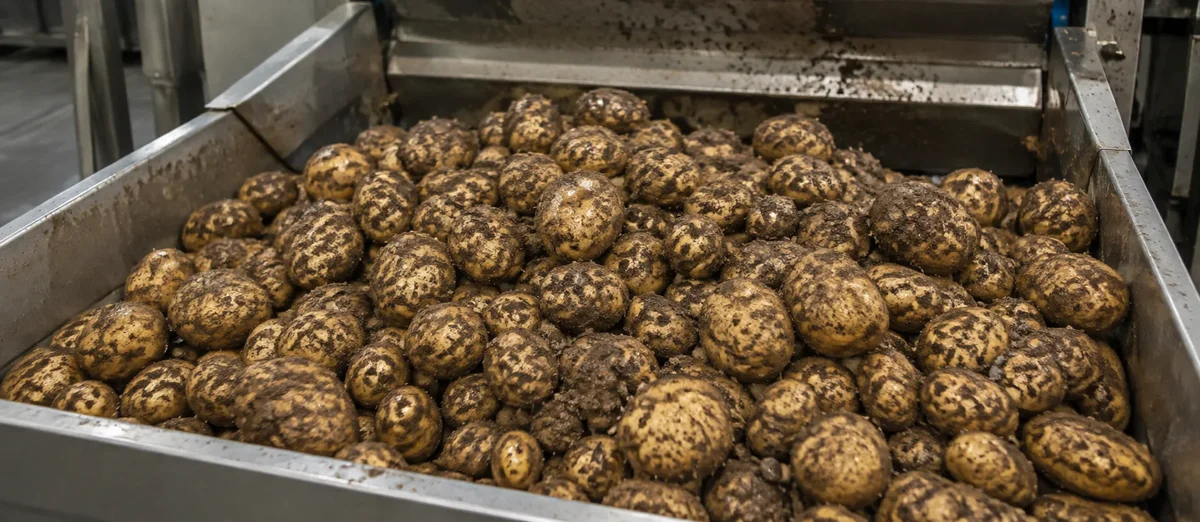
Root vegetables
Root vegetables introduce different questions around soil load, washing or peeling, manual defect removal, cutting and the amount of wet product entering downstream stages. One root-vegetable line configuration used wash/peel → manual sorting → cutting → two bubble/spray washing stages → automatic centrifugal dewatering → inspection → metal detection → weighing/crating → palletizing.
See the Root Vegetable Processing Line for the broader application context.
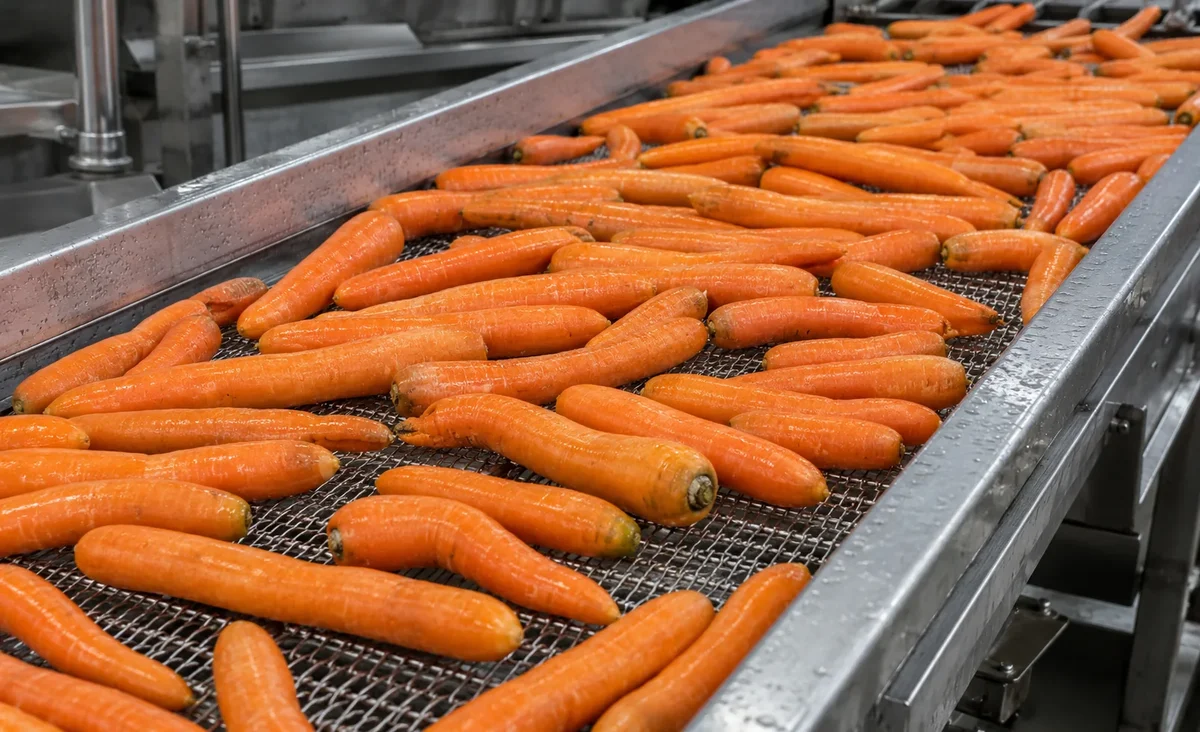
Whole vegetables intended for later cutting
Whole vegetables intended for later cutting may require washing or treatment before size reduction. One whole-vegetable line configuration placed washing, treatment and air drying before cutting, followed by inspection, metal detection, weighing/crating and downstream packing.
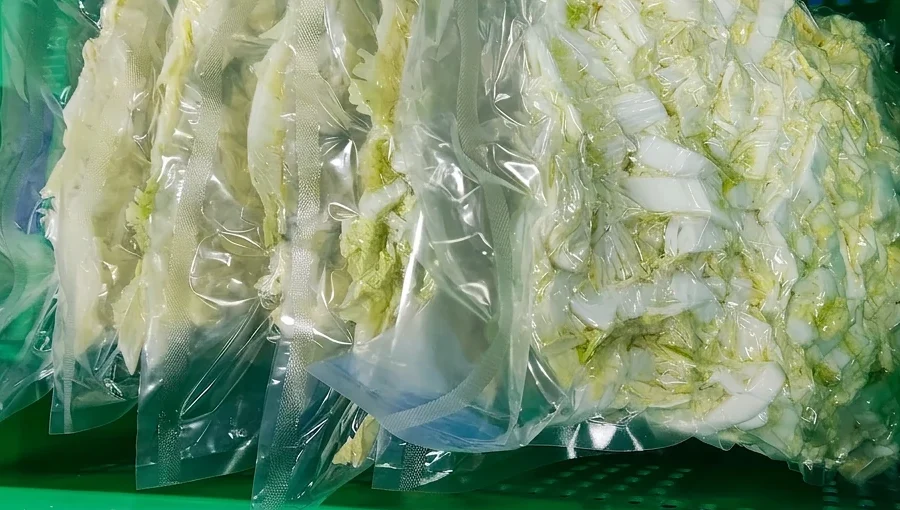
RTE salad and fresh-cut applications
RTE salad and fresh-cut applications introduce additional questions around treatment control, surface-water removal, hygienic handling and the interface with final packing.
Explore the RTE Salad Processing Line and Fresh-Cut Vegetable Processing for the broader line and industry contexts.
How Process Stages Affect Each Other
The value of process engineering comes from understanding interfaces.
A cutter may have sufficient rated throughput but still create an unstable line if upstream preparation cannot feed it consistently.
A washing stage may become the practical bottleneck when residence time, product loading or water-management requirements differ from nominal machine throughput.
A dewatering stage can constrain continuous upstream equipment when it operates in batches.
Packaging can become the limiting interface if product arrives faster than it can be inspected, weighed or packed.
A cutter may have sufficient rated throughput but still create an unstable line if upstream preparation cannot feed it consistently. A washing stage may become the practical bottleneck when residence time, product loading or water-management requirements differ from nominal machine throughput. A dewatering stage can constrain continuous upstream equipment when it operates in batches. Packaging can become the limiting interface if product arrives faster than it can be inspected, weighed or packed.
This is why rated machine capacity is not automatically sustainable line output, and sustainable line output is not automatically saleable finished-product output. Yield loss, inspection rejects, operating interruptions, sanitation, changeovers, product mix and downstream packaging conditions affect what the complete process can sustain.
Define the startup, shutdown and cleaning sequence for your line. Start downstream equipment before feeding product from upstream, and plan shutdown and cleaning from upstream toward downstream, following the operating instructions for the selected equipment.
Plan progressive drainage and cleaning from top to bottom or front to back, as appropriate for the equipment. Do not direct water jets at switches, electrical boxes or electrical components. Allow for cleaning access when arranging and connecting equipment.
From Process Decision to Equipment Selection
Before comparing individual equipment models, define the operating inputs that shape the process.
Process Decision-Input Checklist
PRODUCT
crop, variety, dimensions and incoming condition
soil, field debris, damaged material or other removal requirements
whole, trimmed, peeled, sliced, diced, shredded, mixed or otherwise prepared
dimensions, orientation and acceptable variation
PROCESS
including any additional process-control requirements
soil removal, separation, rinsing or other defined process task
where applicable, including treatment and control requirements
condition required before inspection, mixing or packing
CAPACITY & OPERATION
target finished output rather than only nominal machine throughput
expected trim, peel, reject and process losses
shifts, SKU changes, batch sizes and cleaning windows
INTEGRATION
pack format, weighing method, accumulation and packing rate
machines or utilities that the new process must connect with
FACILITY
available room dimensions, personnel access and material movement
electrical, water, compressed air and wastewater interfaces as applicable
Once these inputs are defined, equipment selection becomes a more meaningful engineering comparison. The question changes from “Which washer or cutter has the highest capacity?” to “Which equipment arrangement can perform the required process under the actual product, layout and operating conditions?”
Process Layout and Workflow Planning
A practical processing layout connects equipment, people and product movement. Consider how each route and work area will support day-to-day operation.
Example flow considerations
Illustrative flow considerations; routes and spacing depend on your facility.
Review raw-material, personnel, semi-finished product, crate-return and waste flows separately when planning your processing areas. Mapping these routes helps you assess how material and people will move through your facility.
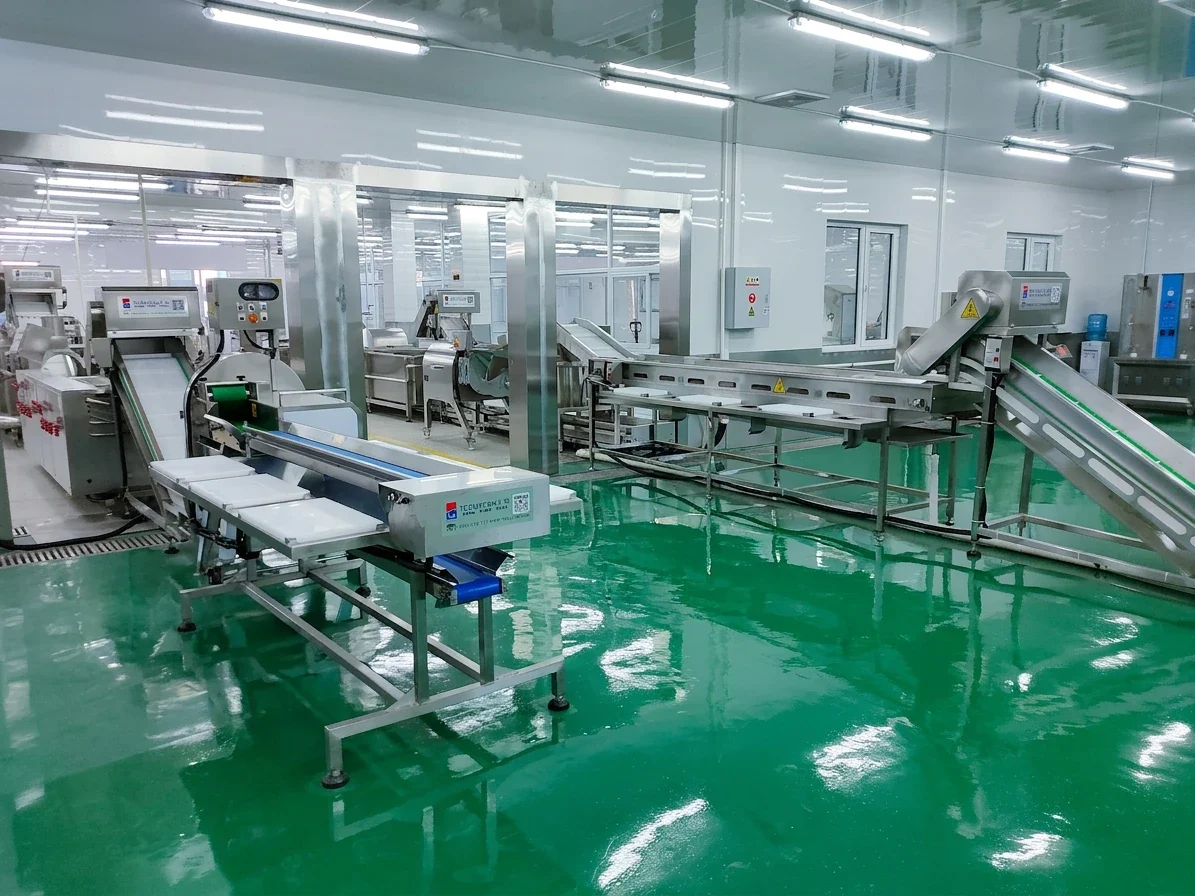
Review the separation requirements for sorting, washing and cutting, packaging, chilled storage, crate washing and crate disinfection. The appropriate zoning depends on your facility, process, local requirements and operating plan.
Process and operator-interface functions.
An inspection, weighing and packing table can connect equipment, buffer or transfer product, and support sorting, inspection, packing and weighing with an external scale. Define the handling tasks and operator access needed at each transfer point.
Explore processing-line examples in TEEMYEAH’s Project Case Studies and see equipment in operation in the Video Center.
Related Solutions / Processing Lines
If you already understand the processing stages and now need to investigate a complete project configuration, continue to the relevant solution or application page.
Food Processing Line Solutions
browse complete-line and project-solution directions.
RTE Salad Processing Line
examine a broader RTE salad processing configuration.
Leafy Vegetable Processing Line
explore line-level processing for leafy vegetables.
Root Vegetable Processing Line
explore root-vegetable preparation and processing.
Fresh-Cut Vegetable Processing
review processing considerations from the fresh-cut producer’s operating context.
Use these solution and application pages to explore complete-line configurations. Compare the processing stages above to define the methods and connections your project needs.
Define the Process Before Selecting the Equipment
If you are planning a new fresh-food processing line, upgrading one processing stage or integrating new equipment into an existing facility, send TEEMYEAH the raw material, incoming condition, finished-product specification, target output, process requirements, available layout and current equipment information.
Our team can use those inputs to discuss the process sequence, identify the interfaces that require further definition and narrow the equipment configuration that should be investigated for your project.