







Summary
A food processing equipment factory acceptance test is a pre-shipment verification event in which the buyer and supplier compare the finished machine or line against an agreed specification, run defined tests, record objective evidence, classify deviations, and decide whether the equipment can be released for packing and shipment. A useful FAT is not a showroom demonstration and not a substitute for commissioning, site acceptance testing, regulatory approval, or validation of the buyer’s food-safety plan.
The strongest FATs are designed before the machine is ready. The buyer and supplier should freeze the test basis, identify representative raw materials and consumables, define measurement methods and acceptance limits, assign witness responsibilities, and agree how failures will be handled. During the FAT, the team should verify equipment identity and workmanship, review hygienic and safety-related features, run dry and loaded trials, test alarms and recovery, observe cleaning and changeover, and reconcile documentation, software, training, and spare-parts commitments. Shipment release should follow the evidence—not the calendar.
Why FAT Should Be a Release Gate, Not a Supplier Demonstration
Food processing projects often reach a risky point just before shipment. The equipment looks finished, production slots are closing, freight may already be booked, and both sides are under pressure to keep the schedule moving. That is exactly when a vague acceptance process can create expensive ambiguity. A buyer may see the machine running and assume it has “passed,” while the supplier may consider the demonstration only a functional check. Weeks later, the two parties can disagree about throughput, product quality, guarding, cleanability, controls, changeover, or missing documentation.
A FAT reduces that ambiguity only when it is tied to contractual and technical requirements. PMMI’s OpX Leadership Network describes its One Voice acceptance-test protocols as a way to align criteria and expectations between consumer packaged goods companies and OEMs, including FAT, virtual FAT, and SAT expectations. Its published material also emphasizes buyer/OEM responsibilities and clear communication before and during acceptance. The underlying principle is useful beyond packaging: acceptance works best when responsibilities, criteria, communication, and evidence are agreed before the test begins.
For a vegetable processing line, that may mean proving a defined saleable output with a representative product while holding cut size, damage, foreign-material removal, moisture condition, or other agreed quality attributes within limits. For a standalone washer, cutter, peeler, dryer, conveyor, or inspection unit, the FAT may be narrower. The scope should reflect the purchased function and project risk, and what can genuinely be demonstrated at the supplier’s factory.
FAT Is Not the Same as QC, Pre-Shipment Inspection, Commissioning, IQ, SAT, or Production Validation
Acceptance language is often used loosely. Before writing the protocol, define what each project stage is expected to prove. The labels below are practical project definitions rather than universal legal terms, and a buyer’s quality system or contract may use different terminology.
| Activity | Main question | Typical timing | What it does not prove by itself |
|---|---|---|---|
| Supplier internal QC | Did the supplier’s own checks find the equipment conforming to its internal build and release process? | During fabrication and before buyer acceptance | Buyer-agreed acceptance against the complete specification, purchase order, and project-specific test criteria |
| Factory Acceptance Test (FAT) | Does the completed equipment meet the agreed pre-shipment requirements that can be tested at the supplier’s factory? | Before packing and shipment | Future performance after installation, site utilities, complete line integration, regulatory approval, or the buyer’s food-safety validation |
| Pre-shipment inspection | Is the equipment complete, correctly identified, visibly undamaged, documented, and prepared for shipment as specified? | Near or after FAT, before dispatch | Loaded process performance unless performance testing is explicitly part of the inspection |
| Commissioning | Can the installed equipment be started, adjusted, and made operational under actual site conditions? | After installation | Formal acceptance unless the contract makes commissioning results part of acceptance |
| Installation qualification (IQ), where used | Was the equipment installed in accordance with approved installation requirements and documented expectations? | Normally on site | Sustained production performance or food-safety process validation |
| Site Acceptance Test (SAT) | Does the installed equipment meet agreed site-dependent acceptance criteria with actual utilities, interfaces, and site conditions? | After installation and commissioning | Long-term production stability beyond the defined SAT duration |
| Production or food-safety validation | Can the complete process, under defined operating conditions, repeatedly achieve the intended product or control outcome? | Under the buyer’s operational and quality system | It cannot be replaced by a supplier FAT simply because the equipment ran successfully before shipment |
FAT versus SAT: the concise distinction
| Question | FAT | SAT |
|---|---|---|
| Where? | Supplier’s factory or test facility | Buyer’s installed site |
| Primary purpose | Pre-shipment conformance and release decision | Site-dependent acceptance after installation |
| Utilities | Supplier test utilities, which may differ from the final site | Actual site power, water, drainage, air, refrigeration, networking, and other relevant utilities |
| Interfaces | May use simulators, temporary conveyors, tanks, controls, or partial upstream/downstream equipment | Tests the actual installed interfaces within the agreed project boundary |
| Materials | Representative product and consumables where practical | Actual production materials and site operating conditions where agreed |
| Release decision | Pack and ship, conditionally release, or hold for correction/retest | Accept installed equipment, conditionally accept, or require site correction/retest |
How to Prepare a Food Processing Equipment Factory Acceptance Test
The protocol should be drafted while the specification is still being finalized, not the evening before the buyer arrives. The FAT is much easier to run when every test row points back to an approved requirement. If the buyer has not yet defined raw material, finished-product specification, required throughput, utilities, or line interfaces, the project is still solving a requirements problem rather than an acceptance problem. A pre-RFQ food processing line requirements checklist can help close those inputs before the FAT plan is frozen.
1. Establish the controlled test basis
Create a document list that identifies the exact revisions governing the FAT. Depending on the project, this can include the user requirement specification or approved technical specification, purchase order and amendments, approved general arrangement and layout drawings, process flow, piping and instrumentation diagram (P&ID) where applicable, electrical drawings, input/output (I/O) list, bill of materials (BOM) commitments, utility schedule, interface matrix, control narrative, alarm list, software and human-machine interface (HMI) version, recipes, and any approved deviation from the original quotation.
The important point is revision control. A FAT against an obsolete drawing is worse than no drawing because it creates false certainty. The protocol should state which revision is authoritative and who can approve a change. Any software configuration relevant to acceptance should be identified so the version tested at FAT can be carried into packing, installation, and SAT.
2. Assign responsibilities and the witness plan
Define who prepares the machine, who supplies product and packaging, who operates the equipment, who records data, who reads instruments, who can stop the test, who signs each result, and who has authority to accept a deviation. Buyers should decide whether engineering, production, maintenance, food safety/quality, environment, health and safety (EHS), procurement, and project management need representation. Not every person must attend every test, but the decision owners should be known in advance.
For remote or hybrid FATs, the witness plan also needs a camera plan, document-sharing method, communication channel, test sequence, time-zone schedule, and rules for independent verification of readings. A camera should not become the measurement system. Instrument displays, sample weights, test timestamps, software versions, alarms, and critical mechanical areas should be readable and recorded as evidence.
3. Define representative test materials
A no-load run can verify rotation, sequencing, basic controls, and some safety functions. It cannot prove how a food machine handles real product. Loaded trials should use raw material, ingredients, packaging, water conditions, tools, consumables, and change parts that are representative of the agreed application whenever practical.
“Representative” must be defined rather than assumed. Fresh-cut vegetables can vary by cultivar, maturity, size, temperature, soil load, surface moisture, density, cut form, and season. A cutter tested only on firm, uniform product may behave differently with fragile or irregular material. A washer tested with relatively clean product may not reveal limitations associated with the agreed incoming soil or debris condition. A dewatering or drying stage can appear acceptable at one cut size and loading pattern yet produce a different result with another SKU. The buyer should select materials that challenge the requirements that matter, not merely materials that are easy to source.
If the exact product cannot be transported to the supplier because of shelf life, import restrictions, biosecurity, or logistics, document the limitation. An agreed surrogate may still be useful for specific mechanical checks, but criteria that depend materially on the actual product should be deferred to SAT or another site trial rather than silently treated as proven.
4. Verify measuring instruments and calibration status
Every quantitative acceptance criterion needs a defined measurement method. List the scales, timers, tachometers, temperature instruments, pressure gauges, flow meters, electrical meters, dimensional gauges, or laboratory methods needed for the protocol. Record instrument identity and calibration or verification status where relevant. If the buyer and supplier use different measurement methods, resolve that before the test; otherwise a performance dispute can become a metrology dispute.
Run the FAT in a Sequence That Preserves Evidence
A practical FAT normally moves from identity and static inspection to safety and dry-function checks, then to loaded trials, cleaning/changeover, documentation, and final disposition. The sequence matters because a loaded test should not begin while fundamental build, safety, or control questions are unresolved.
Verify equipment identity, scope, and configuration
Start by confirming that the physical equipment in front of the witness team is the equipment covered by the order. Record machine or line identity, serial numbers where assigned, major assemblies, motors, pumps, drives, sensors, controls hardware, change parts, tooling, and agreed accessories. Compare the build against the approved drawings and component commitments. For an integrated line, confirm the boundary between supplier scope and buyer-provided or third-party scope so missing interfaces are not discovered only after arrival on site.
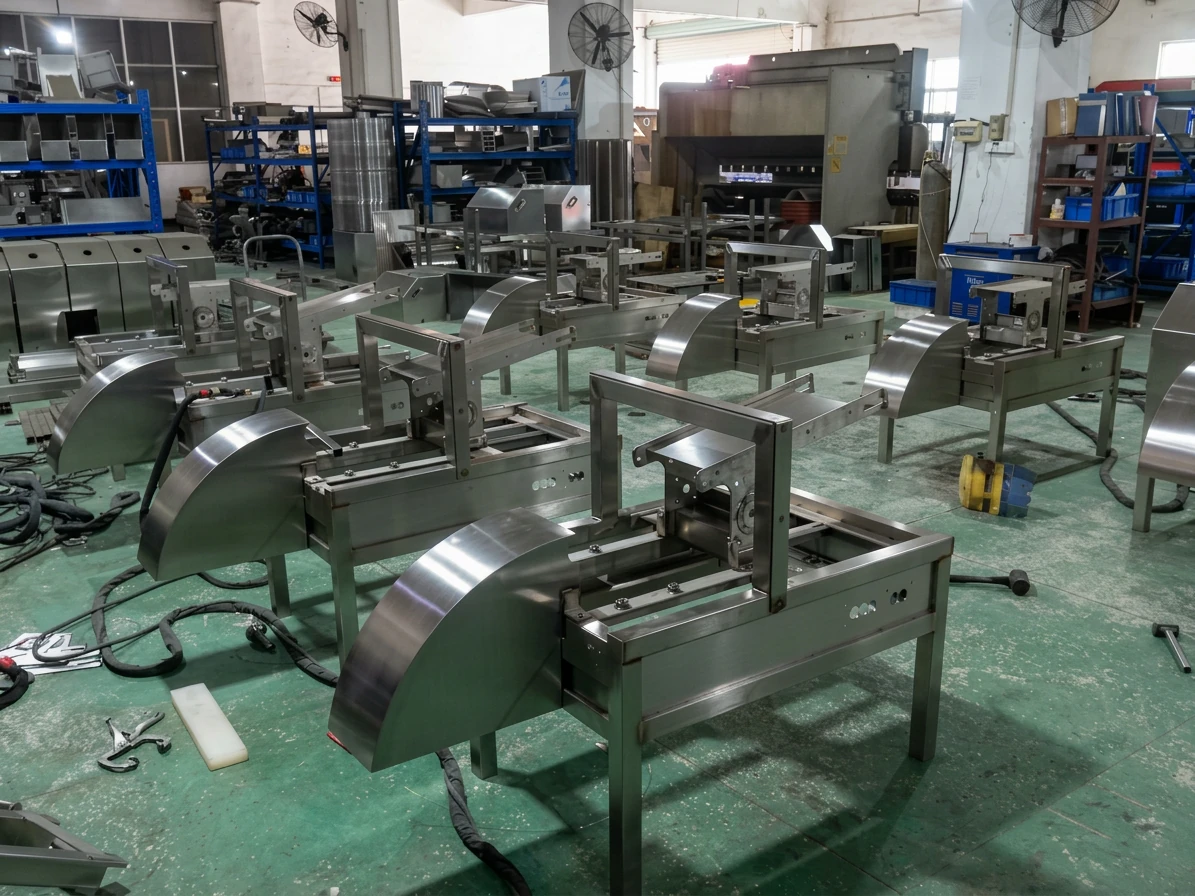
Inspect workmanship and hygienic design before product obscures the details
Static inspection is the right time to look at food-contact surfaces, weld finish where specified, drainage, accessible crevices, fastener placement, seals, hollow areas, product traps, belt access, removable parts, tool requirements, access for inspection, and whether dismantling can be carried out as intended. Do not turn a FAT into an unsupported claim of “hygienic certification.” Instead, compare the equipment with the project’s approved hygienic-design requirements and record observable evidence.
For U.S. food facilities subject to 21 CFR Part 117, FDA explains that CGMP requirements address plant equipment, sanitary operations, facility sanitation, and production/process controls. FDA’s August 2026 final guidance for RTE fresh-cut produce is specifically scoped to that category and identifies itself as nonbinding guidance; within that scope, it discusses equipment design and recommends reviewing cleanability before purchase and installation. EHEDG’s public description of Guideline 13, third edition June 2024, states that it covers hygienic design criteria for equipment used in wet-cleaned open food-processing environments, including construction, installation, integration, and minimum documentation. These references can inform a buyer’s specification, but the FAT still has to test the requirements actually adopted for the project.
Test guards, emergency stops, interlocks, and energy isolation
Machine safety checks should be specific enough to produce evidence. Confirm the installed guarding against the approved risk assessment and project requirements, operate emergency stops, challenge interlocks where it is safe to do so, verify safe restart behavior, and review energy-isolation provisions relevant to servicing. For U.S. workplaces, OSHA 29 CFR 1910.212 addresses machine guarding, while 29 CFR 1910.147 addresses control of hazardous energy during servicing and maintenance, including documented energy-control procedures and verification of isolation where the standard applies. ISO 12100:2010 provides a general machinery risk-assessment and risk-reduction methodology and includes documentation and verification principles. Applicability depends on jurisdiction, machine type, and the buyer’s legal and corporate requirements; a FAT is not itself a legal compliance certificate.
Run dry cycles before introducing food
Exercise automatic and manual modes, sequence logic, sensors, actuators, conveyors, pumps, valves, recipe selection, set-point ranges, HMI functions, data logging where specified, start/stop logic, and communications within the test boundary. Run enough cycles to reveal sequence faults rather than demonstrating one successful start. Record abnormal noises, vibration, leakage, contact, unstable tracking, unexpected reset behavior, or software states that require correction.
Run a loaded production trial against agreed acceptance criteria
Loaded testing should answer a defined question: can the equipment produce acceptable output at the required rate under the agreed test conditions? A useful protocol records incoming material condition, quantity, product temperature where relevant, SKU, tooling or recipe, operator interventions, start and stop times, rejected material, rework, good output, downtime, reasons for stops, and quality measurements. If utilities materially affect performance, record the relevant utility conditions as well.
Do not use nameplate speed or instantaneous feed rate as a substitute for production capacity. For capacity-specific methodology, the buyer can separately review food processing equipment capacity verification. In the FAT itself, the acceptance metric should match the commercial requirement: saleable output, not merely how fast product entered the machine.
Challenge alarms, faults, recovery, and restart
Normal production is only one operating state. Where the design allows safe simulation, test selected faults such as sensor loss, guard opening, material starvation, overload, blocked downstream condition, low utility condition, or communication failure. Confirm the alarm message, machine response, operator reset sequence, and whether a restart creates an unsafe or uncontrolled product condition. The test list should be risk-based; it is not necessary or sensible to create every imaginable failure at FAT.
Observe cleaning, access, and changeover
A machine can pass a throughput trial and still create an operational problem if the sanitation team cannot access product-contact areas or if changeover requires unplanned tools and time. Select the cleaning and changeover activities that matter to the intended operation: disassembly, belt release, screen removal, blade or tooling changes, access to tanks and drains, removal of retained product, reassembly, and restart checks.
FAT observation does not validate the buyer’s sanitation program, cleaning chemicals, microbiological effectiveness, allergen controls, or final cleaning frequency. It verifies specified mechanical access and procedures under factory conditions. For RTE applications in particular, this distinction matters because equipment capability cannot replace the operator’s hazard analysis, sanitation controls, zoning decisions, monitoring, verification, and personnel practices.
Reconcile documentation, training, and spare-parts commitments
Before closure, compare delivered documentation with the purchase-order scope. Common items include operation and maintenance manuals, electrical drawings, parts lists, recommended spare-parts list, lubrication information, calibration information, software backups, parameter or recipe backups, certificates or material records only where contractually required, preventive-maintenance guidance, troubleshooting information, and training materials.
If operator or maintenance training is included in the FAT scope, record which tasks were demonstrated, who attended, what material was provided, and which topics remain for site training. Documentation should also distinguish final as-built information from provisional material that will be updated after the FAT. The test is not complete merely because a folder of documents exists; the buyer needs to know whether the information corresponds to the configuration actually tested.
A Decision-Grade FAT Matrix
The matrix should be customized to the purchase. The example below shows the level of specificity that makes a FAT auditable. Acceptance criteria marked “per approved specification” must be replaced by actual project limits before the test.
| Requirement | Test method | Acceptance criterion | Evidence | Disposition owner |
|---|---|---|---|---|
| Equipment identity and scope | Compare physical build, serials, assemblies, accessories, and major components with approved order documents | Matches approved specification/purchase order and recorded deviations | Signed checklist, photos, component records | Buyer project engineer |
| Software/control version | Record PLC/HMI version, recipes, parameter set, and backup files where applicable | Approved version; backup captured and identified | Version screenshots and backup record | Controls engineer |
| Guarding and safety functions | Visual inspection and functional challenge of selected guards, emergency stops, interlocks, and restart behavior | Meets approved safety requirements; no unresolved stop-ship safety deviation | Test log, photos/video, deviation record | EHS/engineering representative |
| Hygienic access and cleanability features | Inspect specified food-contact areas; demonstrate required disassembly/access | Matches approved hygienic-design and access requirements | Inspection record, photos, disassembly notes | Quality/food-safety representative |
| Dry functional cycle | Operate defined modes and sequences for agreed number of cycles | No unresolved functional fault; sequence matches approved control narrative | Cycle log, alarm history, witness sign-off | Buyer and supplier controls leads |
| Loaded saleable throughput | Run representative material for defined elapsed time; weigh accepted good output | At or above the pre-agreed saleable throughput under recorded test conditions | Scale records, timestamps, raw-data sheet, video where used | Production/project representative |
| Product quality | Sample output using agreed sampling method and measure defined attributes | Pass rate and individual attributes meet pre-agreed limits | Sample sheet, photos, measurements | Buyer quality/production representative |
| Fault recovery | Safely simulate selected agreed faults and restart conditions | Alarm, stop, reset, and restart behavior matches approved logic | Alarm log and witness record | Controls engineer |
| Cleaning/changeover access | Demonstrate selected disassembly, cleaning access, tooling change, reassembly, and restart | Required access and change parts available; no unapproved obstruction | Timed or untimed task record as specified, photos | Sanitation/maintenance representative |
| Documentation, training, and spares | Reconcile document register, agreed training scope, and contracted spare/change-part package | Complete or explicitly listed as controlled pre-shipment punch items | Document index, training record, packing list, punch list | Project manager/procurement |
| Shipment release | Review all FAT results, deviations, retests, and open actions | No open stop-ship items; conditional items explicitly accepted by authorized buyer | Signed FAT summary and release record | Authorized buyer project owner |
Worked Illustrative FAT Calculation: Throughput, Yield, and Quality Pass Rate
The following numbers are hypothetical and are not TEEMYEAH equipment data. They show how a buyer can convert a product trial into auditable acceptance evidence.
- Hypothetical raw input introduced during the defined trial: 600 kg
- Hypothetical accepted good output: 510 kg
- Hypothetical elapsed operating time used by the protocol: 45 minutes, or 0.75 hour
- Hypothetical output sample inspected for the agreed quality attributes: 200 kg
- Hypothetical sampled weight within specification: 190 kg
Saleable throughput = accepted good output / elapsed operating time
Saleable throughput = 510 kg / 0.75 h = 680 kg/h.
Quality pass rate = units or weight within specification / total tested
Quality pass rate = 190 kg / 200 kg = 95%.
If the buyer also wants a simple mass yield indicator for this test window, the hypothetical calculation is 510 kg accepted good output / 600 kg raw input = 85%. That figure should not be treated as a universal equipment yield because raw-material trimming, defects, moisture loss, process purpose, sampling rules, and upstream/downstream boundaries can materially change the result. The acceptance criterion must be agreed before the test.
Assume, only for illustration, that the protocol required at least 650 kg/h saleable throughput and at least 93% quality pass rate under the specified test conditions. This run would meet those two numerical criteria. It would still not automatically pass the FAT if a critical safety function failed, the wrong component was installed, or another stop-ship deviation remained open.
Why a short peak-speed demonstration does not prove sustained capacity
Suppose the supplier feeds 20 kg through the machine in one minute and extrapolates that momentary rate to 1,200 kg/h. That number may describe a short feed event, but it does not prove one hour of saleable output. A sustained trial has to account for product residence time, accumulation, operator intervention, intermittent stops, replenishment, discharge behavior, quality rejects, changeover constraints, and interaction with upstream and downstream equipment.
A buyer purchasing capacity should therefore define the run duration, stabilization period, measurement boundary, allowable stops, sampling plan, and quality criteria before the FAT. If 1,000 kg/h is the commercial requirement, the relevant question is not whether the machine can momentarily accept material at a 1,000 kg/h equivalent feed rate. The question is whether the agreed process can produce the required quantity of acceptable output over the defined test window without unacceptable quality loss or excluded downtime.
Classify Deviations Before the Test, Not During the Argument
A FAT almost always produces observations. The important discipline is deciding which observations affect shipment release and who has authority to make that decision. The following categories are useful project-management labels, not universal legal definitions. Contracts, corporate standards, and regulated quality systems may use different severity terms.
Stop-ship or critical deviation
This category is appropriate when the equipment should not be released because the deviation affects a fundamental acceptance condition. Examples can include a failed safety function, incorrect machine identity or critical configuration, a material performance miss outside an agreed acceptance tolerance, an unapproved control behavior that creates material risk, or a build deviation that prevents the required hygienic access. The normal disposition is correction plus documented retest before packing or shipment.
Conditional-release or major deviation
A major item may be significant but not justify holding the complete shipment when the buyer can understand and explicitly accept the remaining risk. Examples might include a non-safety component substitution already technically accepted but awaiting final documentation, a site-completion item that can only be finished after installation, or a noncritical function with an agreed remedy and retest plan.
Conditional release should name the owner, due date, closure evidence, commercial responsibility, and whether SAT acceptance depends on closure. It should never be used to bypass a stop-ship issue simply because freight has already been booked.
Documentary or minor deviation
Minor items usually do not affect safe function or the core purchased performance but still require closure. Examples may include a drawing awaiting an as-built revision, an incomplete spare-parts cross-reference, or a labeling correction. “Minor” should not become a place to hide recurring workmanship issues. Several small deviations can reveal a larger configuration-control problem and may justify escalation.
Three final dispositions are usually clearer than a vague “pass”: accepted for shipment; conditionally accepted for shipment with a controlled punch list; or not accepted for shipment pending correction and retest. The purchase contract should define the legal and commercial effect of these statuses.
In-Person, Remote, or Hybrid FAT?
Virtual FAT methods are established enough to be treated as a planned acceptance format rather than an improvised video call. PMMI and OpX published virtual FAT guidance and later integrated virtual FAT material into the broader One Voice acceptance-test work, emphasizing communication, buyer/OEM alignment, and clear expectations. The right format depends on equipment complexity, risk, travel constraints, availability of buyer specialists, and the kinds of evidence that must be observed directly.
| Format | Best fit | Main strengths | Main limitations | Controls to add |
|---|---|---|---|---|
| In-person FAT | Complex lines, high-value projects, difficult hygienic/access inspections, novel applications, or acceptance involving many physical checks | Direct access, easier inspection from multiple angles, immediate sampling, easier technical discussion | Travel cost, scheduling, visa/logistics, limited availability of all buyer specialists | Pre-issued protocol, disciplined data recording, defined witness authority |
| Remote FAT | Standard equipment, repeat builds, lower-risk projects, or cases where buyer travel is impractical | Lower travel burden, easier participation by dispersed specialists, recordable video evidence | Camera blind spots, inability to touch/access components, dependence on supplier positioning and connectivity, harder independent measurement | Camera plan, stable connection, close-up and overview views, readable instruments, raw-data sharing, pre-agreed sample handling |
| Hybrid FAT | Projects where one local witness or third party can attend while engineering, quality, or management joins remotely | Combines physical verification with broader specialist participation | Needs strong coordination and clear authority between on-site and remote witnesses | Named on-site evidence owner, remote agenda, shared live data, explicit sign-off route |
A remote FAT should not pretend to see what the camera cannot prove. If weld access, hidden product-contact surfaces, dimensional checks, noise, vibration, physical guarding, or a complex cleaning sequence is material to acceptance, either design a method to capture that evidence credibly or move the check to an in-person witness, third-party inspection, or SAT.
When an Elaborate FAT Is Disproportionate
Not every purchase needs a multi-day protocol with hundreds of checkpoints. A simple, standard, low-risk machine with a well-understood function may justify a concise FAT focused on identity, build completeness, basic safety and guarding, control function, a short representative product trial, contracted accessories, documentation, and shipment condition. The cost and complexity of the acceptance process should be proportionate to equipment complexity, novelty, integration risk, product risk, and the consequences of discovering a problem after shipment.
This matters because testing itself consumes resources. Representative food may need to be purchased and transported; operators and engineers must be assigned; a supplier may need temporary utilities or auxiliary equipment; and an overseas buyer may incur travel cost. Adding test rows simply to make the FAT document appear comprehensive can consume time without reducing meaningful project risk.
Some critical checks must move to SAT
A supplier may not have the buyer’s actual chilled-water temperature, drainage geometry, compressed-air quality, network environment, upstream feeder, downstream packaging machine, final sanitation system, building ventilation, or production-control interfaces. An integrated line may also depend on third-party equipment that is not present at the supplier’s facility.
In those cases, forcing a factory simulation can create misleading evidence. The protocol should state which criteria are deferred, why they cannot be proven at FAT, what temporary checks will still be performed, and the exact SAT method that closes the gap. A site-dependent criterion marked “not tested” with an agreed SAT plan is more useful than a factory test that appears to pass but does not reproduce the required condition.
Baseline checks should still never disappear
Equipment identity, contracted scope, basic function, obvious workmanship, essential safety functions that can be tested, software/configuration control, agreed documentation, and a rational pre-shipment inspection should not be skipped simply because the equipment is standard. A low-complexity FAT can be short without being casual.
Release for Packing and Shipment Only After Disposition Is Clear
The end of the loaded trial is not the end of the FAT. Hold a formal closeout while the evidence is still fresh. Review each test row, attach raw data, identify failed or not-tested items, agree deviation severity, define retests, and assign owners and dates. If a correction changes software, tooling, a critical component, or a setting that affects accepted performance, decide whether the relevant test must be repeated.
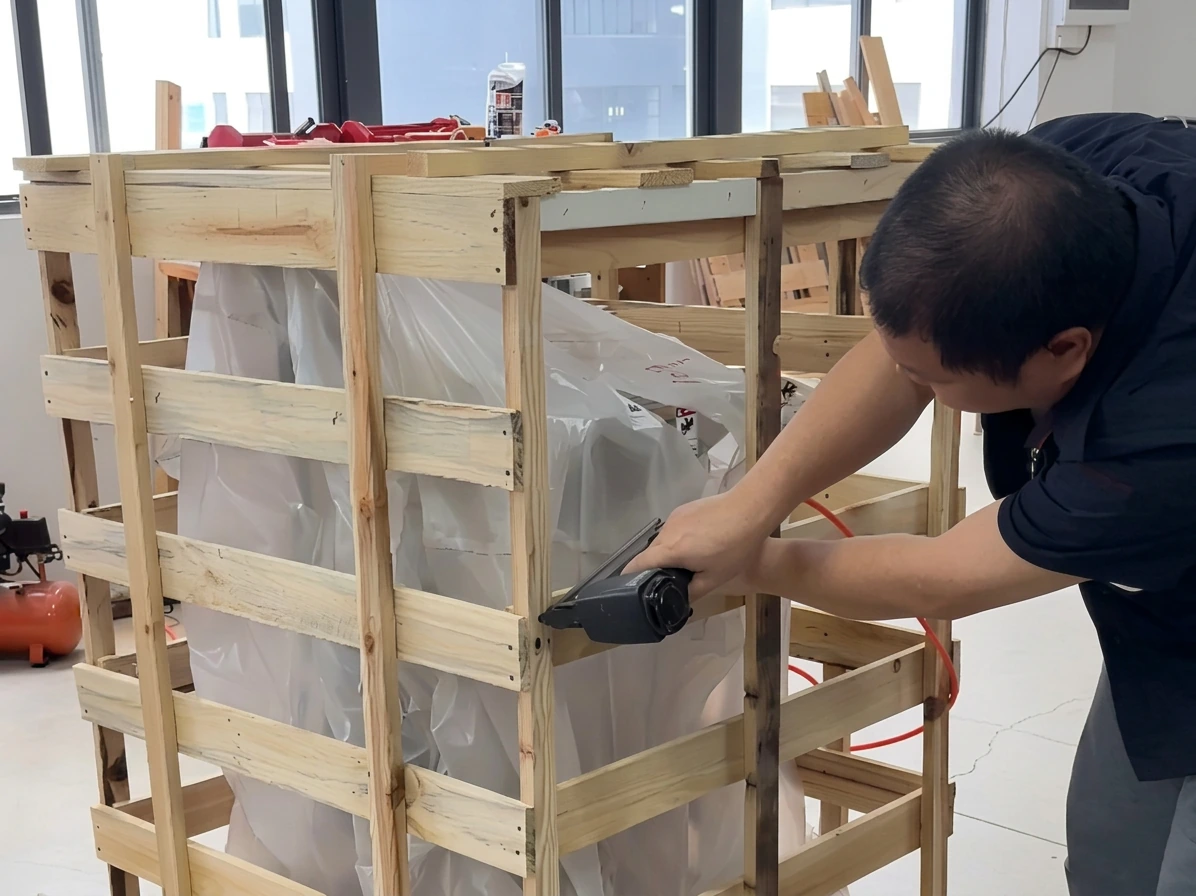
Shipment release should be a controlled decision. A practical release package can include the signed FAT summary, punch list and closure evidence, final equipment identity record, software backup/version record, as-built document status, contracted spare/change-part reconciliation, preservation and packing requirements, and any tests explicitly transferred to SAT. If the buyer permits conditional shipment, the release should state exactly what remains open and how it affects site acceptance.
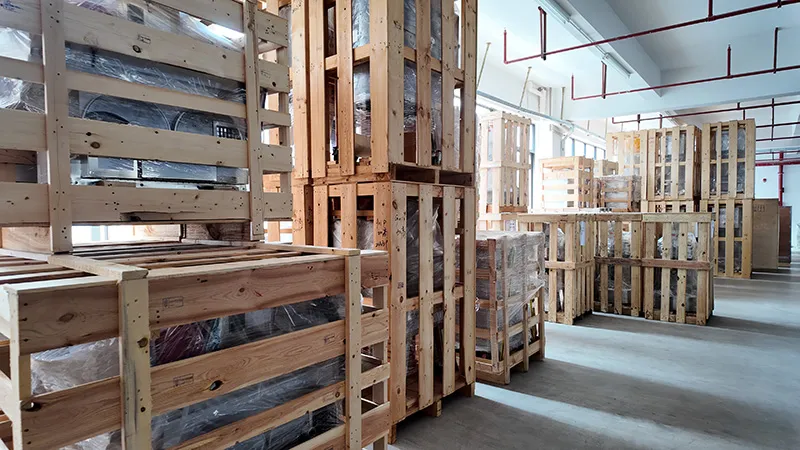
Carry the evidence into SAT
The FAT-to-SAT handover should preserve continuity rather than start a new test history. Transfer the FAT baseline settings, software versions, raw test data, unresolved punch items, utility assumptions, interface requirements, calibration information, product-test method, acceptance criteria, and any limitations created by factory conditions.
SAT can then focus on what changed: installation, actual utilities, site interfaces, actual materials, integrated operation, site safety responsibilities, and the tests that were intentionally deferred. When a result differs from FAT, the two data sets provide a structured basis for determining whether the cause is machine configuration, installation, utilities, incoming material, operating conditions, or another site variable.
This approach also prevents a common supplier-evaluation mistake: treating a signed FAT report as proof that the machine will automatically deliver the same result in every future factory condition. Raw-material variability, site utilities, line balance, sanitation, operator practices, maintenance, upstream/downstream constraints, and the buyer’s process controls remain part of real production performance.
Download the FAT Checklist Before Shipment Release
Download the FAT Checklist and adapt every acceptance row to your approved specification, product, utilities, and project risks before the test date is confirmed. The checklist should become a controlled project document rather than a generic supplier form: replace broad statements such as “capacity acceptable” with the actual measurement boundary, run duration, product condition, acceptance criterion, evidence, and disposition authority.
For projects involving product-specific washing, cutting, inspection, draining, dewatering, conveying, or line integration, TEEMYEAH can review proposed test conditions, representative raw materials, capacity measurement boundaries, witness responsibilities, and the FAT-to-SAT handover before a scheduled product test. A focused review through our technical support process can help turn the FAT into a supplier-evaluation and shipment-release record rather than a last-minute machine demonstration.
FAQ
1. What should a food processing equipment factory acceptance test include?
A food processing equipment factory acceptance test should include the requirements that can be objectively verified before shipment: equipment identity, approved configuration, major components, controls and software version, workmanship, specified hygienic-access features, guards and safety functions, dry operating cycles, representative loaded trials, throughput and quality criteria, alarms and fault recovery, cleaning/changeover access, documentation, training items, spare parts, and deviation closure. Each test should state the method, acceptance limit, evidence, and decision owner. Site-dependent items should be identified rather than forced into an unrealistic factory simulation.
2. Is a FAT the same as a pre-shipment inspection?
No. A FAT normally verifies agreed functional and performance requirements before the equipment is released for shipment, often including witnessed operation and product trials. A pre-shipment inspection is usually more focused on identity, completeness, visible condition, documentation, accessories, preservation, packing, and readiness for dispatch. The two activities can overlap or be combined contractually, but buyers should not assume that a visual pre-shipment inspection proves loaded process performance. Define both terms in the purchase documents so the supplier and buyer share the same release criteria.
3. What is the difference between FAT and SAT for food processing equipment?
FAT is performed before shipment at the supplier’s factory or test facility and verifies the requirements that can credibly be tested there. SAT is performed after installation and focuses on actual site utilities, installation, interfaces, site controls, real upstream and downstream equipment, and criteria intentionally deferred from FAT. FAT can reduce shipment risk, but it cannot prove every site condition. A strong FAT report therefore includes a handover list showing which settings, open deviations, test methods, and acceptance criteria must be carried into SAT.
4. How long should a loaded FAT production trial run?
There is no universal duration. The run should be long enough to test the purchased requirement rather than merely show a short peak rate. The buyer should consider stabilization time, product residence time, replenishment, accumulation, operator interventions, normal minor stops, quality sampling, and the interaction between process stages. A simple standalone machine may need a shorter trial than an integrated line. The protocol should define the timing boundary, allowable exclusions, and sampling plan before the test so neither party can choose a favorable calculation after seeing the results.
5. Can a remote FAT replace an in-person FAT?
Sometimes, but only when the evidence needed for acceptance can be captured reliably. Remote FAT can work well for standard equipment, repeat builds, control-sequence checks, document review, and visible product trials. It is weaker when acceptance depends on tactile inspection, hidden surfaces, difficult dimensions, complex cleanability checks, noise/vibration judgment, or independent sampling. A hybrid approach can place one qualified witness or inspector on site while specialists join remotely. The format should be selected from project risk and evidence needs, not travel cost alone.
6. Does passing FAT prove the machine will achieve the same capacity at the buyer’s site?
No. FAT proves only the agreed criteria under the recorded factory test conditions. Site utilities, raw-material variability, operator practices, upstream feed, downstream discharge, layout, control interfaces, sanitation, temperature, maintenance, and line balance can change actual throughput. That is why the FAT should record test conditions and why site-dependent criteria may need SAT confirmation. Capacity acceptance should use saleable output over a defined elapsed period with quality criteria, not a theoretical motor speed or a brief peak-feed demonstration.
7. Should cleaning and hygienic design be tested during FAT?
Relevant cleanability and hygienic-access requirements should be reviewed during FAT when they are part of the approved specification. The team can inspect food-contact surfaces, access, drainage features, removable parts, disassembly, reassembly, and selected cleaning/changeover procedures. That does not validate the buyer’s sanitation program or prove microbiological effectiveness. Chemical selection, cleaning frequency, environmental controls, allergen management, verification methods, and the complete food-safety system remain site and process responsibilities. The FAT should clearly distinguish observable equipment features from process validation.
8. What happens if equipment fails one FAT criterion?
A failed criterion should trigger a documented deviation, not an informal promise. The team should record the requirement, observed result, evidence, proposed correction, severity, owner, retest method, and shipment impact. A stop-ship item normally requires correction and successful retest before release. A major but noncritical item may be conditionally released only if the authorized buyer accepts the risk and closure plan. Documentary or minor items can often remain on a controlled punch list. The contract should define who has final acceptance authority and what each disposition means commercially.
9. Who should attend a FAT for an integrated food processing line?
Attendance should follow the decisions being made. A complex line may need buyer representatives from project engineering, production, maintenance, controls, quality/food safety, EHS, and procurement, plus the supplier’s project, mechanical, electrical, controls, and application personnel. Not everyone needs to witness every test. The important requirement is that the people judging safety, product quality, capacity, controls, and commercial release have either direct participation or a clear delegation route. Remote participation can reduce travel while still bringing specialist reviewers into defined test windows.
10. Can the FAT be simplified for a standard standalone machine?
Yes. A highly elaborate FAT can be disproportionate for a standard, low-risk machine with a familiar application and limited interfaces. A shorter protocol can still verify identity, contracted configuration, basic workmanship, guarding and essential safety functions, dry operation, a representative product check where needed, accessories, documentation, and shipment readiness. The key is proportionality, not omission. If a critical performance or safety requirement exists, it should not disappear merely because the machine is inexpensive or standard. Site-dependent checks can be transferred explicitly to SAT.
Data and Source Note
This article uses public sources to define the regulatory and industry context, not to claim that any FAT format is universally mandatory. PMMI and the OpX Leadership Network’s One Voice acceptance-test materials, updated by PMMI in 2022 and presented by OpX as revised in Winter 2023, address alignment of FAT, virtual FAT, and SAT expectations as well as buyer/OEM responsibilities and communication in capital-equipment projects. Their scope is CPG and OEM project practice rather than law.
U.S. FDA information on Current Good Manufacturing Practices explains that 21 CFR Part 117 addresses, among other topics, plant equipment, sanitary operations, facility sanitation, and production/process controls. FDA announced its final Guidance for Industry, Guide to Minimize Biological Hazards in Ready-to-Eat Fresh-Cut Produce, in August 2026. The guidance applies to its stated RTE fresh-cut produce scope and explains that FDA guidance documents are nonbinding unless specific regulatory or statutory requirements are cited. This article uses its equipment-design and cleanability recommendations only within that stated scope and does not treat them as a global equipment certification standard.
U.S. OSHA 29 CFR 1910.147 is used here only for U.S.-context discussion of hazardous-energy control during servicing and maintenance, and 29 CFR 1910.212 only for U.S.-context machine-guarding requirements. ISO 12100:2010 is referenced from ISO’s public abstract for its machinery risk-assessment, risk-reduction, documentation, and verification framework; no paywalled clause text is reproduced. EHEDG Guideline 13, third edition June 2024, is referenced only from EHEDG’s public scope description for wet-cleaned open food-processing equipment, including construction, installation, integration, and minimum documentation. Project applicability must be determined by the buyer for its jurisdiction, food category, corporate standards, and contractual requirements.

