







Introduction: Food Businesses Are Growing, but Manual Preparation Is Becoming the Bottleneck
Many food businesses do not fail because they lack market demand. They struggle because their production floor cannot keep up with the demand they have already created.
A central kitchen wins new restaurant-chain contracts. A fresh-cut vegetable supplier starts serving supermarkets. A catering company receives larger institutional orders. A food factory expands into ready-to-cook products. Sales are growing, purchase orders are coming in, and the market looks promising.
Yet inside the preparation area, the pressure is visible.
Workers are still washing leafy greens in batches. Potatoes are still peeled manually or semi-manually. Onions, carrots, cabbage, cucumbers, and peppers are still cut by hand or handled through isolated single machines. Trays of semi-finished ingredients wait between steps. Product quality depends on worker skill. The floor becomes wet. Supervisors spend more time checking size consistency, hygiene, and output than improving the business.
This is where many food operations reach a hidden growth ceiling.
The problem is not only labor cost. It is the entire manual preparation model: unstable output, inconsistent cutting, higher contamination exposure, difficult quality control, production delays, floor-space pressure, and weak scalability.
At the same time, the global food industry is moving toward more standardized, safer, and more efficient preparation systems. Food-away-from-home demand, institutional catering, supermarket ready-to-cook products, central kitchens, and fresh-cut supply chains all require the same thing: large volumes of consistent, clean, and traceable semi-finished ingredients. In the U.S. market alone, USDA ERS reported that foodservice outlet sales reached USD 1.52 trillion in 2024, showing how large and structured the food-away-from-home economy has become.
This is why automated food pre-processing is becoming a strategic investment, not just an equipment purchase.
It allows food businesses to move from labor-dependent preparation to controlled industrial production. Raw vegetables, fruits, root crops, meat, or other ingredients enter a planned workflow, pass through sorting, washing, peeling, cutting, sterilization or disinfection where required, dewatering, weighing, and packaging, then leave as clean and uniform semi-finished products ready for cooking, retail, cold-chain distribution, or further processing.
For businesses that want to scale, the question is no longer whether automation is “advanced.” The real question is whether the current manual system can still support future growth.
What Is Automated Food Pre-Processing?
Automated food pre-processing refers to the use of industrial equipment and integrated production lines to prepare raw food materials before cooking, packaging, or further manufacturing.
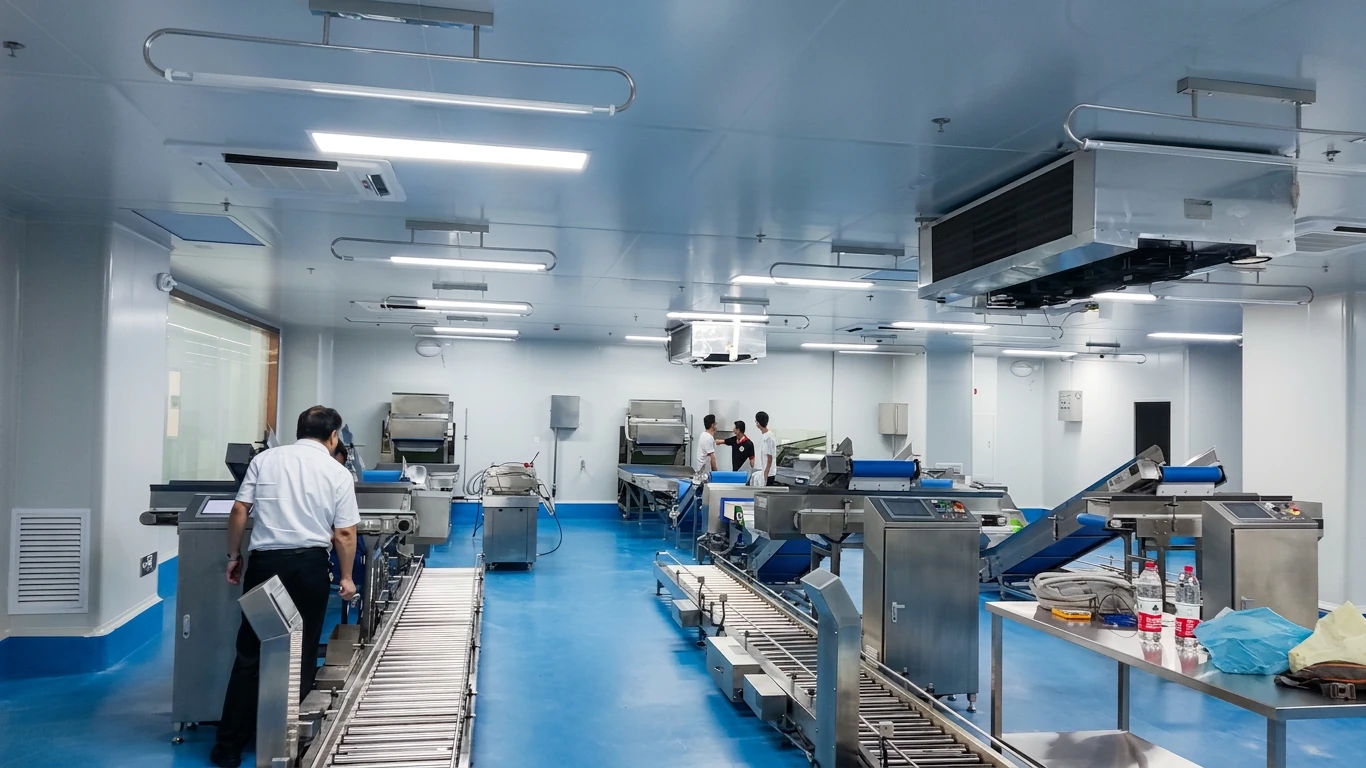
It usually covers the upstream preparation stages, including:
|
Stage |
Function |
Typical Equipment |
|---|---|---|
|
Sorting / inspection |
Remove damaged raw materials, foreign objects, and unsuitable pieces |
Inspection conveyor, sorting table |
|
Washing |
Remove soil, mud, insects, pesticide residue, and surface contaminants |
Bubble washer, spray washer, root vegetable washer, leafy vegetable washing line |
|
Peeling |
Remove skin from potatoes, carrots, taro, ginger, onions, or other root crops |
Brush peeler, abrasive peeler, steam peeler depending on application |
|
Cutting |
Slice, dice, shred, strip, julienne, cube, or segment ingredients |
Vegetable cutting machine, dicing machine, meat cutting machine |
|
Sterilization / disinfection |
Reduce microbial load according to product and process requirements |
Ozone water system, PAA dosing system, sodium hypochlorite system, UV where applicable |
|
Dewatering / drying |
Remove surface water before packaging or cooking |
Centrifugal dewatering machine, vibration dewatering machine, air drying line |
|
Weighing & packaging |
Portion, weigh, seal, and prepare product for distribution |
Weighing system, packing machine, MAP packaging equipment |
In simple terms, automated food pre-processing turns raw ingredients into standardized semi-finished ingredients.
For example:
- Whole potatoes become peeled potato slices, strips, or cubes.
- Fresh cabbage becomes washed and shredded cabbage for salad, stir-fry, or central kitchen use.
- Leafy greens become washed, disinfected, dewatered, and ready-to-cook ingredients.
- Carrots become peeled and diced components for soup, frozen food, or ready meals.
- Meat blocks become sliced, diced, or portioned raw material for further cooking or packaging.
This is different from general food processing. Food processing often refers to downstream transformation, such as cooking, baking, frying, freezing, canning, mixing, seasoning, or forming finished food products. Food pre-processing happens before that. It prepares raw ingredients so the next production stage can operate more efficiently and safely.
For a modern food business, this upstream stage is critical because it directly affects yield, labor cost, hygiene, production speed, shelf life, and final product consistency.
Why Manual Food Preparation Is No Longer Enough
Manual food preparation is flexible at small scale. A restaurant kitchen, a small catering operation, or an early-stage food startup can rely on people because the daily volume is limited and the product range changes frequently.
The problem begins when volume grows.
Once a business needs to process hundreds of kilograms or several tons of raw materials per day, manual preparation becomes increasingly unstable. More workers do not automatically create better output. In many cases, adding workers introduces new problems.
The cutting size becomes harder to control. Washing quality varies by operator. Product waits longer between steps. Supervisors need more time to manage people. Hygiene risk increases because more hands, tools, containers, and transfer points are involved. Training becomes continuous because staff turnover is high in repetitive preparation roles.
This is not only an operational inconvenience. It affects the business model.
A central kitchen cannot reliably serve restaurant chains if every batch of cut vegetables looks different. A supermarket supplier cannot build fresh-cut retail programs if shelf life is unstable. A catering company cannot serve hospitals, schools, factories, or airlines with weak process control. A food factory cannot pass strict customer audits if preparation relies on undocumented manual habits.
Food safety is also becoming a larger commercial issue. WHO states that unsafe food causes hundreds of millions of illnesses globally each year, and its updated food safety fact sheet estimates major worldwide productivity and medical losses from unsafe food. The World Bank has also estimated that unsafe food costs low- and middle-income economies about USD 110 billion each year in lost productivity and medical expenses.
For food businesses, these numbers point to a practical reality: food safety is no longer only a compliance topic. It is part of business continuity, customer trust, contract retention, and export competitiveness.
Manual preparation makes it difficult to build a documented, repeatable, auditable process. Automation does not remove the need for food safety management, but it gives the business a much more controllable foundation.
The Industrial Logic Behind Automated Food Pre-Processing
Automated food pre-processing is not simply “buying machines to replace workers.”
The deeper value is process control.
A well-designed pre-processing system defines how raw material moves, how long it stays in each stage, how much water is used, how washing force is applied, how product is transferred, how cutting dimensions are controlled, how surface moisture is removed, and how finished product is packed or sent to the next process.
In manual operations, many of these variables are uncontrolled. Workers decide washing time by experience. Cutting quality depends on hand skill. Product transfer depends on available labor. Semi-finished ingredients may stay in open containers for too long. Supervisors correct problems after they happen.
In automated operations, the process is designed before production begins.
Conveyor speed, washing time, water flow, bubble intensity, spray pressure, cutting size, blade speed, dewatering time, and packaging flow can all be planned according to product type and capacity target. This makes production more predictable.
That predictability matters because modern food buyers do not only buy ingredients. They buy consistency.
A restaurant chain expects the same size carrot dice across every branch. A supermarket expects the same visual quality in every bag of fresh-cut vegetables. A central kitchen expects production planning to match delivery time. An institutional catering client expects food safety documentation, traceability, and stable output.
Automation helps food businesses move from “people doing tasks” to “systems producing results.”
The Core Benefits of Automated Food Pre-Processing
1. Higher Production Capacity Without Proportional Labor Growth
Manual preparation scales poorly. If daily volume doubles, labor often needs to increase close to proportionally. More workers require more space, more supervision, more training, more tools, and more management.
Automated food pre-processing changes that relationship.
A vegetable washing line, cutting machine, peeling machine, or dewatering system can handle continuous production with a small number of operators. Instead of assigning workers to cut, wash, transfer, and pack manually, workers supervise machines, feed raw materials, inspect quality, and manage changeovers.
This does not mean every worker disappears. In a well-run facility, people are still needed for raw material inspection, quality control, machine operation, sanitation, maintenance, and process management. The difference is that labor shifts from repetitive handwork to higher-value operational control.
For businesses facing labor shortages or rising wage pressure, this is often the first reason to automate. But in practice, the bigger advantage is not only lower labor cost. It is the ability to accept larger orders without losing control of production.
2. More Consistent Cutting and Product Appearance
Cutting consistency is one of the most visible differences between manual preparation and automated pre-processing.
In manual cutting, size variation is unavoidable. Even trained workers produce differences due to fatigue, speed pressure, knife sharpness, ingredient shape, and individual technique. For some products, this may be acceptable. For chain restaurants, frozen food factories, ready-meal producers, and supermarket fresh-cut suppliers, it can become a serious quality issue.
Inconsistent cutting creates multiple problems:
- Uneven cooking time
- Poor product appearance
- Higher trimming loss
- More broken or crushed pieces
- Customer complaints
- Difficulty meeting product specifications
- Lower trust from B2B buyers
Automated cutting equipment uses fixed blade assemblies, controlled conveyor speed, and repeatable cutting mechanisms to create more uniform output. Whether the target is slicing, dicing, shredding, strip cutting, or julienne cutting, the machine gives the business a repeatable standard.
This is especially important when the product is supplied to QSR chains, central kitchens, supermarket private labels, frozen food manufacturers, or airline catering companies. These buyers usually care less about whether the product was “handmade” and more about whether every batch meets specification.
3. Better Yield and Less Raw Material Waste
Food loss is one of the largest hidden costs in food supply chains. FAO has highlighted that food loss and waste remain a major global issue, with earlier broad estimates suggesting around one-third of food produced for human consumption was lost or wasted globally. More recent FAO data also shows fruits and vegetables have one of the highest loss rates among food categories.
In food preparation facilities, waste is not only caused by spoilage. It also comes from poor cutting, excessive trimming, bruising, crushing, repeated handling, and long waiting times between stages.
Manual cutting often removes more edible material than necessary. Manual peeling may take away too much flesh. Rough transfer can damage leafy greens or soft vegetables. Wet product left in crates can deteriorate quickly. Inconsistent product size may lead to rejection or rework.
Automated pre-processing can reduce these losses in several ways:
- Peeling equipment can remove skin more evenly and preserve more usable flesh.
- Cutting machines can reduce excessive trimming and size deviation.
- Continuous conveyors reduce repeated manual handling.
- Dewatering reduces free surface moisture before packaging.
- Integrated workflow shortens the time between raw material input and finished semi-product output.
Even a small improvement in yield can have a large financial impact.
If a facility processes 3 tons of vegetables per day and improves usable yield by only 5%, that equals 150 kg of recovered product per day. Across 300 working days, that is 45,000 kg of additional sellable material. For businesses processing higher-value ingredients or larger volumes, yield improvement may pay for equipment faster than labor savings.
This is why equipment ROI should not be calculated only by counting how many workers are replaced. Yield recovery, reduced rejection, and lower spoilage are often equally important.
4. Stronger Food Safety and Lower Cross-Contamination Risk
Food safety is one of the strongest reasons to automate pre-processing.
Manual preparation creates many contact points: hands, gloves, knives, cutting boards, crates, tables, weighing tools, washing tanks, and transfer containers. Every additional contact point creates another opportunity for contamination or cross-contact.
The risk becomes higher when the same facility handles multiple ingredient categories, such as leafy vegetables, root vegetables, raw meat, cooked food, RTE ingredients, and RTC ingredients. If the workflow is not separated properly, contamination risk can increase quickly.
Codex General Principles of Food Hygiene emphasize good hygiene practices and HACCP-based food safety control across the food chain. Automated pre-processing supports this logic because it makes process flow easier to define, monitor, clean, and verify.
A well-designed automated system can help reduce food safety risk through:
- Less direct hand contact with food
- Fewer manual transfer steps
- Clearer separation between raw and finished zones
- Controlled washing and rinsing stages
- More consistent dewatering before packaging
- Easier sanitation procedures
- More stable process documentation
- Better compatibility with HACCP, GMP, and audit requirements
In some applications, ozone water, peracetic acid, sodium hypochlorite, or other approved antimicrobial systems may be used as part of the washing or disinfection process. Ozone, for example, is permitted under U.S. federal regulation for use in the treatment, storage, and processing of foods, including meat and poultry, under specified conditions.
However, antimicrobial systems should not be treated as a magic solution. Their effectiveness depends on concentration, contact time, water quality, organic load, product type, temperature, pH, and process validation. The stronger approach is to combine hygienic equipment design, correct line layout, documented sanitation, and suitable antimicrobial control where required.
For B2B food suppliers, this matters because large buyers increasingly care about process evidence. They want to know not only what product you can supply, but how reliably and safely you can produce it.
5. Longer Shelf Life for Fresh-Cut and Ready-to-Cook Products
Fresh-cut vegetables and ready-to-cook ingredients are highly sensitive to moisture, temperature, microbial load, and cutting damage.
Once a vegetable is cut, its surface area increases. Cell structure is damaged. Moisture release accelerates. Oxidation may begin. If the product is not washed, cooled, dewatered, and packed correctly, quality can decline quickly.
This is why the dewatering stage is so important.
Excess surface water inside packaging creates a poor storage environment. It can accelerate microbial growth, soften texture, cause unpleasant appearance, and reduce shelf life. In leafy greens, fresh-cut cabbage, salad mixes, and washed vegetables, surface moisture control is often one of the most important factors affecting product stability.
Automated dewatering systems, including centrifugal dewatering machines, vibration dewatering machines, and air drying lines, help remove excess surface water more consistently than manual draining. When combined with proper cold-chain management and suitable packaging, this supports better shelf life and more stable product quality.
Temperature control remains essential. Food safety agencies commonly identify the temperature danger zone as the range where bacteria can grow rapidly; USDA FSIS notes that bacteria can double in as little as 20 minutes within the 40°F to 140°F range. Automation cannot replace cold-chain management. But it reduces the time product spends waiting in open containers, improves moisture control, and helps businesses build a more reliable process before refrigeration or distribution.
From Single Machines to Integrated Food Pre-Processing Lines
Many businesses begin automation by purchasing one machine: a vegetable cutter, a washer, a peeler, or a dewatering machine. This is a reasonable starting point, especially for small and medium-sized operations.
But as volume grows, single machines can create a new problem.
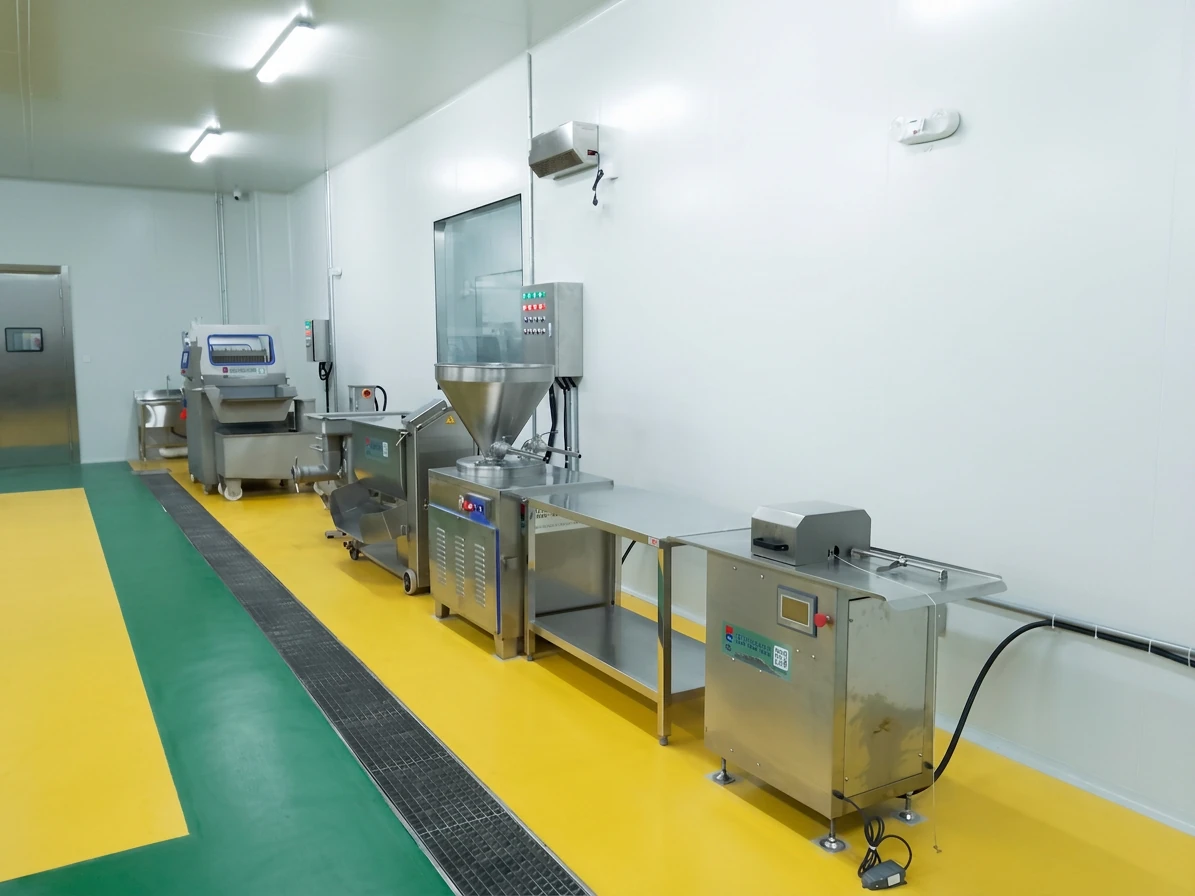
A cutter may process faster than workers can wash and feed materials. A washer may discharge product faster than workers can transfer it. A dewatering machine may wait for batches. Workers may still carry crates between stations. The machines are automated, but the process is not.
This is often called an “island of automation” problem.
Each machine works, but the total production flow is still limited by manual transfer, batch waiting, and poor synchronization. The business buys equipment, but the bottleneck simply moves from cutting to washing, from washing to drying, or from drying to packing.
An integrated food pre-processing line solves this by connecting the stages into one continuous workflow.
A typical vegetable pre-processing line may look like this:
Raw Material Receiving → Sorting → Washing → Peeling if needed → Cutting → Secondary Washing or Disinfection if required → Dewatering → Weighing → Packaging → Cold Storage
For leafy vegetables, the line may focus more on gentle washing, foreign matter removal, disinfection control, and dewatering.
For root vegetables, the line may include soil removal, peeling, trimming, cutting, and washing.
For central kitchens, the line may need to handle multiple SKUs and frequent product changeovers.
For food factories, the line may prioritize high capacity, stable cutting size, and connection with downstream cooking, freezing, or packaging.
The key is not to copy one standard line. The key is to design the line according to product type, daily volume, labor structure, floor plan, hygiene zoning, and target output.
Common Applications of Automated Food Pre-Processing
Central Kitchens
Central kitchens need to prepare large volumes of ingredients for multiple restaurants, canteens, hotels, hospitals, schools, or industrial clients. The main challenge is not only capacity. It is standardization.
A central kitchen must produce the same ingredient specification repeatedly, often under strict delivery schedules. Automated pre-processing helps central kitchens reduce manual labor, improve output planning, standardize cutting quality, and separate clean and dirty process zones.
Typical applications include:
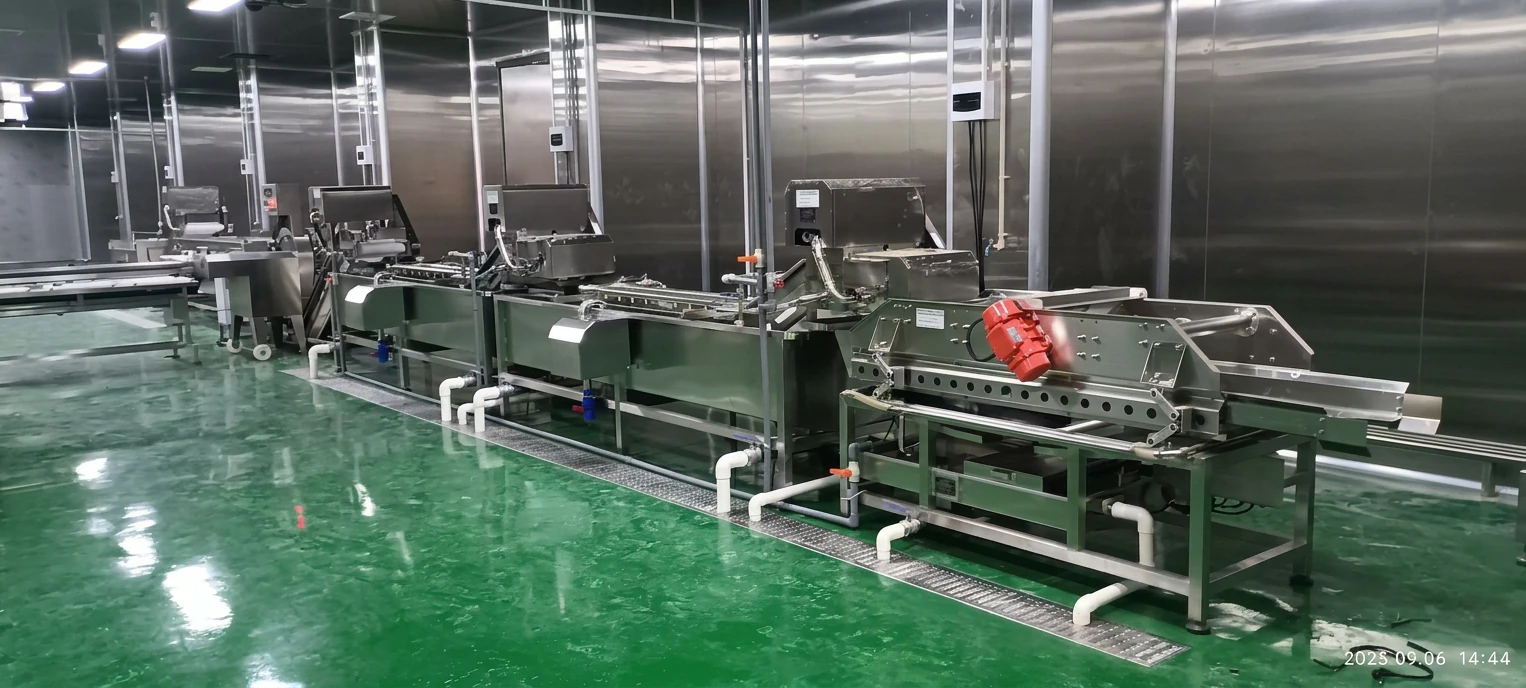
- Washed and cut vegetables for cooking
- Peeled and diced potatoes or carrots
- Shredded cabbage and sliced onions
- Prepared leafy greens
- Meat slicing or dicing before cooking
- Portioning and packing for branch distribution
For restaurant groups, central kitchen automation is also a brand consistency tool. The more preparation is standardized upstream, the easier it becomes for outlets to cook, assemble, and serve consistent food.
Fresh-Cut Vegetable Suppliers
Fresh-cut suppliers serve supermarkets, convenience stores, meal-kit brands, restaurant chains, and institutional buyers. Their products may include washed lettuce, shredded cabbage, salad mixes, sliced carrots, diced onions, cut peppers, or ready-to-cook vegetable packs.
This business model depends heavily on appearance, shelf life, hygiene, and packaging quality.
Automated washing, cutting, dewatering, and packing lines allow fresh-cut suppliers to improve product consistency and reduce manual exposure. The ability to control moisture and reduce waiting time is especially important for fresh-cut products.
For these businesses, automation is often directly connected to customer expansion. Supermarket and chain buyers usually require stable supply, documentation, and quality consistency before increasing order volume.
Food Manufacturing Plants
Food factories use pre-processing equipment to prepare ingredients for downstream manufacturing, such as frozen meals, sauces, soups, dumplings, bakery fillings, pickled products, canned food, and ready meals.
In this case, pre-processing must connect smoothly with later stages such as cooking, mixing, forming, freezing, or packaging.
For example:
- A frozen food factory may require uniform diced carrots, potatoes, onions, and meat.
- A sauce factory may require washed and cut chili, garlic, ginger, or onion.
- A ready-meal factory may require portioned vegetables and meat for cooking lines.
- A soup manufacturer may require consistent cubes or slices for even cooking.
Automated pre-processing improves upstream stability, which improves downstream efficiency.
Institutional Catering and Large-Scale Meal Service
Institutional catering businesses often serve factories, schools, hospitals, military facilities, mining camps, oil and gas camps, and office parks. They may need to prepare thousands or tens of thousands of meals per day.
Manual preparation becomes difficult when menus change daily and production windows are short. The business needs speed, safety, and predictable output.
Automated pre-processing helps catering companies reduce morning preparation pressure, improve hygiene control, and organize ingredient preparation before cooking. For large catering businesses, it can also support the shift from scattered kitchen preparation to centralized or semi-centralized ingredient supply.
This model is especially relevant in markets where labor is becoming harder to manage and food safety expectations are rising.
Agricultural Packhouses and Primary Processing Facilities
Packhouses and primary processing facilities are located closer to farms. Their role is often to clean, sort, grade, trim, and prepare produce before distribution.
For these businesses, automated pre-processing helps reduce post-harvest loss, improve product grading, and increase the value of agricultural products before they enter retail, foodservice, or industrial processing channels.
Instead of selling raw produce only, a packhouse may develop value-added products such as washed vegetables, peeled root crops, cut vegetables, or ready-to-cook packs.
This can improve margins and create stronger relationships with downstream buyers.
How to Know Whether Your Business Is Ready for Automation
Not every food business needs a complete automated line immediately. The right automation path depends on volume, product mix, labor cost, quality requirements, and growth plan.
Your business may be ready for automated food pre-processing if you recognize several of these signs:
|
Business Symptom |
What It Usually Means |
|---|---|
|
Daily preparation volume exceeds 500 kg to 1 ton |
Manual preparation is likely becoming inefficient |
|
Cutting size varies between workers or shifts |
Product quality depends too much on individual skill |
|
You need to hire more workers every time orders increase |
Growth is tied directly to labor availability |
|
Product waits in crates between steps |
The workflow has transfer and waiting-time bottlenecks |
|
Floor space is crowded with tables, bins, and workers |
Manual layout is limiting capacity |
|
Customer audits are becoming more demanding |
Process documentation and hygiene control need improvement |
|
Fresh-cut product has unstable shelf life |
Washing, dewatering, packaging, or cold-chain control may be weak |
|
Supervisors spend too much time correcting mistakes |
The process is not standardized enough |
|
Large buyers ask for consistent specifications |
Manual output may not support B2B scale |
A useful rule is this: if your business is already spending significant management energy on labor scheduling, cutting consistency, washing quality, hygiene supervision, and production delays, automation is no longer only a cost-saving idea. It is a production stability requirement.
How to Evaluate Automated Food Pre-Processing Equipment
Buying food pre-processing equipment should not begin with a machine list. It should begin with a production question:
What raw materials do you process, what finished specifications do you need, and what capacity must the system achieve per hour or per day?
A reliable supplier should ask detailed questions before recommending equipment.
Important evaluation points include:
1. Raw Material Type
Leafy vegetables, root vegetables, fruits, herbs, mushrooms, meat, and seafood behave differently. The washing force, cutting method, belt design, water flow, and dewatering method must match the material.
For example, leafy greens need gentle handling. Root vegetables may need stronger washing and peeling. Tomatoes and soft fruits require low-damage transfer. Meat requires separate hygiene zoning and equipment design.
2. Finished Product Specification
The final form matters:
- Slices
- Cubes
- Strips
- Shreds
- Julienne cuts
- Whole washed products
- Peeled whole products
- Ready-to-cook mixed packs
- Ready-to-eat salad ingredients
Cutting size, thickness, and shape determine the machine configuration.
3. Capacity Requirement
Capacity should be calculated by realistic production planning, not only machine maximum output. The supplier needs to understand hourly output, daily working hours, batch changes, cleaning time, feeding speed, and downstream packing capacity.
A machine may have a high theoretical capacity, but the full line must be balanced. If the washer, cutter, dewatering machine, and packaging area do not match, the bottleneck remains.
4. Hygiene and Cleaning Design
Food equipment must be easy to clean. Sanitation design is especially important for fresh-cut, RTE, RTC, meat, and central kitchen applications.
Look for:
- Stainless steel food-contact surfaces
- Smooth structure
- Easy access for cleaning
- Removable belts or quick-release parts where possible
- Reduced dead corners
- Drainage design
- Compatibility with facility cleaning procedures
Equipment that is difficult to clean may reduce labor during production but increase sanitation burden after production.
5. Factory Layout and Process Flow
The best equipment can still fail if the layout is wrong.
A proper layout should consider:
- Raw material receiving
- Dirty zone and clean zone separation
- Personnel flow
- Product flow
- Waste flow
- Drainage
- Cold storage location
- Packaging area
- Equipment maintenance access
- Future expansion space
For central kitchens and fresh-cut facilities, layout design is often as important as equipment selection.
6. After-Sales Support and Spare Parts
Food production equipment must operate continuously. Downtime directly affects orders, delivery, and customer trust.
Before buying, evaluate whether the supplier can provide:
- Installation guidance
- Operator training
- Technical documentation
- Spare parts support
- Remote troubleshooting
- Video support
- Process adjustment advice
- Long-term equipment upgrade options
Automation is not a one-time purchase. It is a production capability that needs support.
Manual Preparation vs Automated Food Pre-Processing
|
Factor |
Manual Food Preparation |
Automated Food Pre-Processing |
|---|---|---|
|
Production capacity |
Limited by number and skill of workers |
Scalable through equipment capacity and line design |
|
Cutting consistency |
Varies by worker, fatigue, and training |
Controlled by blades, speed, and machine settings |
|
Labor dependency |
High |
Lower; operators supervise machines |
|
Food safety control |
More hand contact and transfer points |
Fewer contact points and more controlled flow |
|
Yield |
Often affected by over-trimming and damage |
More stable, depending on equipment and material |
|
Shelf life control |
Often weak due to moisture and waiting time |
Better support through washing, dewatering, and cold-chain connection |
|
Floor space |
Many tables, bins, and workers |
More compact and organized line layout |
|
Management burden |
High supervision and training pressure |
More process-based management |
|
Audit readiness |
Harder to document consistently |
Easier to standardize and verify |
|
Growth model |
Add more people |
Improve system capacity |
This comparison does not mean manual work has no place. Manual inspection, trimming, quality control, and product-specific handling may still be necessary. The point is that repetitive, high-volume, hygiene-sensitive preparation should not depend entirely on manual labor once the business reaches industrial scale.
The ROI Logic: What Automation Actually Saves
Many buyers evaluate food processing equipment by purchase price. That is understandable, but incomplete.
The real ROI of automated food pre-processing comes from several areas:
Labor Reduction
Automation reduces the number of workers required for repetitive washing, cutting, peeling, transferring, and dewatering tasks. Even when wages are low, the hidden cost of labor includes recruitment, training, supervision, turnover, errors, injuries, and absence.
Yield Improvement
Better peeling, cutting, and handling can reduce raw material waste. For high-volume operations, even a few percentage points of yield improvement can create significant annual savings.
Higher Output
Automation allows the business to process more volume within the same working hours. This helps accept larger orders without expanding labor proportionally.
Lower Rework and Rejection
Consistent cutting and cleaner processing reduce customer complaints, internal rework, and rejected batches.
Better Shelf Life
Improved washing, dewatering, and process speed can help reduce spoilage, especially when connected with proper packaging and cold-chain control.
Stronger Buyer Confidence
Large B2B buyers prefer suppliers with stable production systems. Better equipment and process control can support audits, long-term contracts, and higher-value customer relationships.
More Predictable Management
When production depends less on manual skill, the business becomes easier to manage. This may be one of the most underestimated benefits of automation.
A basic ROI calculation should include:
Annual Savings = Labor Savings + Yield Recovery + Reduced Rejection + Reduced Spoilage + Additional Gross Profit from Higher Capacity – Additional Maintenance and Utility Costs
The equipment payback period depends on product value, daily volume, labor cost, and line configuration. For some businesses, the first machine may pay back quickly. For others, the larger benefit comes when several stages are integrated into one continuous line.
Why Automated Food Pre-Processing Is the Future of Food Businesses
The future of food preparation is not simply “more machines.” It is more controlled, more traceable, more efficient, and more standardized production.
Several industry forces are pushing food businesses in this direction.
Foodservice and ready-to-eat consumption continue to expand in many markets. Institutional foodservice, chain restaurants, supermarket fresh-cut products, central kitchens, and meal delivery all depend on stable upstream preparation. USDA ERS data shows how significant foodservice expenditure has become in a mature market, with foodservice outlet sales reaching USD 1.52 trillion in 2024.
Food safety expectations are also rising. Global agencies continue to emphasize the economic and health burden of unsafe food, while large buyers increasingly require documented supplier control.
Food loss and waste reduction is another driver. Fruits and vegetables are among the most loss-prone food categories, making better handling, washing, cutting, and cold-chain preparation commercially and environmentally important.
Labor is becoming less predictable. Many food businesses struggle to recruit and retain workers for repetitive, wet, cold, or physically demanding preparation jobs. Even in lower-wage markets, labor availability and training consistency can limit growth.
Customer expectations are changing as well. Buyers want reliable size, appearance, safety, packaging, and delivery. They do not want excuses caused by worker shortages or inconsistent preparation.
Automated food pre-processing directly responds to these pressures.
It helps businesses build a production system that can support growth instead of constantly fighting against it.
How TEEMYEAH Helps Food Businesses Build Automated Pre-Processing Systems
TEEMYEAH designs and manufactures food pre-processing equipment and integrated production solutions for central kitchens, fresh-cut vegetable suppliers, catering companies, food factories, agricultural processing facilities, and chain foodservice operations.
Instead of recommending equipment only by machine model, TEEMYEAH focuses on the complete preparation workflow:
- What raw materials do you process?
- What finished forms and cutting sizes do you need?
- What is your hourly and daily capacity target?
- Are your products RTC, RTE, or ingredients for further cooking?
- What are your hygiene and food safety requirements?
- How much floor space do you have?
- How many workers are currently involved?
- Which stage is the current bottleneck?
- Do you need a single machine, a modular system, or a full turnkey line?
Based on these requirements, TEEMYEAH can help configure washing equipment, peeling equipment, vegetable cutting machines, meat cutting machines, dewatering systems, conveyors, sorting tables, sterilization or disinfection modules, and packaging connections into a practical production flow.
For growing businesses, the goal is not to over-invest. The goal is to automate the right stage at the right time and leave room for future expansion.
Some clients begin with one high-impact machine, such as a vegetable cutter or washing machine. Others need a complete line from raw material receiving to finished ingredient packaging. For larger projects, layout design and process planning become essential to avoid bottlenecks, cross-contamination risk, and inefficient material flow.
The best automation solution is not the most expensive one. It is the one that matches your product, capacity, labor structure, hygiene standard, and growth plan.
Conclusion: Automation Is Not Replacing Food Businesses — It Is Helping Them Scale
Automated food pre-processing is no longer a luxury for large factories only. It is becoming the practical foundation for food businesses that want to grow beyond manual capacity.
If your business is still relying on workers to wash, peel, cut, transfer, dewater, and pack large volumes of ingredients by hand, your real limitation may not be market demand. It may be the preparation system itself.
Manual preparation can support early growth. But once volume, quality requirements, food safety expectations, and buyer audits increase, the manual model becomes fragile.
Automated pre-processing helps transform food preparation from a labor-heavy task into a controlled production process. It improves consistency, reduces labor dependency, supports food safety, improves yield, strengthens shelf-life control, and makes business growth more predictable.
For central kitchens, fresh-cut suppliers, catering companies, supermarket suppliers, and food factories, this is the direction the industry is moving.
The future of food preparation is not more people standing at more tables with more knives.
The future is cleaner flow, smarter equipment, better process control, and scalable production.
Call to Action
Are you planning to upgrade from manual food preparation to automated food pre-processing?
TEEMYEAH can help you evaluate your current workflow, identify your production bottlenecks, and design a suitable equipment configuration based on your raw materials, cutting requirements, capacity target, and factory layout.
Whether you need one machine or a complete washing, cutting, dewatering, and packaging line, our team can help you build a practical automation solution for your business.
Contact TEEMYEAH to discuss your food pre-processing project.
Frequently Asked Questions
What is automated food pre-processing?
Automated food pre-processing is the use of industrial equipment and integrated production lines to prepare raw ingredients before cooking, packaging, or further manufacturing. It typically includes sorting, washing, peeling, cutting, sterilization or disinfection where required, dewatering, weighing, and packaging.
What is the difference between food pre-processing and food processing?
Food pre-processing refers to upstream preparation steps such as washing, peeling, cutting, and dewatering raw ingredients. Food processing usually refers to downstream transformation, such as cooking, mixing, freezing, canning, frying, baking, or producing finished food products.
Which businesses need automated food pre-processing equipment?
Automated food pre-processing is suitable for central kitchens, fresh-cut vegetable suppliers, food factories, restaurant chains, supermarket suppliers, institutional catering companies, agricultural packhouses, cloud kitchens, and ready-to-cook food producers.
When should a business move from manual preparation to automation?
A business should consider automation when daily preparation volume becomes difficult to manage manually, labor cost keeps rising, cutting quality is inconsistent, product waiting time is long, food safety audits become stricter, or larger buyers require more stable supply and documentation.
Can small and medium-sized food businesses use automation?
Yes. Automation does not always require a full production line. Smaller businesses can begin with one or two key machines, such as a vegetable cutter, washing machine, peeler, or dewatering machine, then expand into a more integrated line as volume grows.
Does automation completely remove workers?
No. Automation reduces repetitive manual labor, but people are still needed for inspection, feeding, operation, quality control, cleaning, maintenance, and production management. The main change is that workers shift from manual preparation to process supervision.
What equipment is used in a vegetable pre-processing line?
A typical vegetable pre-processing line may include an inspection conveyor, bubble washing machine, spray washing machine, peeling machine, vegetable cutting machine, disinfection system, centrifugal dewatering machine, air drying line, weighing system, packaging machine, and connecting conveyors.
Can one production line process all types of vegetables?
Not always. Different vegetables require different handling methods. Leafy greens need gentle washing and dewatering. Root vegetables may require stronger washing and peeling. Soft fruits need low-damage transfer. A flexible line can handle multiple products, but the design must be based on actual raw materials and finished specifications.
Is ozone safe for food processing?
Ozone is permitted under U.S. federal regulation for use in the treatment, storage, and processing of foods, including meat and poultry, under specified conditions. Its use must be properly controlled and validated according to the product, process, concentration, contact time, and local regulatory requirements.
What is the biggest mistake when buying food pre-processing equipment?
The biggest mistake is buying individual machines without considering the whole production flow. A cutter, washer, or peeler may work well by itself, but if feeding, transfer, dewatering, packaging, and cleaning are not planned together, the bottleneck may simply move to another stage.
How do I choose the right automated food pre-processing solution?
Start with your raw materials, finished product specifications, hourly capacity, daily production plan, hygiene requirements, available floor space, and labor structure. A reliable supplier should evaluate these factors before recommending machines or line layouts.
Sources
- FAO, The State of Food and Agriculture 2019 — food loss and waste overview.
- FAO Statistics Highlight, 2025 — fruit and vegetable loss rate data.
- World Bank, Food-borne Illnesses Cost US$110 Billion Per Year in Low- and Middle-Income Countries.
- WHO, Food Safety Fact Sheet.
- USDA ERS, Food Service Industry — Market Segments.
- eCFR, 21 CFR §173.368 — Ozone use in food treatment, storage, and processing.
- Codex Alimentarius / FAO, General Principles of Food Hygiene CXC 1-1969.
- USDA FSIS, Danger Zone 40°F–140°F food safety guidance.

