








Root Vegetable Processing Line
Reduce manual handling, control peeling loss and produce more consistent washed, peeled or precision-cut root vegetables through an integrated process configured around your crop, finished specification, output target and factory layout.
Raw Materials
Potato · Carrot · Sweet Potato · Taro · Cassava
Core Processes
Pre-Wash · Peel · Sort · Cut · Treat · Dewater
Configurations
Standalone Cell · Integrated Line · High-Volume System
Root vegetables the line is built for
Root vegetables differ in shape, size, soil load, skin condition, flesh firmness and finished-product requirements. The line must be configured around these differences rather than treating every crop as the same raw material.
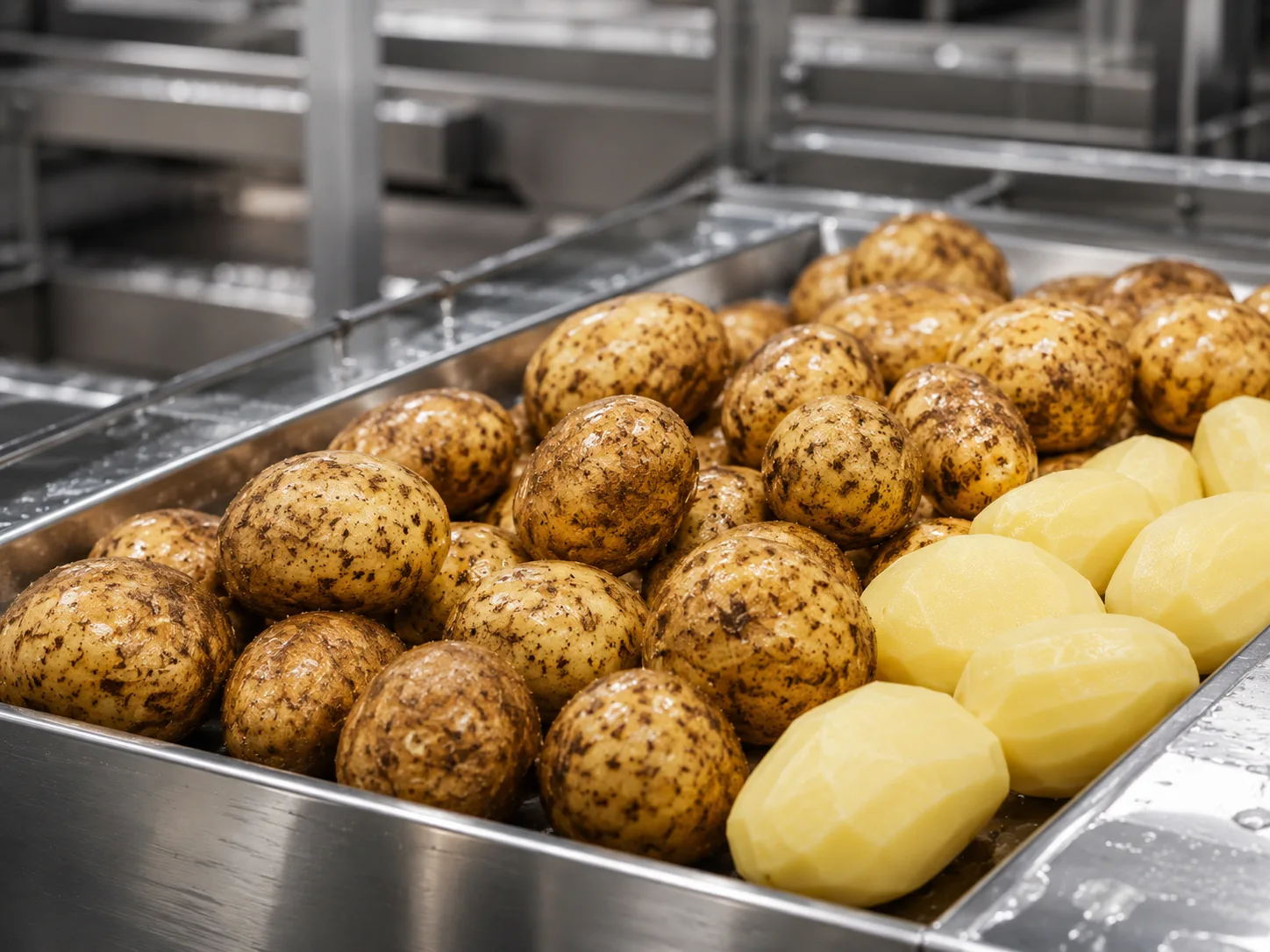
Potato
Fries · Dices · Wedges · Peeled Whole
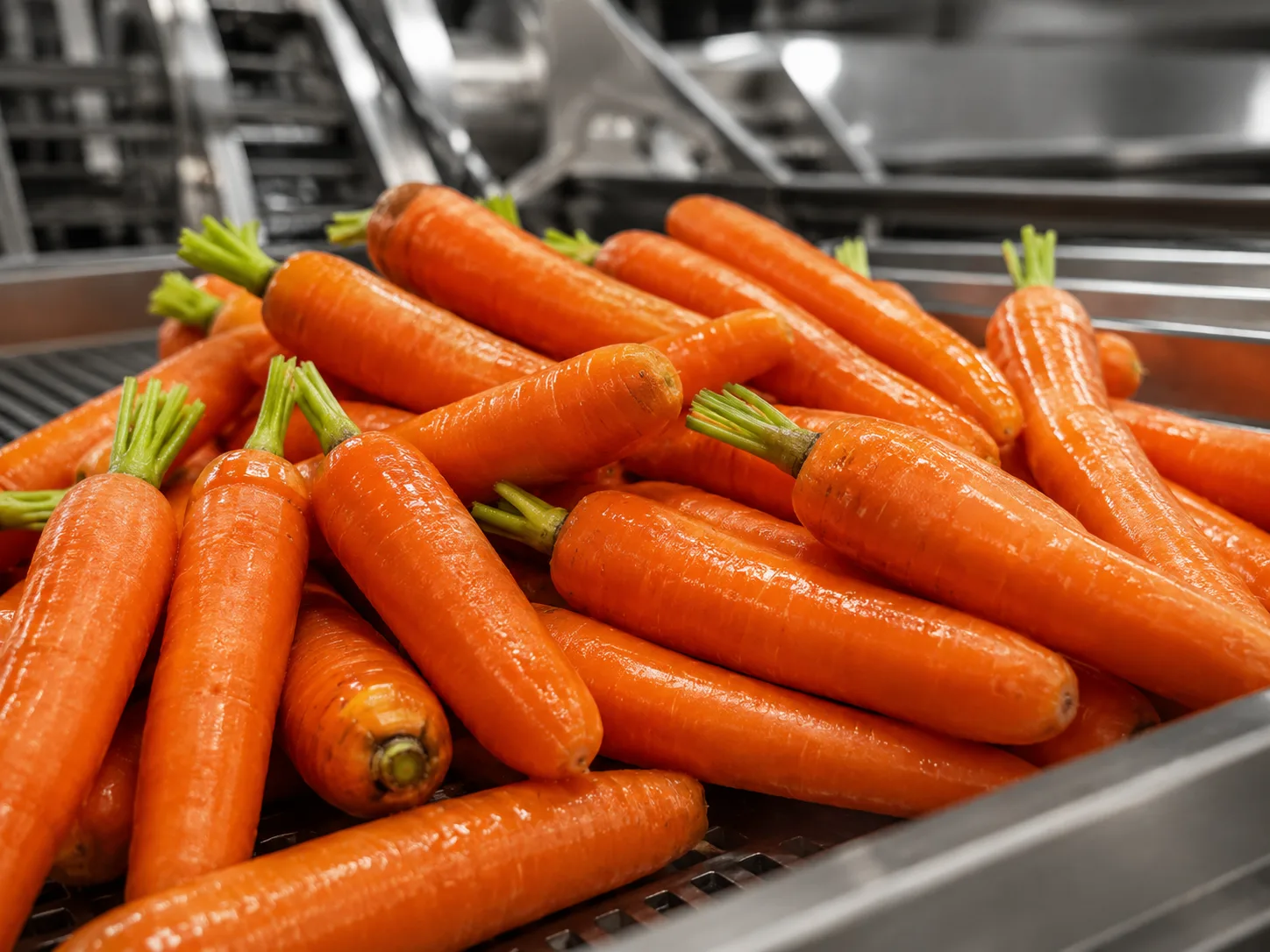
Carrot
Dices · Slices · Julienne · Meal Preparation
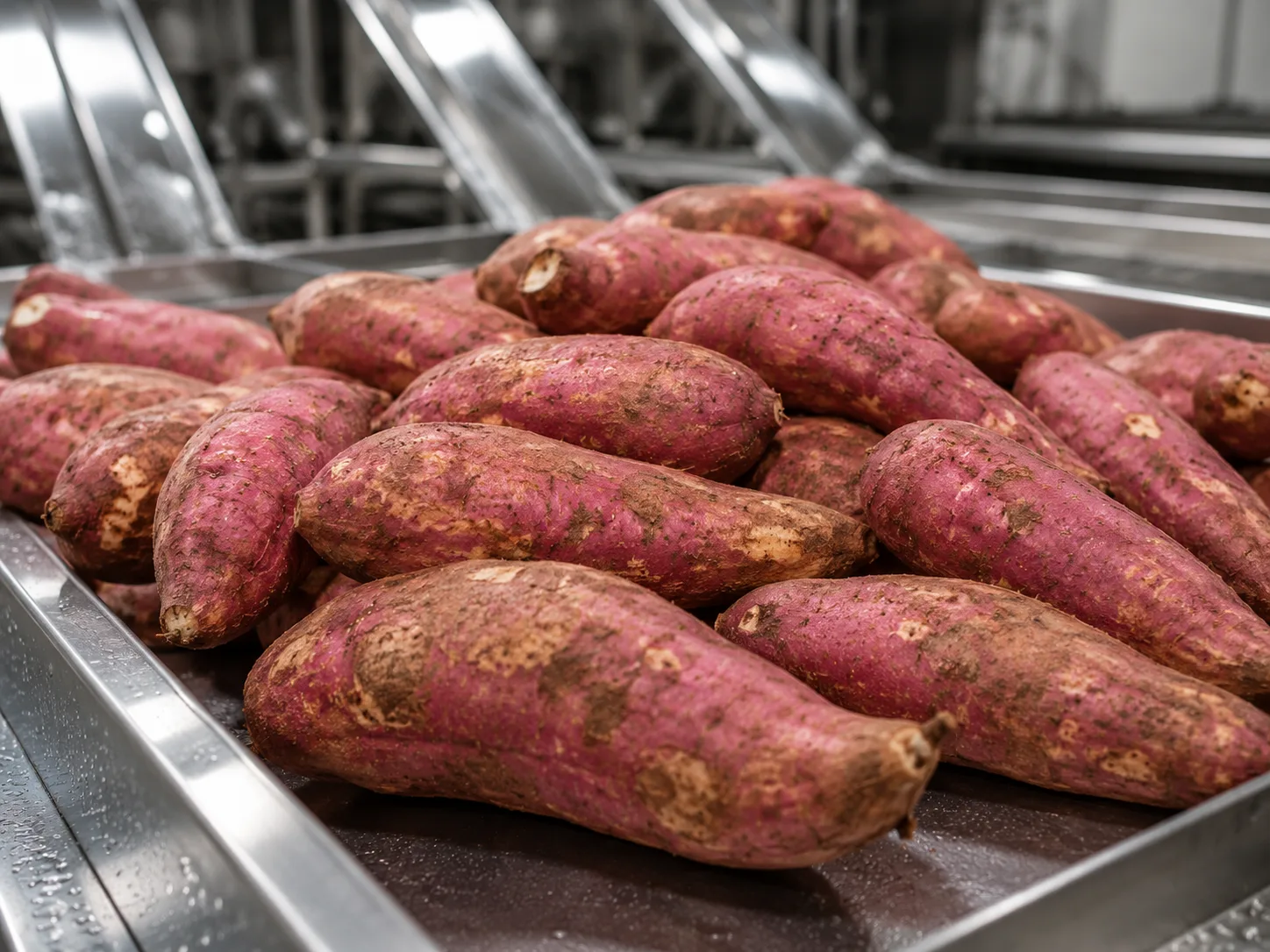
Sweet Potato
Cubes · Fries · Slices · Frozen Ingredients
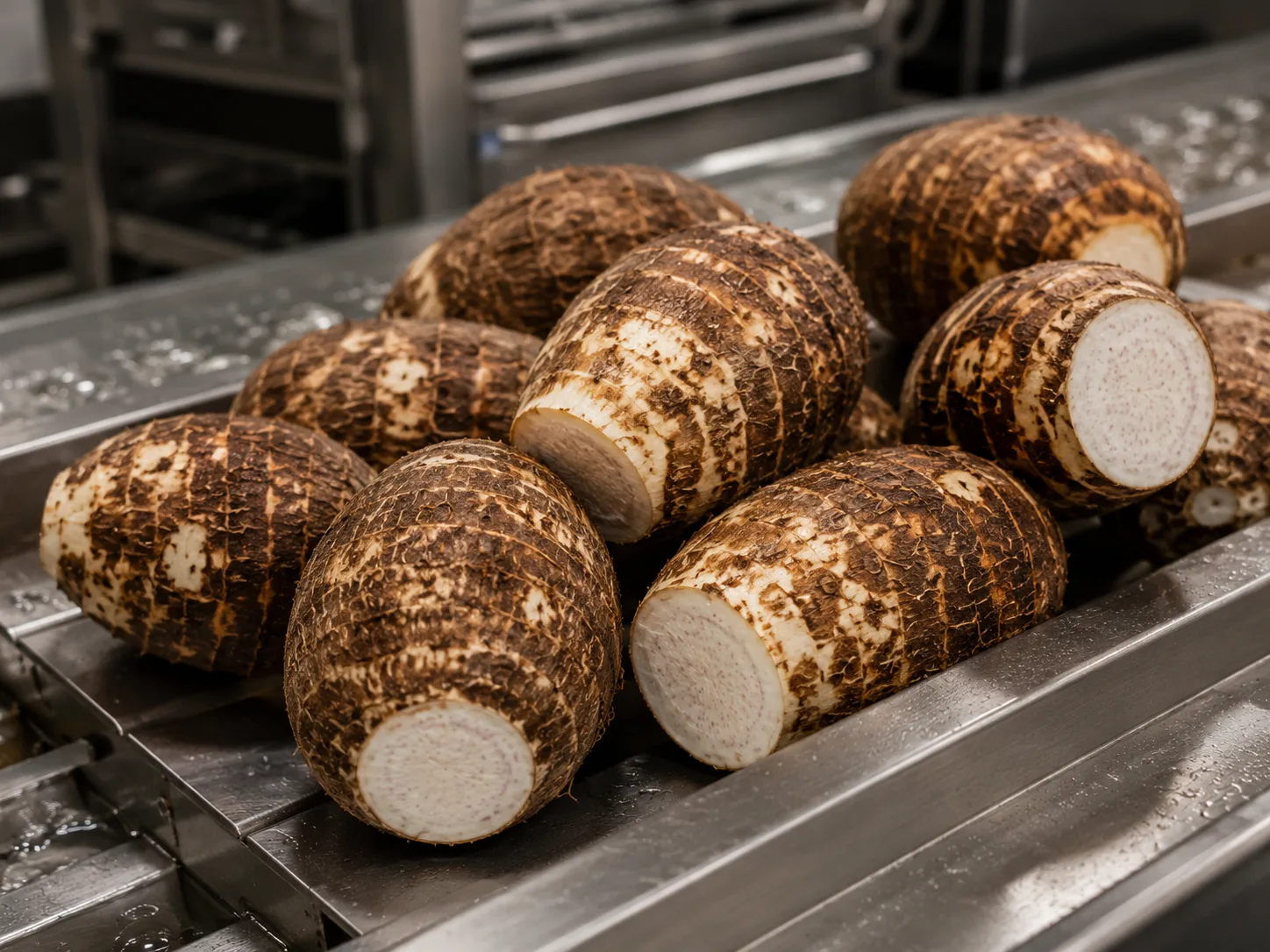
Taro
Peeled Whole · Cubes · Slices · Dessert Ingredients
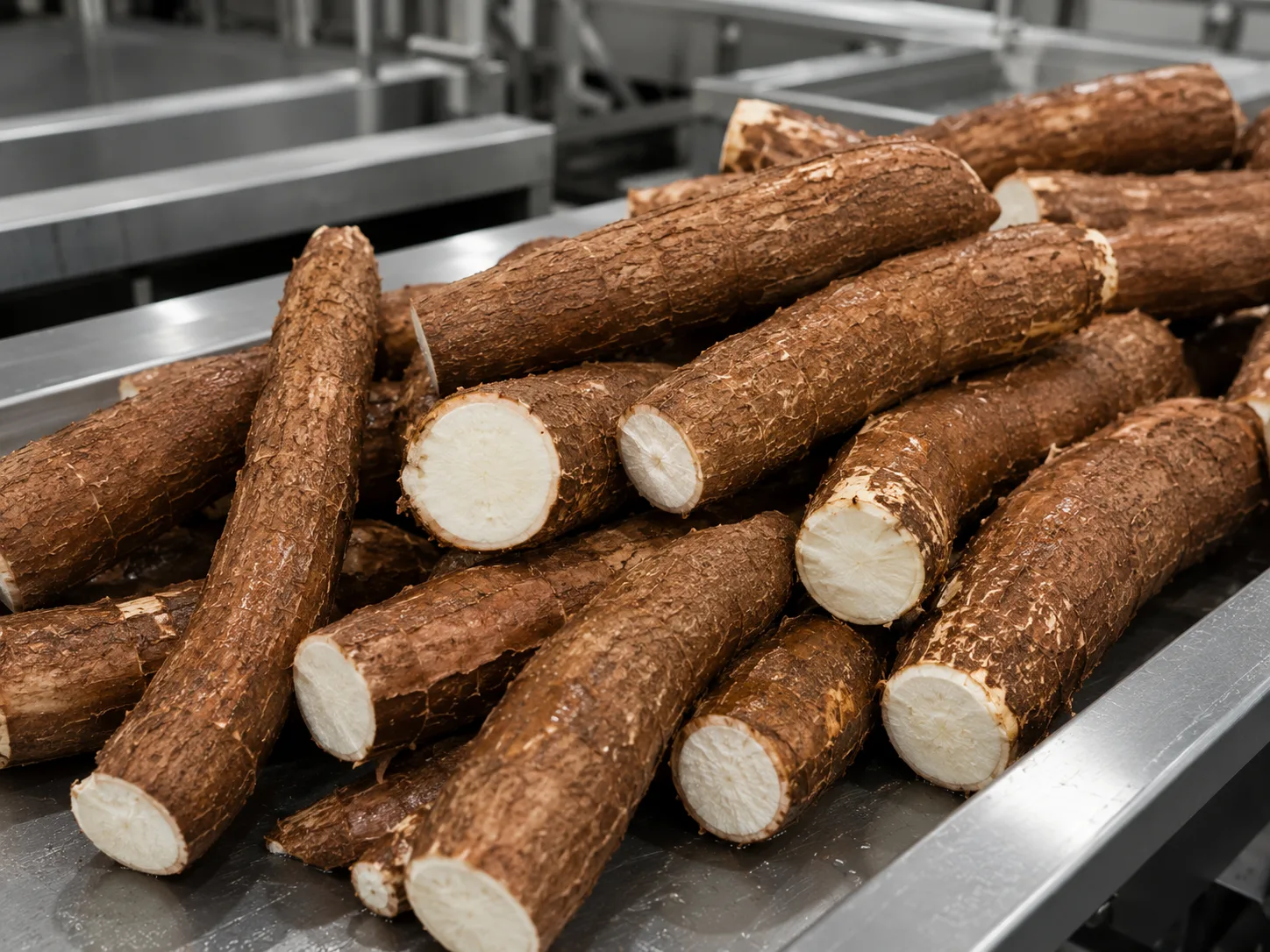
Cassava
Peeled Sections · Chunks · Chips · Further Processing
A complete root vegetable processing system
Every stage is designed to protect usable product yield, finished-cut consistency and practical output. Root crops arrive with soil, sand, stones, fibres and irregular skins, while variety, maturity, storage period and crop dimensions all change how washing, peeling and cutting equipment performs.
- Remove heavy contaminants before peeling and cutting
- Define the required surface finish before selecting the peeling method
- Match feeding and cutting equipment to crop dimensions
- Coordinate post-cut washing, treatment, dewatering and packing
- Calculate complete-line output from the bottleneck process
Process-first note: The process should begin with the incoming crop and required finished product. Equipment selection comes after those two variables are defined.
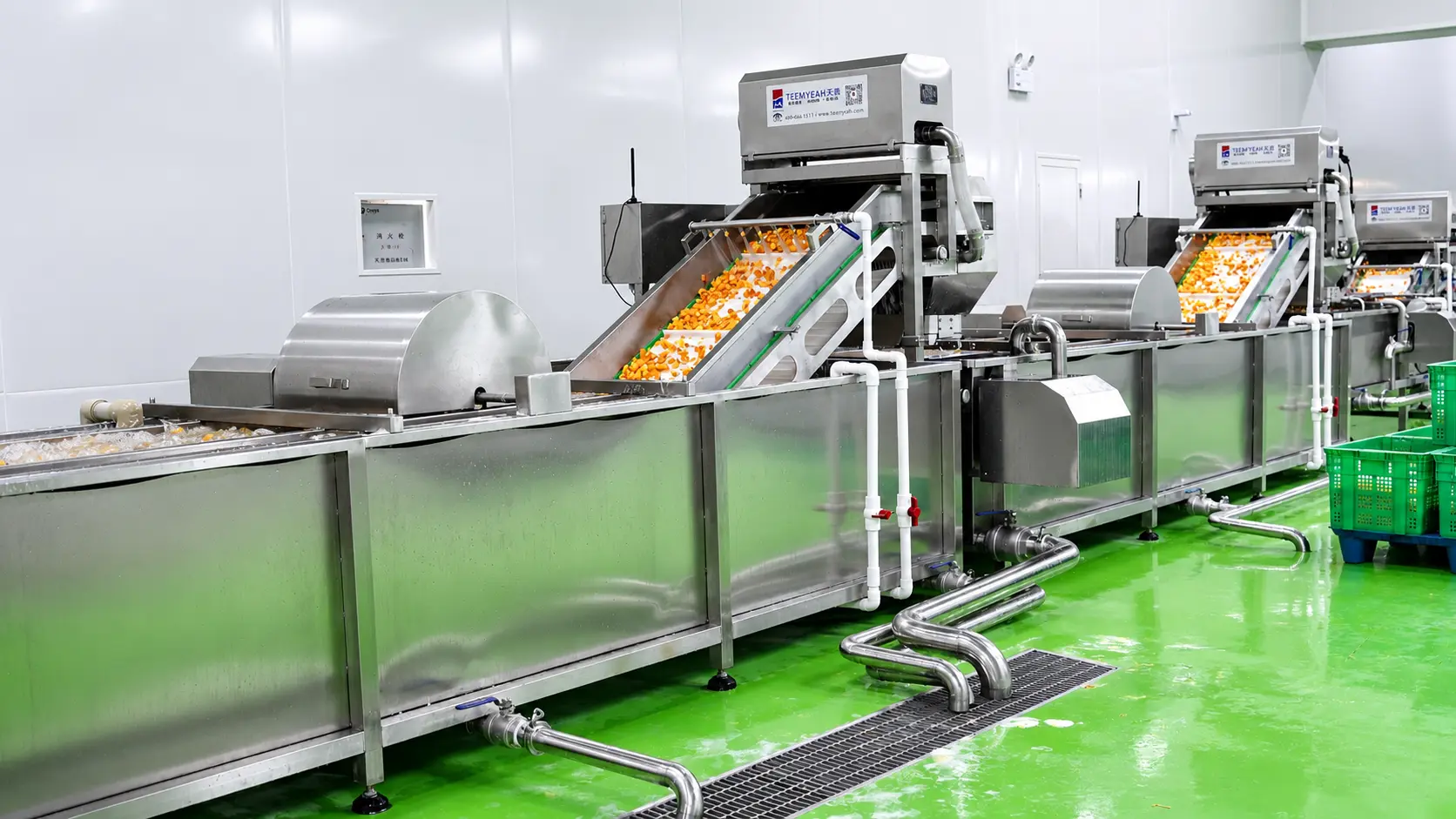
What this line changes on your floor
The engineering below is designed to improve six operating outcomes that influence labor, usable yield, finished-product consistency, food-safety preparation, scalability and long-term support requirements.
Reduce labor in washing, peeling and cutting
Automating repetitive preparation stages reduces dependence on manual staffing and helps maintain more stable output across shifts.
Protect more usable product
Controlled washing, peeling and trimming can reduce unnecessary flesh removal and rework. Actual usable yield must be measured using the customer's crop and agreed surface finish.
Produce repeatable finished cuts
Stable feeding, correct cutting equipment and controlled downstream handling help each batch meet the agreed dice, slice, baton, fry or section specification.
Support food-safety and buyer-audit preparation
Hygienic construction, controlled treatment and documentable process settings can support the customer's food-safety program. Equipment alone does not guarantee certification, regulatory approval or audit acceptance.
Scale volume without matching headcount growth
A connected production line can increase capacity while reducing intermediate handling, helping processors expand output without increasing labor at the same rate.
Project and after-sales support you can reach
Crop testing, line configuration, layout coordination, commissioning, training and overseas after-sales support reduce implementation and start-up risk.
Raw-material inputs that shape the line
A useful configuration begins with the crop that actually arrives at the factory—not a nominal crop name alone.
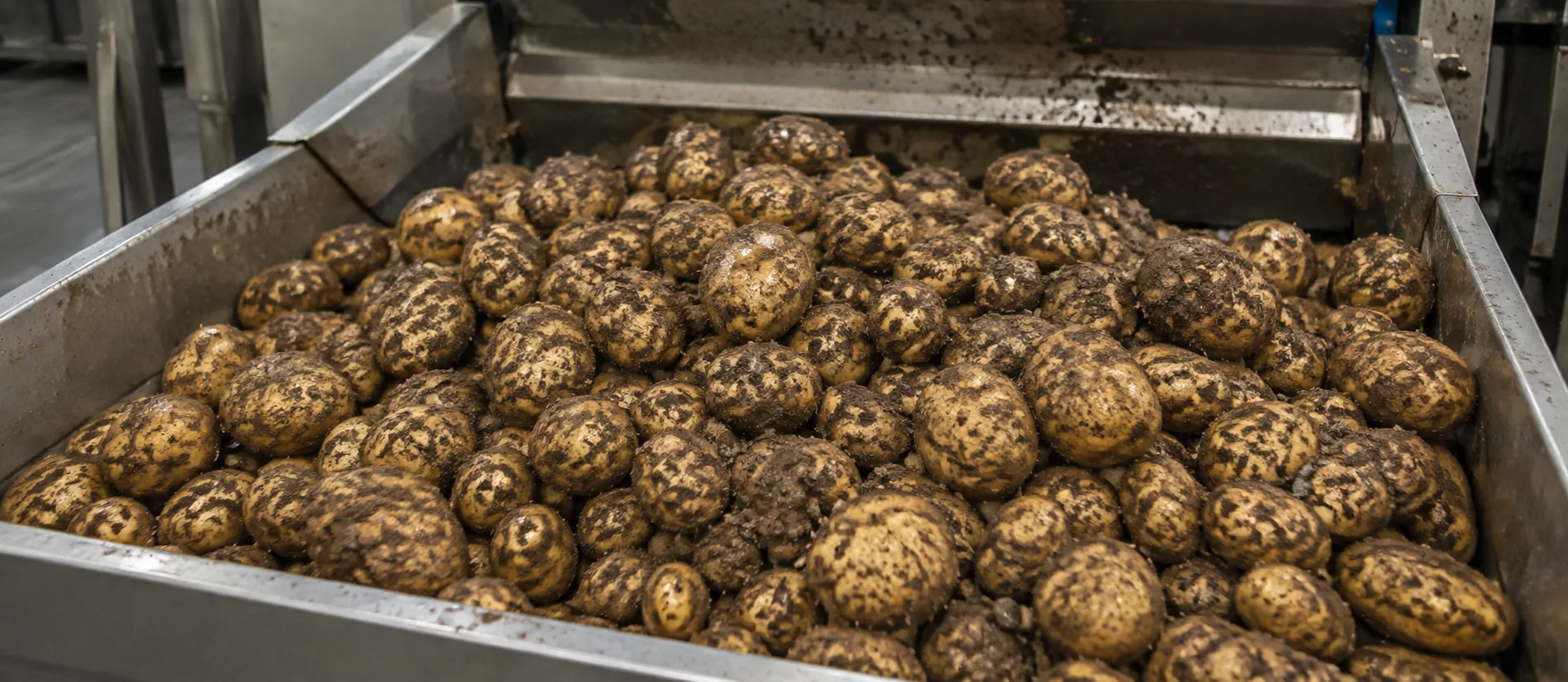
Soil and Stone Load
Heavy mud, sand, stones and root fibres determine the pre-wash, separation, screening and drainage design needed before downstream equipment.
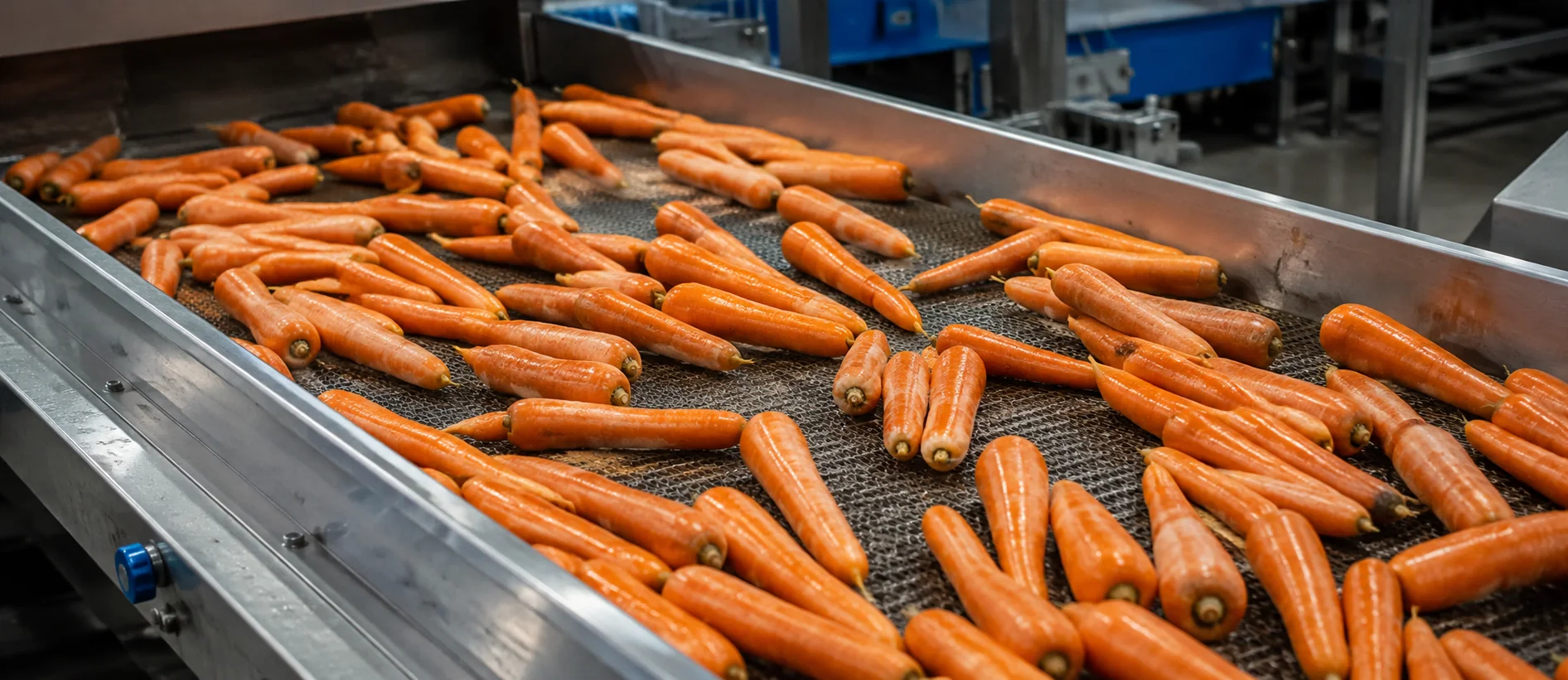
Shape and Size Variation
Length, diameter, curvature and mixed grading influence feeding stability, peeling contact, orientation and the cutting method.
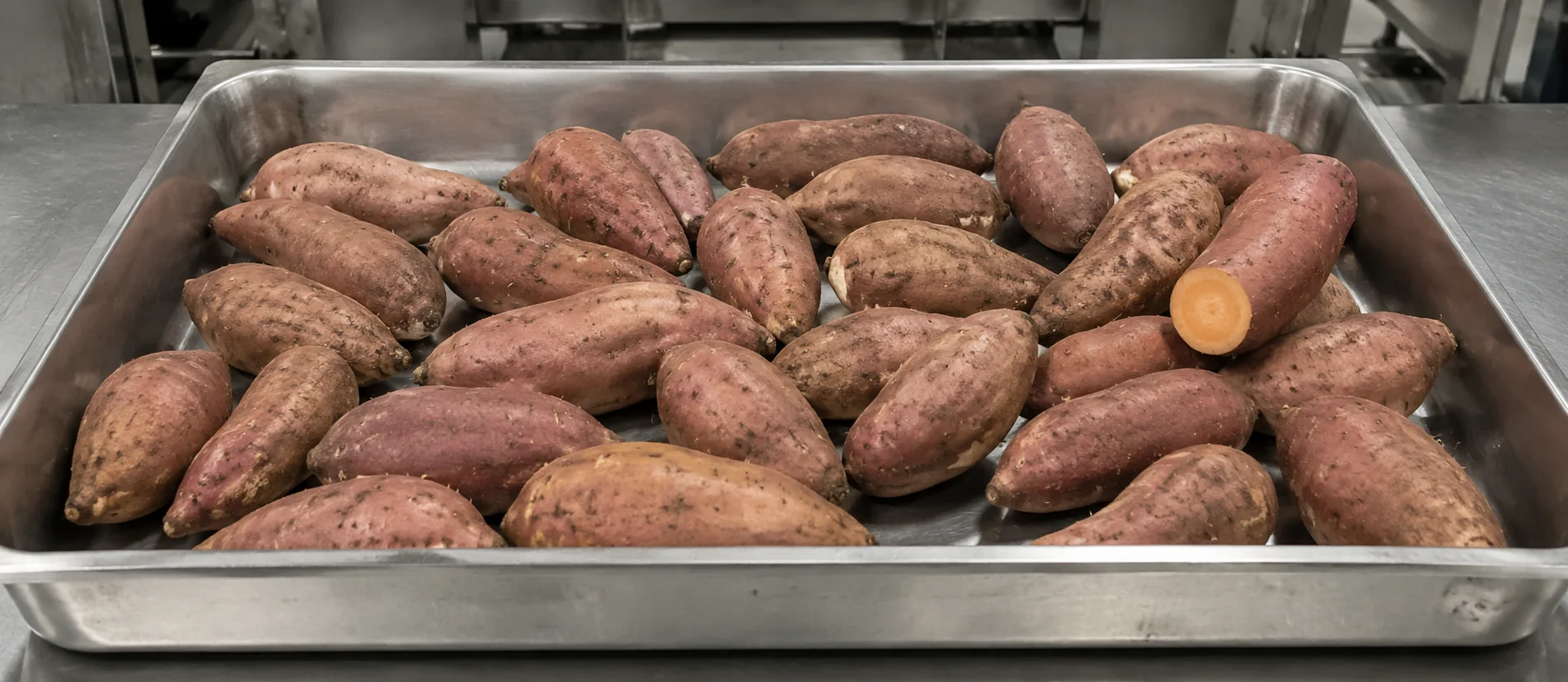
Skin and Flesh Condition
Variety, maturity, storage period, skin thickness and flesh firmness affect cleaning pressure, residence time and peeling loss.
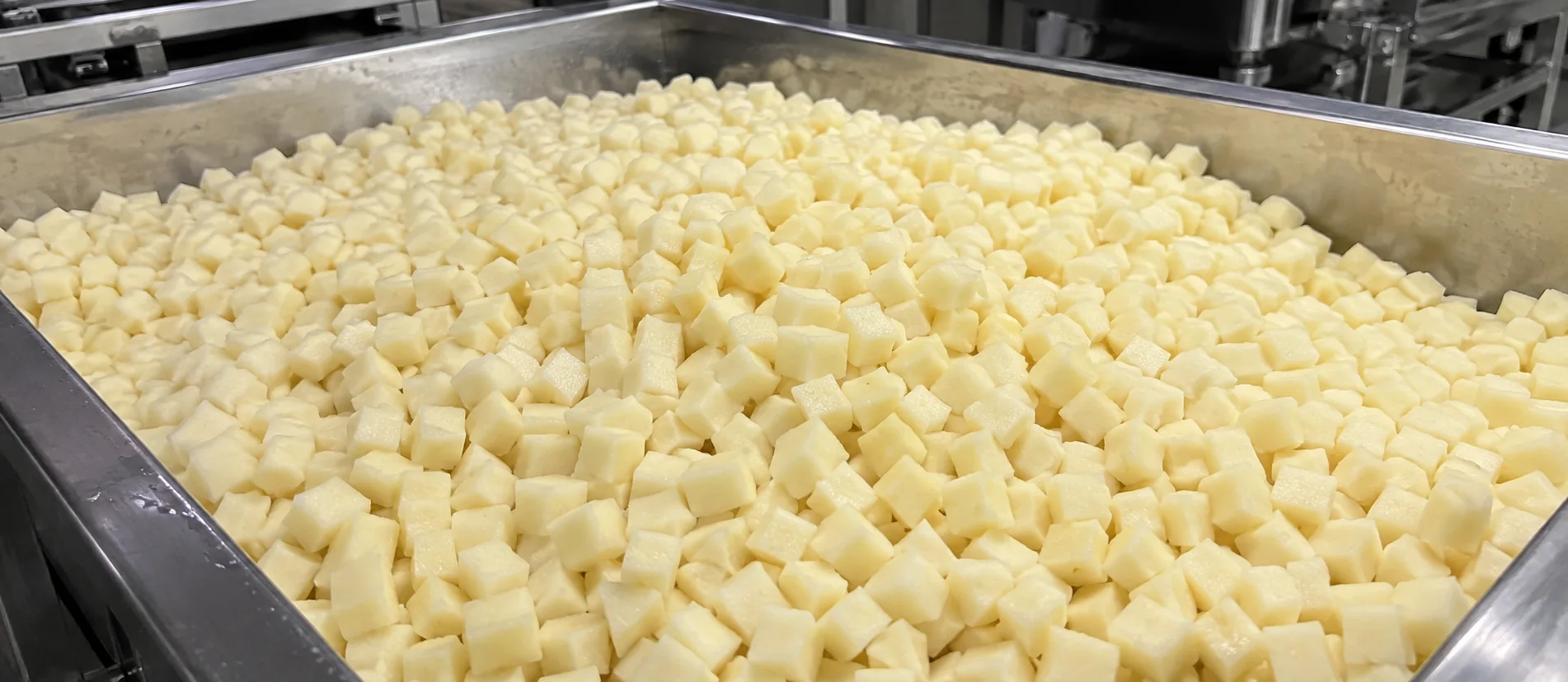
Finished Product Specification
Washed whole, peeled whole, dice, slice, baton, fry or section formats set the required process route and downstream controls.
The finished product sets the process route
The same incoming crop can require a very different sequence depending on whether it leaves the line clean, peeled or precision-cut.
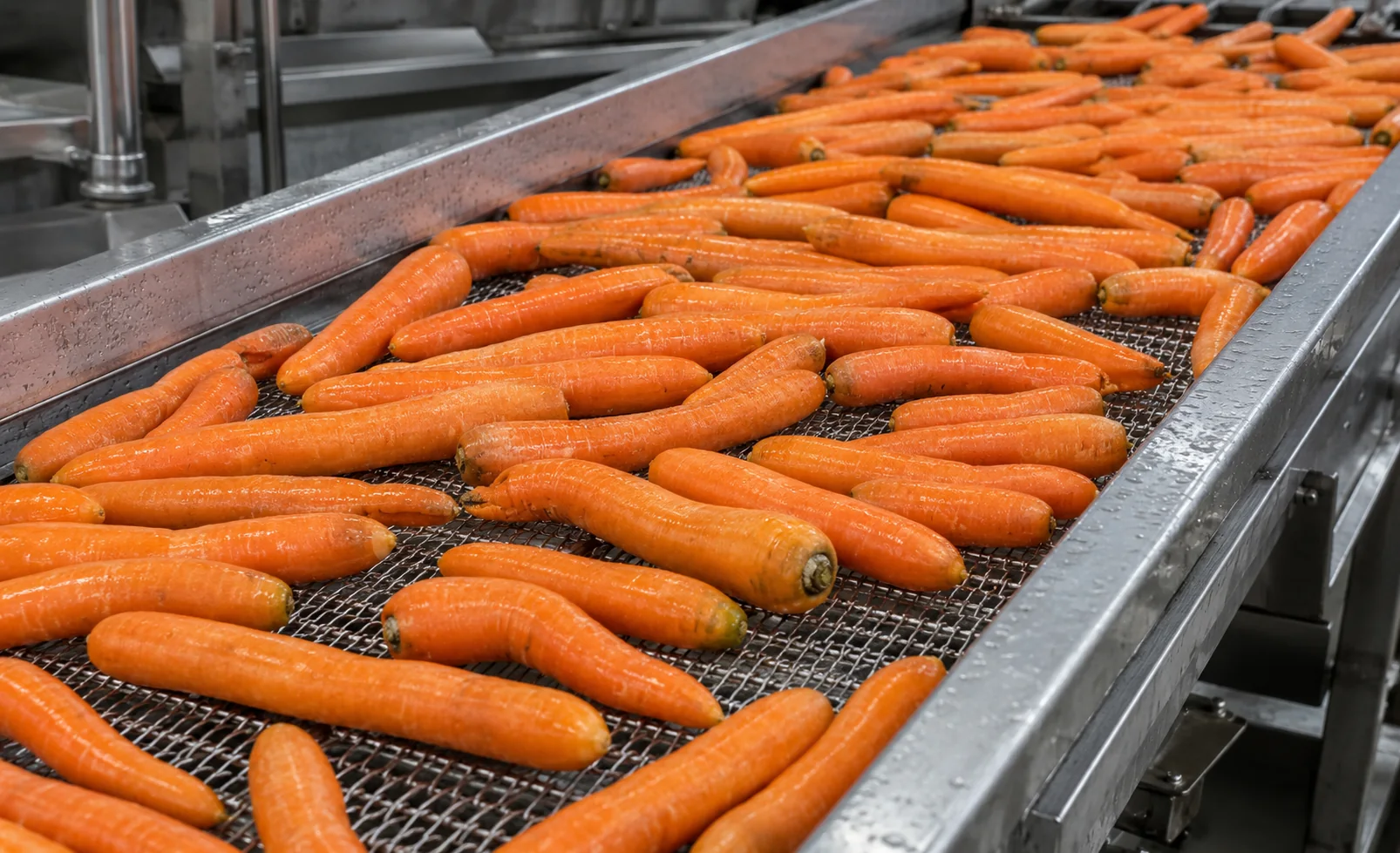
Clean Whole Roots
Remove soil, stones and field debris while retaining the natural skin where the finished product does not require peeling.
Design priority: contaminant removal without unnecessary surface damage.
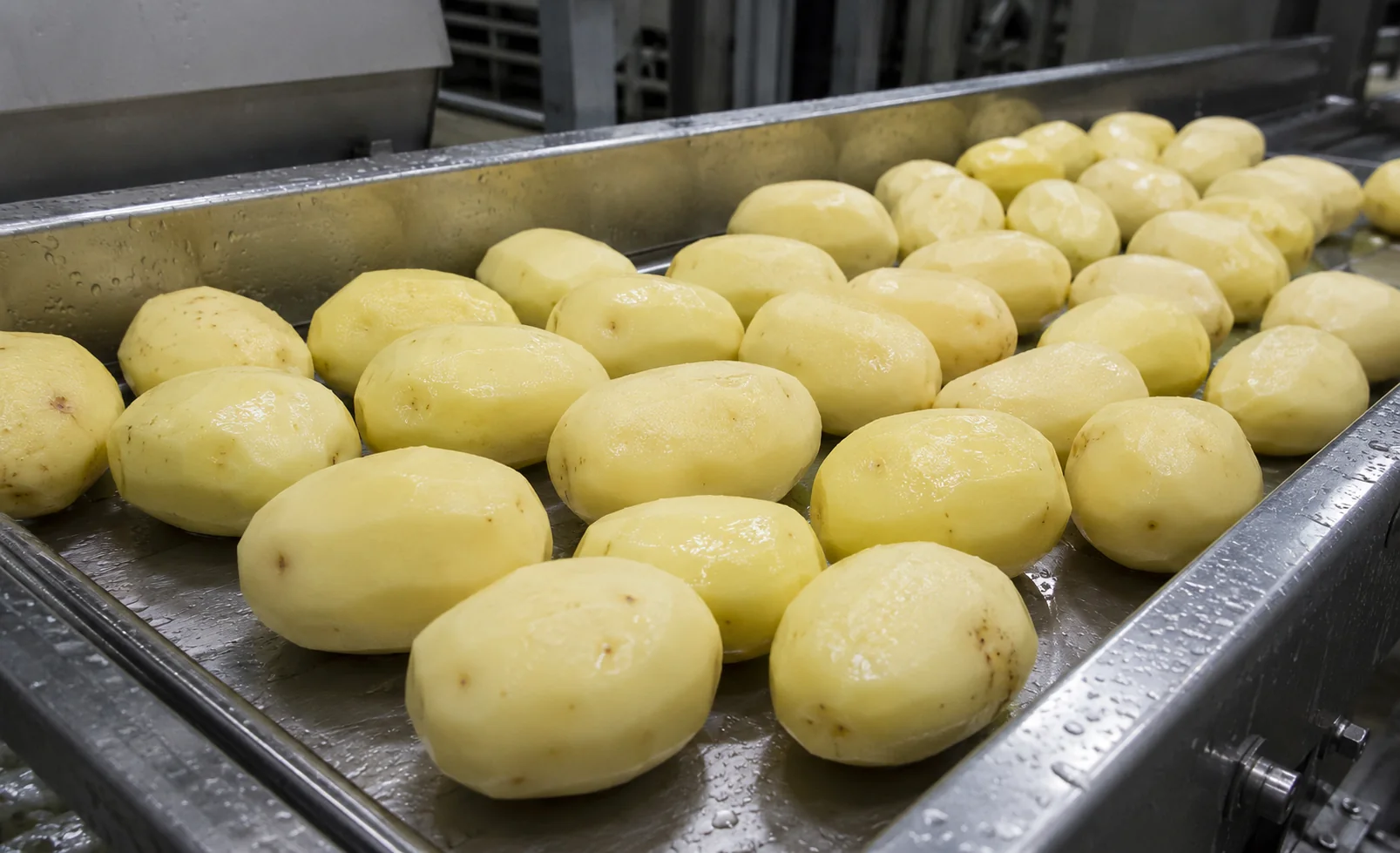
Washed and Peeled Ingredients
Combine controlled washing, brush or abrasive peeling, inspection and final rinsing for whole roots ready for kitchen or factory use.
Design priority: achieve the agreed surface finish while controlling usable-product loss.
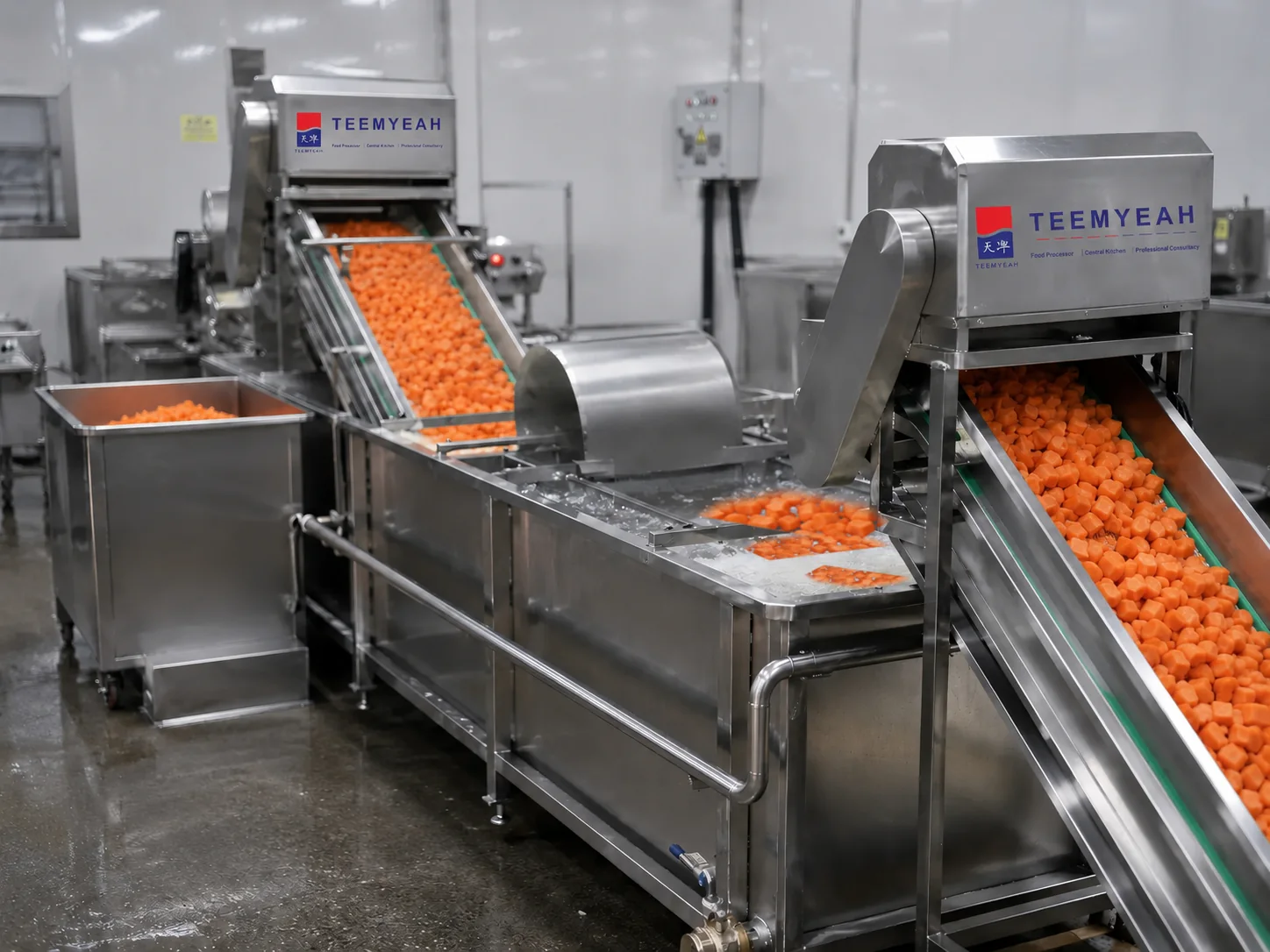
Precision-Cut Root Products
Add stable feeding, precision cutting, post-cut washing or treatment, dewatering and packing interfaces for repeatable formats.
Design priority: cut consistency, surface condition and downstream flow balance.
Engineering challenges the line controls
Root processing must manage heavy contamination, variable surfaces and demanding finished specifications without relying on fixed-loss promises.
Mud, Sand and Stones
Remove heavy contaminants early so pumps, brushes, conveyors and cutting equipment are protected.
Excessive Peeling Loss
Match brush type, abrasive action, residence time and loading to the crop and required surface finish.
Inconsistent Cut Geometry
Control grading, orientation, feed stability, blade condition and downstream handling for repeatable cuts.
Browning, Starch and Surface Water
Coordinate post-cut rinsing, approved treatment, dewatering and packing to protect the required product condition.
End-to-end process flow, receiving to packing
Each stage must hand off product at a rate and condition that the next stage can accept.
Receiving & Raw Inspection
Confirm crop, size range, incoming condition, soil load and defect criteria.
Pre-Washing & Heavy Soil Removal
Loosen mud, separate heavy particles and remove coarse field debris.
Brush Cleaning or Peeling
Apply the required cleaning or peeling action for the agreed surface finish.
Sorting & Defect Removal
Remove stones, damaged product and defects before precision cutting.
Precision Cutting
Produce the required dice, slice, baton, fry, chunk or section format.
Post-Cut Washing or Treatment
Remove starch and cut fragments or apply an approved anti-browning process.
Dewatering & Final Inspection
Reduce surface water and verify finished-product condition and specification.
Weighing, Packing or Downstream Process
Transfer at the rate required by packing, cooking, freezing or another process.
Peeling: the finish you need, with controlled loss
The target is not maximum peeling. The target is the agreed surface finish with practical usable-product yield and manageable rework.
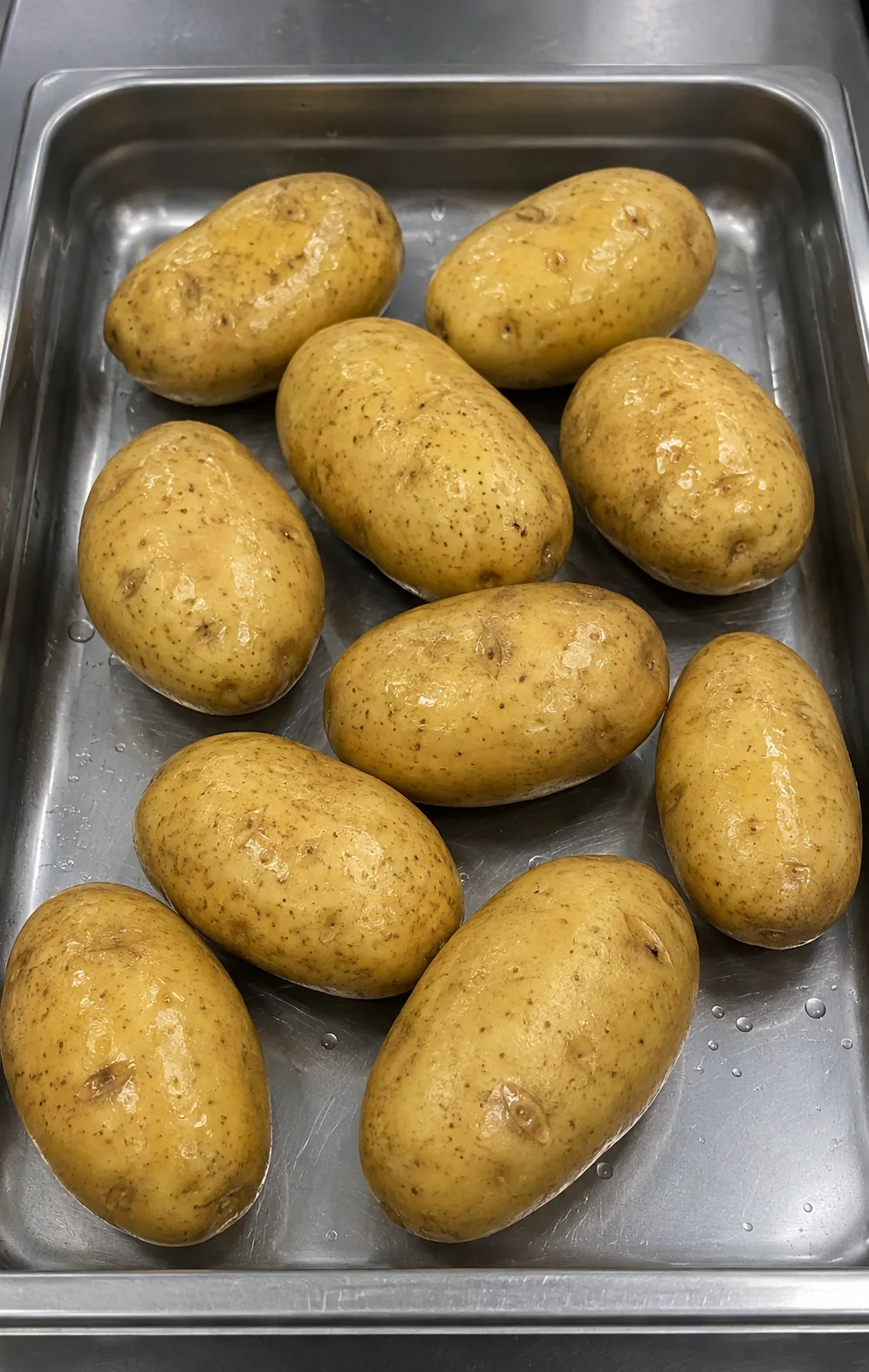
Washed Only
Soil and loose contamination removed while retaining the natural surface where the product specification allows.
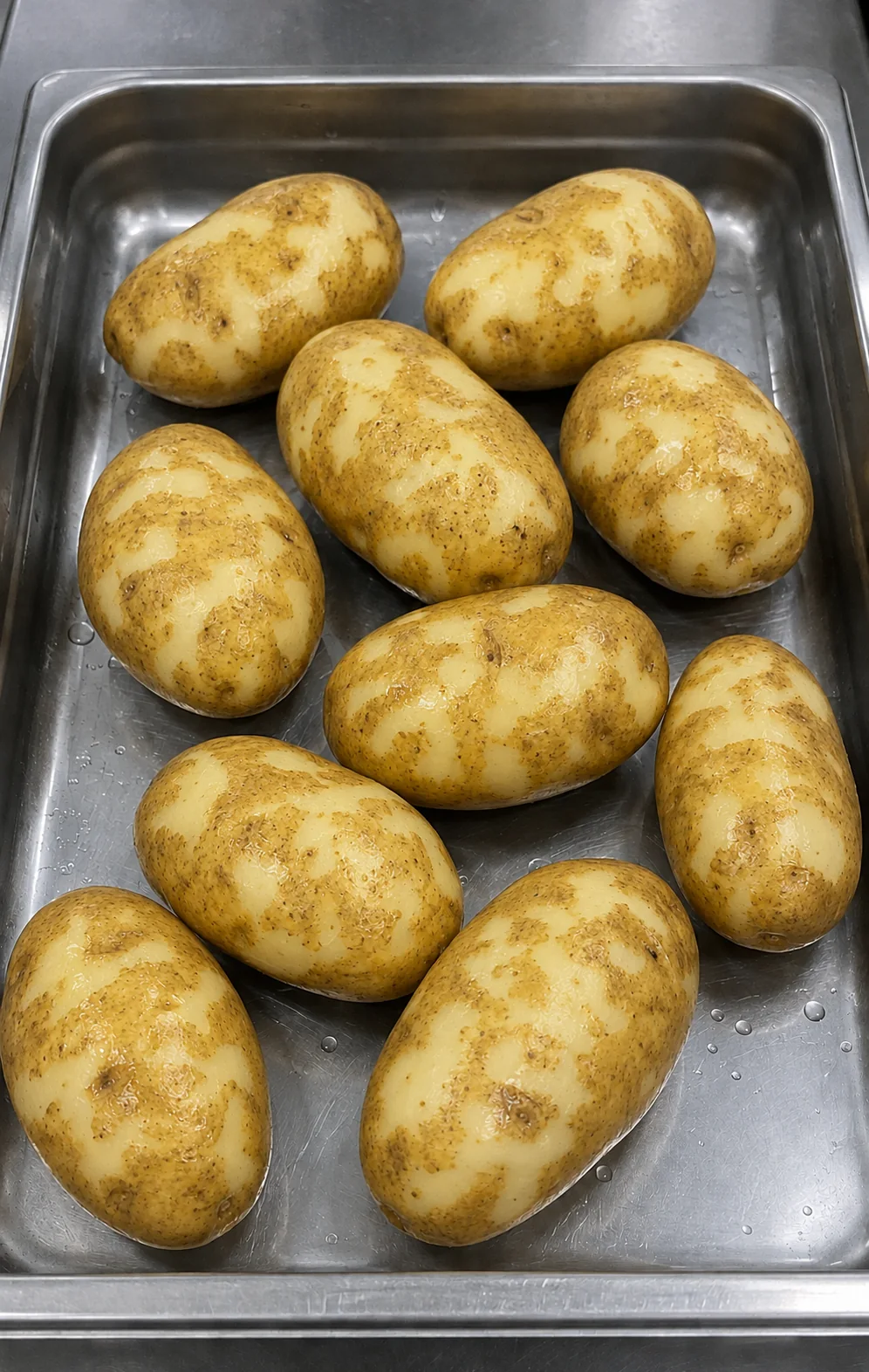
Light Brush Peeling
Controlled brush contact cleans or removes a light skin layer while limiting unnecessary flesh removal.
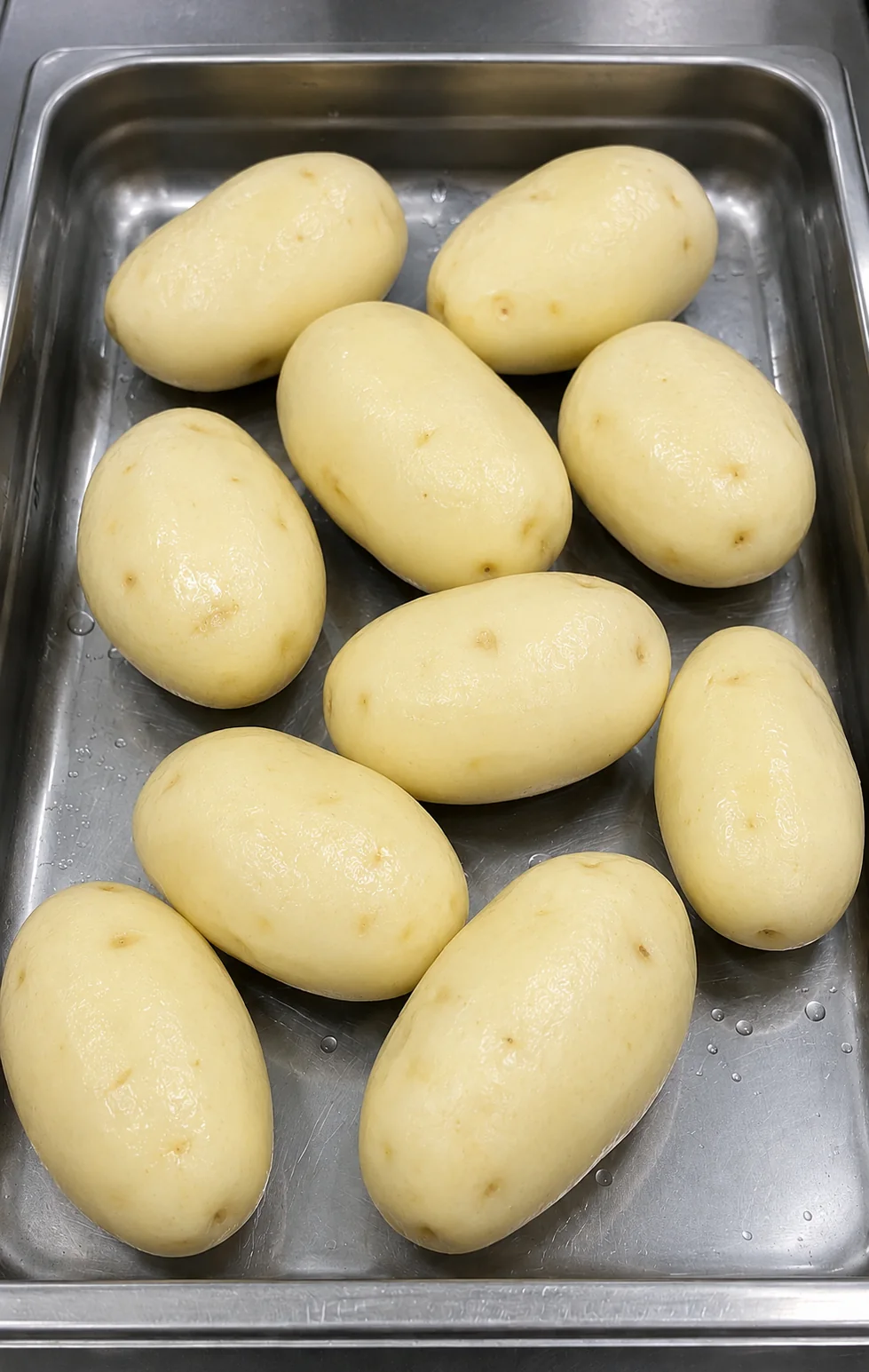
Ready for Cutting
The accepted surface finish is confirmed before stable feeding and the selected cutting process.
Validate finish and loss together
Peeling performance changes with variety, maturity, storage, skin thickness, crop geometry, loading, brush type and residence time. A product test should measure the complete mass balance.
- Incoming raw weight
- Cleaned / peeled weight
- Peel and reject weight
- Usable product yield
- Surface finish
- Rework requirement
- Throughput
Verified using the customer’s actual crop and agreed process condition.
Four peeling methods, matched to the crop
TEEMYEAH’s standard root-processing equipment focuses on brush and abrasive cleaning or peeling. Knife or steam peeling may be evaluated as project-specific equipment or third-party integration where required.
Brush Peeling
Best for
Potatoes, carrots and other roots needing light cleaning or controlled surface removal.
How it works
Rotating food-grade brushes clean the surface and can remove a controlled layer of skin.
Practical considerations
Brush selection, loading and residence time determine finish and loss.
Abrasive Peeling
Best for
Firm roots requiring stronger surface removal than brush cleaning alone.
How it works
An abrasive surface removes skin as the crop moves through the peeling zone.
Practical considerations
Crop irregularity and over-processing can increase flesh loss and rework.
Knife Peeling
Best for
Products needing a defined peel depth or geometry-specific surface removal.
How it works
Mechanical blades follow the product surface and cut away the skin.
Practical considerations
Grading, orientation and crop shape strongly influence performance.
Steam Peeling
Best for
High-volume applications where validated steam peeling suits the crop and finish.
How it works
Controlled steam pressure loosens skin before removal and downstream rinsing.
Practical considerations
Utilities, pressure systems, validation and integration require project review.
Dirty-end process sequence
Raw Roots
Pre-Wash
Heavy-Particle Separation
Debris Screening
Main Wash / Peel
Drain & Sludge Handling
Design the dirty end before protecting downstream equipment
Remove mud, sand, stones and root fibres as early as practical. Sedimentation, floating-debris removal and filtration serve different functions, while drainage and sludge handling must be sized around actual incoming contamination.
- Keep stones away from cutting equipment
- Separate pre-wash water from post-cut washing objectives
- Size drainage around realistic soil and sediment load
- Validate any recirculation plan against crop contamination and product requirements
- Avoid fixed water-saving claims before the process is tested
Cut formats the line produces
The cutting module, crop preparation and downstream handling are selected around the finished format and application.
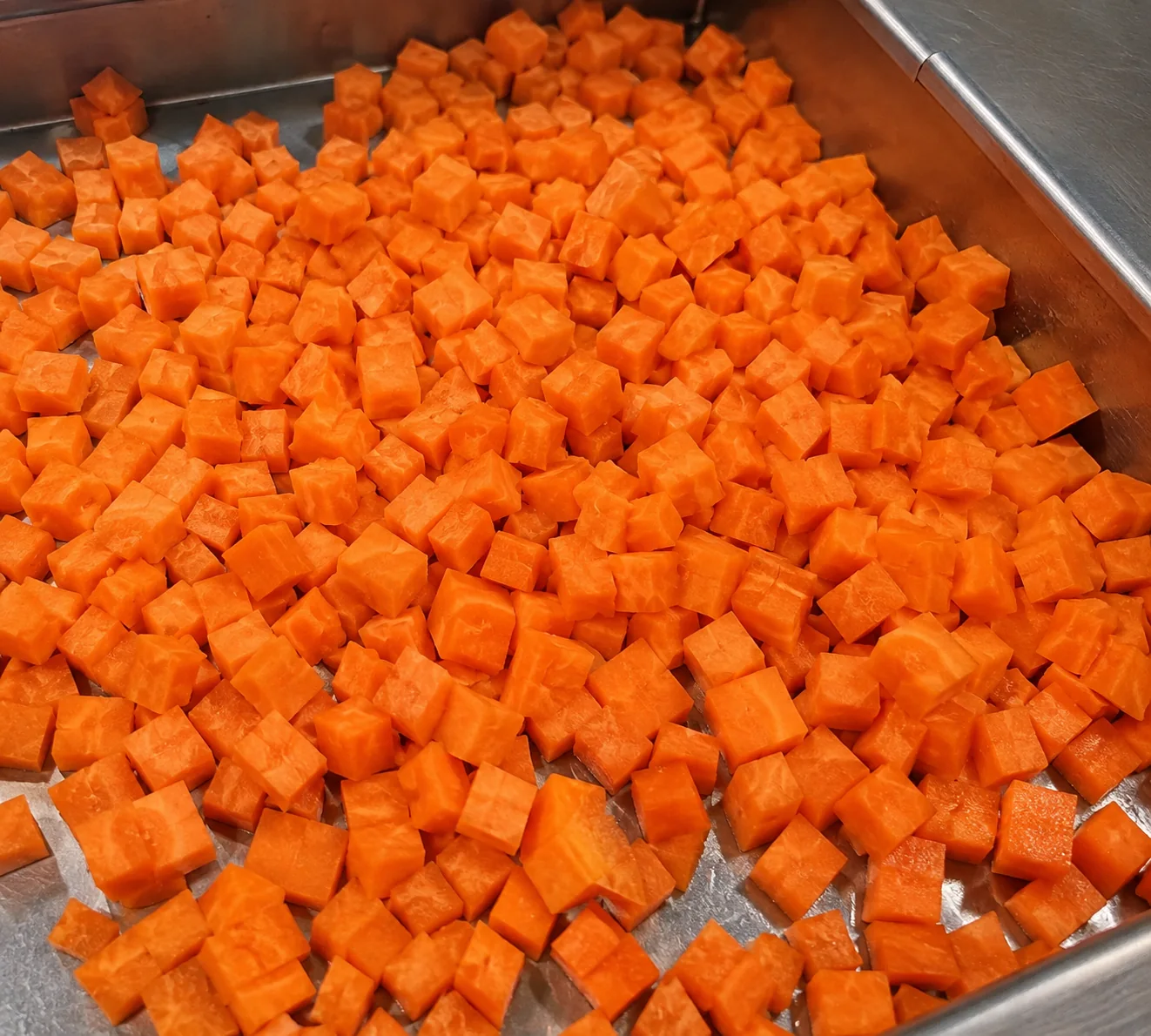
Dices
Applications: Ready meals · Frozen ingredients · Central kitchens
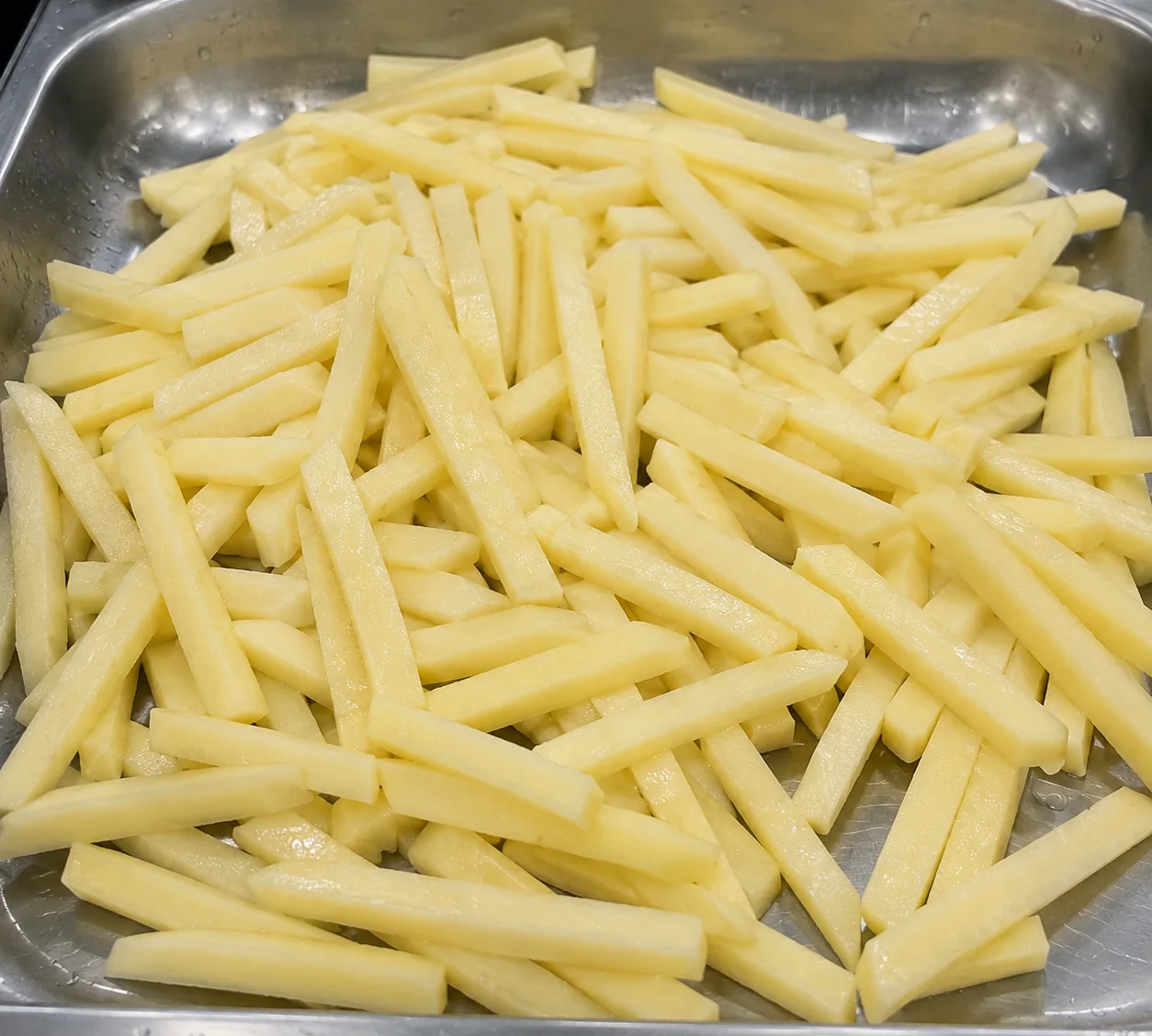
Batons / Fries
Applications: Fry lines · Foodservice prep · Frozen products
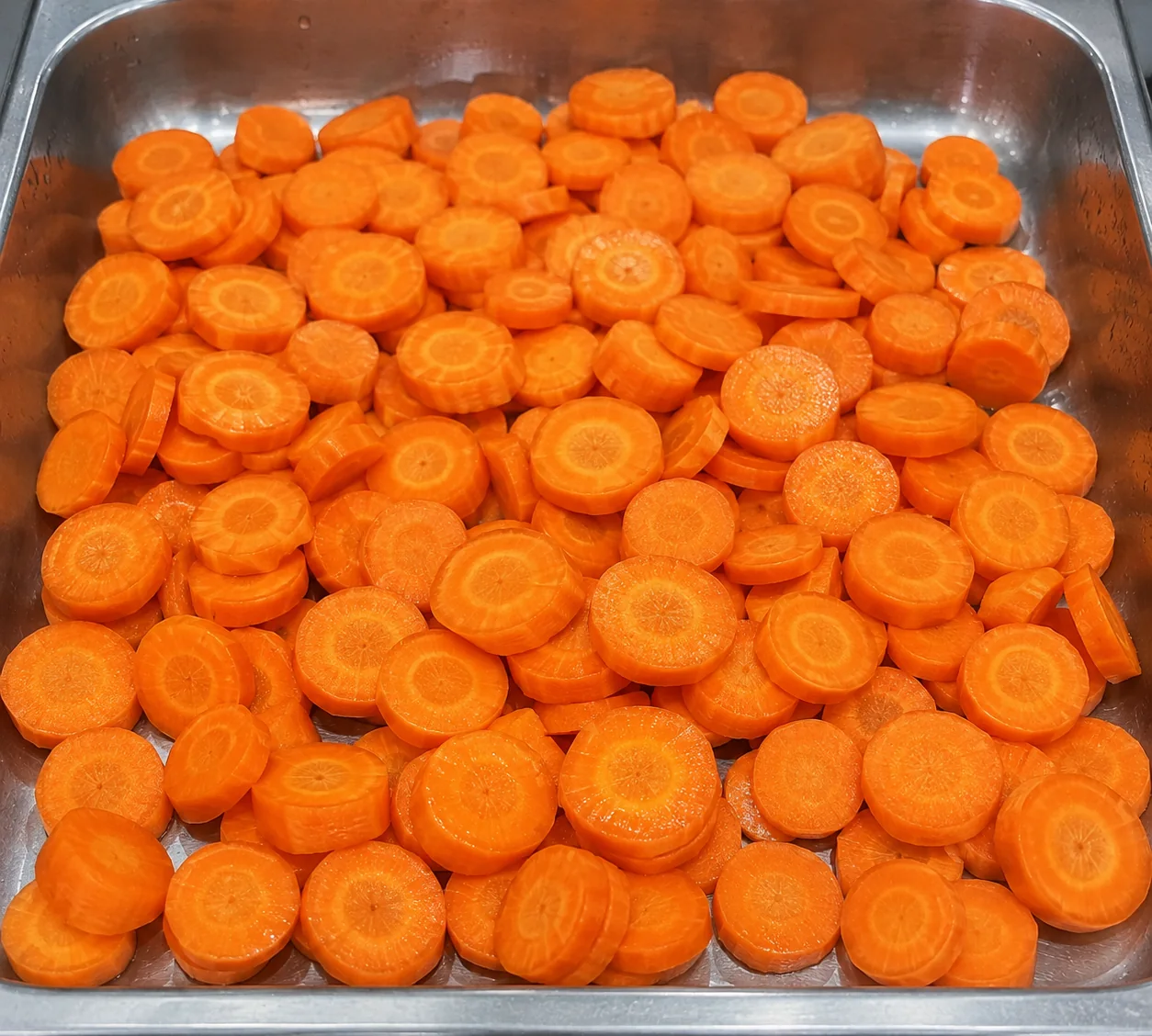
Slices
Applications: Meal preparation · Chips · Further processing
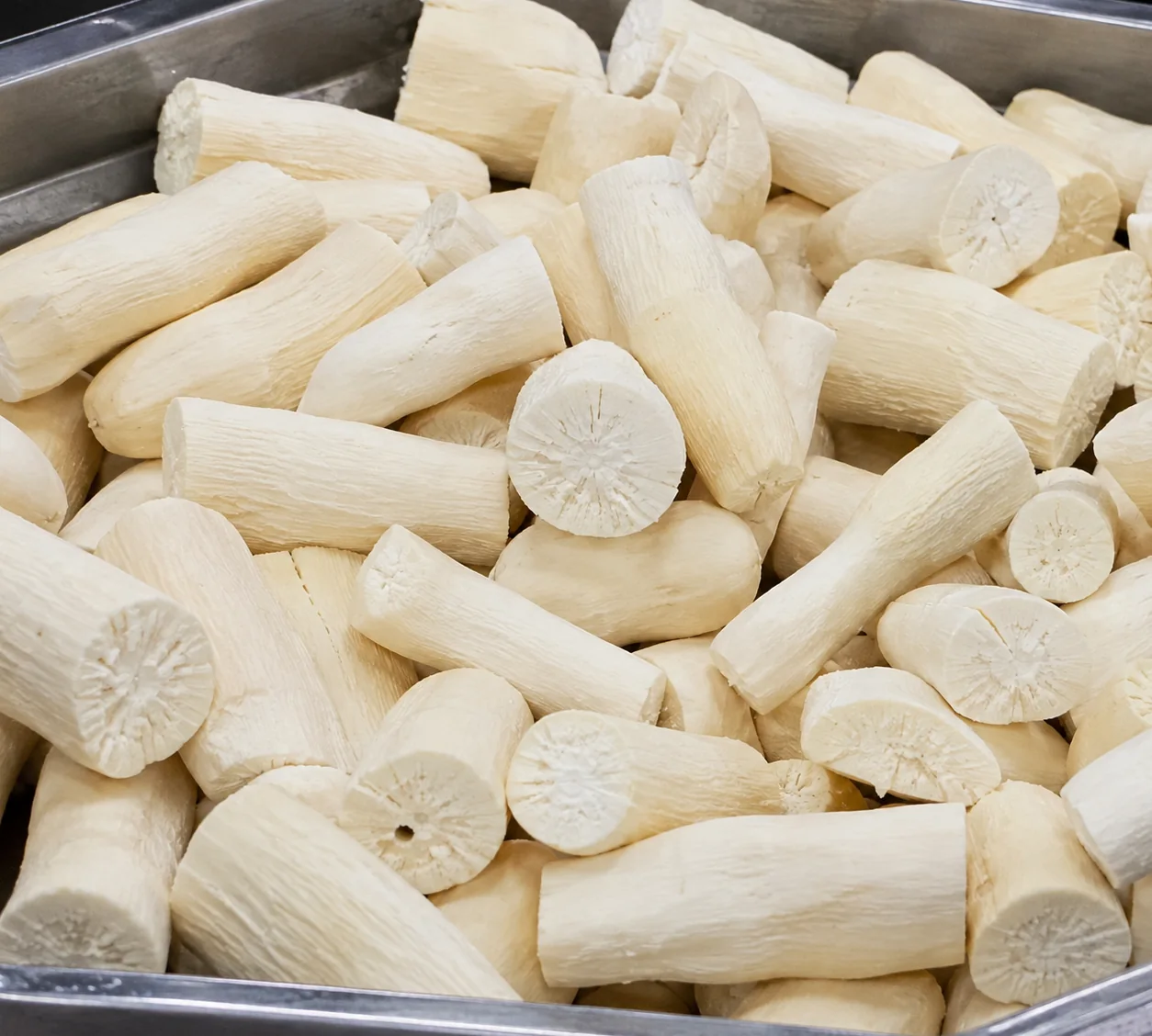
Peeled Whole / Sections
Applications: Central kitchens · Cooking · Packing
Core equipment modules
Catalog capacity is shown for the individual machine. Complete-line output must be calculated from the crop, operating condition and bottleneck process.

Cleaning and Peeling Machine
Process role: Brush cleaning and peeling
Suitable crops: Potato · Carrot · Sweet Potato · Lotus Root
Catalog Capacity: 600–1,000 kg/h

Cleaning and Peeling Machine
Process role: Compact brush cleaning and peeling
Suitable crops: Potato · Carrot · Sweet Potato · Lotus Root
Catalog Capacity: 400 kg/h

Large-Scale Vegetable Washing Machine
Process role: Integrated whole-product washing
Suitable crops: Whole root vegetables and mixed produce
Catalog Capacity: 1,000–2,000 kg/h

Vegetable Washing Machine
Process role: Hydrodynamic and bubble washing
Suitable crops: Root vegetables and cut produce by test
Catalog Capacity: 800–2,000 kg/h
.webp)
Large Vegetable and Fruit Dicing Machine
Process role: High-volume dicing and baton cutting
Suitable crops: Potato · Carrot · Taro · White Radish
Catalog Capacity: 2,500–3,500 kg/h

Fully Automated Vegetable Dehydration Line
Process role: Automated dewatering and moisture control
Suitable crops: Cut root vegetables and mixed produce by test
Catalog Capacity: 0.6–1.2 T/h
Line configuration and automation levels
The suitable configuration depends on product mix, daily volume, changeover frequency, finished specifications, layout and downstream process.
Compact Washing and Peeling Cell
A practical cell for central kitchens, pilot production or processors moving from manual root preparation.
- Receiving and manual inspection
- Pre-wash or rinse
- Brush cleaning or peeling
- Final inspection and transfer
Best fit: multiple crops, moderate volume and frequent changeovers.
Integrated Root Preparation Line
A connected washing, peeling, sorting, cutting, treatment and dewatering system built around defined finished products.
- Controlled dirty-end separation
- Continuous washing and peeling
- Precision cutting and treatment
- Dewatering and packing interface
Best fit: repeatable daily production with defined product families.
High-Volume Root Crop Processing System
A scalable system with balanced feeding, buffer capacity, automated transfer and provision for future expansion.
- Graded raw-material reception
- High-volume washing and peeling
- Parallel or dedicated cutting routes
- Automated dewatering and downstream interface
Best fit: large factories with stable volume and expansion plans.
What we measure in a product test
Performance values must be verified using the customer’s actual raw materials, finished-product specification and agreed operating conditions.
Raw-material throughput
Measured by crop, size range and incoming condition.
Usable product yield
Calculated from incoming weight and accepted finished product.
Peel and reject loss
Separated into peel, defects, foreign material and rework.
Cut specification conformance
Checked against the agreed dice, slice, baton or section tolerance.
Stone and foreign-material removal
Verified before downstream cutting and product transfer.
Post-cut surface condition
Assessed for starch, browning, cut damage and treatment result.
Dewatering result
Checked against the required residual surface-water condition.
Changeover time
Measured for the planned crop and finished-product sequence.
Cleaning access
Reviewed for practical sanitation, inspection and maintenance.
Packaging interface rate
Confirmed against the downstream packing or process requirement.
24+
Years of food-processing equipment R&D
20,000+
Equipment applications & customer projects
SUS 304 / 316L
Food-grade contact surfaces by project requirement
Turnkey
Config · layout · commission · train
Those outcomes are only as good as the partner behind the line
Four reasons operators choose TEEMYEAH to support usable yield, consistent finished products, scalable production and long-term operation.
Proven operating experience
24+ years of food-processing equipment R&D and more than 20,000 equipment applications and customer projects provide a practical base for configuring industrial root-crop processing systems.
One partner for the complete line
TEEMYEAH can coordinate washing, peeling, inspection, cutting, treatment, dewatering, conveying and downstream interfaces as one processing system.
Tested with your actual crop
The line can be evaluated using your actual root crops, incoming condition, required surface finish, cut specification and output target before the final configuration is confirmed.
After-sales support you can reach
Configuration, layout coordination, commissioning, operator training, spare-parts planning and overseas after-sales support help keep the line maintainable after production start-up.
Define responsibilities before installation
A clear scope separates equipment supply and project support from site preparation, utilities, local approvals and downstream systems outside the contract.
Include line automation and monitoring in the project scope where equipment visibility and operating records are required.
Typical TEEMYEAH Scope
- Process discussion and equipment configuration
- General line layout and utility coordination
- Manufacturing and equipment testing
- Factory acceptance support
- Installation guidance and commissioning as contracted
- Operator training and technical documents
- Spare-parts and after-sales planning
Typical Customer / Site Scope
- Raw-material and finished-product specification
- Factory floor, drainage and site preparation
- Electrical, water and utility connections
- Local permits and food-safety validation
- Packaging or downstream equipment outside the contract
- Raw materials and utilities for testing
- Site installation support as agreed
Integrated Root Vegetable Washing, Cutting and Dewatering Line
A complete processing system is coordinated around the incoming crop, required surface finish, finished cut, practical line balance, hygiene flow and the downstream packing or cooking process.
- Root washing and heavy-contaminant removal
- Controlled peeling and inspection
- Precision cutting and post-cut handling
- Dewatering and downstream transfer
- Layout coordination and commissioning support

Questions operators ask before configuration
The answers below describe the engineering variables that should be confirmed before equipment and line capacity are finalized.
A properly configured line can process potatoes, carrots, sweet potatoes, taro, cassava, radishes, beets, lotus roots and other firm root or tuber vegetables. The final equipment configuration depends on crop size, shape, soil load, skin condition and finished-product specification.
Some washing, inspection and transfer modules may be shared, but peeling pressure, residence time, cutting equipment, loading and changeover procedures must be adjusted for each crop. A shared line should be planned around the actual product mix and production schedule.
No. Some products only require soil removal and brush cleaning, while others require light surface peeling, deeper peeling or manual defect trimming. The required finish should be defined before the peeling equipment is selected.
Peeling loss is influenced by crop variety, maturity, storage condition, skin thickness, brush selection, loading, residence time and inspection criteria. It should be verified by weighing incoming product, usable output, removed peel and rejects during product testing.
The dirty-end process may combine pre-washing, sedimentation, heavy-particle separation, debris screening, overflow control and manual inspection. The selected method depends on incoming soil and stone load and should protect downstream peeling and cutting equipment.
Yes. Cutting modules can be selected for dices, slices, julienne, batons, fries, chunks or large sections. Product size, orientation, knife condition and pre-sorting influence finished-cut consistency.
Treatment tanks, rinsing, blanching, cooling, dewatering or downstream freezing and packing interfaces can be incorporated when required. Treatment chemistry, temperature and process validation remain part of the customer’s approved food-safety and product-quality program.
Practical capacity is determined by the slowest process stage, crop density and size, soil load, peeling residence time, cutting format, inspection requirements, treatment time, dewatering and downstream packing speed. A single machine’s catalog capacity is not the guaranteed output of the complete line.
Useful inputs include raw-crop photos or videos, crop dimensions and soil condition, finished-product format, daily and peak hourly volume, acceptable peeling finish, packaging or downstream process, factory layout, utilities and future expansion plan.
Request a root vegetable line configuration
Share your raw materials, incoming condition, finished-product specification, target volume and factory layout. TEEMYEAH will help evaluate the suitable washing, peeling, cutting and downstream configuration.
Explore the rest of the Solutions family
Compare related processing systems while keeping the current Root Vegetable Processing Line context clear.
Leafy Vegetable Processing Line
Cutting, staged washing, hygiene control, dewatering and packing for leafy vegetables and fresh-cut products.
Root Vegetable Processing Line
Washing, peeling, cutting, treatment and dewatering configured around root crops and finished formats.
Custom Food Pre-Processing Line
Integrated preparation systems for mixed vegetables, fruit, meat, poultry, seafood and central-kitchen workflows.
Continue your root-processing research
Use these TEEMYEAH resources to compare engineering guidance, applications and available equipment.