







How our five operating centers, in-house R&D capabilities and three manufacturing facilities support food-processing projects from initial assessment and factory planning to equipment manufacturing, commissioning and operational guidance.
More Than a Food Processing Machine Supplier
We are an integrated food ingredient pre-processing solution provider with in-house equipment R&D and manufacturing capabilities.
Although we are widely recognized for fresh-cut vegetable processing equipment, our work has never been limited to selling individual vegetable washing or cutting machines.
Over the past 24 years, our project experience has covered process assessment, capacity planning, production-flow design, hygiene zoning, equipment selection, processing-line integration, installation, commissioning, training and operational guidance.
Depending on the project, we support:
- A single machine for a clearly defined processing step
- A combination of machines for a particular production section
- The automation of a current manual process
- The expansion or modification of an existing processing line
- A complete ingredient pre-processing line
- Whole-facility processing and layout planning
- A central kitchen or food factory project developed in phases
- The digital integration and long-term improvement of an existing facility
This distinction is important. We manufacture food processing equipment, but equipment manufacturing is only one part of our role. Our broader objective is to help customers develop processing systems that are technically appropriate, operationally practical and aligned with their actual business requirements.
From Taiwan to the Mainland Market
Our industry experience has roots in Taiwan. In 2002, we entered the mainland market and established a new mainland company, beginning a long-term development journey in food ingredient pre-processing.
Our original focus was on mechanizing labor-intensive vegetable preparation. This included processes such as:
- Sorting and preparation
- Washing
- Cutting
- Dehydration
- Mixing and marination
- Conveying
- Weighing
- Packing preparation
As the food service and central kitchen industries developed, customer requirements became more complex. A machine that performed one task was no longer enough. Customers increasingly needed to understand how different processes, rooms, production areas, operators and equipment should work together.
Our capabilities therefore expanded from individual machinery into processing-line integration and whole-facility processing solutions.
Today, our work often begins before any equipment is selected. We can study the customer’s products, capacity targets, existing workflow, available space, labor arrangement, hygiene requirements and development plans. Equipment is then selected—or developed—around the confirmed process.
Our official Chinese profile describes this evolution from processing equipment into customized automated processes, equipment configurations and whole-facility solutions for fresh-cut food factories and central kitchens.
Three Manufacturing Facilities Supported by R&D and Engineering
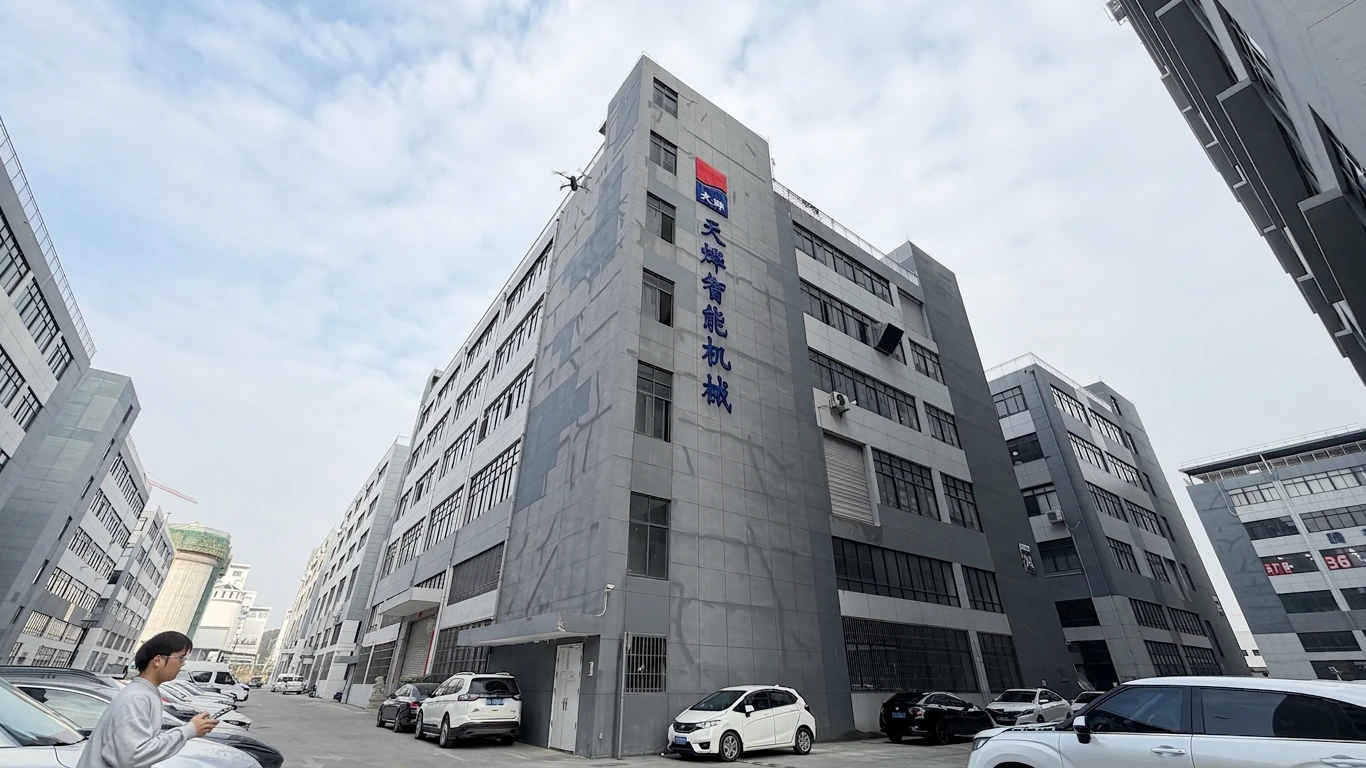
Our product and project capabilities are supported by three manufacturing facilities located in:
- Taichung
- Shenzhen
- Foshan
Our manufacturing network is supported by in-house R&D, product engineering, standardization, manufacturing-process development, assembly, quality control and testing capabilities.
These facilities do not operate simply as production workshops. Together, they form part of our coordinated product and project-delivery system.
The main supporting capabilities include:
Product R&D
We develop and improve equipment according to food characteristics, production requirements, operating environments and customer feedback.
Our objective is not merely to add features. Product development considers practical issues such as processing consistency, cleaning requirements, operator safety, maintainability, line compatibility and future expansion.
Engineering and Standardization
Our Product Center manages drawings, bills of materials, manufacturing processes and technical specifications.
Standardization helps us maintain consistency across equipment, while project-specific engineering allows products to be adapted when a standard machine cannot fully satisfy the required process.
Manufacturing and Assembly
We organize production planning, manufacturing coordination, component preparation, assembly and testing around the agreed project requirements and delivery plan.
Quality Control and Testing
We check equipment during manufacturing, assembly and pre-delivery testing. For integrated projects, individual machines must also be reviewed as parts of a complete production process.
A machine can function correctly by itself and still require adjustment to match upstream feeding, downstream conveying, line speed, product characteristics or site conditions. This is why our product manufacturing and solution engineering functions must remain connected.
Supply and Logistics Coordination
Integrated food-processing projects often involve different equipment types, accessories, control components and supporting systems. Coordinated procurement, supplier management, warehousing and logistics help us bring these elements together for delivery.
Our Taichung, Shenzhen and Foshan facilities form the manufacturing network supporting these activities.
How TEEMYEAH Is Organized
Our organization is structured around the complete customer and project lifecycle.
Under our management structure, five operating centers collaborate to move a project from initial opportunity to solution development, product realization, delivery and long-term service.
| Operating center | Main responsibilities | Customer-facing result |
|---|---|---|
| Sales Growth Center | Market development, regional and international sales, strategic accounts, commercial coordination and customer communication | A clearly understood business requirement and an appropriate project opportunity |
| Solutions & Engineering Center | Process diagnosis, equipment selection, line configuration, layout planning, technical review and technical handover | A technically correct and deliverable solution |
| Product Center | Product R&D, engineering, standardization, manufacturing coordination, quality control, assembly and testing | Equipment and systems produced according to the confirmed project requirements |
| Delivery & Service Center | Shipment, installation, commissioning, acceptance, after-sales support, maintenance and technical upgrades | Reliable project delivery and continued operational support |
| Corporate Management Center | Finance, administration, human resources, legal and risk control, IT, systems, data and process management | Safe, coordinated and efficient company operations |
Our five centers are not intended to function as isolated departments. Each has a different responsibility, but all five contribute to the same operational chain.
1. Sales Growth Center: Understanding the Business Requirement
The Sales Growth Center is usually the customer’s first point of contact.
Its role is not limited to presenting products or preparing commercial offers. Our team needs to understand the business context behind an inquiry before defining a suitable direction.
Relevant questions include:
- What products will be processed?
- What is the current and expected production volume?
- Which steps are currently performed manually?
- Where are the main bottlenecks?
- Is the objective to reduce labor, improve hygiene, increase consistency or expand capacity?
- Is the customer improving an existing operation or developing a new facility?
- What investment timing and implementation sequence are realistic?
- Which requirements are essential, and which can be introduced later?
This information helps us separate a real operational requirement from a general interest in automation.
For major projects, the Sales Growth Center coordinates with our technical and product specialists early in the discussion. This helps prevent a quotation from being prepared before the process and project boundaries are sufficiently understood.
2. Solutions & Engineering Center: Turning Requirements Into a Deliverable Process
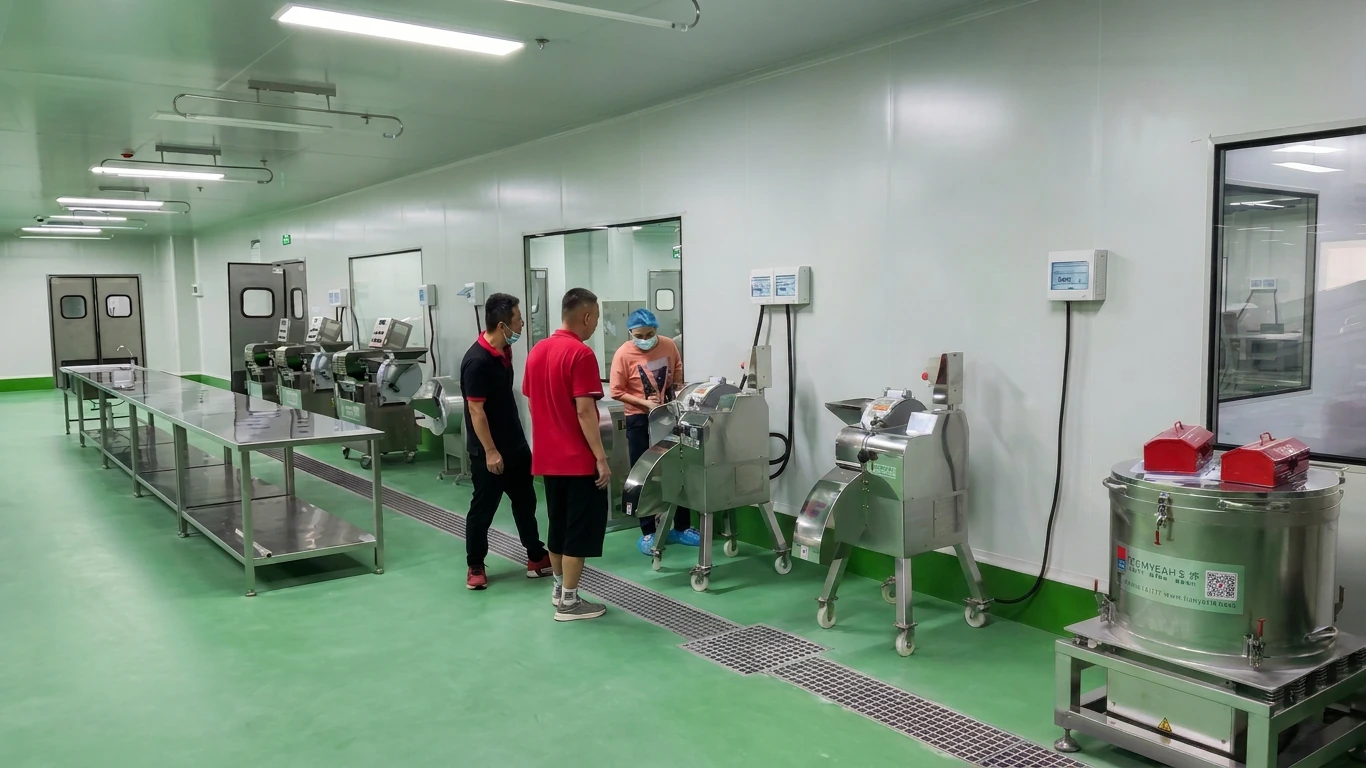
Our Solutions & Engineering Center translates customer requirements into a practical technical solution.
Its work includes:
- Existing-process diagnosis
- Product and raw-material analysis
- Process-flow development
- Capacity calculations
- Equipment selection and combination
- Production-line configuration
- Functional-area planning
- Equipment layout
- Material-flow and personnel-flow considerations
- Technical quotations and bid support
- Review of complex or non-standard requirements
- Technical clarification with the customer
- Formal technical handover after contract confirmation
This center is particularly important when a project involves more than one machine.
In an integrated line, every process affects the next. Washing performance influences cutting quality. Cutting specifications affect dehydration or mixing. The required output of one machine must match the capacity of the next. Cleaning access, operator movement, drainage, waste collection and packaging preparation must also be considered.
For whole-facility projects, we focus on food-processing planning and integrated equipment solutions. Architectural, civil, structural, fire-protection, utility and other locally regulated engineering disciplines are coordinated according to the confirmed project scope and handled with the appropriate qualified parties.
This boundary allows us to concentrate on our primary responsibility: making sure the processing concept, production flow and equipment system can work together.
3. Product Center: Connecting R&D, Manufacturing and Quality
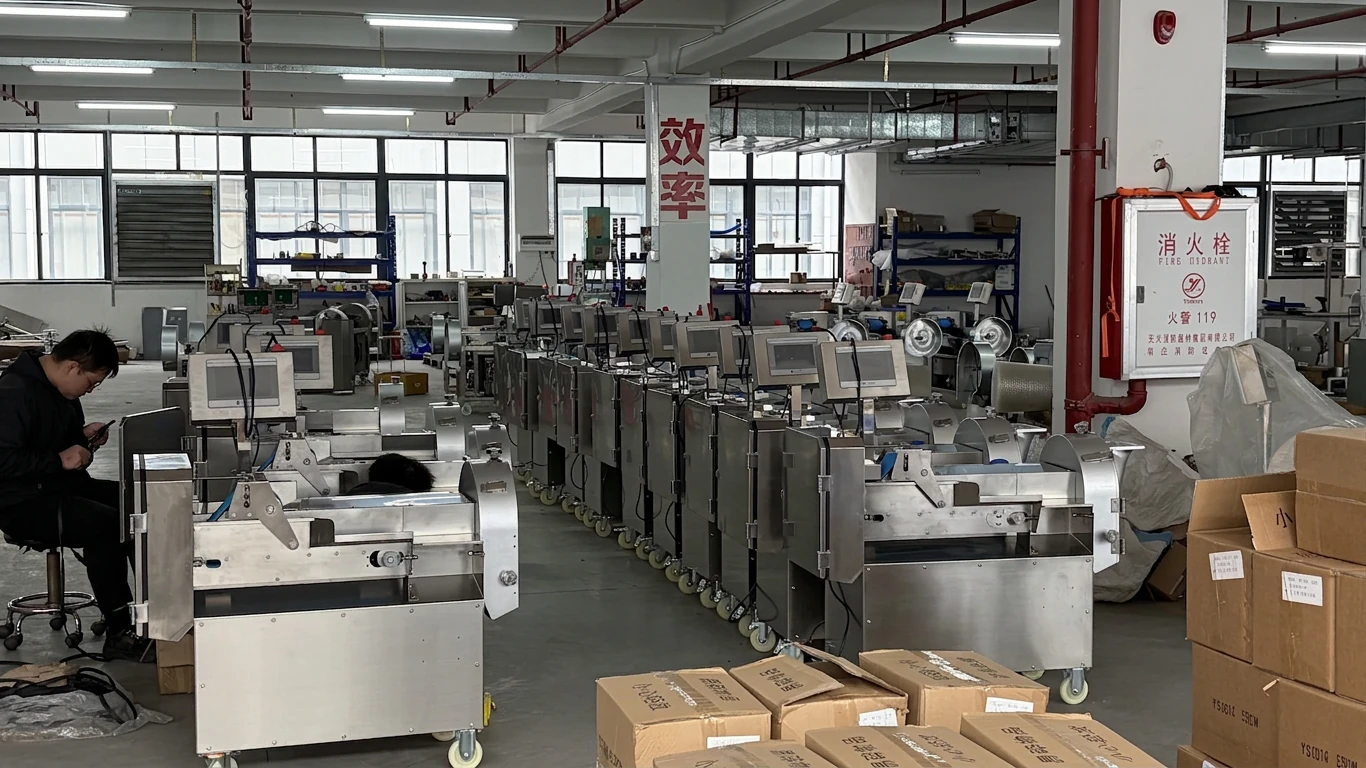
Our Product Center connects the technical proposal with physical product realization.
Its responsibilities include:
- Product research and development
- Equipment improvement and standardization
- Drawings and bills of materials
- Manufacturing-process development
- Production and material planning
- Procurement coordination
- Supplier and outsourced-production management
- Warehousing and logistics
- Manufacturing-base coordination
- Quality inspection
- Equipment assembly
- Functional testing
This structure gives our solutions team direct access to product and manufacturing knowledge.
When a project includes an unusual raw material, a special cutting requirement, restricted installation space or a non-standard connection between machines, our engineering and product teams can review the requirement together.
The resulting direction includes:
- A standard machine
- A standard machine with an approved modification
- A new equipment combination
- A project-specific interface
- A non-standard engineered solution
- A recommendation to change the process rather than modify the equipment
The last outcome is sometimes the most responsible one. Customization should solve a genuine process problem; it should not introduce unnecessary complexity.
4. Delivery & Service Center: One Coordinated Window After Contract
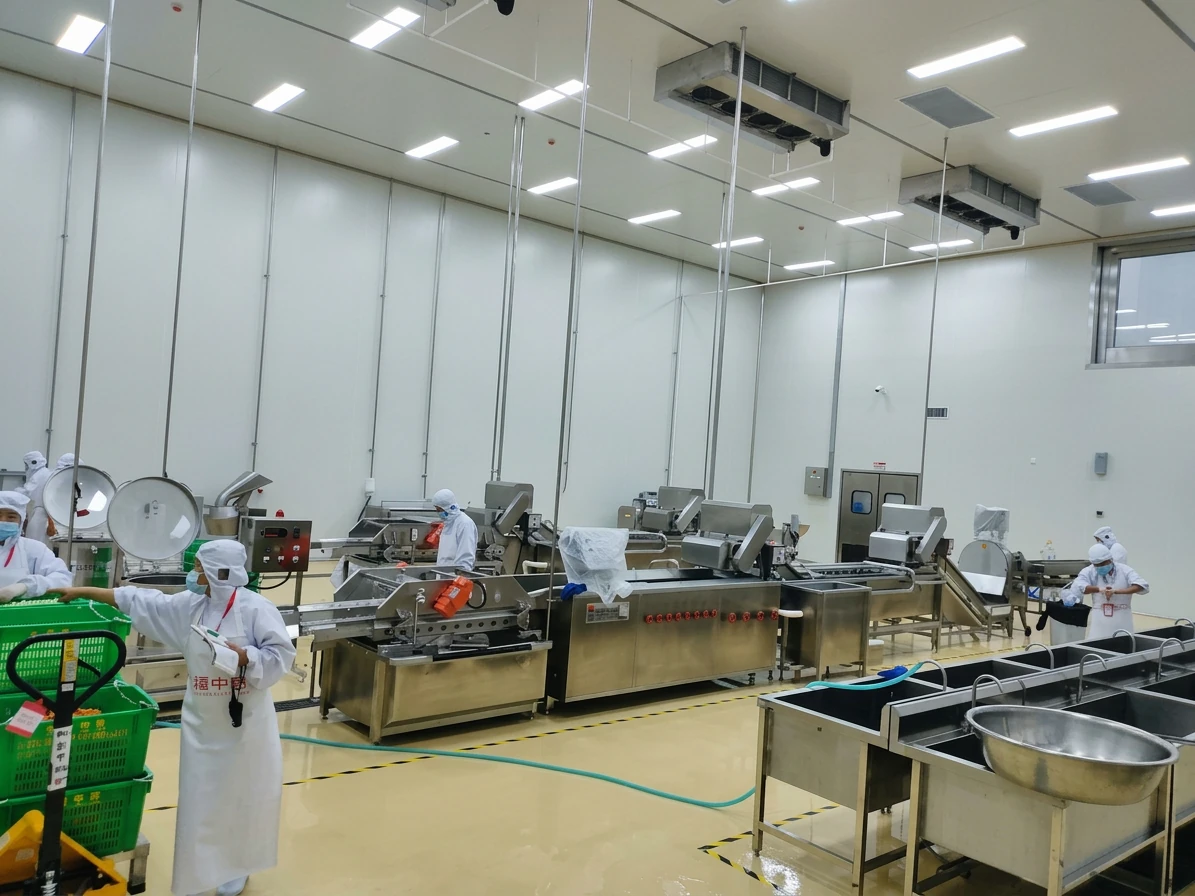
After a contract is confirmed, our Delivery & Service Center becomes the coordinated customer-service window.
Its responsibilities include:
- Delivery planning
- Shipment coordination
- Site installation
- Equipment commissioning
- Production-line testing
- Customer acceptance support
- Regional technical assistance
- Equipment records
- After-sales work-order management
- Spare-parts support
- Preventive maintenance
- Repair services
- Technical upgrades
- Customer follow-up
- Operational feedback collection
We do not treat delivery as the moment when responsibility ends.
For an integrated line, successful delivery requires more than placing machines at the site. Our team must confirm installation conditions, equipment connections, operating sequences, control relationships and actual processing performance.
Commissioning can also reveal differences between the original project assumptions and real production conditions. Raw-material size, temperature, moisture, cleanliness, operator habits and upstream supply can all influence the final result.
Our delivery and service team records these conditions and coordinates with the technical or product teams when adjustment is required.
5. Corporate Management Center: Supporting Safe and Coordinated Operations
Our Corporate Management Center provides the internal support required to operate projects consistently.
Its functions include:
- Finance and business analysis
- Human resources and administration
- Contract, legal and risk control
- IT systems
- AI and data applications
- Process management
- Internal operational coordination
Customers do not communicate with this center as frequently as they do with our commercial, technical or service teams, but its role remains essential.
Integrated projects can involve long schedules, multiple technical documents, different suppliers, site coordination and cross-functional decisions. Clear contracts, controlled information, organized documentation and reliable internal processes help us reduce project risk.
One Project, Two Accountable Leads
We use a coordinated project model built around two principal roles:
- One commercial lead
- One solution lead
Our commercial lead maintains responsibility for customer communication, business coordination and the confirmed commercial scope.
Our solution lead is responsible for the technical logic, process direction and coordination of relevant specialists.
Our product engineers, manufacturing personnel, delivery staff and service specialists can participate directly when their expertise is required. This reduces information loss and helps technical questions reach the right people.
After contract confirmation, the project enters a formal handover process. We transfer the confirmed commercial scope, technical requirements, drawings, equipment configuration, delivery conditions and responsibilities into the execution system.
We review new requirements discovered during delivery or operation as separate opportunities instead of handling them informally without a clear scope.
From Opportunity to Long-Term Value
Our organization supports a continuous project and customer lifecycle:
Customer requirement → Process assessment → Solution development → Commercial confirmation → Product engineering and manufacturing → Delivery and acceptance → Operational service → Improvement or expansion
This closed-loop structure gives feedback from completed projects a direct route back to the relevant teams.
For example:
- Service observations can support future product improvements.
- Commissioning results can improve process calculations.
- Customer production data can identify a suitable technical upgrade.
- New product requirements can create a second-phase project.
- Recurring operating problems can be evaluated before additional equipment is recommended.
Our objective is not to maximize the amount of equipment in the initial project. We aim to establish a solution that can operate effectively and develop with the customer’s business.
Whole-Facility Capability Does Not Mean Every Project Must Be Large
Our experience includes whole-facility processing planning, but this does not mean every customer needs to build a complete new factory.
The appropriate project level depends on the customer’s present situation.
| Current situation | Possible direction |
|---|---|
| Existing operation meets current commercial and production requirements | Continue operating and monitor future demand; no major immediate investment is necessary |
| Workflow is inefficient but equipment capacity is sufficient | Improve process sequencing, staffing, material flow or production management |
| One process creates a clear bottleneck | Introduce a targeted machine or localized automation module |
| Capacity is growing gradually | Develop a phased expansion plan with future interfaces reserved |
| Current facility cannot support required capacity, hygiene or product range | Evaluate a new processing line or whole-facility project |
If a customer’s existing operation is meeting its current commercial and operational requirements, our assessment can conclude that a major new investment is not yet necessary.
Investment should follow a defined business and operational requirement. We do not recommend it simply because automation is available.
Before proposing a major project, we normally need to understand:
- Current sales volume and expected demand
- Product mix
- Peak and average capacity
- Labor availability and labor cost
- Yield and product loss
- Food safety and hygiene risks
- Existing equipment condition
- Available space and utilities
- Maintenance capability
- Implementation timing
- Expected commercial return
Sometimes the correct conclusion is to postpone investment. In other cases, a small targeted improvement can produce a clearer result than an immediate whole-factory project.
For more discussion on project timing, see How to Make a Food Processing Equipment Investment Decision and Which Food Process Should You Automate First?.
Is TEEMYEAH Only a Vegetable Processing Specialist?
Fresh-cut vegetable processing is one of our deepest and most established fields of expertise.
Our long-term work in this area includes washing, cutting, dehydration, mixing, conveying, weighing and packing-preparation processes. This accumulated experience is valuable because fresh vegetables vary significantly in shape, texture, cleanliness, moisture and processing behavior.
However, our project experience is not limited to vegetables.
Depending on the project requirements and technical review, we can support processing areas involving:
- Fruits
- Root vegetables
- Leafy vegetables
- Meat
- Poultry
- Seafood
- Mixing and marination
- Ingredient preparation
- Conveying and material transfer
- Weighing and packing preparation
- Ready-to-cook and selected ready-to-eat preparation processes
- Central kitchen ingredient pre-processing
We also offer dedicated meat cutting and meat processing equipment.
No responsible company should claim that one person or one team is automatically an expert in every food category and every processing discipline.
For broader projects, we confirm which processes fall within our established capabilities. We then assign the relevant internal specialists and involve trusted technical partners when a project contains areas outside our direct equipment or engineering scope.
This collaborative model allows customers to receive an integrated solution without hiding the boundaries between different areas of responsibility.
Project Experience Beyond Individual Machines
Our previous projects demonstrate that our involvement can extend from early planning to operational guidance.
Dongguan Caiguanjia Food Project
For a food project in Dongguan covering approximately 20,000 square metres, our reported scope included early project research, planning, fresh-cut vegetable process design, equipment configuration, installation, commissioning and operational guidance.
The facility involved the preparation of vegetables, meat, eggs and related food products, with a planned daily supply of up to 200,000 portions.
Wuxi Sunan Student Meal Project
The Wuxi Sunan project covered approximately 18,000 square metres and included six automated production lines, with a reported processing capacity of 120 tonnes per day.
We participated in early-stage planning, process design, equipment configuration, installation, commissioning and operational support. The project was developed to support food supply for approximately 300,000 students.
Jiangyin Sunan Project
For the second phase of the Jiangyin Sunan project, our involvement included production-process design, project preparation, equipment supply, installation, commissioning and training.
This illustrates how equipment engineering, facility preparation and operational implementation can form a continuous project scope.
We do not present these examples to suggest that every customer requires the same project scale. They demonstrate the range of our involvement—from process planning and equipment manufacturing to commissioning and operational guidance.
What Customers Should Prepare Before a Project Discussion
A productive first discussion does not require a completed technical specification.
Customers can begin with practical operational information, including:
- Main products and raw materials
- Product photographs or samples
- Required finished-product specifications
- Current daily and hourly output
- Expected future capacity
- Existing process flow
- Number of operators
- Main production bottlenecks
- Current equipment list
- Available floor plan
- Water, electricity, drainage and other utility conditions
- Hygiene or certification requirements
- Expected implementation schedule
- Approximate investment priorities
From this information, we can determine which questions require further testing, calculation or site investigation.
For a project involving a complete line or multiple processing areas, visit the Custom Food Pre-Processing Line and Central Kitchen Solutions pages.
A Practical Definition of TEEMYEAH
Our work can be understood through four connected identities:
- An equipment manufacturer Developing and manufacturing food ingredient pre-processing machinery.
- A process solution provider Diagnosing requirements and configuring equipment around the required production process.
- A whole-facility processing planning partner Supporting process flow, capacity planning, production-area relationships, equipment layout and implementation planning.
- A lifecycle service organization Supporting installation, commissioning, maintenance, upgrades and future expansion after delivery.
These identities are supported by our five operating centers, in-house R&D and engineering capabilities, and three manufacturing facilities in Taichung, Shenzhen and Foshan.
Our structure enables us to support both focused improvements and complex integrated projects while maintaining clear responsibility from the first discussion through long-term service.
Review the Process Before the Investment
A successful automation project does not begin with the question, “Which machine should we buy?”
It begins with more fundamental questions:
- What problem must be solved?
- Which process creates the greatest operational constraint?
- What result would justify the investment?
- Should the improvement be completed now or introduced in phases?
- How will the new equipment connect with the existing operation?
- What capabilities will be required in the next stage of the business?
Our role is to help customers examine these questions and translate the answers into an appropriate technical direction.
That direction takes the form of a workflow adjustment, one targeted machine, a processing module, a phased automation plan or a complete food-processing facility.
The scale can vary. The principle remains the same: the solution should fit the process, the operation and the customer’s long-term business plan.
Not Sure Whether a New Processing Line Is Necessary Yet?
Share your current workflow, product mix, production capacity, labor arrangement and main operating constraints.
We can help evaluate whether the most appropriate next step is:
- Improving the existing process
- Upgrading a specific bottleneck
- Introducing automation in phases
- Expanding an existing line
- Developing a complete processing-line or whole-facility project

