




TEEMYEAH TY-220 Automatic Basket Weighing and Filling Machine
Dual-station reciprocating basket weighing and filling for vegetable washing lines in central kitchens and fresh-cut produce plants
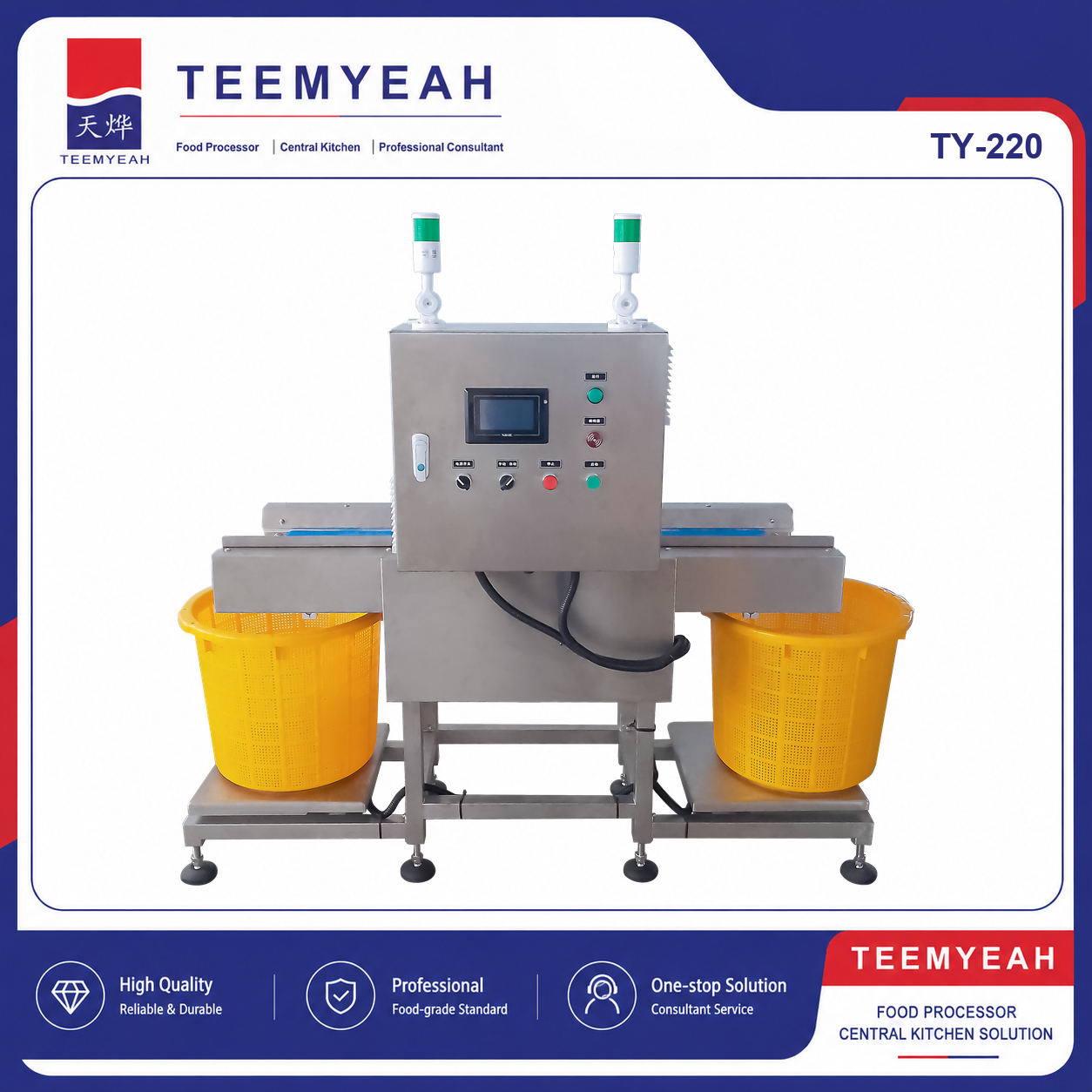
The TY-220 automatic basket weighing and filling machine receives washed vegetables and fruit from a processing line and divides them into baskets at a preset target weight. Its belt conveyor and two alternating weighing stations support a more consistent handoff from washing to basket handling.
Designed as the successor to the discontinued TY-110, the TY-220 uses belt transfer in place of the previous receiving tray and a simpler structure for cleaning and access. The first prototype has been completed; contact our team to confirm project configuration and delivery availability.
- Automatic alternation between two basket weighing stations
- Audible and visual alerts when the target weight is reached
- Belt conveyor designed to reduce material accumulation
- Two C3-class load cells; maximum gross basket weight 50 kg
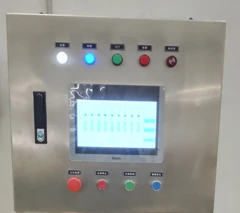
- 4.3-inch touchscreen for weight settings and scale calibration
- 304 stainless steel construction; 220 V single-phase supply
How the TY-220 Weighs and Fills Baskets
Alternating Basket Filling
Set the target weight on the touchscreen and position empty baskets at both weighing stations. The conveyor feeds washed produce into one basket. When the target weight is reached, the machine signals that the basket is full and switches receiving to the other station.
An operator removes the full basket and replaces it with an empty one while the other station receives product. Continued line operation depends on replacing baskets in time and matching the upstream feed rate to the filling cycle.
Belt Transfer and Cleaning Access
The TY-220 replaces the TY-110 receiving tray with a belt conveyor to reduce retained produce and simplify access. Its 304 stainless steel structure is designed for convenient cleaning, maintenance and repositioning. Follow the supplied cleaning and electrical isolation instructions.
Weight Settings and Calibration
A PLC and variable-frequency drive coordinate operation. The 4.3-inch touchscreen provides target-weight setting, scale-platform calibration and weight display. Two C3-class load cells provide the weighing input.
The maximum gross load is 50 kg per basket, including the basket itself. Set the product target with the basket weight in mind. Confirm finished-basket weight consistency using the actual produce and feed conditions during commissioning.
TY-220 Technical Specifications
| Parameter | Specification |
|---|---|
| Model | TY-220 |
| Operation | Dual-station reciprocating basket weighing and filling |
| Dimensions (L × W × H) | 1600 × 650 × 1400 mm |
| Basket opening | Internal opening dimension greater than 300 mm |
| Basket height | Up to 400 mm |
| Maximum gross weight per basket | 50 kg, including basket and contents |
| Conveyor belt width | 300 mm |
| Power supply | 220 V, single phase |
| Power | 200 W |
| Machine weight | 100 kg |
| Weighing sensors | Two C3-class load cells |
| Operator interface | 4.3-inch touchscreen |
| Control system | PLC and variable-frequency drive |
| Construction | 304 stainless steel |
Vegetable Washing Line and Basket Compatibility
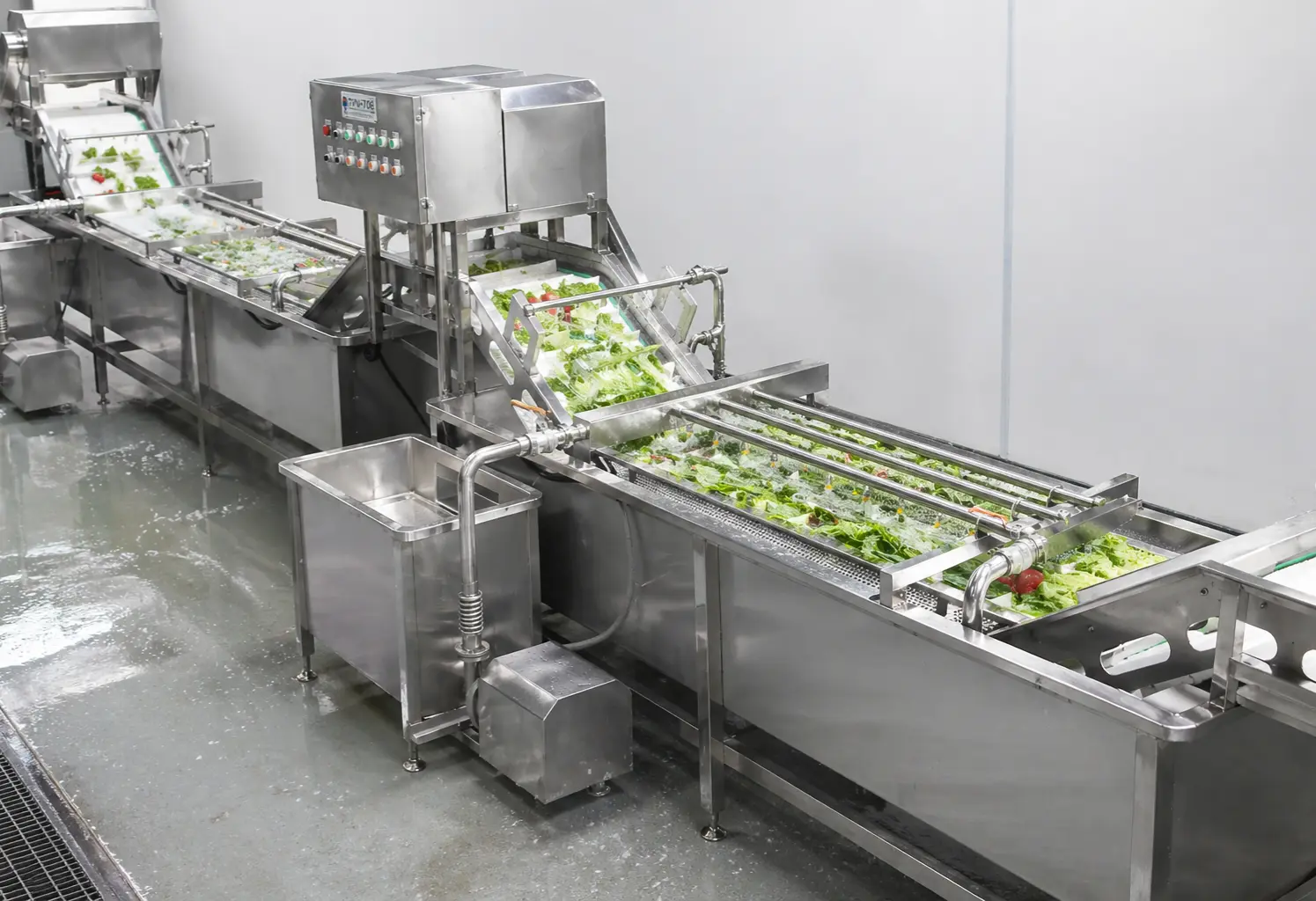
The TY-220 is designed for receiving washed produce after 406, 506 and 606-3 series vegetable washers. It supports basket-based handling in central kitchens, fresh-cut vegetable plants and prepared-food ingredient preparation areas.
It accommodates 980B and 980C standard dewatering baskets and suitable plastic draining or turnover baskets with an internal opening dimension greater than 300 mm and height no greater than 400 mm. Confirm basket shape, stability and clearance for the actual installation.
For line planning, review our TW-506L vegetable washer and TY-980C vegetable spin dryer. Confirm discharge height, feed rate and basket handling with our team.
Plan a TY-220 Line Integration
Share your washer model, produce type, feed rate, target weight per basket and basket dimensions. Include basket tare weight and available floor space so we can review the receiving arrangement and confirm the supply scope.

