







During a recent discussion with a Central Asian food industry client, employment requirements were identified as an important factor in determining the acceptable level of production-line automation.
The conversation did not produce a simple engineering question such as, “How many operators can this line replace?” It produced a more important project question:
What level of automation can deliver the required capacity, food-safety control and operating stability while remaining compatible with local labor conditions, investment incentives and employment expectations?
That distinction matters.
Food processing automation is often presented as a straight progression from manual work to machines, conveyors, sensors and centralized control. Under that view, a fully automatic line appears to be the natural end point, while any remaining manual operation looks like inefficiency.
Real factories are more complicated.
The technically most advanced configuration may be economically premature, operationally fragile or inconsistent with the conditions attached to a local investment project. Conversely, a semi-automatic food processing line may provide a better balance of capacity, flexibility, employment and future expansion.
The most automated solution is not always the most suitable solution.
A stronger food factory automation plan identifies the tasks that must be controlled, the tasks that benefit from mechanization and the tasks where human judgment still creates value. It also considers how national programs, regional incentives, industrial-park arrangements and project-specific employment commitments change the relative cost of capital and labor.
Why Automation Level Is Not Only a Financial Decision
Capital expenditure is highly visible, so it tends to dominate early project discussions.
Buyers compare the purchase price of a semi-automatic food processing line with the cost of a fully integrated line and ask which option has the faster payback period. That comparison is necessary, but it is incomplete.
The correct decision depends on at least five interacting systems.
- The production system: target output, product mix, process sequence, changeovers, yield and bottlenecks.
- The labor system: worker availability, skill level, wage structure, turnover, shift coverage and supervision.
- The food-safety system: zoning, hygienic design, process monitoring, cleaning validation, traceability and corrective action.
- The technical-support system: maintenance competence, spare-parts access, utilities, controls expertise and response time.
- The policy and investment system: grants, tax incentives, local hiring objectives, employment-linked support and obligations negotiated with authorities or industrial zones.
A line may look attractive when measured only by direct labor savings, yet become less attractive when its maintenance burden, changeover losses, downtime exposure and financing cost are added.
The opposite can also happen. A higher-capital solution may be justified when labor is unavailable, output commitments are stable and the cost of inconsistent quality is high.
Public policy can materially alter this calculation.
European Union regional investment-aid rules, for example, allow certain eligible costs to be calculated using the estimated wage costs arising from jobs created by an initial investment, calculated over a two-year period. This does not mean that every EU investment project must create a fixed number of jobs. It demonstrates that job creation can be incorporated directly into the economics and documentation of an investment incentive.
South Africa’s Employment Tax Incentive works from another direction. It is designed to encourage employers to hire qualifying young work seekers and reduces the effective cost of eligible employment. A processor evaluating labor cost and food processing automation in this environment should not model payroll solely from the headline wage rate; applicable employment incentives may change the marginal economics of retaining or creating certain positions.
Singapore provides a contrasting policy signal. Its Productivity Solutions Grant supports eligible companies adopting productivity solutions and equipment to automate existing processes. Where a government shares part of the technology-adoption cost, the effective capital cost of automation can fall. The current program information also notes that existing grants remain accessible until the launch of the new Enterprise Development and Growth Exchange, or EDGE, framework.
These examples point in different directions, which is precisely the point.
One jurisdiction may reward job creation, another may subsidize qualifying workers and another may support automation equipment. A food processing plant cannot select its automation level responsibly without checking which policies apply to the legal entity, location, investment category, workforce and equipment package.
How Local Employment Policies May Influence Plant Design
“Local employment policy” should not be treated as a single law that either permits or prohibits automation.
In most projects, the influence is more indirect and more varied.
Employment-Linked Investment Incentives
A regional development authority may evaluate a project partly through expected employment, payroll, training or local economic impact.
Even where there is no statutory minimum headcount, the number and type of jobs can affect:
- eligibility for investment support;
- the amount of an incentive;
- regional-development scoring;
- tax treatment;
- access to subsidized land or infrastructure;
- the strength of an investment application;
- compliance with a previously negotiated commitment.
This creates a plant-design implication.
A project that eliminates nearly all direct labor may improve one line item in the operating model but weaken another part of the investment case. A semi-automatic layout that preserves inspection, trimming, quality-control, sanitation and packing roles could create a stronger overall project outcome.
Hiring Subsidies and Payroll Incentives
Hiring incentives reduce the effective cost of selected workers. They may apply only to specific age groups, salary ranges, locations, employment periods or contractual conditions.
The engineering team does not need to become a tax adviser. It does, however, need to understand whether the financial model uses gross payroll or net payroll after legally available support.
That distinction can change the preferred balance between:
- manual and automatic feeding;
- conveyor transfer and trolley movement;
- manual inspection and vision systems;
- operator-assisted packing and fully automatic packaging;
- centralized supervision and individual machine operation.
A task that appears expensive when measured at gross labor cost may remain economically rational after employment support is considered. The reverse is also possible if an incentive is temporary and automation is evaluated over a ten-year operating life.
Automation, Productivity and Digitalization Grants
Other public programs lower the cost of approved equipment, software, sensors or digital systems.
In such cases, a line that appears too expensive at list price may become economically rational after eligible support is confirmed.
The relevant word is confirmed.
A supplier quotation should not assume that a grant application will succeed. The investment model should separate:
- the base case without incentives;
- the expected incentive case;
- a downside case in which support is delayed or rejected;
- any conditions attached to the grant;
- reporting, ownership and operating-period requirements.
An automation project that only works financially after receiving an uncertain subsidy carries a different level of risk from one that is viable without support.
Industrial-Park or Project-Specific Commitments
Some employment expectations arise not from national legislation but from a land agreement, development contract, concession, investor memorandum, financing condition or negotiation with a local authority.
These conditions can be highly project-specific.
For this reason, statements such as “full automation is not allowed in this country” should be treated cautiously unless supported by an applicable legal or contractual document.
The correct due-diligence questions are:
- Is there a binding minimum employment commitment?
- Is the commitment measured at commissioning, after ramp-up or as an annual average?
- Does it apply only to direct employees, or are contractors included?
- Are technical, quality, sanitation and logistics roles counted?
- Is the target a condition of land use, tax treatment, financing or investment approval?
- What happens if market demand is lower than forecast?
- What happens if the production process changes after approval?
- Can productivity upgrades be introduced later without losing support?
- Is there a clawback provision if the employment target is not maintained?
- Which document contains the actual obligation?
These questions prevent a conversation with one stakeholder from being misinterpreted as a nationwide prohibition.
Full Automation, Semi-Automation and Low Automation: What Do They Actually Mean?
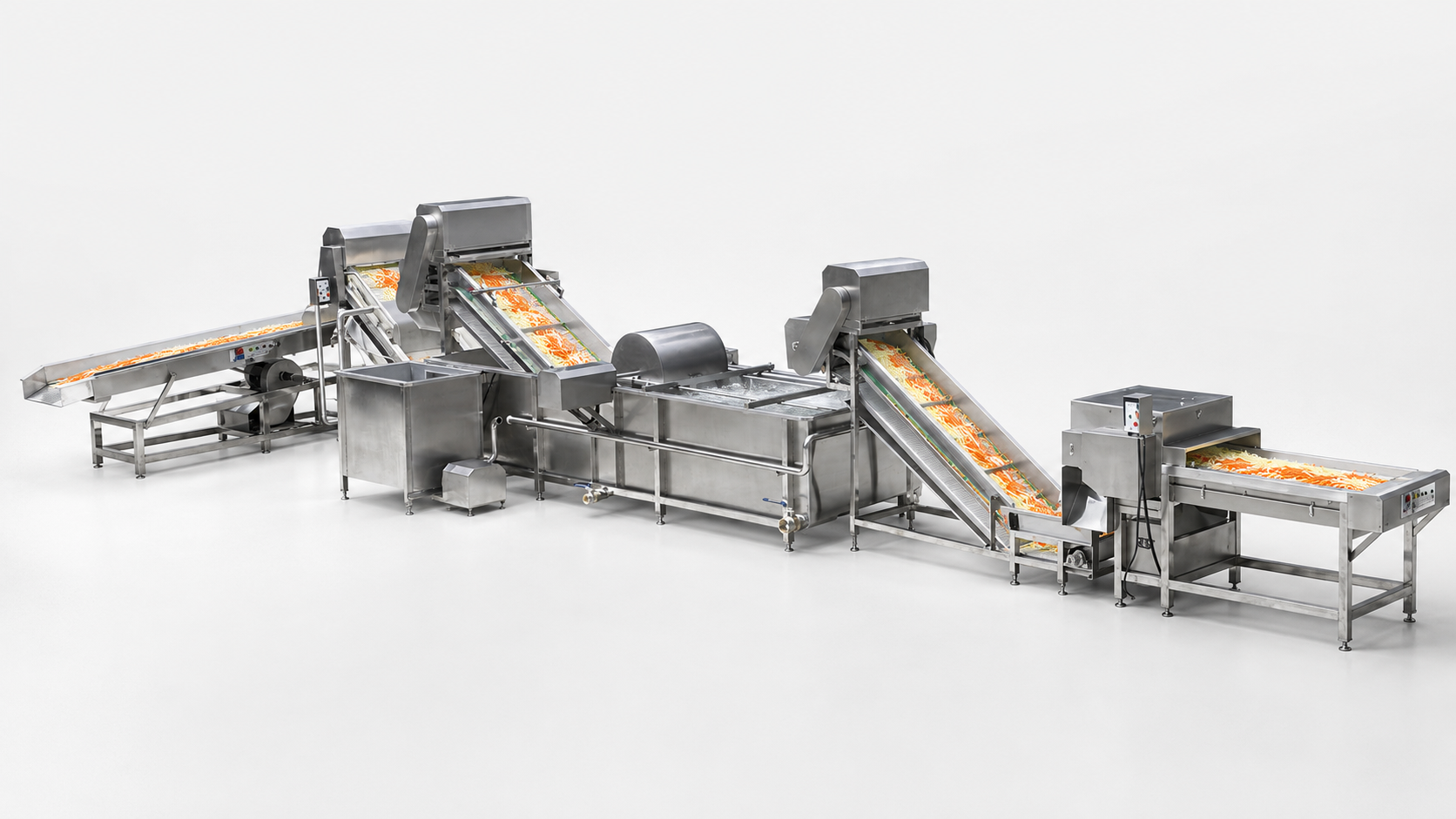
The labels are often used too loosely.
A processing plant may call itself “fully automatic” because products move by conveyor, even though workers still load raw materials, inspect defects, adjust recipes, manage sanitation and pack finished goods.
Another facility may describe itself as “semi-automatic” even though its critical process parameters are monitored and controlled more consistently than those of a poorly integrated automatic line.
A practical definition should focus on material flow, decision-making and operator intervention.
Manual or Low Automation
Workers perform most loading, transfer, trimming, cutting, inspection, weighing and packing tasks.
Individual machines may mechanize specific operations, but materials are moved between them manually and line coordination depends heavily on operators and supervisors.
This model can be flexible and relatively inexpensive to establish. Its weaknesses usually become visible as production volume increases:
- variable cycle times;
- inconsistent operating methods;
- difficult labor scheduling;
- repetitive lifting and handling;
- limited process data;
- production losses during shift changes;
- greater dependence on individual operator experience;
- inconsistent output between teams or shifts.
Low automation may remain appropriate for low-volume, highly customized production, but it usually becomes difficult to scale without additional process control.
Semi-Automation
Machines control selected high-impact processes while people remain responsible for variable, judgment-intensive or low-volume tasks.
Conveyors may connect major stages. Operators may continue to:
- load products;
- remove defects;
- change cutting tools;
- verify finished quality;
- replenish packaging materials;
- adjust product presentation;
- handle exceptions;
- conduct sanitation and inspection.
A well-designed semi-automatic food processing line is not an unfinished full-automation project.
It is an intentional allocation of work between people and equipment.
The line may mechanize washing, cutting, mixing, dewatering and transfer while preserving manual quality-control points. It can therefore reduce the most expensive or inconsistent labor tasks without sacrificing the flexibility needed for irregular products and changing customer specifications.
Full Automation
Material handling, processing, transfer, inspection, dosing, control and packaging are integrated to minimize routine intervention.
Sensors, programmable controls and production-data systems coordinate line speed and process conditions. Human roles shift toward:
- supervision;
- preventive maintenance;
- quality verification;
- sanitation;
- exception handling;
- production planning;
- process improvement;
- controls and data management.
Full automation still requires people.
The U.S. Bureau of Labor Statistics projects that food and beverage manufacturing will add approximately 130,000 jobs between 2024 and 2034, representing projected growth of 6.2%. This is a useful reminder that automation often changes the composition of work rather than eliminating the workforce entirely.
The number of routine handling positions may decline while demand increases for maintenance technicians, quality personnel, sanitation specialists, production planners and skilled operators.
Full Automation vs Semi-Automation: Comparison Table
| Factor | Manual / Low Automation | Semi-Automation | Full Automation |
|---|---|---|---|
| Initial investment | Low | Medium | High |
| Direct labor requirement | High | Medium | Low |
| Product flexibility | High | High | Medium |
| Output consistency | Low | Medium–High | High |
| Local job creation | High | Medium | Low |
| Maintenance complexity | Low | Medium | High |
| Changeover burden | Mostly labor-based | Moderate | Potentially high if poorly designed |
| Process-data availability | Limited | Moderate–High | High |
| Sensitivity to technical downtime | Low per machine, high labor dependence | Balanced | High if one integrated section stops the line |
| Expansion potential | Limited | High when modular | High if capacity was designed in advance |
| Training requirement | Basic operational training | Mixed operator and technical training | Strong controls, maintenance and systems capability |
| Best fit | Low volume, high variability, early-stage demand | Growing plants, mixed products, staged investment | Stable high volume, repeatable products, strong technical support |
The table should be read as a pattern rather than a universal scorecard.
A poorly designed automatic line can produce less consistent results than a disciplined semi-automatic line. A modular semi-automatic line can also offer more expansion potential than a rigid “fully automatic” system built around one product or package format.
When Full Automation Makes Sense
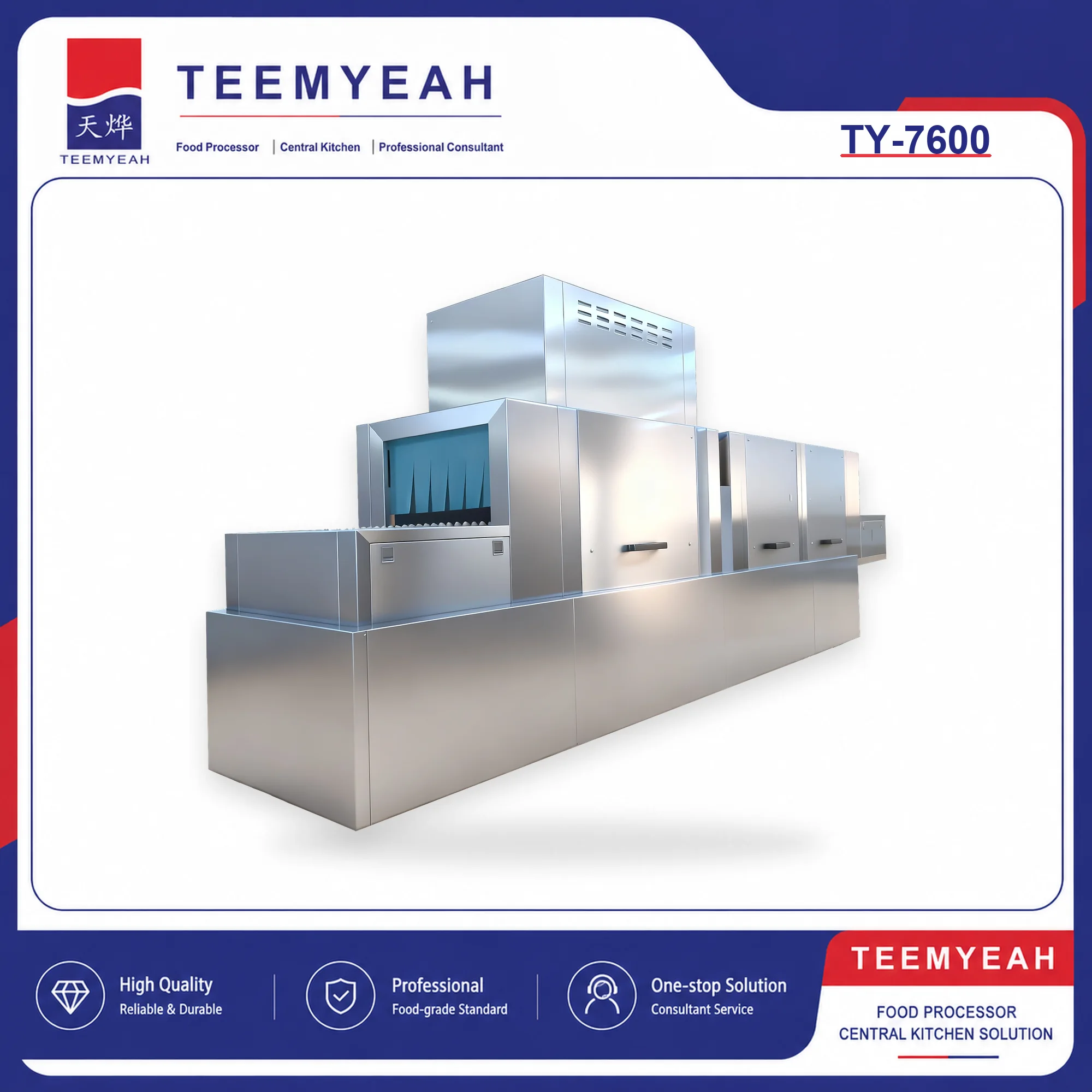
Full automation becomes compelling when several conditions align—not when one labor-cost number appears high.
Labor Is Structurally Scarce
A temporary recruitment problem does not automatically justify a major capital project.
Full automation is more defensible when the plant has persistent difficulty recruiting, training and retaining enough workers to cover the required shifts.
The analysis should separate labor scarcity from labor price.
A location may have relatively low wages but an insufficient supply of reliable workers. In that situation, the operational risk comes from:
- absenteeism;
- high turnover;
- inconsistent shift staffing;
- limited supervisory capacity;
- seasonal migration;
- difficulty covering night shifts;
- repeated retraining;
- production interruptions.
The financial impact is not limited to payroll. It may include overtime, lost output, missed deliveries, inconsistent quality and management time spent rebuilding teams.
Demand Is Stable Enough to Load the Line
High-capacity automation requires utilization.
A line designed for 2,000 kilograms per hour does not necessarily generate an attractive return if demand supports only several short runs per week.
The buyer should distinguish:
- theoretical capacity;
- tested capacity;
- input capacity;
- finished-product capacity;
- peak hourly capacity;
- average annual utilization;
- saleable output after yield losses.
Long-term customer contracts, predictable seasonal programs or a stable internal demand base make full automation easier to justify.
A processor supplying its own restaurant group, retail network or established foodservice customers may have greater demand visibility than a new contract processor that is still developing its customer base.
The Product Range Is Repeatable
Automatic systems perform best when raw-material dimensions, recipes, cut specifications, package formats and quality criteria remain within a manageable range.
A plant producing a small number of high-volume SKUs can optimize:
- feeding systems;
- conveyor speed;
- cutting configurations;
- process time;
- dosing;
- inspection thresholds;
- package sizes;
- line controls.
A factory processing dozens of irregular products in small batches may spend too much time on adjustment, changeover and sanitation.
Full automation can still accommodate multiple products, but flexibility must be engineered deliberately. It should not be assumed simply because a machine has an adjustable speed setting.
Process Consistency Has High Economic Value
Full automation can improve repeatability in dosing, timing, transfer and handling when the equipment is correctly designed and maintained.
This matters where variation causes:
- excessive giveaway;
- yield loss;
- inconsistent cuts;
- underprocessing or overprocessing;
- rework;
- customer complaints;
- rejected batches;
- unstable shelf life;
- difficulty meeting contractual specifications.
The value is not limited to labor savings.
Consistent output can protect revenue, improve raw-material utilization and support larger customer contracts. In some plants, a small improvement in yield or giveaway control may have a greater financial impact than removing several operators.
Hygiene and Traceability Requirements Are Demanding
Automation may reduce unnecessary product contact and make process data easier to collect.
It does not, by itself, create a compliant food-safety system.
The FDA preventive-controls framework requires covered facilities to conduct hazard analysis and implement risk-based preventive controls. HACCP similarly addresses biological, chemical and physical hazards across the food chain. Equipment should support the control plan; it does not replace it.
A fully automatic line makes the most sense when the following elements have been considered from the beginning:
- hygienic equipment design;
- cleaning access;
- drainage;
- raw and ready-to-eat zoning;
- chemical dosing and monitoring points;
- product-contact materials;
- traceability;
- corrective-action procedures;
- safe maintenance access;
- verification of critical operating parameters.
A line should not be judged only by how little manual contact occurs during production. It must also be judged by how effectively it can be cleaned, inspected and restored after a deviation.
Technical Support Is Strong
Integrated automation concentrates risk.
A sensor fault, control issue or failed transfer can stop upstream and downstream equipment. Full automation therefore requires:
- capable maintenance personnel;
- electrical and controls knowledge;
- documented spare-parts strategy;
- remote-support arrangements;
- stable utilities;
- preventive-maintenance schedules;
- clear recovery procedures;
- backup operating methods where practical.
NIST’s Manufacturing Extension Partnership describes task automation and data analysis as two important ways food manufacturers can introduce Industry 4.0 technologies. This distinction is useful: a plant may gain substantial value by automating selected repetitive tasks and improving production visibility before integrating every physical movement.
When Semi-Automation May Be the Better Choice
Semi-automation is often the more resilient choice for a growing processor because it controls major bottlenecks without forcing the plant to predict every future product and volume pattern.
Product Mix Changes Frequently
Fresh vegetables, meat, seafood, bakery ingredients and prepared foods can vary in:
- size;
- shape;
- moisture;
- firmness;
- maturity;
- contamination load;
- incoming temperature;
- defect type;
- customer specification.
Human inspection and adjustment remain valuable where incoming materials are inconsistent or quality criteria are difficult to express through a simple sensor threshold.
A semi-automatic line can automate washing, cutting, dewatering, conveying or weighing while keeping people at inspection and exception-handling points.
The Project Needs to Preserve Employment
Where job creation supports the investment case, semi-automation can preserve meaningful roles without turning the factory into a labor-intensive operation.
The design objective should not be to “keep people busy.” It should be to position workers where judgment, hygiene verification, quality control and flexible handling create measurable value.
Suitable roles may include:
- raw-material inspection;
- removal of damaged products;
- trimming;
- foreign-material control;
- visual quality verification;
- sanitation inspection;
- allergen-changeover checks;
- package presentation;
- exception handling;
- production documentation.
Repetitive lifting and unsafe interaction with moving equipment should not be retained merely to increase headcount.
OSHA requires hazardous machinery to be safeguarded, while conveyors create pinch-point, maintenance and lockout risks that must be controlled.
Employment objectives should therefore be achieved through productive and safe roles, not through the preservation of hazardous manual handling.
Local Maintenance Capability Is Limited
An automatic line may perform well during commissioning but become difficult to sustain if the plant lacks electrical, controls and mechanical competence.
Semi-automation reduces system interdependence.
One machine can often be isolated while other tasks continue manually or through a temporary bypass. This is especially important in markets where:
- specialized technicians are not locally available;
- imported spare parts have long lead times;
- remote connectivity is unreliable;
- the plant has limited controls experience;
- voltage or utility conditions are unstable;
- language differences complicate technical support.
The cost of automation should include the cost of maintaining automation.
Demand Is Not Yet Proven
A new central kitchen, fresh-cut facility or contract-processing plant may have ambitious forecasts but limited operating history.
Installing maximum automation before product-market fit can lock capital into the wrong process.
A modular semi-automatic line allows the operator to validate:
- actual demand;
- product specifications;
- customer acceptance;
- batch sizes;
- yield;
- cleaning requirements;
- labor standards;
- bottleneck locations;
- packaging formats.
Automatic feeding, inspection, weighing or packing can be added after these operating facts are established.
The Plant Handles Many Short Production Runs
Short production runs increase the importance of cleaning and changeover time.
A highly integrated line may save labor while running but consume excessive time between products.
The economic model must therefore include:
- tool changes;
- recipe changes;
- product flushing;
- allergen cleaning;
- sanitation verification;
- line clearance;
- packaging-material replacement;
- startup adjustment;
- end-of-run residual product.
Rated throughput alone does not reveal whether a line is productive across a full working day.
Food Safety: Automation Supports Control but Does Not Replace It
Food processors sometimes assume that fewer workers automatically mean safer production.
Reduced manual contact can be beneficial, but the relationship is not automatic.
Every machine introduces:
- food-contact surfaces;
- joints and seals;
- conveyor belts;
- spray nozzles;
- guards;
- drainage points;
- frames and supports;
- potential product accumulation areas;
- potential microbial harborage locations.
More integration can also create more difficult access for inspection and sanitation.
Automation introduces failure modes that may be easy to miss:
- incorrect sensor calibration;
- recipe-selection errors;
- inadequate chemical concentration;
- blocked spray nozzles;
- belt-tracking problems;
- inaccurate weighing;
- failed reject mechanisms;
- a control system that records a target value without confirming the physical result.
FDA guidance emphasizes hazard analysis and risk-based preventive controls. A plant therefore needs evidence that the selected process and monitoring system are capable of controlling the relevant hazards under actual operating conditions.
The appropriate automation level should improve the food-safety system in practical ways:
- reduce uncontrolled product contact;
- stabilize critical process times and flow rates;
- make cleaning access easier rather than harder;
- support segregation between raw and ready-to-eat zones;
- provide usable records rather than excessive unreviewed data;
- make deviations visible;
- allow safe intervention, maintenance and lockout;
- preserve inspection points where automation cannot reliably identify defects.
A fully automatic transfer between two poorly controlled processes is not a food-safety improvement.
A semi-automatic process with validated controls, disciplined sanitation and clear accountability may be safer.
How to Calculate the Appropriate Automation Level
A reliable assessment uses seven dimensions.
The result may be one general automation level for the plant and different levels for individual process steps.
1. Target Capacity
Define required saleable output, not only input rate or equipment nameplate capacity.
For each product family, calculate:
Required hourly input = Required saleable output ÷ Expected yield ÷ Effective operating-time ratio
Suppose a plant needs 6,000 kilograms of finished product during a six-hour production window.
The nominal average output is:
6,000 kg ÷ 6 hours = 1,000 kg/h
If the expected yield is 85% and the effective running time after cleaning, minor stops and adjustment is 80%, the required input capacity becomes approximately:
6,000 ÷ 0.85 ÷ 4.8 = 1,471 kg/h
This is an illustrative calculation, not a universal yield assumption. Every project should use tested product data.
The capacity analysis should expose the real bottleneck.
Automating a washer provides limited value if manual trimming or packaging cannot match its output. Similarly, buying a faster cutter does not solve a dewatering or weighing constraint downstream.
2. Labor Headcount and Fully Burdened Cost
Count labor by task and shift:
- receiving and raw-material handling;
- sorting and trimming;
- loading and transfer;
- machine operation;
- quality inspection;
- sanitation;
- packaging;
- maintenance;
- supervision;
- internal logistics.
Use fully burdened labor cost, including:
- wages;
- payroll taxes;
- benefits;
- overtime;
- recruitment;
- training;
- turnover;
- protective equipment;
- transportation or accommodation where applicable;
- supervision.
Deduct employment incentives only after their applicability and duration have been verified.
Do not assume that every removed operator becomes an immediate cash saving. Some workers may be reassigned to quality, sanitation, material preparation or packaging. Automation may also create new technical roles.
3. Number of Shifts and Utilization
Automation economics generally improve when equipment runs more productive hours.
A line operating two or three shifts can spread capital cost over greater output, but only if demand, sanitation windows and maintenance capacity support those shifts.
Calculate:
Annual effective production hours = Scheduled hours × Availability × Performance factor
Rated speed without availability is misleading.
The model should include:
- planned cleaning;
- changeovers;
- preventive maintenance;
- minor stops;
- startup time;
- operator breaks;
- raw-material shortages;
- realistic production ramp-up.
A machine rated at 1,500 kilograms per hour does not necessarily produce 12,000 kilograms of saleable product during an eight-hour shift.
4. Product and SKU Variability
Create a product-process matrix showing:
- raw-material dimensions;
- incoming condition;
- required preparation;
- washing intensity;
- cut specification;
- batch size;
- allergen separation;
- hygiene zoning;
- packaging format;
- cleaning requirement;
- changeover time.
The more variation a line must accommodate, the more valuable the following features become:
- adjustable modules;
- quick-change tooling;
- bypass routes;
- buffer areas;
- independent speed control;
- human inspection;
- modular rather than rigid integration.
A highly automated line designed around one product may lose much of its theoretical advantage when it processes many small batches.
5. Investment Return and Risk
A basic payback calculation is useful:
Payback period = Net additional investment ÷ Annual net operating benefit
Annual net operating benefit should include more than labor savings.
Consider:
- direct labor reduction or avoidance;
- yield improvement;
- lower product giveaway;
- reduced rework;
- increased saleable capacity;
- reduced overtime;
- lower injury exposure;
- utility changes;
- maintenance costs;
- spare-parts costs;
- financing costs;
- expected downtime;
- training;
- software and licensing;
- additional technical personnel.
A more mature project should compare net present value under several scenarios:
- low demand;
- base demand;
- high demand;
- with and without incentives;
- expected uptime;
- reduced uptime;
- stable SKU mix;
- increased product complexity.
A line that produces an attractive payback only under the highest-demand scenario is not equivalent to one that remains viable under conservative assumptions.
6. Policy, Employment and Investment Conditions
Create a written policy checklist before freezing the plant layout.
The checklist should cover:
- verified hiring or headcount commitments;
- wage or employment incentives;
- automation or productivity grants;
- tax allowances;
- local-content rules;
- workforce-training requirements;
- industrial-zone conditions;
- environmental restrictions;
- utility restrictions;
- deadlines for investment and commissioning;
- reporting requirements;
- clawback conditions.
The plant owner’s legal, tax and investment advisers should confirm these items.
The equipment supplier’s role is to translate confirmed constraints into process architecture. A supplier should not independently interpret an informal comment as a legal prohibition or promise that a project will qualify for an incentive.
7. Future Expansion
The line should have a defined expansion path.
Ask what happens when:
- volume increases by 30%;
- a second production shift is introduced;
- a new SKU is added;
- packaging changes;
- a large customer requires tighter specifications;
- ready-to-eat production is added;
- additional inspection becomes necessary.
Expansion planning includes:
- floor space;
- electrical load;
- water supply;
- drainage;
- compressed air;
- control-panel capacity;
- conveyor interfaces;
- upstream and downstream balance;
- sanitation access;
- product-flow zoning.
A line that cannot accept future modules may be cheaper initially but more expensive across the full project life.
A Worked Decision Example
Consider a hypothetical processor planning a vegetable preparation facility.
The expected first-year demand is 800 kilograms per hour across 18 SKUs, with two shifts during peak months and one shift during the rest of the year. Raw-material quality varies, customer specifications are still evolving and the local investment proposal includes an employment objective.
A fully automatic line may offer the lowest direct labor per kilogram at design capacity.
Its business case, however, is weakened by:
- uncertain annual utilization;
- frequent product changeovers;
- raw-material variation;
- changing customer specifications;
- limited local maintenance experience;
- the importance of employment to the investment proposal.
A low-automation plant would preserve jobs and flexibility, but manual transfer and inconsistent cycle times could restrict growth.
A practical semi-automatic design could use:
- controlled mechanical washing;
- an adjustable cutting section;
- conveyors between high-handling stages;
- manual inspection before and after critical processing;
- semi-automatic dewatering;
- manual or semi-automatic weighing and packing;
- production-data collection at each module;
- space and utilities reserved for future automatic feeding, vision inspection and packaging.
This configuration does not maximize automation on day one.
It reduces the highest-cost and highest-variability bottlenecks while keeping the project adaptable. Once demand, SKU mix and workforce performance are proven, modules can be added based on measured constraints rather than forecasts alone.
A Modular Approach to Food Processing Automation
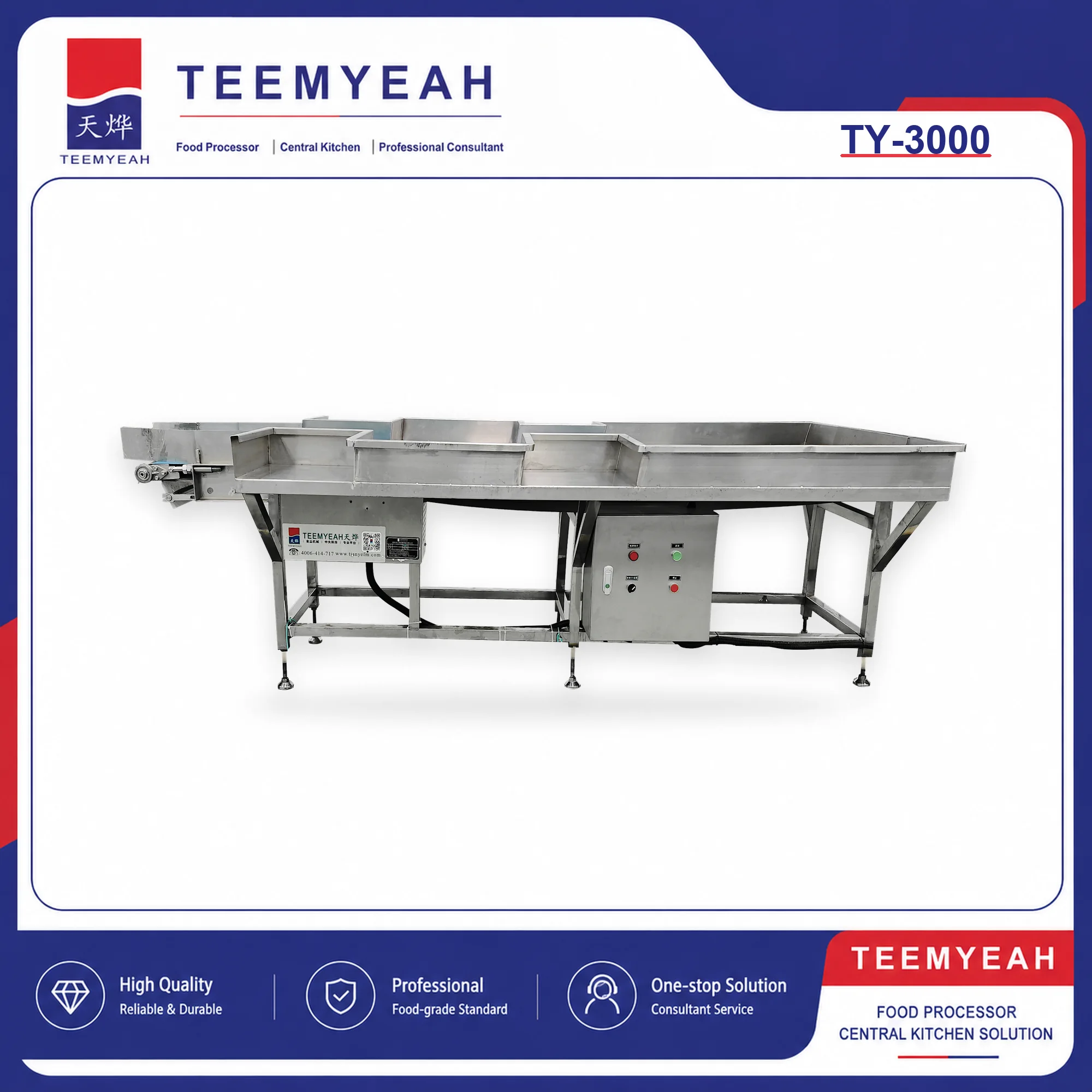
The choice is not permanently “manual versus fully automatic.”
A modular architecture allows a plant to increase automation in stages.
Stage 1: Mechanize the Constraint
Identify the operation that limits output or creates the greatest ergonomic, hygiene or consistency risk.
Depending on the plant, this may be:
- washing;
- cutting;
- mixing;
- dewatering;
- lifting;
- weighing;
- product transfer.
Automating the true constraint usually creates more value than purchasing machines for every process simultaneously.
Stage 2: Stabilize Transfer and Line Balance
Add conveyors, buffer tables, controlled feeding or discharge systems so that one machine does not overwhelm the next.
Good line balance often produces more value than purchasing the fastest individual machine.
The objective is not to maximize the speed of every unit. It is to create a stable flow in which the entire line produces consistently.
Stage 3: Add Measurement and Visibility
Install practical monitoring for:
- output;
- downtime;
- process conditions;
- chemical dosing;
- temperature;
- product weight;
- reject rate;
- changeover time;
- yield.
NIST notes that digital manufacturing can be introduced through staged applications suited to the individual plant environment rather than as one overwhelming transformation.
This data reveals where additional automation will create measurable value.
Stage 4: Automate Repetitive Decisions
Once the plant has reliable operating data, automate tasks with stable rules.
Examples include:
- dosing;
- speed coordination;
- weight control;
- label verification;
- package counting;
- automatic replenishment signals;
- reject mechanisms.
Automating an unstable or poorly understood process usually transfers the instability into the control system.
Stage 5: Integrate Where Integration Reduces Total Risk
Connect modules through centralized control when the operational benefit exceeds the added complexity.
Preserve manual bypasses or recovery procedures for critical sections where practical.
The most integrated solution is not automatically the most resilient solution. The design should consider how production can recover after a fault, rather than only how the line operates when everything is functioning correctly.
This staged method protects capital and gives the workforce time to develop technical capability. It also supports policy environments where employment is valued initially but productivity expectations rise as the project matures.
Decision Matrix: Which Model Fits Your Plant?
Choose full automation when most of the following are true:
- demand is high and contractually stable;
- products and package formats are relatively standardized;
- labor is structurally scarce or unreliable;
- the line will run enough hours to support the investment;
- sanitation and changeover procedures are engineered into the design;
- maintenance and controls support are available;
- policy incentives favor capital investment or do not depend heavily on direct job creation;
- downtime contingency plans are credible.
Choose semi-automation when most of the following are true:
- the plant is growing but demand remains variable;
- SKU diversity is high;
- raw materials require judgment-based inspection;
- local job creation is important to the investment case;
- technical maintenance capacity is developing;
- the buyer wants to validate products and processes before deeper integration;
- future modules can be added without replacing the core equipment.
Choose manual or low automation only when low volume, highly customized production or limited capital makes it rational—and when the resulting safety, hygiene, capacity and consistency risks remain manageable.
Questions to Answer Before Requesting a Line Proposal
A useful equipment proposal should begin with operating facts rather than a general request for “a fully automatic line.”
Provide the supplier with:
- Product names, raw-material condition and finished specifications.
- Required output by product, shift and day.
- Expected yield or current yield data.
- Batch sizes and number of daily changeovers.
- Current and planned worker count by process.
- Local wage structure and verified employment incentives.
- Any binding hiring, land, tax, financing or industrial-zone conditions.
- Available utilities and sanitation windows.
- Local maintenance capability and spare-parts expectations.
- Expansion targets for the next three to five years.
These inputs allow the supplier to compare process architectures rather than simply adding machines to a quotation. Discuss your project with TEEMYEAH and our engineers can help you match the right automation level to your capacity and labor conditions.
Conclusion: Optimize the Plant, Not the Automation Percentage
Food processing automation is not a competition to remove the greatest number of operators.
It is a design discipline that allocates people, equipment and controls to achieve a reliable business outcome.
Full automation is appropriate when volume, repeatability, labor conditions, hygiene requirements and technical support justify integration.
Semi-automation is often stronger when:
- the product mix is changing;
- job creation matters;
- maintenance capacity is limited;
- demand is still being proven;
- future flexibility has high strategic value.
Local employment policy can influence the choice through investment aid, payroll incentives, grants, contractual commitments and development objectives.
Those factors must be verified project by project.
An informal statement should trigger due diligence—not a country-level conclusion.
The strongest solution may be a modular semi-automatic food processing line that controls today’s bottlenecks and creates a clear path toward tomorrow’s automation.
That approach respects capital, protects flexibility and allows expansion to follow measured demand.
Talk to TEEMYEAH About the Right Automation Level
Not every food processing plant needs the highest level of automation.
Share your target capacity, product range, labor conditions and local policy requirements with TEEMYEAH. We can help you identify a practical balance between manual operation, semi-automation and full automation—and develop a modular food processing solution that can expand with your business. Discuss your project with TEEMYEAH to get a tailored recommendation.
Frequently Asked Questions
1. What is the difference between full automation and semi-automation in food processing?
Full automation integrates material handling, processing, controls and often packaging with minimal routine intervention.
Semi-automation mechanizes selected operations while operators continue to load, inspect, adjust, transfer or pack products.
The practical difference is not the number of machines. It is how much material flow and decision-making are controlled automatically.
2. Is full automation always more profitable?
No.
Profitability depends on utilization, labor availability, product mix, yield, downtime, maintenance, financing and policy incentives.
A fully automatic line running below capacity or experiencing frequent changeovers may generate a weaker return than a well-balanced semi-automatic line.
3. How do local employment policies affect food factory automation planning?
They can change project economics through job-creation conditions, hiring incentives, payroll support, investment grants, industrial-zone agreements or project-specific commitments.
The exact effect must be confirmed through applicable legal, tax, land and investment documents. It should not be inferred from general statements about a country.
4. Can a semi-automatic food processing line be expanded later?
Yes, provided that it is designed modularly.
Future modules may include:
- automatic feeding;
- conveyors;
- buffer systems;
- automated inspection;
- dosing;
- weighing;
- packaging;
- centralized data collection.
Floor space, utilities and control interfaces should be reserved during the original design.
5. Does automation automatically improve food safety?
No.
Automation can reduce manual contact and stabilize process conditions, but it also introduces additional surfaces, components and failure modes.
Food safety still depends on hazard analysis, hygienic design, validated controls, sanitation, monitoring and corrective action.
6. When should a central kitchen choose semi-automation?
Semi-automation is usually appropriate when the kitchen processes many SKUs, experiences changing demand, requires manual quality judgment or wants to expand in stages.
It can control washing, cutting, mixing, dewatering and transfer bottlenecks while preserving flexible inspection and packing roles.
7. What data are needed to calculate automation ROI?
At minimum, the calculation should include:
- target saleable output;
- yield;
- operating hours;
- labor by task;
- fully burdened payroll;
- current downtime;
- changeover time;
- maintenance cost;
- utility consumption;
- reject and rework rates;
- financing cost;
- expected equipment availability;
- verified incentives.
8. What is the best way to automate a food processing plant gradually?
Start with the production constraint, stabilize flow between processes, collect reliable operating data and automate repetitive decisions only after the process is understood.
Add deeper integration when it reduces total cost and operational risk—not simply because it increases the apparent automation level.

